












-
×
 0100 Drawstring Bag
2 × 2,44€
0100 Drawstring Bag
2 × 2,44€


Subscribe to our newsletter to receive news, promotions and insights into the world of Sidea
[mc4wp_form id=277679].


 0100 Drawstring Bag

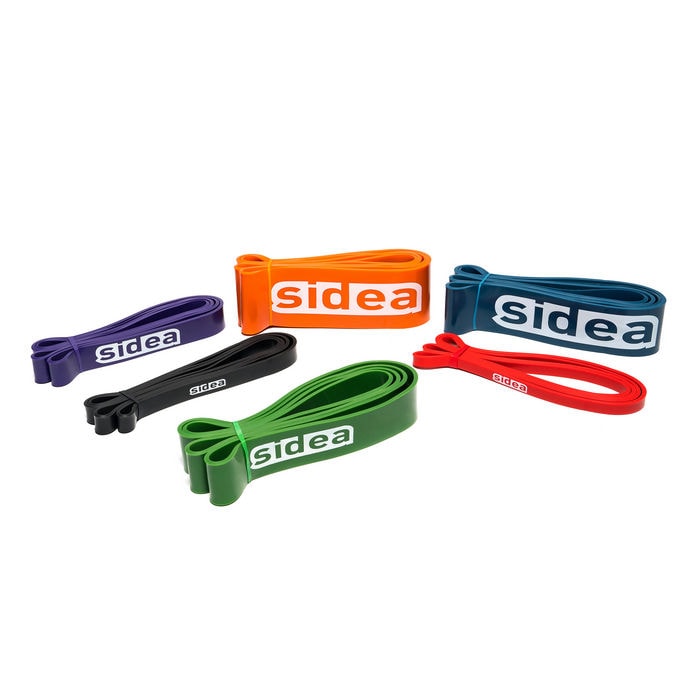
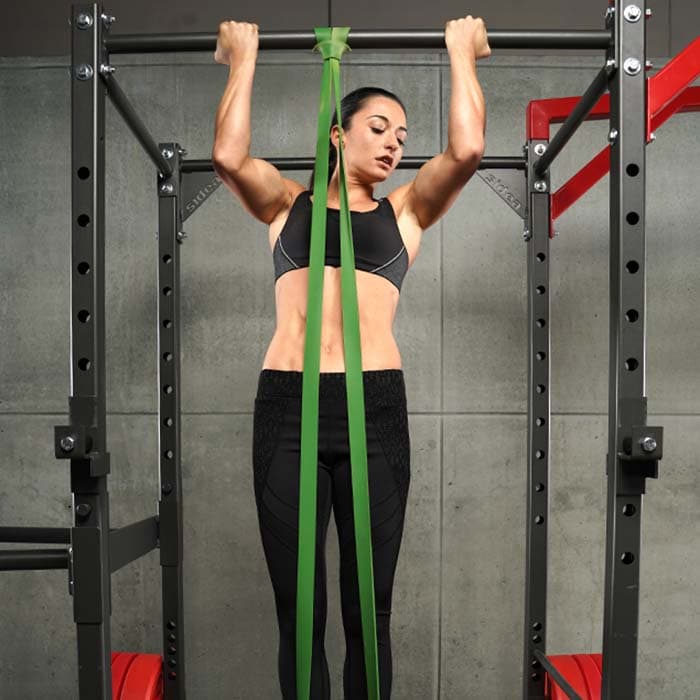
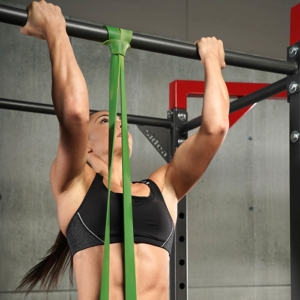
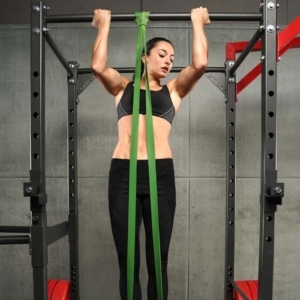
High-resistance elastic bands, 100 cm long, available in 6 different strengths and can be used as a barbell traction aid, for barbell training, partnered running or free-body exercises against resistance.
10,68€ - 53,38€Fascia di prezzo: da 10,68€ a 53,38€ 8,54€ - 42,70€Fascia di prezzo: da 8,54€ a 42,70€ FEES and TAXES NOT INCLUDED
Power Loops are high-resistance elastic bands, 1000 mm long, available in 6 different resistances and can be used for a variety of applications: bar pull-ups, barbell training, partnered running, free body exercises against resistance.
Disponibile

Power Loops are high-resistance elastic bands, 1000 mm in length, which can be used for many applications: bar pull-ups, barbell training, pair-restrained running, free body exercises against resistance.
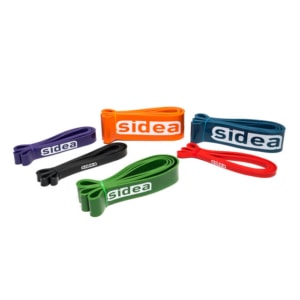
The resistance of elastic bands is progressive. In order to allow a practical and effective orientation between the different elastic bands, we give two indications of resistance expressed in kilograms: the first refers to the force required for the elastic band to begin to deform, i.e. to stretch, while the second refers to the force required to stretch the elastic band by +100 cm.
Power Loop model |
Colour |
Force required for it to start deforming |
Force required to extend it by +100 cm |
| code 0513 elastic SLIM | Red | 5 Kg | 6 Kg |
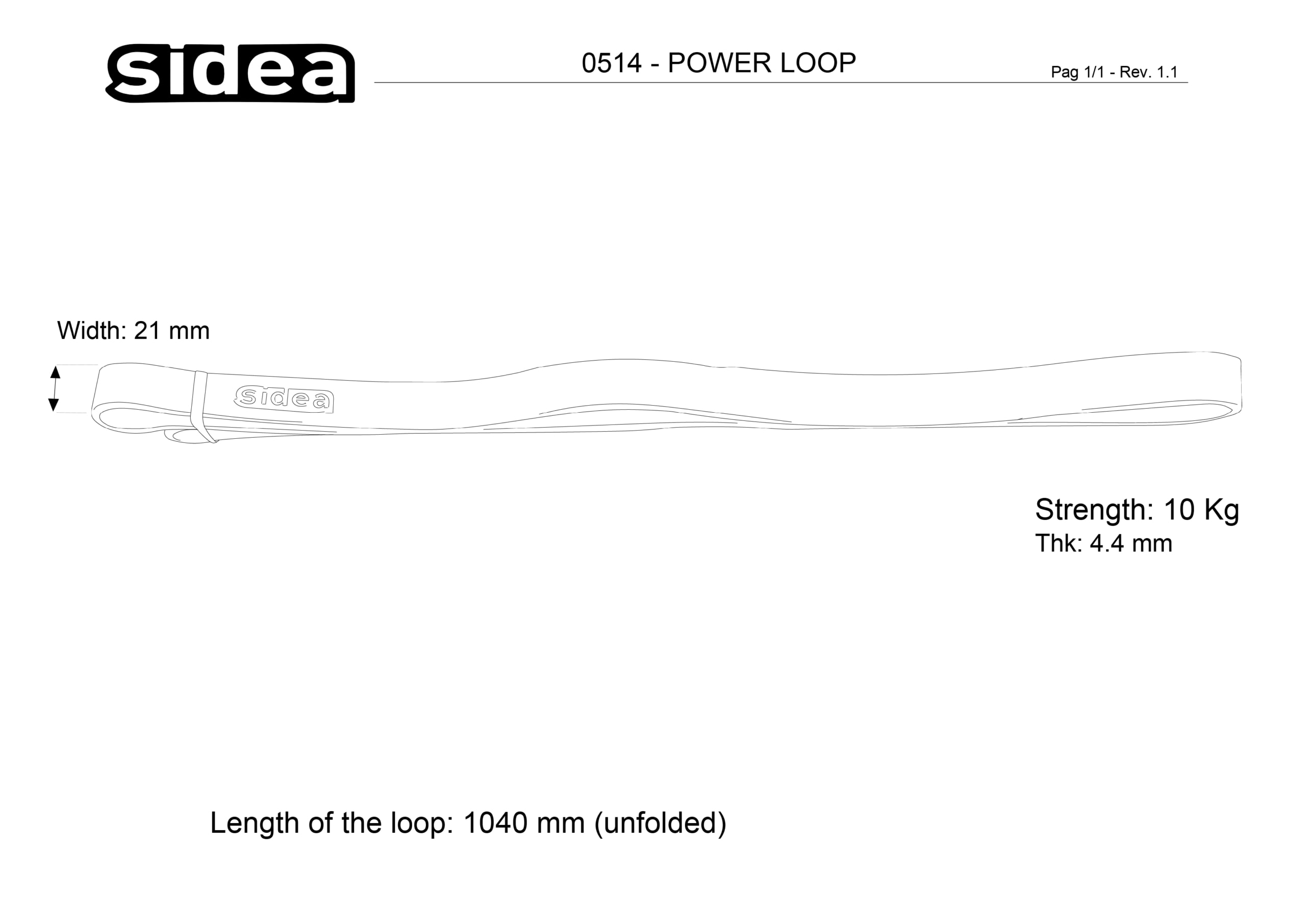
| code 0514 elastic MINI | Black | 10 Kg | 12 Kg |
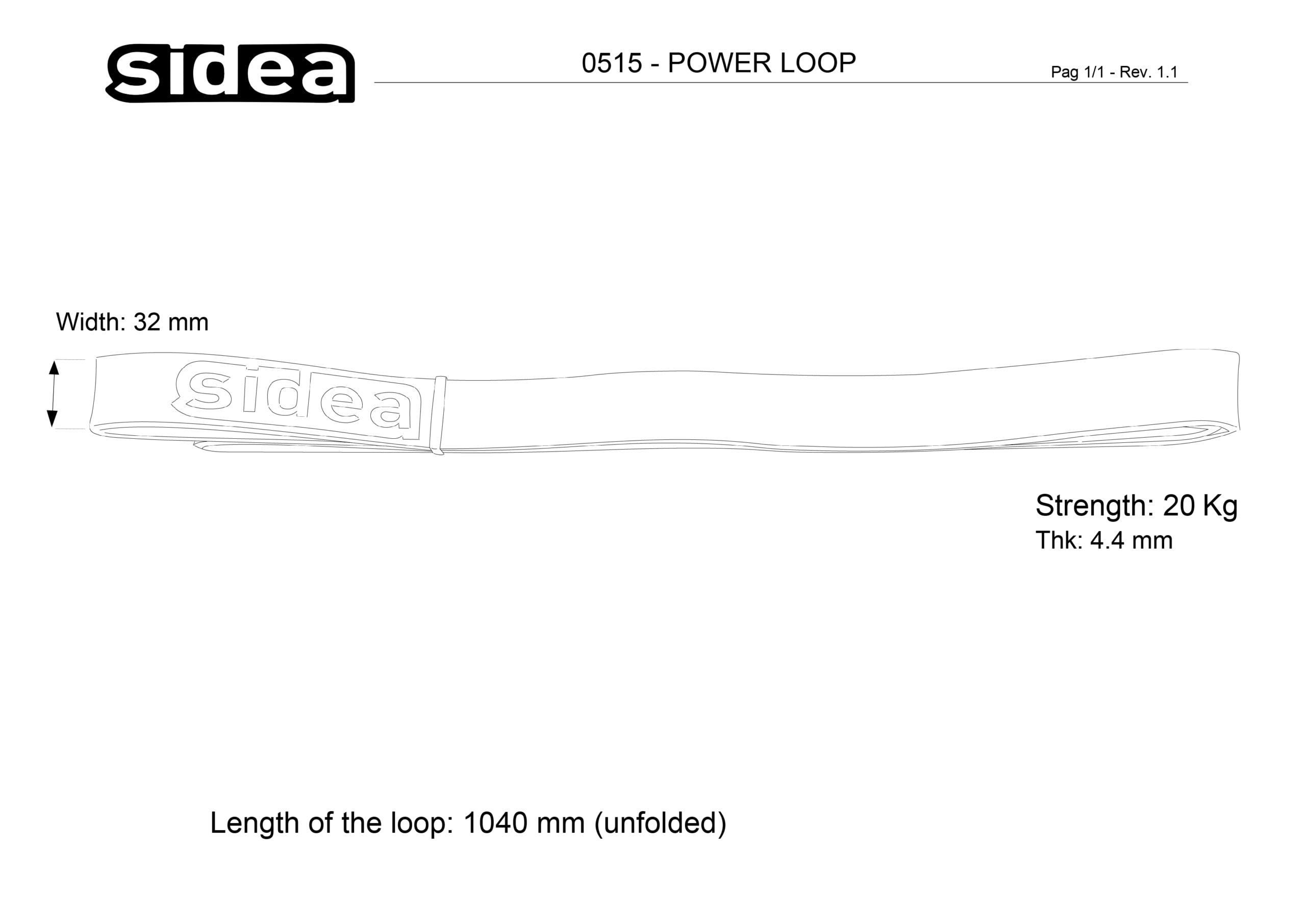
| code 0515 elastic X-LIGHT | Viola | 15 Kg | 20 Kg |
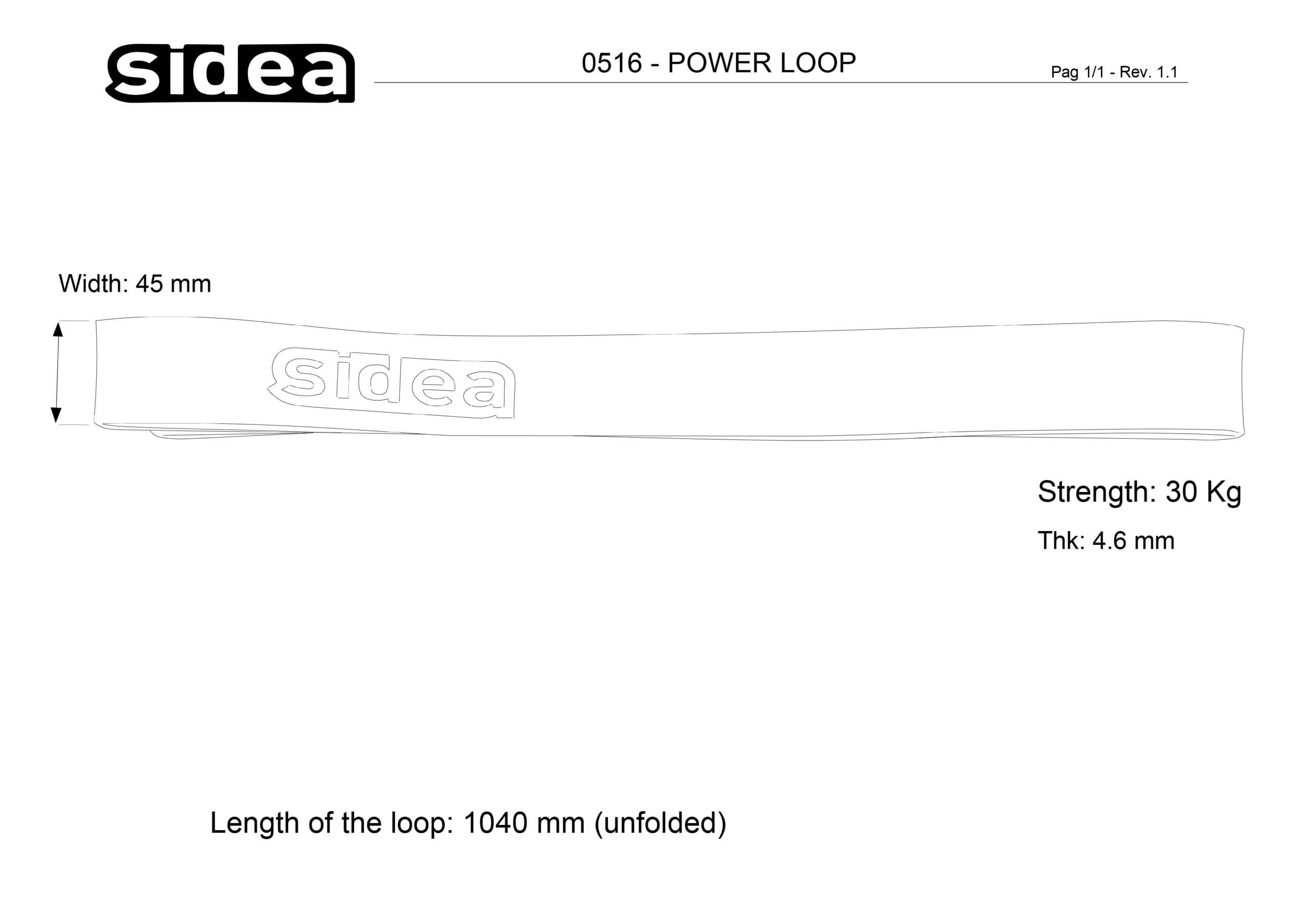
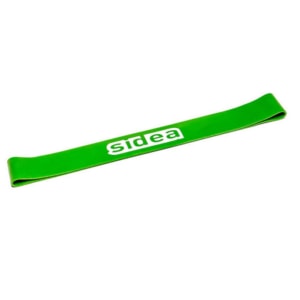
| code 0516 elastic LIGHT | Green | 20 Kg | 30 Kg |
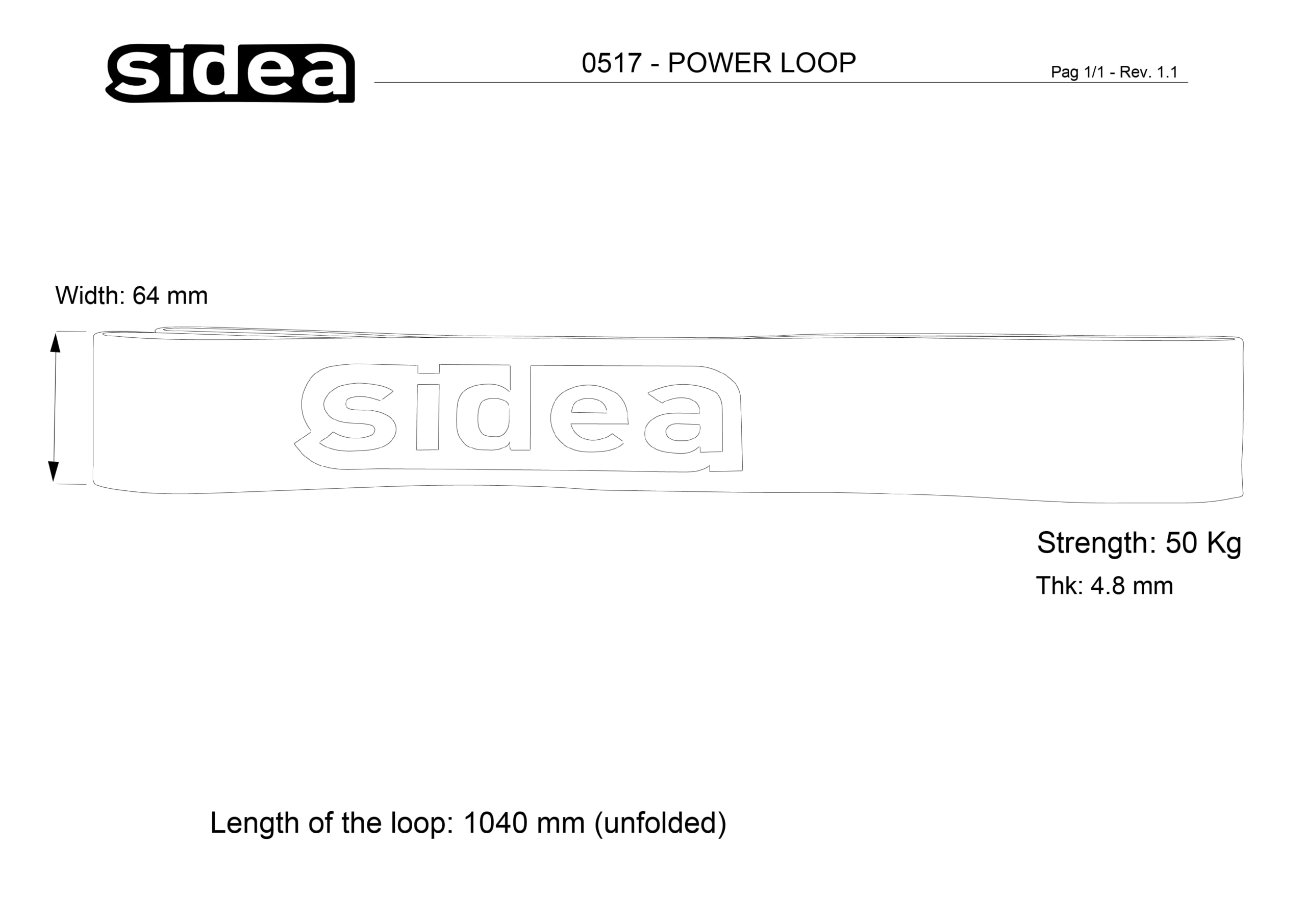
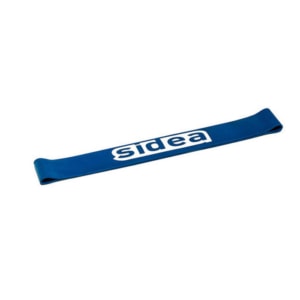
| code 0517 MEDIUM elastic | Blue | 25 Kg | 50 Kg |
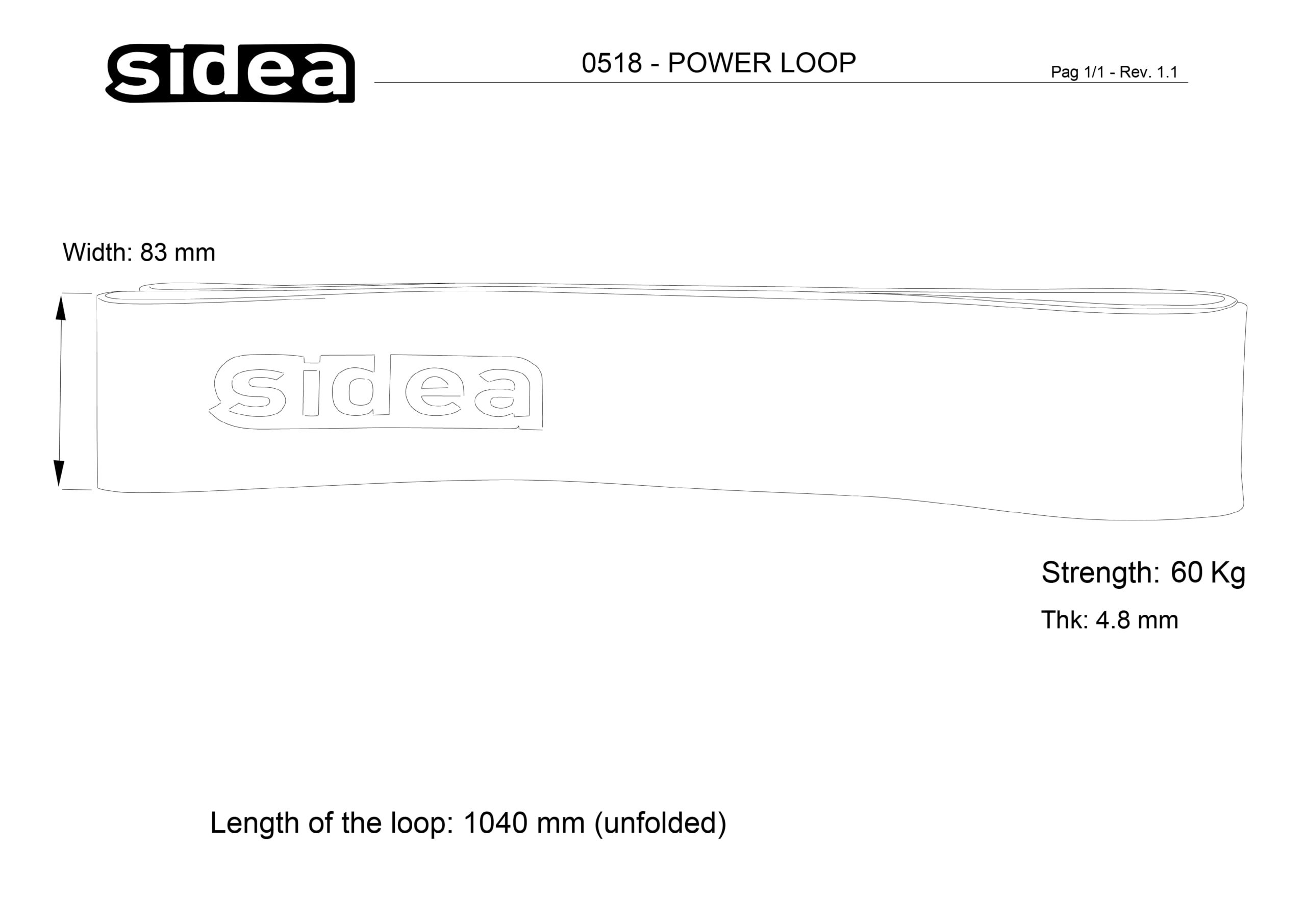
| code 0518 elastic STRONG | Orange | 30 Kg | 60 Kg |
These are approximate values, which we wanted to express in kilograms to allow for practical orientation. Therefore, the Power Loop code 0518orange in colour, very strong, it starts to stretch with a force of 30 kg, reaching 60 kg when its elongation reaches one metre.
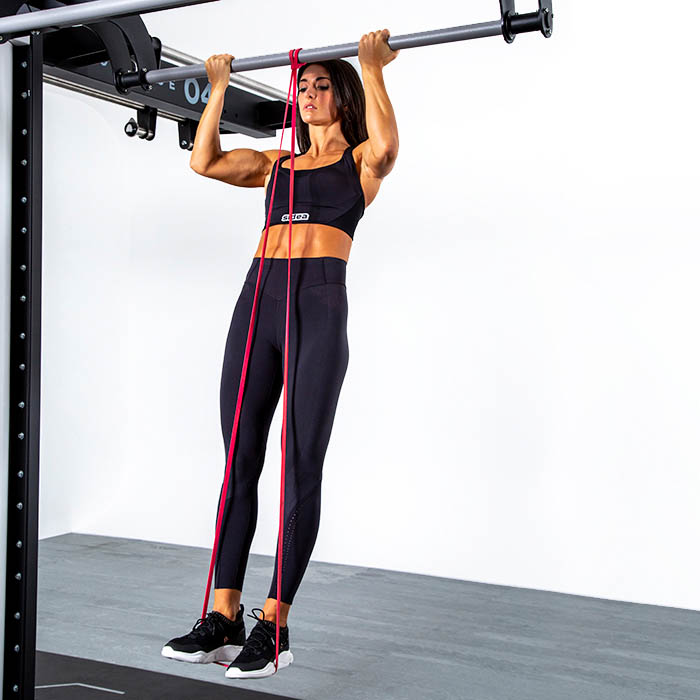
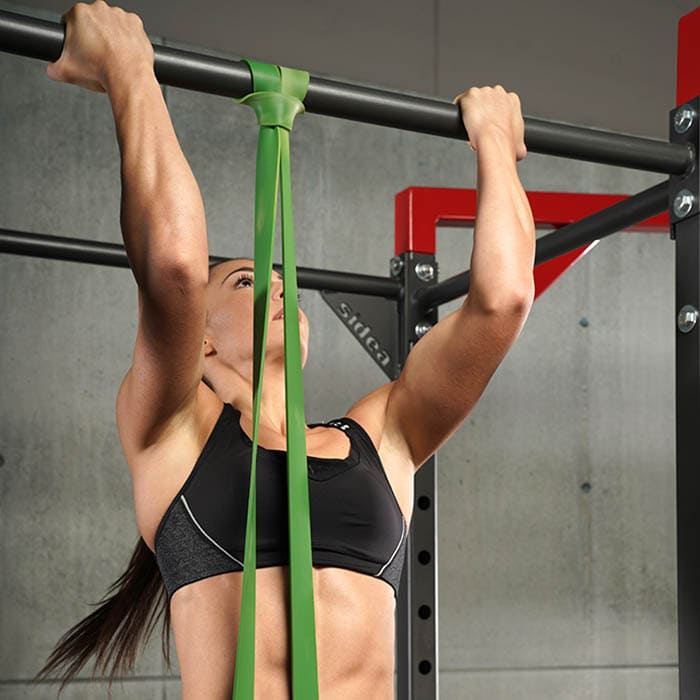
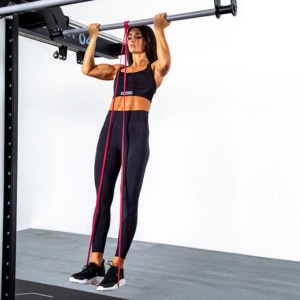
Resistors ranging from 0513 to 0516 are the most commonly used in assisted Muscle Up.
I Power Loop are closed loop elastic bands, available in various sizes and strengths, and have achieved great success in recent years due to the growing interest in thefunctional training. Resistance with elastic ring bands has already been known and used for years by many athletic trainers and/or calisthenics experts. Athletic trainers who are no longer very young will well remember the use of inner tubes from bicycle wheels used to strengthen muscles, perform pulling exercises or as 'spotters' for more difficult exercises.
One of the greatest pioneers of auxotonic training is the physiotherapist of the German national football team Erich Deuser. Already in the early 1950s, he had a ring band produced in order to strengthen and train the musculoskeletal system of his athletes and noticed great advantages in treating his patients' ailments through specific exercises. He also wrote a manual, 'Die Deuserband Gymnastik', which is a kind of vademecum on exercises that can be performed with elastic resistance. The term 'functional training' can already be found in this book, which is why, from the very beginning, the power loop is an excellent product to use in one's own functional training programmes.
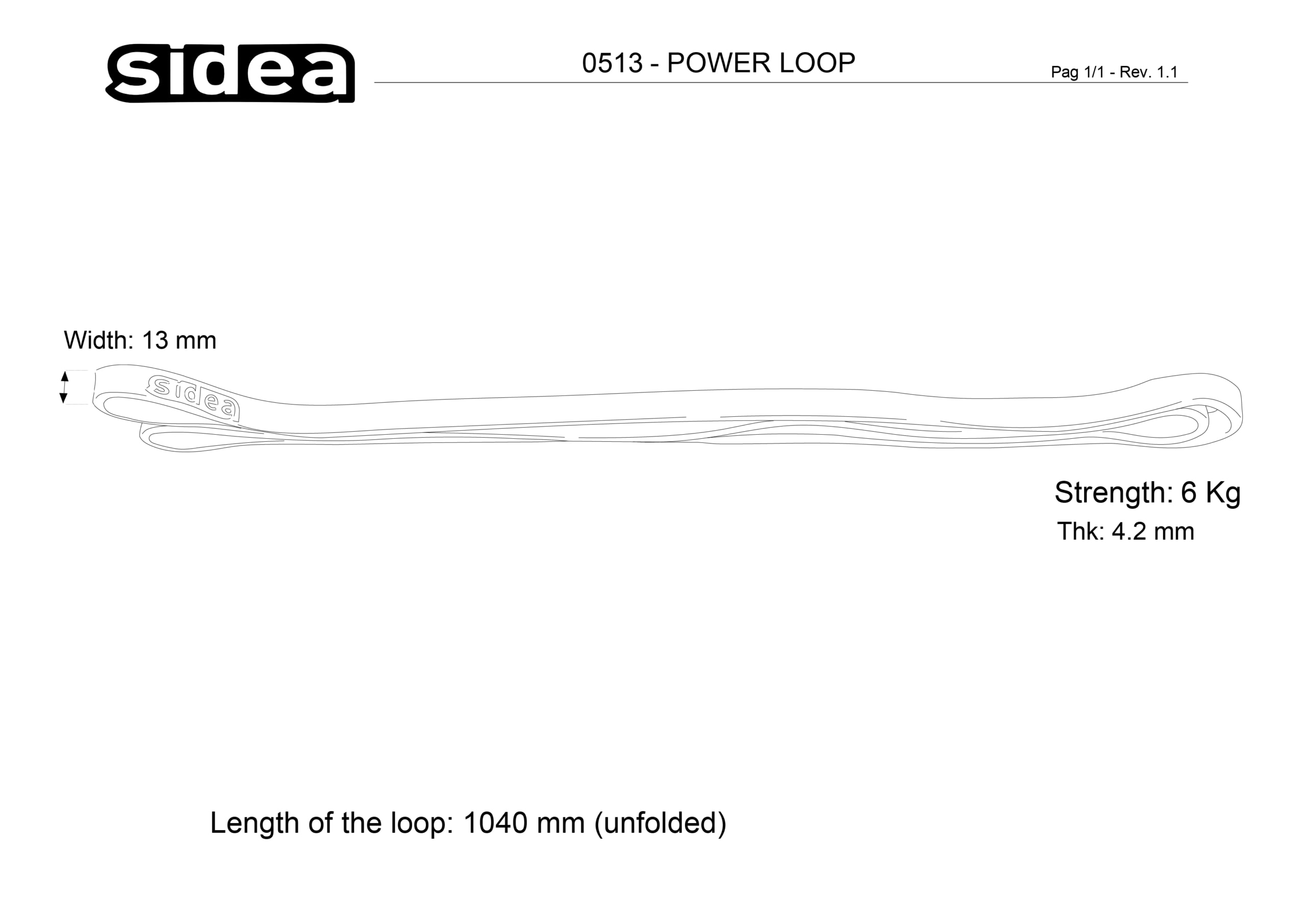
The power loop is a comfortable, lightweight and versatile tool that is simple to use and easy to transport wherever you want: to the park, on holiday, at work or on the playground. It comes in different sizes and strengths, from the smallest, the SLIM model code 0513 (red, 6 kg resistance measured at 100 cm elongation) to the largest, model STRONG code 0518 (colour orange, 60 kg resistance measured at 100 cm elongation).
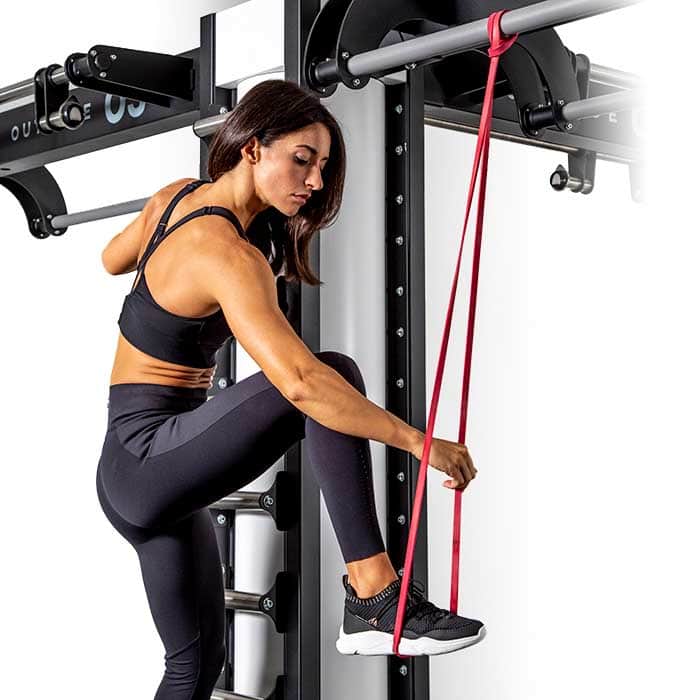
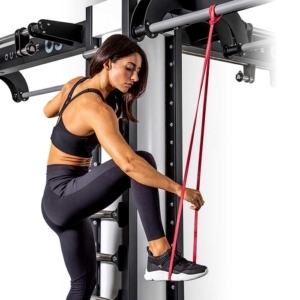
One of its greatest advantages is that it can be anchored to any structure, fixed or not: whether it is a bar on which we can perform pull-ups, a hook on the floor or our own feet, the power loop allows us to perform any type of exercise in complete safety.
The use of this product is often associated with sports practice, especially in athletic preparation, and functional training. Many athletic trainers in fact supplement specific strength sessions with more dynamic and explosive exercises with the Power Loop. The type of muscle contraction is auxotonic and increases progressively as the elastic band is stretched. In field exercises it is preferred to the use of weights because it is 'customised', i.e. it responds differently depending on the strength and explosiveness of the user. Thanks to this feature, the time needed to load and/or unload the barbell is almost eliminated, as it is quick and easy to use.
It is usually proposed as an 'aid' in the execution of exercises such as Pull-ups and Muscle-ups, as it gives a thrust, depending on the resistance of the Loop itself, which allows the full execution of the required movement. This is one of the many uses it can have, but it would be really reductive to entrust it only with this characteristic. The Power Loop in fact allows the execution of all 7 fundamental movements:
These are some examples of exercises that can be performed with the Power Loop. Its use is usually proposed in the warm-up and cool-down phases as it allows the musculoskeletal and neuromuscular apparatus to correctly learn the movement to be performed without requiring sudden, explosive contractions, which could be 'harmful' if not ready for such efforts. Another characteristic is that of 'full body activation'. In order to perform the exercise correctly, the Power Loop requires activation of the core as the type of muscle contraction, which is auxotonic, creates continuous destabilisation and without voluntary control and good proprioception it would be impossible to perform the movement. Its use, especially when associated with the specific sporting gesture, allows the development of various capacities: agility, speed, power and resistance. It is no coincidence that several athletic trainers use the Power Loop as an active resistance to be overcome during the various movements, tying it to the athlete's waist or placing an end to the limb to be strengthened. In the case of a tennis player, for example, it can be effectively applied to the waist or arms, holding one end of the Power Loop in the hand to simulate a racket.
The use of the Power Loop is not only restricted to the sports and fitness world, but can also be extended to holistic and physiotherapeutic activities.
In holistic activities, it offers resistance that is modified and managed according to the user. It is also excellent for general toning exercises, but also as an aid for stretching and postural exercises. The advantage is that it allows the body to reach certain positions slowly and gradually and to be able to maintain them without problems and fatigue.
In physiotherapy, the Power Loop creates, as already mentioned, a destabilisation that forces our body to modulate movements by activating the deep muscles, the stabilising muscles. Whether it is an exercise for strengthening the rotator cuff or a power walk performed with a belt, the elastic band will allow the exercise to take place by activating all the proprioceptive systems of our body so as to modulate its action.
Maintenance
Power loops made of latex. This material is susceptible, over time, to evaporation of the chemicals that make this type of rubber elastic.
To extend the life of this product, you can follow a few steps:
See also:
cod. 0511 Latex Loop Resistance Medium
cod. 0512 Latex Loop Strong Resistance
cod. 0560-0562 Latex Band
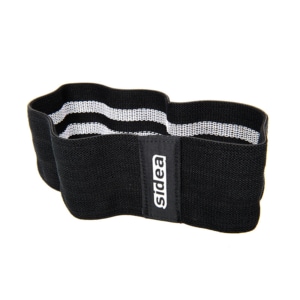
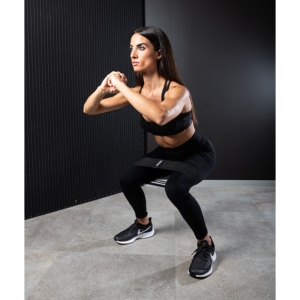
cod. 0606 Hip Band
| Weight | ND |
|---|---|
| resistance | complete set, 05 kg(Code 0513), 10 kg(Code 0514), 15 kg(Code 0515), 20 kg(Code 0516), 25 kg(Code 0517), 30 kg(Code 0518) |
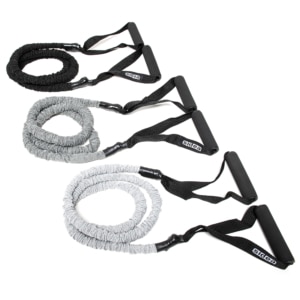
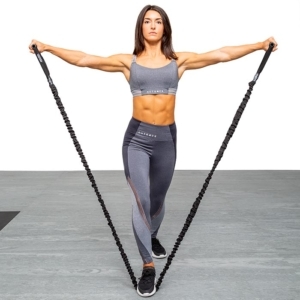
Elastic bands, Fit tube, Big Tubing
Elastic bands, Fit tube, Big Tubing
Elastic bands, Fit tube, Big Tubing
Elastic bands, Fit tube, Big Tubing
Elastic bands, Fit tube, Big Tubing
Elastic bands, Fit tube, Big Tubing
Grips, handles, push ups
Elastic bands, Fit tube, Big Tubing
Elastic bands, Fit tube, Big Tubing






 Defibrillator AED
 Gift CardSidea
 Spare parts