















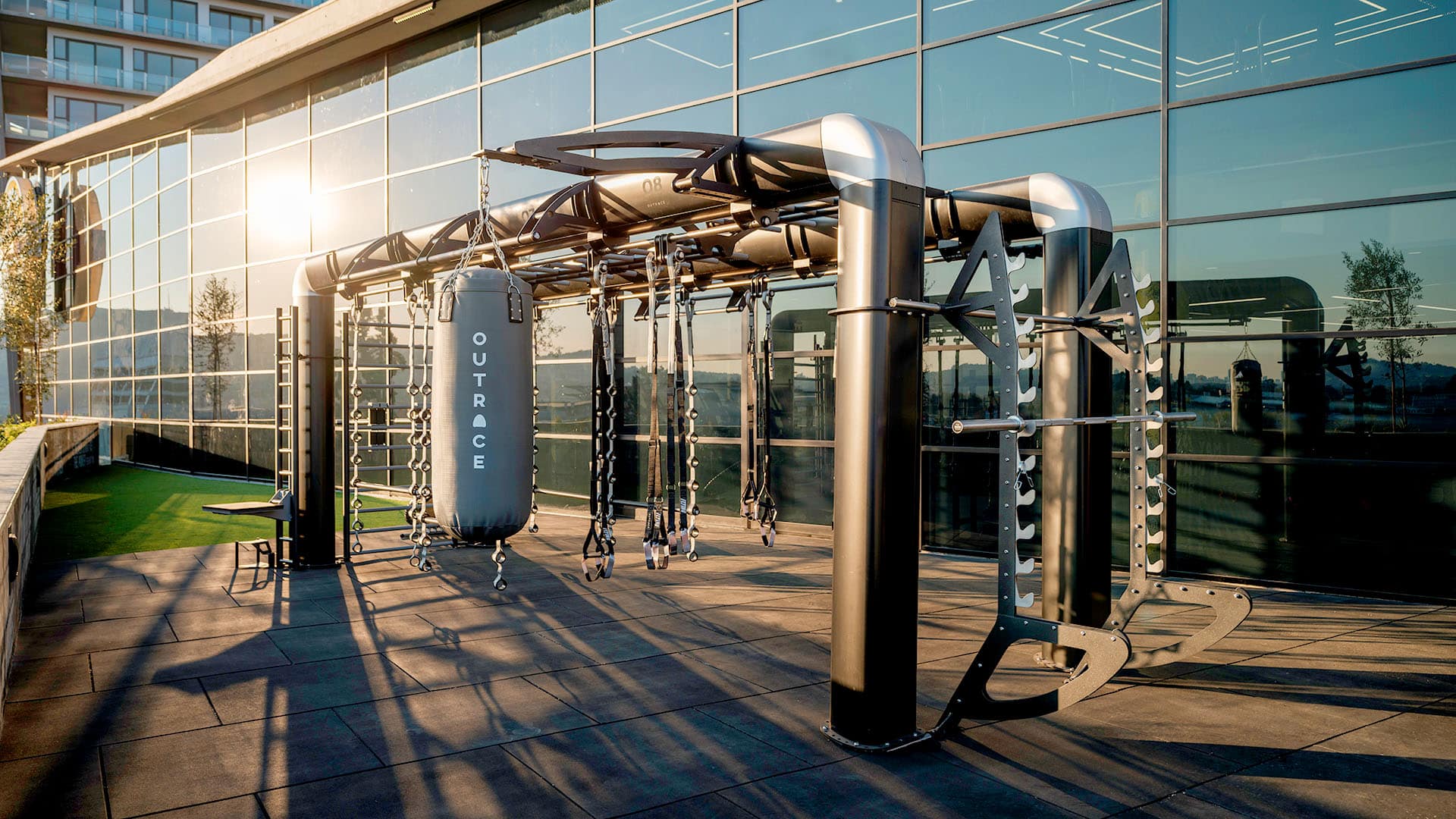

Functional Training is not a passing fad, but the logical and scientific evolution of physical training.
Rooted in rehabilitation and a deep understanding of kinesiology, it is now the most advanced methodology for optimising human performance in any context, from everyday life to high competition.
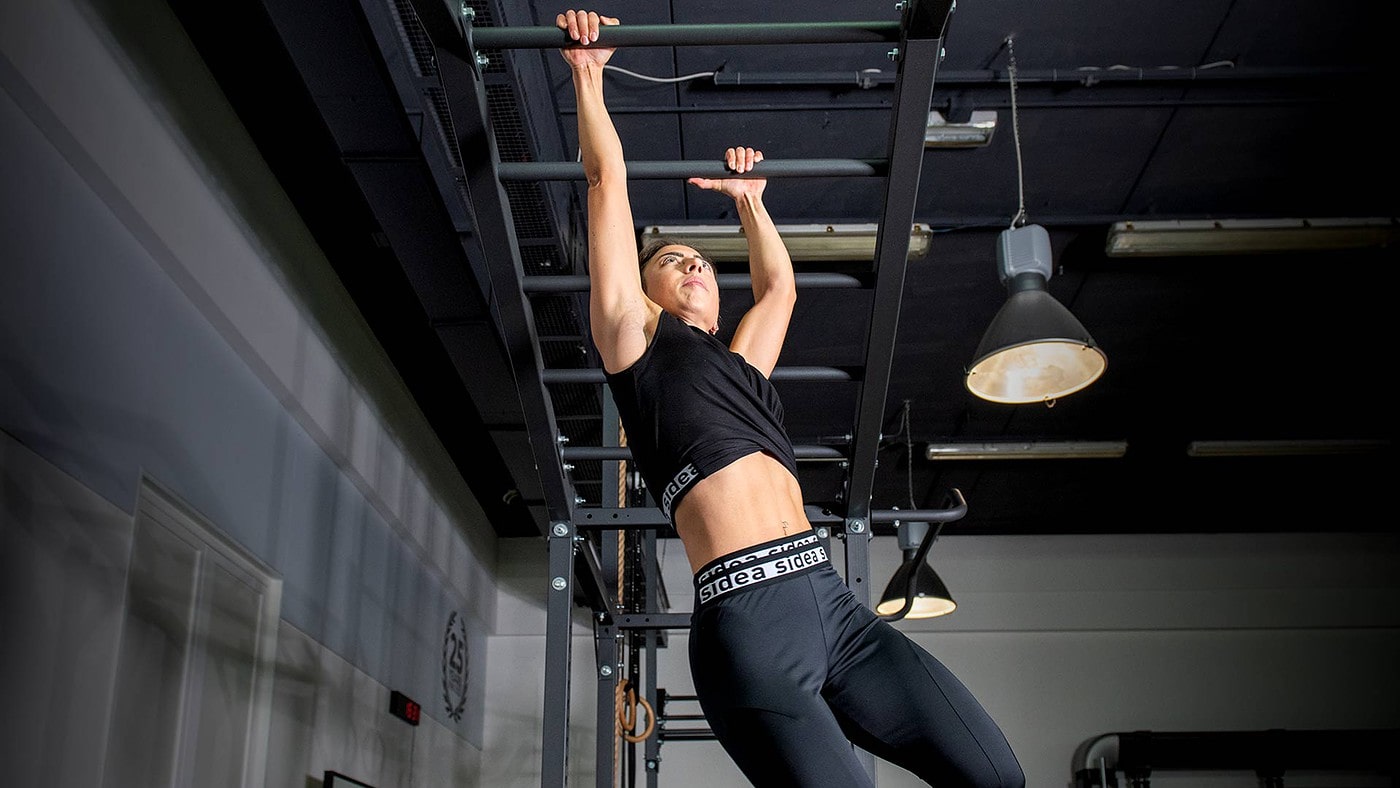
In this article, we will pragmatically analyse its genesis, its main principles and its impact, without neglecting a critical perspective.
The origins and evolution of Functional Training ,The concept of “functionality” in exercise has a complex and multi-layered history. Although today it is often associated with commercial fitness, its true birth lies in the clinical and rehabilitation field. The fundamental idea, championed by pioneers of functional training rehabilitation, was that the body should be trained not for individual muscles (muscle-centric theory), but for the integrated movements necessary for life itself. Initially, physical and occupational therapists aimed to restore basic motor skills (walking, grasping, standing up). This perspective was later brilliantly adopted and systematised in sports training by figures such as Vern Gambetta (considered one of the fathers of sport-specific training) and Michael Boyle to name but a few. They argued that strength training should mimic the dynamic and chaotic demands of the relevant sport, rather than isolating muscles in machines. Their thesis, which refuted the dogma of muscle isolation, was simple: the body does not move in isolated segments, but as a set of multiple components a constantly interconnected kinetic chain.
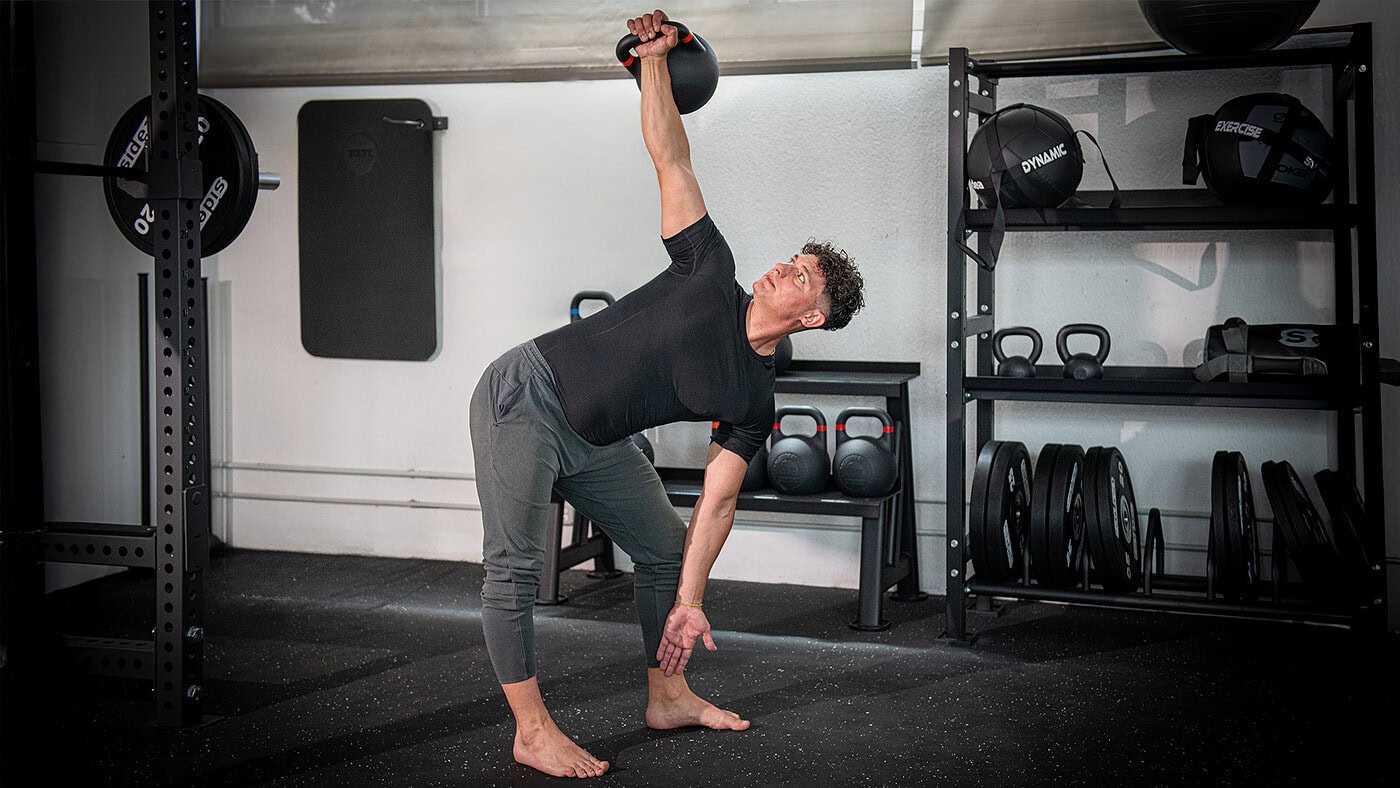
Functional Training requires a thorough initial assessment (as advocated by Gray Cook with the FMS - Functional Movement Screen) to identify dysfunctions before loading the movement. The commitment of SIDEA, a European market leader in the design and marketing of functional training tools, is absolute. In fact, the effectiveness of Functional Training is strictly dependent on the tools used. In a critical approach, it is essential that the equipment does not constrain the body into fixed trajectories, but allows and stimulates three-dimensional freedom of movement. SIDEA is strategically positioned, providing equipment ranging from large equipment to small equipment, and in the last 15 years has put a great deal of effort into research and development in the latter, spanning all domains of human movement: from proprioceptive (such as the Freeman board), stabilising (duneball), reactive (flowbag), to integrative (si-bag and giant ball) and even exploratory equipment such as the si-mace kettlebell and finally the sense-perceptive equipment such as the speed ladder and plyo box.
All those tools that, by their very nature, require the body to stabilise and move in non-linear ways, responding perfectly to the criteria of multi-planarity and inertial force management, pillars of modern functional training.
The Key Criteria of Scientific Functional Training The technical approach to Functional Training is based on a series of interconnected kinesiological principles, all aimed at improving the efficiency and resilience of the neuromuscular system.
- The Functional Trinity: Mobility, Stability and Integration The true success of Functional Training is based on proper integration between body segments, a concept summarised in the Functional Trinity, a fundamental pillar for injury prevention and performance optimisation. This nomenclature is central to movement assessment and correction approaches such as the Joint-by-Joint Approach popularised by Gray Cook and Michael Boyle. This “trinity” identifies the three crucial areas that must work in harmony: 1. Hip Mobility: The hip is intended to be a primary centre of movement and power. Its ability to move freely in all three planes is vital to performing patterns such as the Squat or Lunge safely. Limited hip mobility forces the neighbouring joints (knee and lower back) to compensate, generating stress. 2. Core Stability: The core represents the ability to resist movement and rotation (anti-movement function). It acts as a bridge that transfers force from the lower limbs to the upper limbs. A lack of stability results in “dispersion” of energy and loss of power. 3. Scapular Retraction/Stability: The shoulder joint needs a stable “platform” (the scapula) from which to operate. Scapular retraction is crucial to stabilise the shoulder during push (press) or pull (pull) movements, preventing instability.
- Proprioception and Dynamic Stability Proprioception is the body's ability to perceive its own position and movement in space, a crucial element according to Psychomotricity and the study of movement. It is not a passive sense, but a continuous feedback system based on mechanoreceptors that inform the Central Nervous System. - In Functional Training: Training on unstable surfaces or with asymmetric loads (e.g. single-leg deadlifts) does not aim to make balance more difficult, but to refine the neuromuscular response, transforming static stability into dynamic stability during movement.
- Multi-Articularity and Multi-Planarity The human body moves in three spatial planes and involves several joints simultaneously: Multi-Articularity: Synergic involvement of several joints (e.g. Squat involves ankle, knee and hip). Multi-Planarity: Movement that crosses the three cardinal axes: Sagittal (Flexion/Extension, e.g. Squat), Frontal (Abduction/Adduction, e.g. Lateral Lunges) and Transverse (Rotation, e.g. Woodchop). Alberto Andorlini, in the context of functional training in Italy, emphasises that most injuries and poor performance result from a deficit in the transverse plane, i.e. rotation management. True Functional Training trains the body not only to generate force, but above all to resist and control unwanted rotational forces.
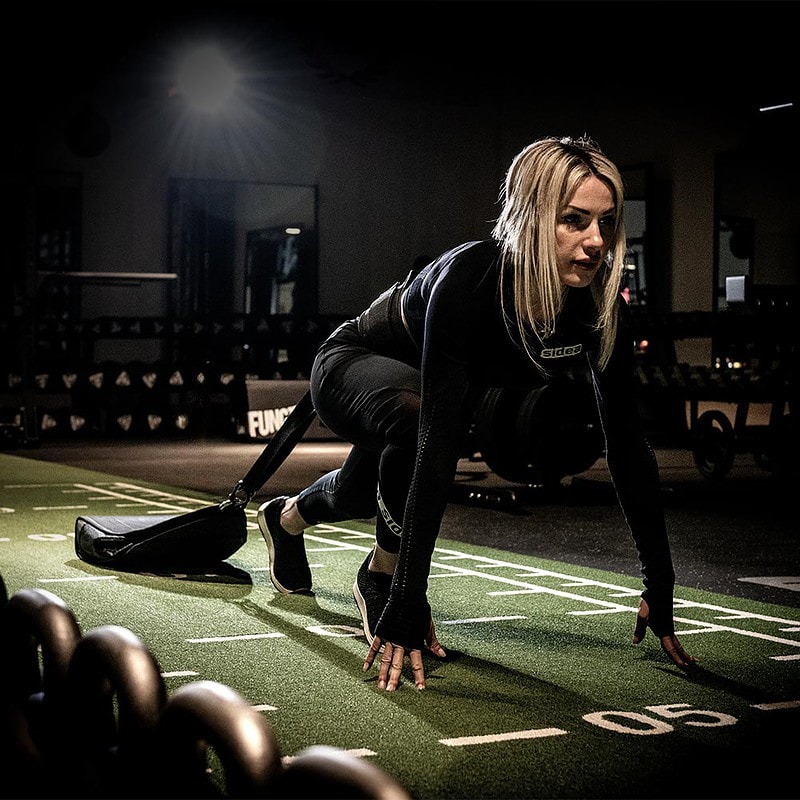
- Managing Acceleration, Deceleration and Inertial Forces Life and sport are characterised by rapid action-reaction cycles. Technical Functional Training (Boyle, Gambetta) emphasises eccentric control. Key Principle: A muscle is functional if it can effectively decelerate the movement and absorb inertial forces (eccentric phase). This also includes the management of Ground Reaction Force (GRF) and Gravity, fundamental physical forces. - Example: Landing from a jump (Deceleration), or throwing a giant-med-ball and then catching it quickly (Absorbing and Releasing Inertial Forces). Efficiency in braking is often more critical for injury prevention than the ability to accelerate alone.

Despite its theoretical soundness, Functional Training is often misinterpreted.
Pro
- Increased Transferability: Maximum correlation between exercise in the gym and performance in the real or sporting world.
- Neuromuscular Integration: Improves communication between the nervous and muscular systems (Coordination).
- Injury Prevention: By training complex motor patterns and dynamic stability, it reduces the risk of dysfunctions and injuries.
Against
- Excessive generalisation and misinterpretation, there is a tendency to think that “everything” is functional.
the thesis that Functional Training should completely replace more traditional strength and hypertrophy training. An athlete or individual requiring significant gains in maximal strength or muscle mass will still have to resort to isolation techniques and high loads. Functional Training is not the negation of strength, but its optimised application.
Functional Periodisation The future of Functional Training lies in a periodisation that integrates:
- Corrective Phase: Using low-load exercises to restore mobility and stability of the segments (the initial rehabilitation approach), proprioceptive, stabilising and reactive tools will be preferred for this intervention.
- Fundamental Phase (Functional Strength): Multi-articular exercises in the kinetic chain (Squats, Deadlifts, Overhead Press), mainly integrative tools.
- Transferable Phase (Functional Power): Integration of velocity and inertial forces (ballistics, plyometrics, speed-work), predominant use of exploratory and sense-perceptual tools, applying all the kinesiological criteria outlined.
In conclusion: Functional Training, as a scientific and rigorous approach, is indispensable for anyone who wants not only to be strong, but also to move better and live a motor-efficient life. The choice of tools, such as those provided by SIDEA, a European market leader in the design of functional tools, becomes crucial for transforming the theoretical principle into effective and safe motor practice, thanks to the enormous investments made by the company in terms of research and development, and partnerships with training schools such as Strong First, which take the principles set out in these pages to a high level and highlight all the advantages that functional training brings to this fundamental area of athletic preparation.
Dr. M. Maraldi
Reference sources and authors:
- Gambetta, V. (2007). Athletic Development: The Art & Science of Functional Sports Conditioning. Human Kinetics.
- Boyle, M. (2016). New Functional Training for Sports. Human Kinetics.
- Cook, G. (2010). Movement: Functional Movement Systems: Screening, Assessment, Corrective Strategies.
- Andorlini, A. (2013) Coaching Movement.
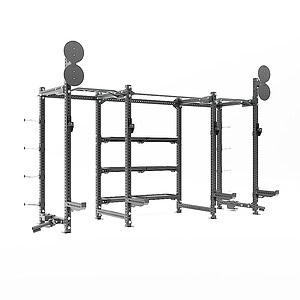
High Performance Packs
8.174,00€ FEES and TAXES NOT INCLUDED
Questo prodotto ha più varianti. Le opzioni possono essere scelte nella pagina del prodotto
Fitness balls
53,38€ 96,84€Fascia di prezzo: da 53,38€ a 96,84€ FEES and TAXES NOT INCLUDED
Questo prodotto ha più varianti. Le opzioni possono essere scelte nella pagina del prodotto



HISTORY OF TRAINING: THE SCIENCE OF MOVEMENT
Strength training and its evolution throughout history: from the athletes of ancient Greece to modern [...]
16
Oct
Oct
Hex Bar: what it is, which exercises to do and how to choose the right one
Strength, stability and freedom of movement: find out why the Hex Bar is an interesting alternative to [...]
09
Oct
Oct
Does strength come from the ground? The Military Press and the body’s hidden synergy
Before you can push, you need something to push against. Before force comes support. [...]
29
Sep
Sep
PHA and Jump Sets on the 9089K1 Cable Station: train strength, circulation and muscle density all in one station
PHA and Jump Sets on the 9089K1 Cable Station: build strength, improve microcirculation by increasing [...]
28
Jul
Jul
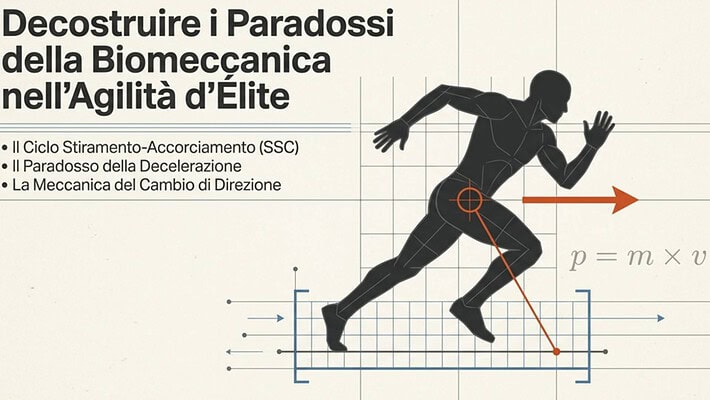
Elite agility: why changing direction isn’t just a matter of strength
Introduction: Agility is not just about being quick on your feet. When we talk about agility, the temptation [...]
30
Jun
Jun

Maximum strength and team sports
When strength becomes performance: Dr Mauro Franzetti’s contribution to the Summit of Strength [...]
26
Jun
Jun
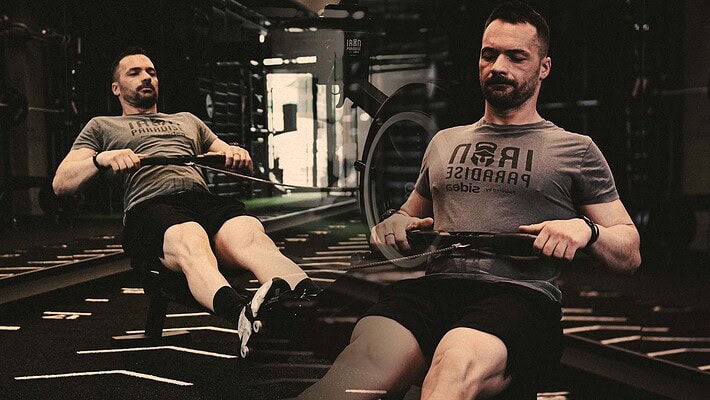
ATHX Games 2026: what it is, how it works and how to prepare for the hybrid competition
The evolution of HYBRID training In recent years, competitive fitness has evolved towards formats that are increasingly [...]
18
Jun
Jun
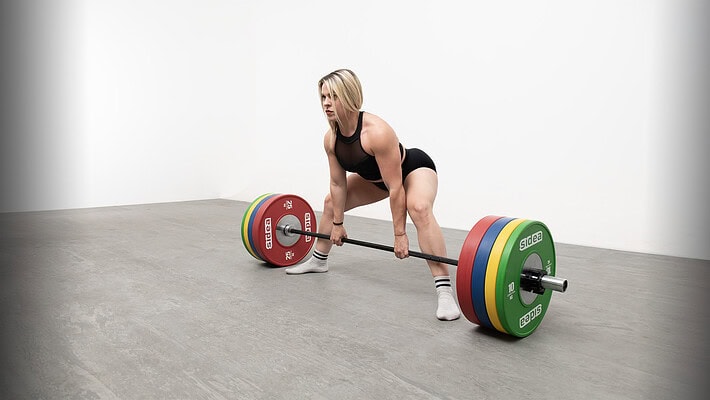
Definitive Guide to Bumper Plate Selection: How Not to Get Your First Set Wrong and Optimise Performance
The truth that no one tells you? Choosing a bumper disc is not just a matter [...]
29
May
May
 Defibrillator AED
 Gift CardSidea
 Spare parts