
















-
×
 0212W SiStep White
1 × 105,23€
0212W SiStep White
1 × 105,23€ -
×
 0230/1 Aerobic Step – 16 steps
1 × 303,48€
0230/1 Aerobic Step – 16 steps
1 × 303,48€
A journey into the myofascial system that is revolutionising strength, movement and performance - from 1 February 2026, Cesena Fiera Multifunctional Centre
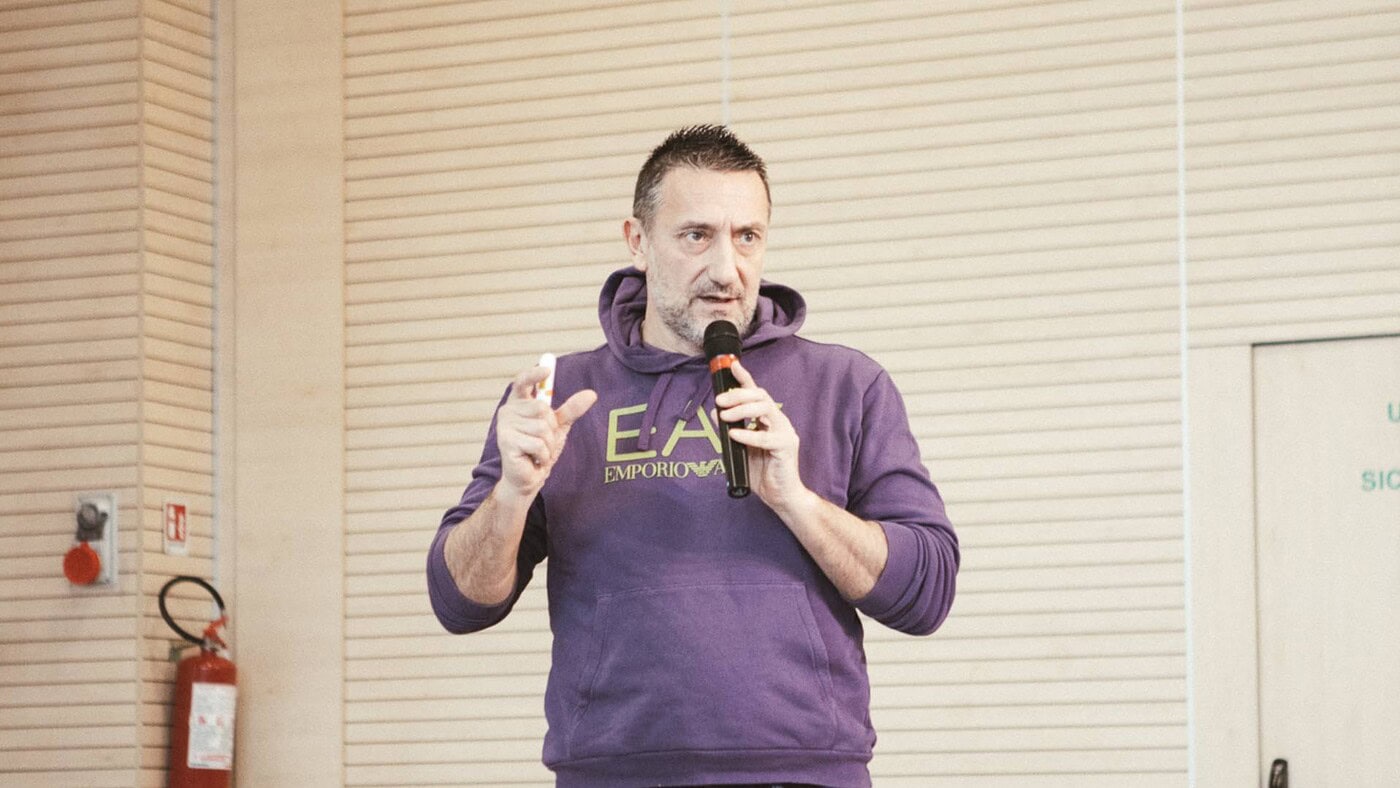
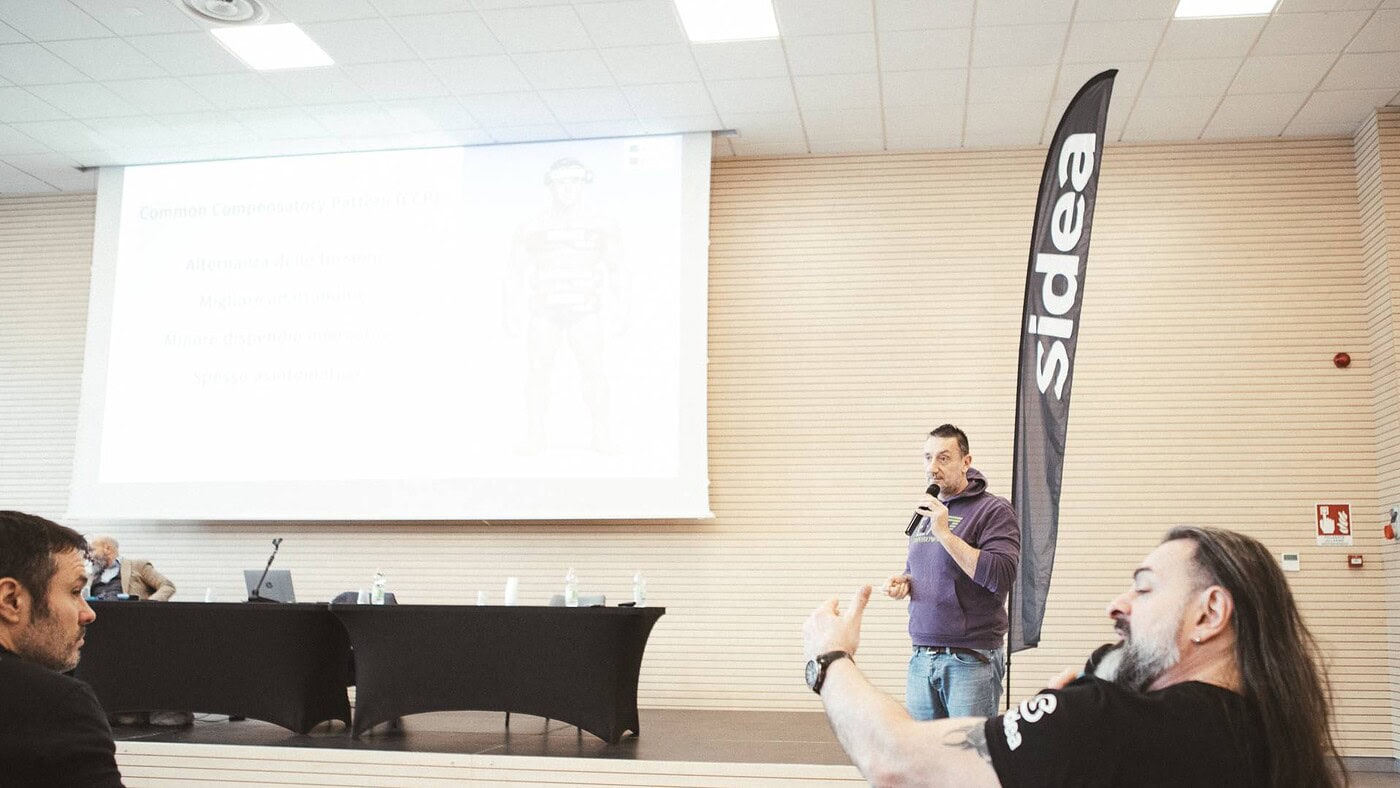
Cesena, Emilia-Romagna - When we observe an athletic gesture, we are not just seeing muscles working. We are seeing the internal organisation of the body at that precise instant. Strength is always the consequence, never the starting point. These are the words with which Dr. Luca Franzon - osteopath D.O.M.R.O.I., graduate in Motor Sciences and lecturer at the second level Master's Degree Course in Sport Osteopathy - opened his lectio magistralis at the Summit of Strength 2026, the StrongFirst Italy training event held on Sunday 1 February 2026 at the Cesena Fiera Multifunctional Centre, with the technical sponsorship of SIDEA, a leading company in functional training and the scientific dissemination of movement in Italy.
Beyond the isolated muscle: the body as an integrated system
Dr Franzon's presentation, entitled “Structure Governs Function”, starts from an assumption that challenges the reductionist approach still all too common in the world of fitness and physiotherapy: function emerges from the organisation of the structure, not from the individual muscle. At a time when training often focuses on the hypertrophy of individual muscle groups, Franzon reminds us that the human body is an integrated system in which the musculoskeletal system, fascial system, nervous system and respiratory system dialogue incessantly.
«Strength is a system output, not just a muscle» - Dr Luca Franzon
This seemingly simple principle has profound implications: every functional adaptation requires an adequate structural basis. Without an efficient structure, function is compensated for - and compensation, in the long run, turns into pain, stiffness and loss of performance.
Joint mobility: scientific definition and role of the fascial system
One of the pillars of the intervention was the redefinition of the concept of mobility. For Franzon, joint mobility is not simply “being flexible”: it is the ability of a joint or joint chain to move actively and passively through its physiological range of motion. This capacity is determined by the interaction between:
- joint geometry
- soft tissue tension (muscles, tendons, ligaments and fascia)
- neurological control
This is where the fascial system comes into play, often overlooked but central to Franzon's philosophy. The fascia is not just a passive “shell”: it is a sensory organ that modulates tone, timing and motor control through proprioceptive input; it is adaptive - repetitive loads and immobility make it rigid, while varied movement keeps it functional - and, above all, it is the means by which a significant proportion of force is transmitted laterally, not just along the tendons.
«Movement arises from an integrated unit: muscle + fascia + nervous system, not from the muscle in isolation»
Myofascial chains: the hidden language of the body
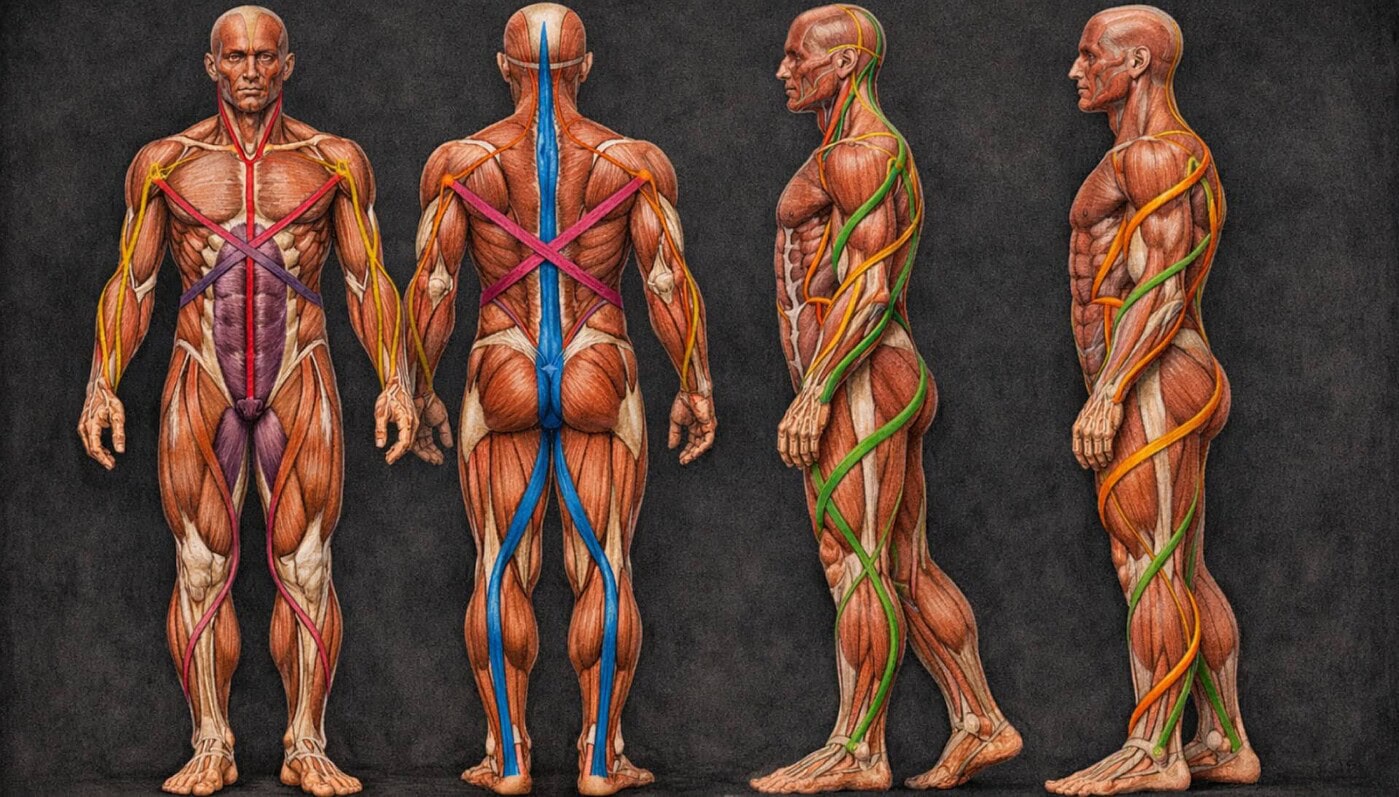
The heart of the presentation was devoted to myofascial chains - structures of tissue continuity that connect the body from top to bottom and right to left, a concept developed by pioneers such as Françoise Mézières, Leopold Busquet and Thomas Myers.
Franzon explained the main static-dynamic chains:
Table
| Chain | Route | Main function |
| Rear chain | From the sole of the foot to the skin of the head | Eccentric flexion management, upright posture maintenance |
| Front chain | From the sole of the foot to the muscles of mastication | Trunk flexion, iliac retroversion |
| Spiral chains | Wrapping the body in a double helix | Rotation, tilting, three-dimensional movements |
| Side chain | From fibula to head | Frontal stabilisation, tilt management |
«The band is spiral-shaped because the human body is designed to handle three-dimensional forces, not linear movements,» Franzon pointed out. «The spiral is not an aesthetic choice of nature, but the most efficient mechanical solution for stability, adaptability and energy savings.».
Screening according to Zink: reading the body like an open book
One of the most innovative parts of the intervention was the practical application of the Gordon Zink's fascial pattern, an osteopathic model that reads fascial tensions through four body “diaphragms”: cranium, scapular girdle, thoracic diaphragm and pelvis.
Franzon explained how the body tends to organise itself into alternating torsion chains - the Common Compensatory Pattern (CCP) - which under healthy conditions allow better adaptability and less energy expenditure. When these twists stop alternating and align in the same direction, one enters the Non-Compensatory Pattern (PCN), associated with reduced adaptive capacity, increased risk of pain and chronic dysfunction.
Table
| Pattern | Features | Clinical reading |
| CCP (Plywood) | Alternating torsions at all 4 levels, fluid movement, preserved nasal breathing | Stable system, wide adaptive margin |
| NCP (Uncompensated) | Aligned torsions, rigidity, compensation visible even at rest | Fragility under stress, risk of dysfunction |
«Zink's fascial pattern allows you to understand how the athlete distributes forces, where he compensates and how much adaptive margin he still has,» explained Franzon, presenting rapid functional tests - from Chin Tuck to the’Ear to Shoulder, from arm elevation to the squat - discriminating between compensated and uncompensated patterns within seconds, even under load.
The SIDEA philosophy: movement science for professionals and enthusiasts
Dr Franzon's speech at the Summit of Strength was not only a moment of advanced training for professionals: it was yet another confirmation of SIDEA's commitment to promoting a movement culture based on science and evidence.
SIDEA - an Italian company with consolidated leadership in functional training on a global level - has always placed at the centre of its mission the principle that movement is culture, is health, is performance. Sponsoring an event such as the Summit of Strength, bringing figures of the calibre of Dr Franzon to the stage, means investing in the ongoing education of trainers, physiotherapists, osteopaths and enthusiasts, offering them concrete tools to read the human body with greater precision and respect.
The SIDEA philosophy is based on an approach that does not separate scientific research from daily practice: the tools, protocols and methodologies proposed are designed to be functional for the real body - one made up of fascia, myofascial chains and neurological patterns, not just isolated muscles. In this sense, the partnership with StrongFirst and the presence of speakers such as Franzon represent a perfect bridge between the academic-osteopathic world and that of strength training.
Why this changes everything: from theory to practice
What Dr Franzon has brought to Cesena is not just a technical update: it is a paradigm shift. If structure governs function, then training strength without first ensuring an efficient structure means building on an unstable foundation. It means producing compensations that, sooner or later, will turn into limitations or injuries.
For the athlete, this translates into greater awareness of their body and the ability to recognise when a movement is “genuine” and when it is “compensated”. For the coach, it means having the tools to personalise the approach, respecting the fascial and neurological history of the person in front of him/her. For the physiotherapist and osteopath, it means being able to read pain not as a localised problem, but as the expression of a broader structural pattern.
As Franzon mentioned, quoting Nietzsche: «There is more reason in your body than in your best wisdom». Perhaps it is time to listen more carefully.
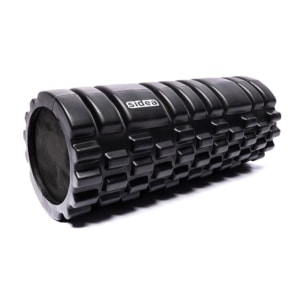
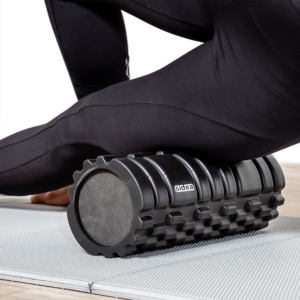
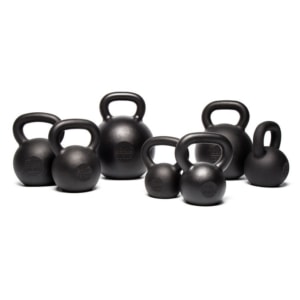
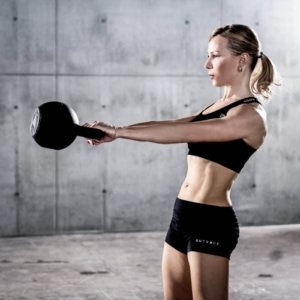
Kettlebell Strong Competition & vinyl
30,50€ 358,38€Fascia di prezzo: da 30,50€ a 358,38€ FEES and TAXES NOT INCLUDED
Questo prodotto ha più varianti. Le opzioni possono essere scelte nella pagina del prodotto



Frequently asked questions (FAQ)
What is the Summit of Strength? It is StrongFirst Italy's annual training event dedicated to strength training with kettlebells, bodyweight and functional movement. The 2026 edition was held in Cesena on 1 February.
Who is Dr. Luca Franzon? Osteopath D.O.M.R.O.I., graduated in Motor Sciences, lecturer at the Master of Sport Osteopathy and specialist in myofascial system and functional screening.
What are myofascial chains? They are structures of tissue continuity that connect muscles, fascia and joints in functional “tracks”, allowing the body to distribute forces and movements in an integrated manner.
What is the Zink Test? It is an osteopathic assessment tool that analyses fascial rotational preferences in four transition zones of the body to identify compensated (CCP) or uncompensated (NCP) patterns.
What “structure governs function” means”? It is the principle that the body's ability to move and generate force depends first and foremost on structural organisation (joints, fasciae, nervous system), not just the strength of individual muscles.
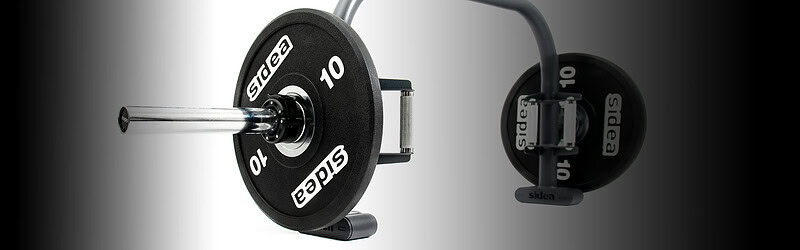
Hex Bar: what it is, which exercises to do and how to choose the right one
Strength, stability and freedom of movement: find out why the Hex Bar is an interesting alternative to [...]
09
Oct
Oct
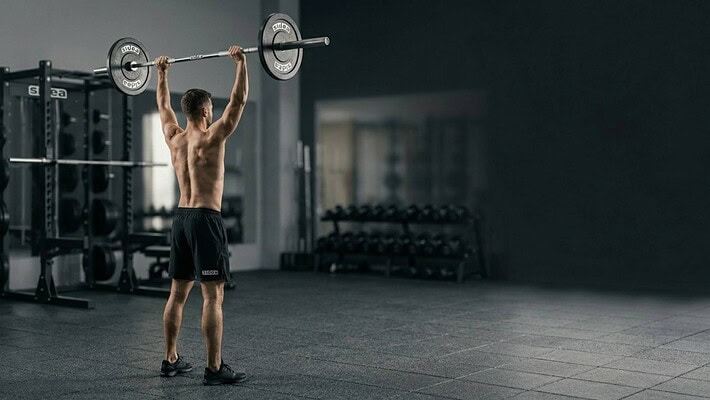
Does strength come from the ground? The Military Press and the body’s hidden synergy
Before you can push, you need something to push against. Before force comes support. [...]
29
Sep
Sep
PHA and Jump Sets on the 9089K1 Cable Station: train strength, circulation and muscle density all in one station
PHA and Jump Sets on the 9089K1 Cable Station: build strength, improve microcirculation by increasing [...]
28
Jul
Jul
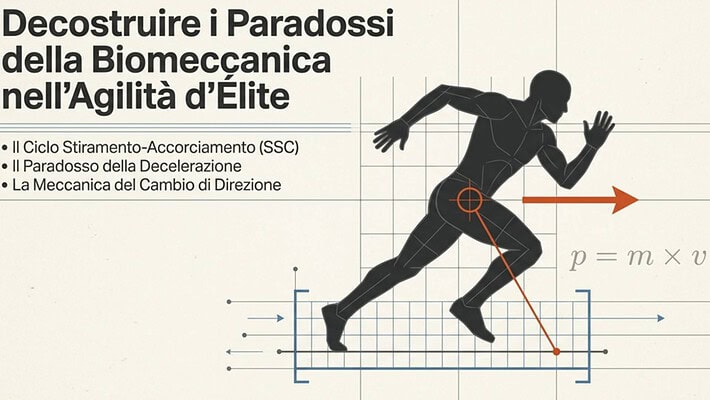
Elite agility: why changing direction isn’t just a matter of strength
Introduction: Agility is not just about being quick on your feet. When we talk about agility, the temptation [...]
30
Jun
Jun
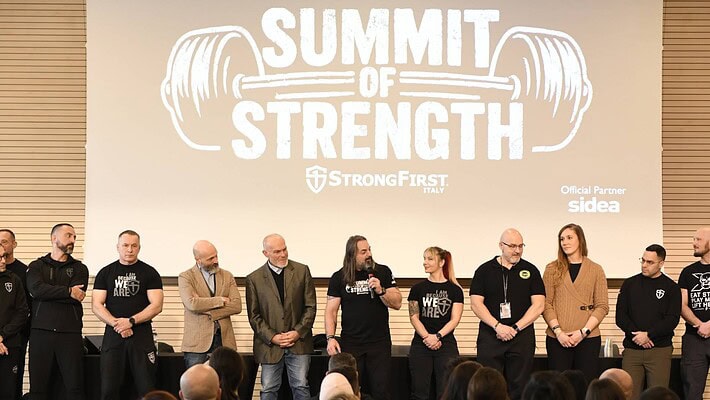
Maximum strength and team sports
When strength becomes performance: Dr Mauro Franzetti’s contribution to the Summit of Strength [...]
26
Jun
Jun
ATHX Games 2026: what it is, how it works and how to prepare for the hybrid competition
The evolution of HYBRID training In recent years, competitive fitness has evolved towards formats that are increasingly [...]
18
Jun
Jun
Definitive Guide to Bumper Plate Selection: How Not to Get Your First Set Wrong and Optimise Performance
The truth that no one tells you? Choosing a bumper disc is not just a matter [...]
29
May
May
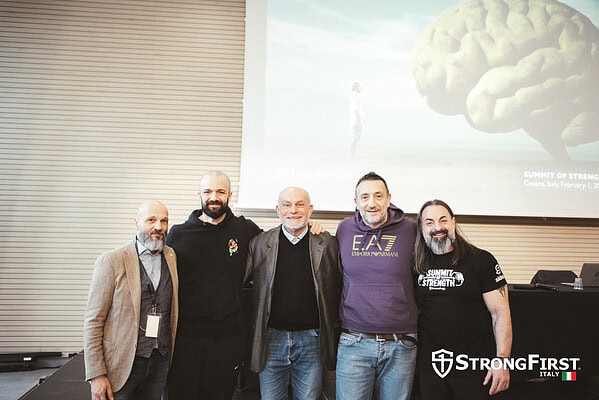
Structure Governs Function: Dr Luca Franzon at the Summit of Strength in Cesena
A journey into the myofascial system that is revolutionising strength, movement and performance - from 1 [...]
26
May
May
 Defibrillator AED
 Gift CardSidea
 Spare parts