










-
×
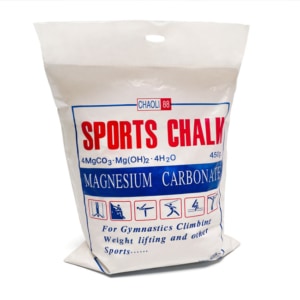 1101 Powder Chalk
2 × 20,59€
1101 Powder Chalk
2 × 20,59€ -
×
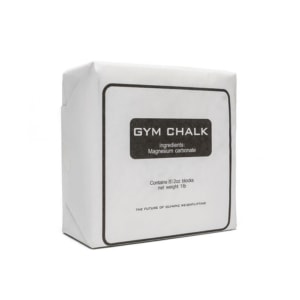 1102 Block Chalk
2 × 22,88€
1102 Block Chalk
2 × 22,88€


Subscribe to our newsletter to receive news, promotions and insights into the world of Sidea



 1101 Powder Chalk
1102 Block Chalk
1101 Powder Chalk
1102 Block Chalk
Deliveries may be delayed due to industrial action in the transport sector
Deliveries may be delayed due to industrial action in the transport sector
Showing all 3 results
Magnesium carbonate (magnesite) is a technical aid that reduces friction between the hand and the tool, counteracting sweat and stabilising the grip under any high-load conditions.
Available in three formats: loose powder, compact block and liquid chalk
Used in weightlifting, powerlifting, calisthenics and climbing
Compatible with barbells, rings, pull-up bars and kettlebells
Magnesium carbonate — commonly known as chalk or magnesite — is an inorganic compound (MgCO₃) that absorbs surface moisture from the hand, thereby increasing the coefficient of friction against any metal or wooden surface. It is not an optional accessory for those working with submaximal loads: it is a technical tool that tangibly changes the outcome of a set. The Sidea range comprises three distinct solutions — powder, block and liquid — designed for different contexts of use, from training in a professional gym to a home gym, from a CrossFit box to an athletic training centre.
Anyone who regularly trains with barbells at weights exceeding 70–75% of their maximum is well aware of the problem: the grip gives out before the target muscles do. Chalk solves precisely this problem, and can be used in a wide variety of situations.
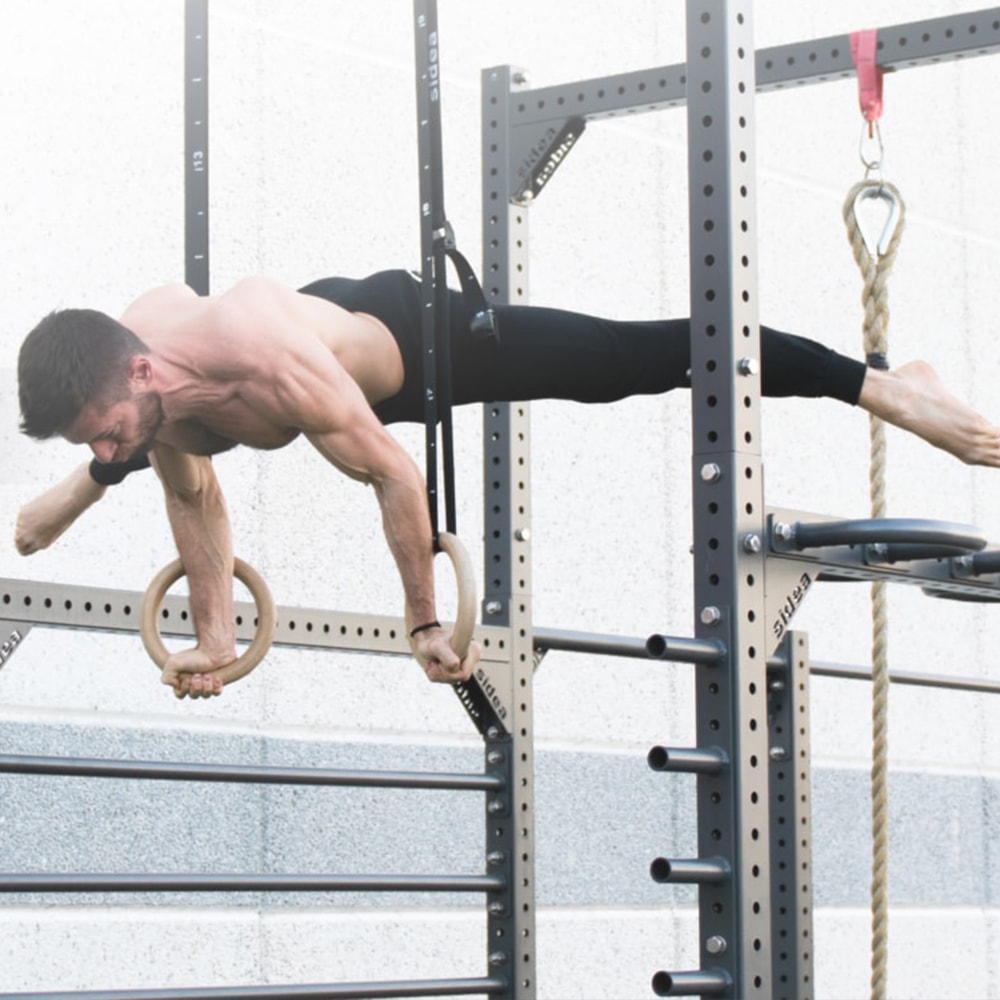
Weightlifters — whether in Olympic weightlifting or powerlifting — systematically apply it to their hands before every major attempt. Athletes in calisthenics training They apply it to the bars and rings to maintain control during weighted pull-ups, muscle-ups and strength exercises on the rings. In CrossFit boxes, it comes into play in any WOD involving a high volume of pulling movements: pull-ups, toes-to-bar and touch-and-go deadlifts.
Fitness coaches who work with athletes in combat sports or team sports find that liquid chalk offers a quicker and less environmentally harmful solution. Those who train in shared spaces or home gyms, where dust dispersion is a practical issue, often opt for the liquid or block format.
The choice of format depends on three factors: the environmental context, the frequency of use and the type of tool.
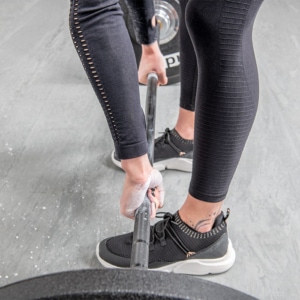
Powdered chalk (1101): this is the classic format, the one found in any competitive gym. It is applied by rubbing it into the palm and fingers; it spreads quickly and provides even coverage. It is best suited for use with a dedicated chalk box, which contains the dust. Ideal for intensive sessions on barbell accessories and for high-volume work where it is frequently reapplied between sets.
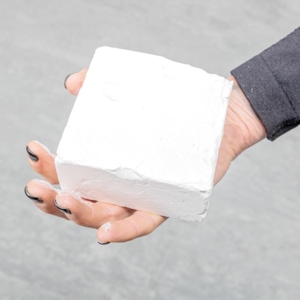
Chalk block (1102): same chemical composition as chalk powder, but in a compressed solid form. It is rubbed directly onto the palm of the hand or onto the climbing hold. It produces less dust than loose powder and can be applied with greater precision. Commonly used in climbing and in gyms where the aim is to minimise airborne dust without compromising on the performance of traditional chalk.
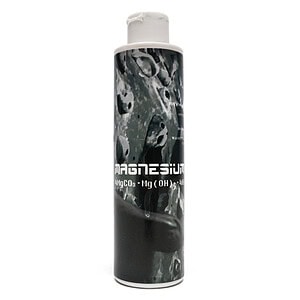
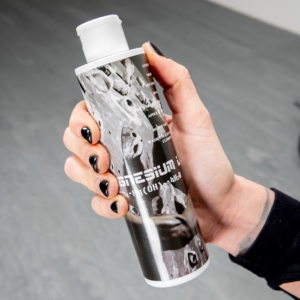
Liquid chalk (1103): magnesium carbonate in an alcoholic solution. It is applied like a gel; the alcohol evaporates in a few seconds, leaving an even layer of magnesite on the skin. It does not produce dust, does not disperse into the environment, and is suitable for gyms that ban powdered chalk. The coating lasts longer than the loose form and is particularly useful during long sessions or in situations where you do not want to interrupt your rhythm to reapply it. Also suitable for kettlebells, rings and fixed bars.
One aspect that is often overlooked: chalk is no substitute for gloves, nor are gloves a substitute for chalk. Gloves reduce tactile sensitivity on the hold and increase the perceived diameter of the grip. Chalk keeps this sensitivity intact. For those working on technical moves, the difference is significant.
The Sidea range covers all three formats with dedicated product codes, available as products in the catalogue:
All three products fit seamlessly into your training routine using barbells, pull-up bars and calisthenics equipment. If you’re fitting out a box or a gym and are considering where to position the chalk station, the Sidea Gym Design service can incorporate this detail into the overall layout of the space.
Sidea has been distributing professional fitness equipment since 1999 and selects each product based on technical, rather than aesthetic, criteria. Chalk is part of this approach: it is a consumable that forms part of the training routine of competitive athletes, trainers and enthusiasts with high standards. Its presence at FIBO, its partnership with StrongFirst and its distribution Luxiaojun They position Sidea within a technical ecosystem where every detail — including an accessory such as magnesium carbonate — is assessed on the basis of its actual function, not its packaging.
 Defibrillator AED
 Gift CardSidea
 Spare parts