



















Force programming without guesswork: towards a truly individual model
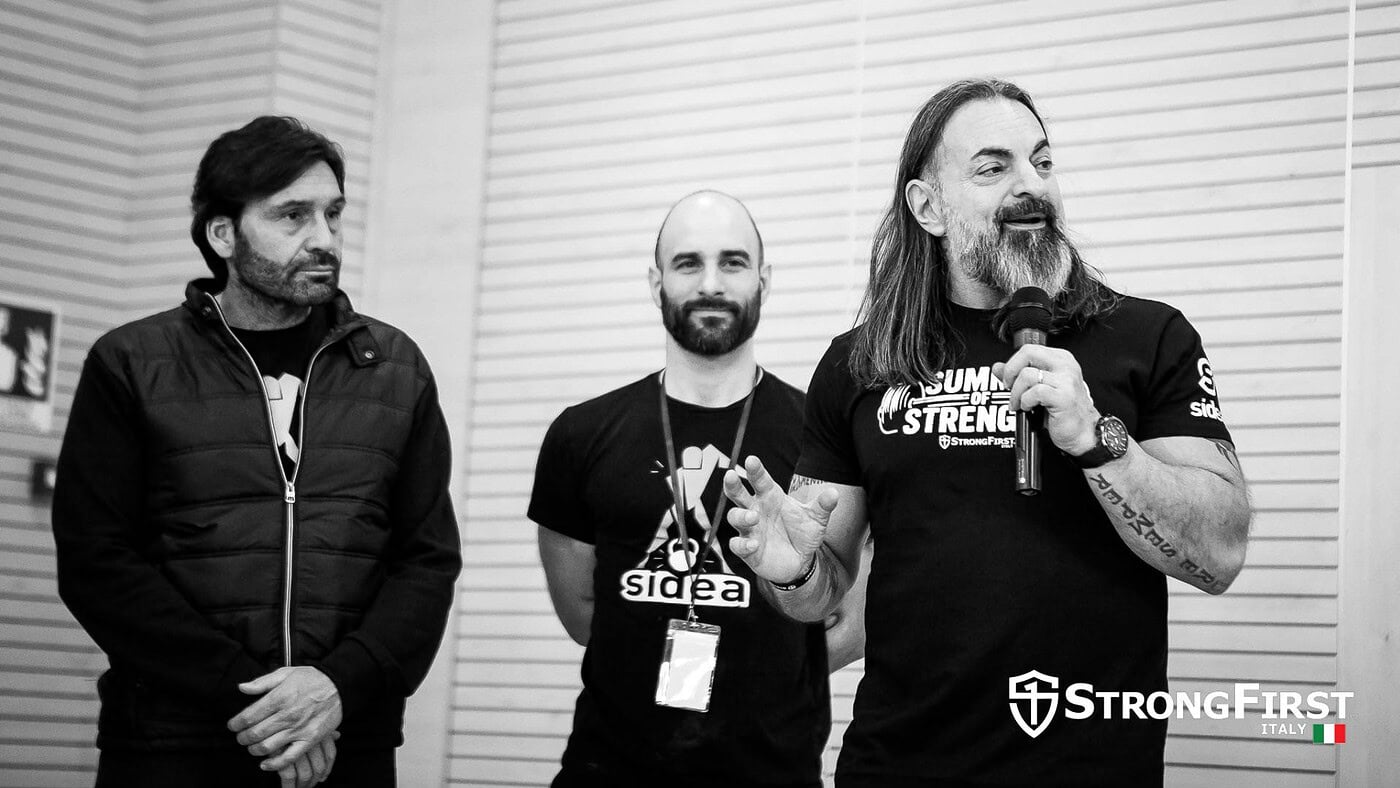
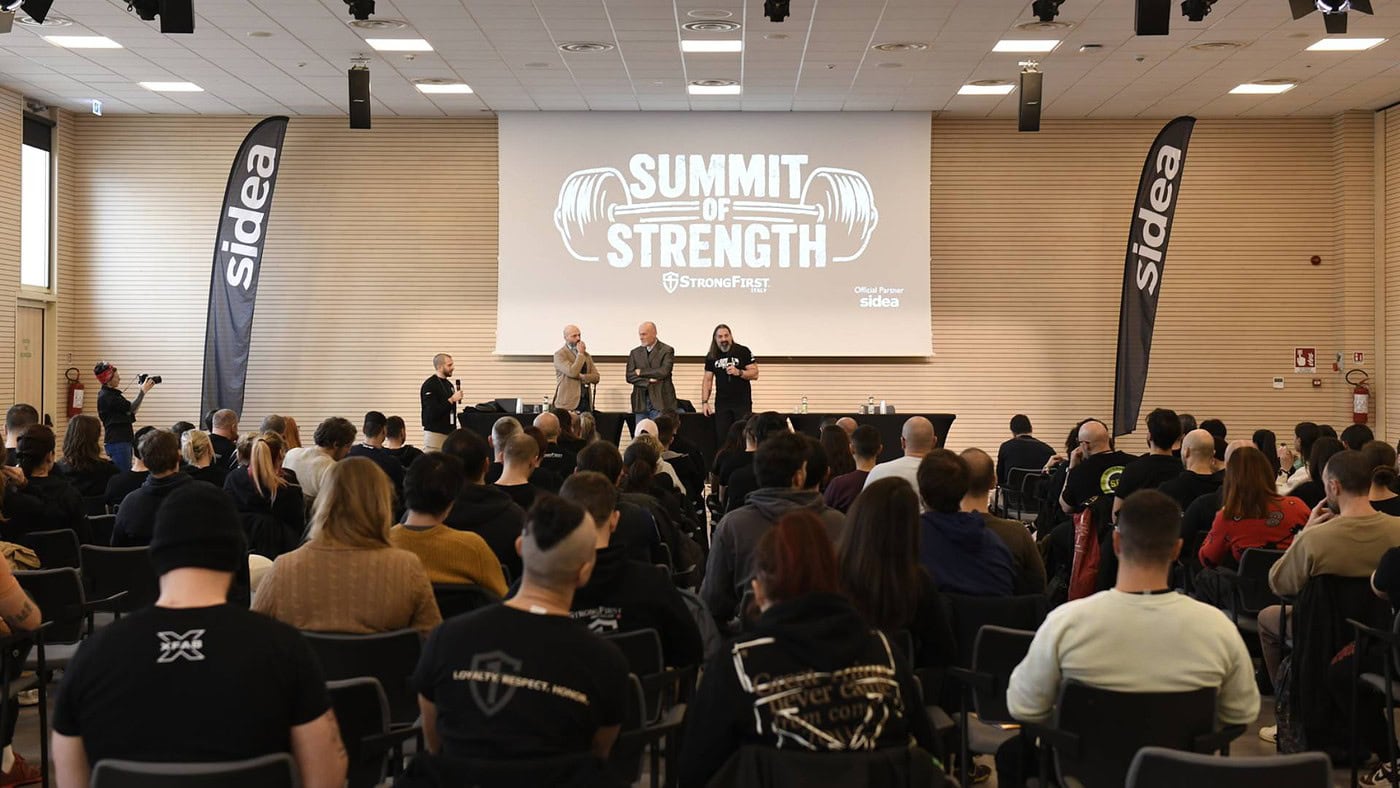
On 31 January and 1 February 2026, Cesena hosted the StrongFirst Summit of Strength 2026, a European event dedicated to strength programming and applied strength & conditioning.
Athletic preparation, training methodology and load modelling were the central themes of a discussion that brought together coaches, trainers, academics and exercise science professionals around a crucial question:
Can uncertainty in force planning be systematically reduced?
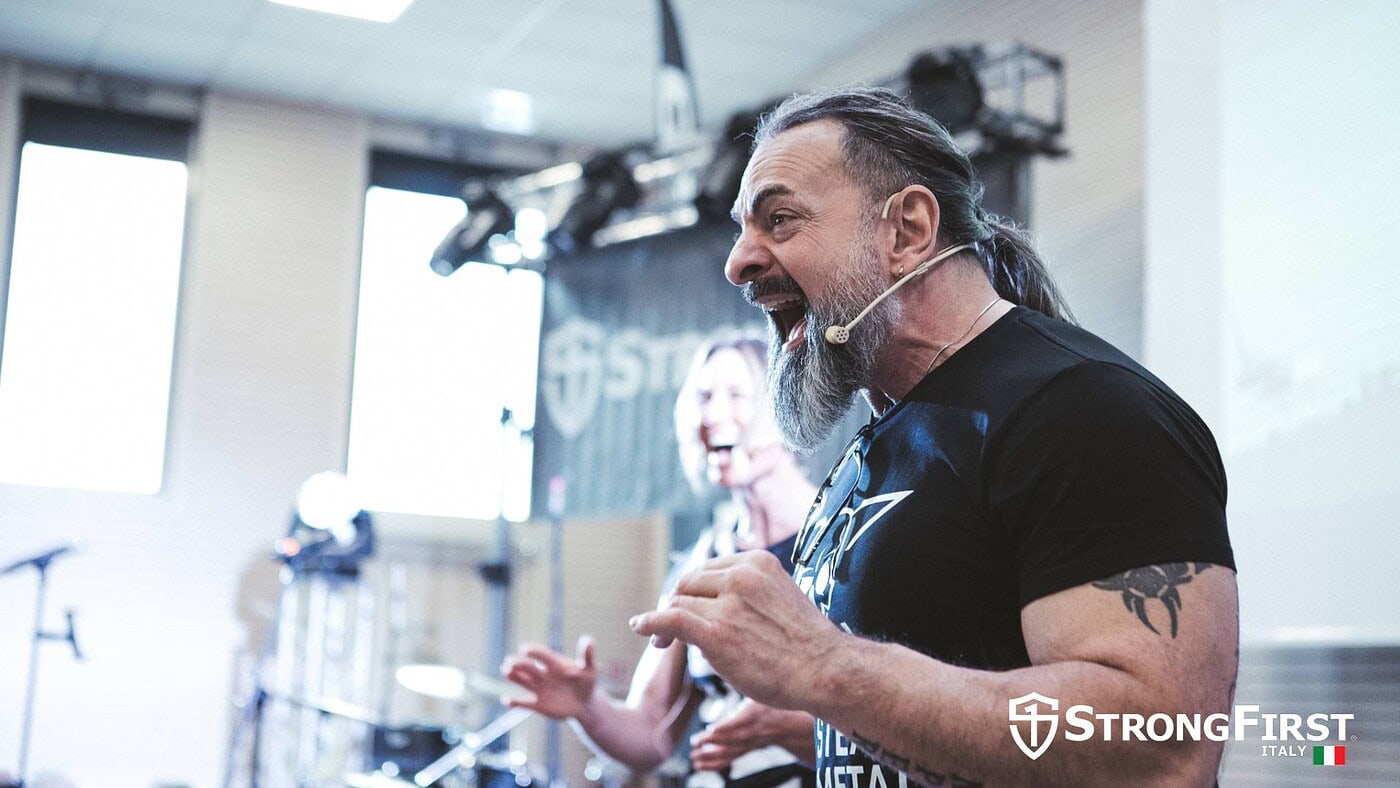
Among the most relevant speeches, that of Fabio Zonin, StrongFirst Certified Master Instructor and university lecturer, directly addressed this methodological node with his presentation:
“Programming Strength Without Guesswork - When Method Eliminates Uncertainty”.”
The implicit limitation of traditional percentages
Programming based on maximum percentages (1RM) has been an operational standard in strength training for decades.
Classic tables (NSCA and derived models) assume an average relationship between load and repetitions, for example:
- 80% ≈ 8 repetitions
- 85% ≈ 6 repetitions
- 90% ≈ 3-4 repetitions
This approach is simple, replicable and statistically based on large populations.
However, it has an implicit assumption:
the load-repeat relationship is sufficiently similar between individuals.
On the other hand, the scientific literature shows significant inter-individual variability in strength endurance at the same 1RM, as well as differences between exercises in the same athlete. Studies on RIR-based training (Helms et al.) and self-regulation have already shown how the use of fixed percentages can produce very different stimuli in terms of proximity to failure.
In other words: the percentage is accurate on load, but may be inaccurate on physiological stress.
RM 80%: a parameter to describe the individual profile
The heart of the methodological proposal presented at the Summit is the introduction of a simple but informative parameter:
RM 80%1RM
→ maximum number of technically correct repetitions that can be performed with the 80% of one's ceiling.
Why the 80%?
According to the proposed analysis:
- Between 80% and 100%, the load-repeat relationship can be approximated almost linearly.
- Metabolic interference is low compared to lower loads.
- Individual differences become apparent.
The 80% thus becomes a privileged observation point to describe the ’slope“ of the individual curve.
Two athletes, same 1RM, opposite stimuli
Let us consider a practical example.
Squat 1RM = 200 kg for both athletes.
Athlete A
RM80% = 5 repetitions
Athlete B
RM80% = 10 repetitions
According to a standard table, the 85% should correspond to about 6 repetitions.
But if we take the individual profile into account:
- For Athlete A, 85% ≈ 4WD
- For Athlete B, 85% ≈ 7RM
Prescribing 5×5 to the 85% therefore produces:
- For A: work close to or above the expected RIR target
- For B: work with a large margin, possible underestimation
Same percentage load.
Different physiological stress.
Here the “guesswork” emerges: not in the use of percentages per se, but in assuming that the curve is identical for everyone.
Δ%RM: the slope of the curve
A second concept introduced is the Δ%RM parameter, i.e. the percentage change required to change the maximum sustainable load by one repetition.
Athletes with low RM80% have steeper curves (high Δ%RM).
Athletes with high RM80% show flatter curves (reduced Δ%RM).
This describes individual load sensitivity.
Measuring this slope makes it possible to:
- better predict proximity to failure,
- normalise stress among athletes,
control the progression with greater internal consistency.
Russian Squat Routine: when average becomes a risk
One case analysed during the Summit was the famous Russian Squat Routine.
The original model implicitly assumes an average profile compatible with about 8 repetitions at 80%.
But if the real value of the athlete is:
- RM80% = 5 → early fatigue accumulation
- RM80% = 11 → early sub-stimulus and late peak
The structure of the routine is not wrong in itself.
The error lies in the unverified input.
The same programme architecture can produce opposite effects depending on the individual profile.
Recalibration: same structure, individual input
In the proposed recalibrated version:
- It measures RM80%.
- The individual curve is estimated.
- A consistent RIR target is defined over the cycle.
The structure of the programme remains unchanged.
Change the input parameter.
The result is a systematic reduction in prescriptive error and greater uniformity of relative stress among athletes.
Built Strong and Variable Overload
The same principle was applied to the Built Strong model:
- Heavy Day 85%
- Medium Day 75%
- Light Day 65%
The novelty is not in the weekly subdivision, but in the translation of the load into repetitions via ladder built on the athlete's actual profile.
The structure remains stable.
Physiology guides adaptation.
Limits and perspectives
Like any model, this approach also has aspects to consider:
- The measurement of the RM80% depends on the quality of the test.
- The curve can change over time with adaptation.
- Daily variability still requires monitoring (RIR, speed, subjective feedback).
It does not eliminate uncertainty - it reduces it.
The interesting perspective is the integration with self-regulation tools (RIR, velocity-based training), creating a hybrid system between predictive model and real-time feedback.
The cultural significance of the event
SIDEA's presence as an official partner fits into this methodological context: supporting initiatives that foster dialogue between practice, force tradition and applied research.
Investing in technical culture means contributing to the maturation of the sector, going beyond the simple replication of models and promoting an approach based on measurable parameters.
Conclusion
The message that emerged at the StrongFirst Summit is clear:
The problem is not using percentages.
The problem is hiring without measuring.
When programming is based on individual parameters:
- stress becomes more predictable,
- the most controllable progression,
- the most interpretable adaptation.
Reducing guesswork does not mean seeking mathematical perfection.
It means replacing the statistical average with the actual profile of the athlete.
And it is on this terrain - measurement, method, application - that the modern evolution of force programming is played out.

Who is Fabio Zonin
Fabio Zonin is StrongFirst Certified Master Instructor, Adjunct Professor at the Department of Biomedical Sciences, University of Padua, European Director of Operations for Flexible Steel, Original Strength Master Instructor and lecturer at the SBB Preparatory School.
His work integrates academic research, practical application and methodological development in the field of strength and conditioning programming.
He represents one of the leading figures in the dialogue between force tradition and the applied scientific model.
Dr. Michael Maraldi


Kettlebell Strong Competition & vinyl
42,70€ 256,20€Fascia di prezzo: da 42,70€ a 256,20€ FEES and TAXES NOT INCLUDED
Questo prodotto ha più varianti. Le opzioni possono essere scelte nella pagina del prodotto
-20%
PROMOTION

Smart Racks

HISTORY OF TRAINING: THE SCIENCE OF MOVEMENT
Strength training and its evolution throughout history: from the athletes of ancient Greece to modern [...]
16
Oct
Oct
Hex Bar: what it is, which exercises to do and how to choose the right one
Strength, stability and freedom of movement: find out why the Hex Bar is an interesting alternative to [...]
09
Oct
Oct
Does strength come from the ground? The Military Press and the body’s hidden synergy
Before you can push, you need something to push against. Before force comes support. [...]
29
Sep
Sep
PHA and Jump Sets on the 9089K1 Cable Station: train strength, circulation and muscle density all in one station
PHA and Jump Sets on the 9089K1 Cable Station: build strength, improve microcirculation by increasing [...]
28
Jul
Jul

Elite agility: why changing direction isn’t just a matter of strength
Introduction: Agility is not just about being quick on your feet. When we talk about agility, the temptation [...]
30
Jun
Jun
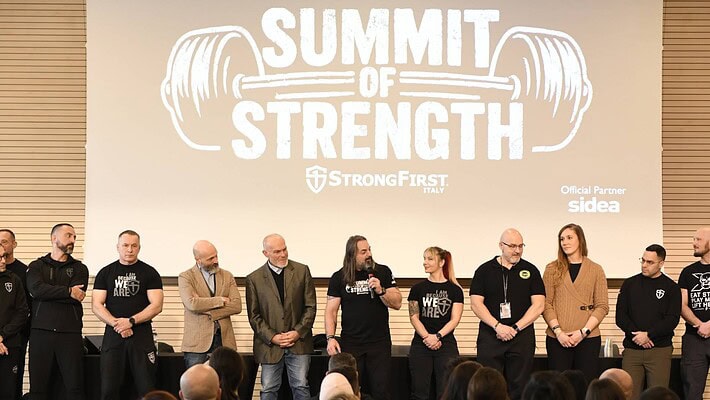
Maximum strength and team sports
When strength becomes performance: Dr Mauro Franzetti’s contribution to the Summit of Strength [...]
26
Jun
Jun
ATHX Games 2026: what it is, how it works and how to prepare for the hybrid competition
The evolution of HYBRID training In recent years, competitive fitness has evolved towards formats that are increasingly [...]
18
Jun
Jun
Definitive Guide to Bumper Plate Selection: How Not to Get Your First Set Wrong and Optimise Performance
The truth that no one tells you? Choosing a bumper disc is not just a matter [...]
29
May
May
 Defibrillator AED
 Gift CardSidea
 Spare parts