



















Strength training and its historical development
From the athletes of ancient Greece to modern monitoring technologies: how our approach to building strength has changed, and why it is now one of the cornerstones of health and performance.
Strength: a skill as old as humankind
Lifting, carrying, pushing, pulling. These movements, which we now associate with gym training, have been part of human life since the dawn of humanity.
Even before it became a sport, strength was a necessity. It was needed to obtain food, build shelters, work and cope with the challenges of the environment.
As civilisations developed, however, something changed: strength ceased to be merely a means of survival and began to take on cultural, educational and competitive significance.
From the exploits of mythological heroes to athletic competitions, the ability to demonstrate strength gradually became a symbol of discipline, courage and physical fitness.
But when did we start training her systematically? And, above all, how did we go from the stones lifted by athletes in ancient times to today’s systems that measure the speed of a barbell?
To answer this, we need to look back over more than two thousand years of history.
Ancient Greece: when strength becomes training
In ancient Greece, physical exercise played a central role in the development of the individual. Physical training was not regarded merely as a matter of building muscle, but as an integral part of education.
The athletes trained using calisthenics, wrestling, running, jumping and lifting heavy objects.
An interesting example is that of the halteres – stone or metal weights used primarily in the long jump – which demonstrate the use of external equipment in athletic training.
Among the most famous tales from ancient sporting tradition is that of Milo of Croton, the legendary wrestler of the 6th century BC.
According to tradition, Milo used to train by carrying a calf on his shoulders every day. As the animal grew, so did the weight he had to bear.
We do not know to what extent this story corresponds to a documented historical event, but its significance is remarkably modern.
In fact, it describes what we now call the principle of progressive overload: in order to continue to improve, the body must be exposed to progressively more challenging stimuli, tailored to its capabilities.
A principle which, although it was not formally established scientifically until many centuries later, still forms the basis of strength training today.

From the Renaissance to the 19th century: strength becomes spectacle
Over the centuries, the culture of physical exercise underwent profound changes.
Between the 18th and 19th centuries, in Europe, organised gymnastics and physical education systems helped to foster a new focus on the development of physical abilities.
At the same time, strongmen began to make a name for themselves at fairs and in theatres: men capable of impressing audiences by lifting heavy weights, bending metal objects or performing feats of strength.
These displays were largely for show, but they helped to transform strength into a quality that could be cultivated, demonstrated and compared.
Eugene Sandow and the birth of modern bodybuilding
A key figure in this transformation was Eugene Sandow (1867–1925).
Sandow did not merely show off his strength. He presented his muscular physique as the result of methodical training, capable of combining physical performance, aesthetic proportions and personal discipline.
His aesthetic ideal was inspired by the proportions of Greco-Roman sculptures.
In 1901, he organised a famous physical fitness competition in London, which is often cited as one of the founding events of modern bodybuilding.
With Sandow, a shift is taking place that is set to have a profound impact on fitness culture: training is no longer just about becoming stronger, but also about consciously transforming one’s body.
The 20th century: the science of strength training emerges
Whilst the nineteenth century had helped to popularise the culture of strength, the twentieth century began to transform it into an increasingly methodical and scientific discipline.
The widespread adoption of adjustable barbells, specialised equipment and the first technical publications made it possible to plan exercises more precisely.
The fundamental question changed.
The question was no longer simply how much weight one could lift, but which combination of load, repetitions and recovery would yield the best adaptations.
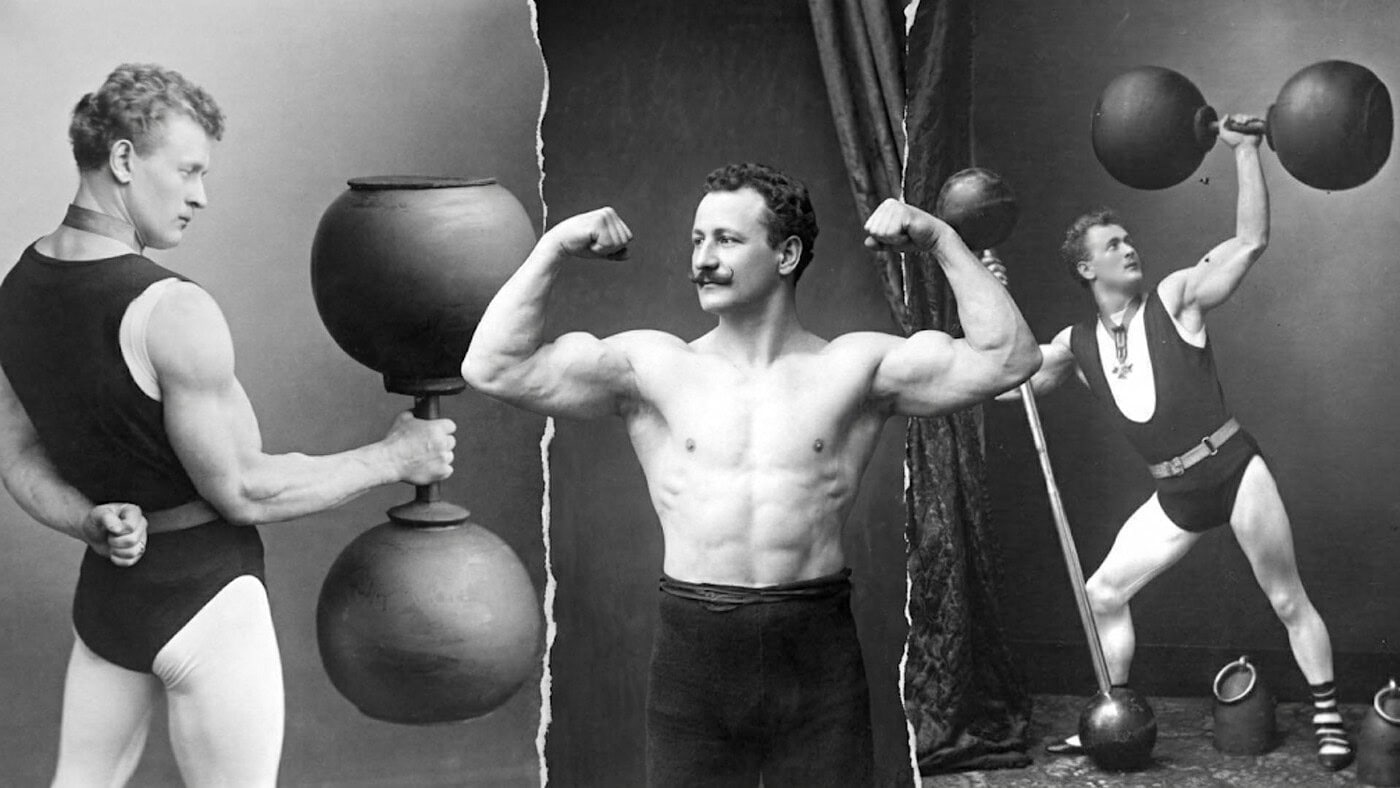
Eugene Sandow
The DeLorme method: progressive overload is incorporated into the training programme
In the 1940s, the American doctor Thomas L. DeLorme developed a progressive resistance training programme, which was initially used in the field of rehabilitation.
His approach helped to popularise Progressive Resistance Exercise (PRE), in which the load was organised in a structured manner.
One of the classic versions of the protocol involved three sets of ten repetitions, with the intensity increasing relative to the maximum load that could be managed for ten repetitions (10RM).
| Series | Reference load |
| Before | 50% of 10RM |
| Second | 75% of the 10RM |
| Third | 100% of the 10RM |
The key contribution was not in regarding this programme as universally optimal, but in introducing a precise methodology: the training load could be quantified, organised and progressively adjusted.
Subsequently, the Oxford method proposed a reverse progression, starting with the heaviest load and reducing it in subsequent sets, with the aim of managing fatigue differently.
They were different approaches, but they shared a revolutionary idea for the time: training could be planned rather than simply improvised.
From fixed patterns to self-regulation
In the 1970s, systems capable of adapting the load to the athlete’s actual performance were further developed.
Among these, DAPRE (Daily Adjustable Progressive Resistive Exercise), associated with the work of Kenneth Knight, marked an important step forward: the load for subsequent sets was adjusted according to the number of repetitions actually completed.
This marked the beginning of the recognition of a principle that is now fundamental.
Your ability to generate strength varies from day to day. Sleep, recovery, stress, diet and training load can all affect your performance.
For this reason, effective planning must have a structure, but also the flexibility needed to adapt to the individual
Periodisation: strength training with a long-term perspective
With the development of sports science, particularly in the second half of the 20th century, the focus shifted from individual training sessions to the organisation of the entire training programme.
Periodisation stems from the need to spread training stimuli, recovery periods and objectives over time, with a view to promoting adaptations and managing fatigue.
Not every week needs to have the same volume. Not every period needs to have the same objective.
Various models of work organisation thus became widespread, including linear periodisation, wave-like periodisation and block models.
For example, a programme may include phases with a greater focus on building muscle mass, others dedicated to maximum strength, and others still geared towards the ability to generate force rapidly.
This does not mean that each quality must be developed in isolation, or that there is a single ideal model.
It means understanding that training is a process of adaptation that develops over time, and that the distribution of training stimuli must be consistent with the individual’s goals, level and needs.

Maximum strength, explosive strength and power: they are not the same thing
For a long time, strength training was seen primarily as the ability to lift heavy weights.
Scientific research has, however, shown that muscle performance is a more complex phenomenon.
Maximum force
The maximum force that the neuromuscular system can generate under certain conditions.
Explosive force
The ability to build strength quickly, which is particularly important when time is limited.
Muscle strength
The speed at which mechanical work is carried out; in linear motion, this is expressed as the product of force and velocity.
An athlete may possess high maximum strength without necessarily being equally effective in movements that require a very rapid generation of force.
Let’s think about a jump, a sprint or a quick change of direction: in these situations, it is not just a question of how much force is potentially available, but also how quickly it is generated and applied.
The Rate of Force Development (RFD)
One of the most important concepts in modern athletic training is the Rate of Force Development, abbreviated to RFD, which refers to the speed at which force is developed.
RFD describes how quickly force increases during a contraction.
The 2016 scientific review by Maffiuletti et al. highlighted the importance of neuromuscular factors, in particular voluntary activation during the very early stages of contraction.
The ability to develop strength rapidly therefore depends on a number of factors, including neural activation, muscle characteristics and the type of training undertaken.
This explains why the development of maximum strength and that of explosiveness may require slightly different stimuli.
Research suggests that both high-load training and training involving explosive contractions can improve RFD, through adaptations that depend on the training protocol and the athlete’s characteristics.
The message is simple: being strong is important, but knowing how to apply that strength for the duration required by the movement can make all the difference.
From traditional training to Velocity-Based Training
Advances in measurement technology have opened up a new possibility: to observe not only the weight being lifted, but also the speed at which it is moved.
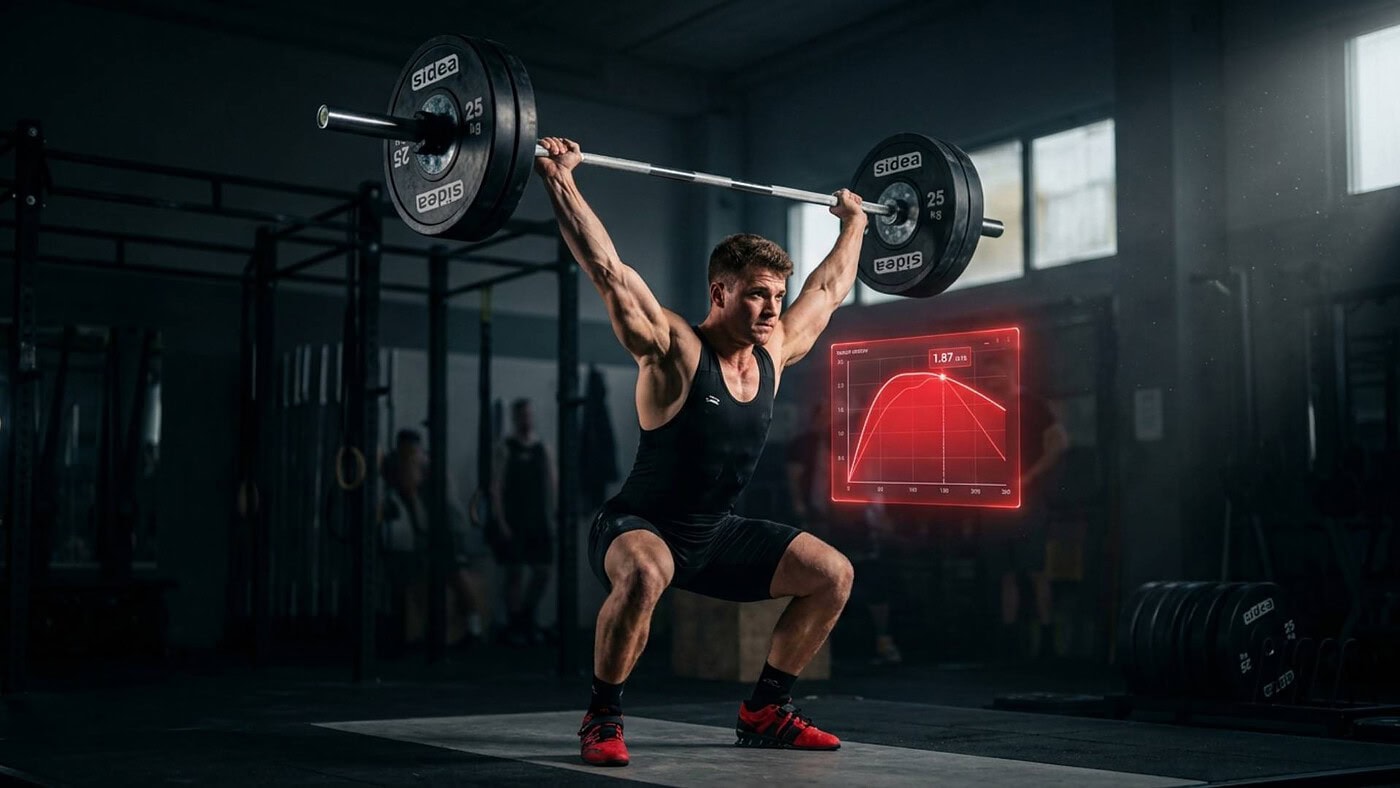
This is how Velocity-Based Training (VBT) came about – an approach that uses movement speed to monitor performance and help regulate the training load.
In traditional training, intensity is often prescribed as a percentage of one’s one-rep maximum (1RM).
The problem is that the maximum value represents a measurement taken at a specific point in time, whilst the athlete’s condition can vary from one session to the next.
VBT allows you to add useful information: how the load is actually being moved at that moment.
How does VBT work?
Using devices such as linear transducers or specialised sensors, it is possible to monitor the speed at which an exercise is performed.
This data can be used to assess the progress of repetitions, identify any changes in performance and adapt the training programme in line with the objectives.
One particularly interesting parameter is velocity loss, that is, the percentage loss in speed during a set.
When repetitions are performed with a consistent level of effort, a gradual slowing down can provide an indication of fatigue and of how close one is to one’s performance limit.
For example, a trainer might choose to stop a set when the speed drops below a certain threshold, rather than always using a fixed number of repetitions.
These thresholds, of course, must be considered in the context of the exercise, the objective and the athlete’s characteristics.
What does scientific research say?
A systematic review by Włodarczyk et al. (2021) analysed the use of VBT in elite athletes, highlighting the potential of speed loss thresholds to monitor fatigue and guide neuromuscular adaptations.
A subsequent meta-analysis by Zhang et al. (2022), based on nine studies involving a total of 253 trained men, found improvements in various indicators, including maximum lower-limb strength, strength endurance, jumping and sprinting.
These are promising results, but they do not prove that VBT is always superior to a well-structured traditional programme.
Its main value lies in the ability to incorporate objective data into the coach’s decision-making.
Is the intention behind a movement just as important as speed?
A particularly interesting point emerges from the review by Behm and colleagues, published in 2025.
The authors emphasise that, in order to develop specific explosive adaptations, it is not only the actual speed of the movement that matters, but also the intention to perform the push phase as quickly as possible.
During a heavy squat, for example, the barbell may move slowly even though the athlete is trying to accelerate it as much as possible.
This explosive movement can provide a significant neuromuscular stimulus, even when the external speed remains relatively low.
Modern training can therefore incorporate high loads, explosive power, rapid movements and plyometric work, always in line with the specific objective.
PAP and PAPE: preparing the neuromuscular system to generate more power
Another aspect of the evolution of training concerns the possibility of temporarily improving performance through prior muscular activity.
Let’s imagine an athlete doing a few repetitions of squats with a heavy load, resting for a few minutes and then performing a series of vertical jumps.
Under certain conditions, jumping performance may improve compared with the initial condition.
This type of strategy has often been linked to the concept of Post-Activation Potentiation (PAP).
The most recent scientific literature, however, has introduced an important distinction.
In the strict physiological sense, PAP refers to a temporary increase in the muscle’s contractile response, as measured by specific stimuli.
PAPE, or Post-Activation Performance Enhancement, refers to an observable improvement in voluntary performance – for example, in a jump or a sprint – following a conditioning exercise.
Blazevich and Babault (2019), together with Prieske et al. (2020), have clarified why these phenomena should not automatically be regarded as equivalent.
The role of recovery
The effect of an activation sequence depends on the balance between the potential benefits of neuromuscular preparation and the fatigue caused by the previous exercise.
If recovery is inadequate, fatigue may take hold and compromise subsequent performance.
A meta-analysis by Li et al. (2024), which included 21 studies and 327 participants, found improvements in vertical jump height following recovery intervals of four minutes and five to eight minutes in the protocols analysed.
This does not mean that there is a universally applicable recovery time: experience, intensity, volume and individual characteristics can significantly alter the response.
Practical application therefore requires assessment, personalisation and monitoring of fatigue.
A cultural revolution: strength is no longer
male only
The evolution of strength training has not been merely technical and scientific. It has also been a social one.
For much of the 20th century, weight training was predominantly associated with men, bodybuilding and strength sports.
Women were often offered activities considered more appropriate according to the stereotypes of the time, such as light gymnastics, dance and aerobic exercise.
The change took place gradually, through advances in research, the rise in women’s participation in sport, and the contribution of female athletes who were able to challenge cultural conventions.
Among them, Jan Todd is a key figure in the history of women’s powerlifting.
Competitive recognition of women in strength sports has gradually expanded, culminating in the inclusion of women’s weightlifting in the Olympic programme at the Sydney 2000 Games.
A review by Kraemer, Fragala and Ratamess (2025) traces this transformation, highlighting how strength training yields significant benefits for women too, ranging from performance to muscle, bone and metabolic health.
We now know that the fundamental principles of resistance training are largely the same for both men and women, although they do require appropriate individualisation.
Strength is not specific to any one gender. It is a human ability that can be developed throughout one’s life.
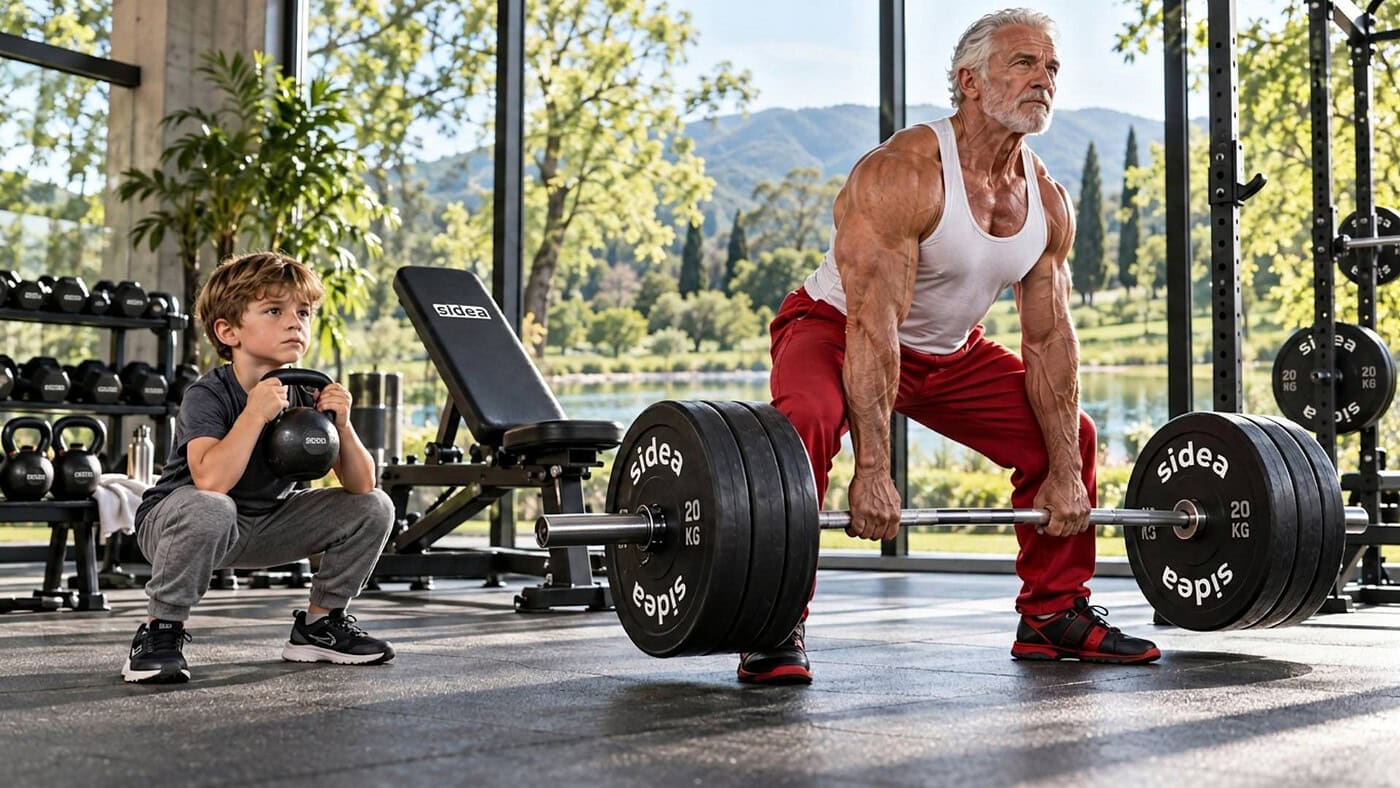
From performance to health: why strength training is essential today
Perhaps the most significant change in the history of strength training concerns its very purpose.
For centuries, we have sought to become stronger in order to fight, work, compete or improve our physical appearance.
We now know that strength training also means investing in our health and future independence.
Muscle strength contributes to the ability to carry out everyday activities, to the functioning of the musculoskeletal system and to maintaining independence as we get older.
Resistance training, when properly planned, can help maintain or increase muscle mass, improve functional ability and contribute to bone health and a healthy metabolism.
It is therefore not an activity reserved for athletes.
For an elderly person, improving the strength of their lower limbs can mean getting up from a chair more easily, tackling a flight of stairs with greater confidence, or maintaining their independence for longer.
For a sedentary adult, it can be an important tool in combating the progressive decline in muscle function.
For a sportsman or sportswoman, however, strength is a fundamental quality that must be combined with technique and the other skills required by the sport.
The goals change, the exercises change and the intensity changes. But the principle remains the same: to stimulate the body in a progressive, safe and sustainable way in order to improve its capabilities.
The future of strength training: technology, personalisation and expertise
Today we have tools that athletes a century ago could never have imagined.
Motion sensors, force plates, speed analysis systems and monitoring software enable us to gather increasingly detailed information about training.
These tools can help coaches and trainers to better understand individual responses to stimuli, monitor progress and adapt programmes.
But technology alone does not guarantee better results.
Data is only useful when it is interpreted correctly and incorporated into a sound decision-making process.
The choice of exercises, the quality of execution, the progression of the load, recovery and consistency remain fundamental elements.
And it is precisely here that the past and the future meet.
The principle illustrated by the story of Milon of Croton, DeLorme’s progressive planning and modern VBT systems all share the same requirement: to identify the most appropriate stimulus to facilitate adaptation.
The tools and knowledge have changed, but not the need to understand the relationship between training, recovery and improvement.
Conclusion: the force has changed, but its value has remained the same
From the stones of antiquity to adjustable barbells, from the earliest progressive overload protocols to periodisation, right through to speed monitoring and performance-enhancing strategies, strength training has undergone an extraordinary transformation.
From a practice linked to survival and competition, it has become a scientifically developed tool for improving performance, supporting health and maintaining the body’s functionality.
Nowadays, real progress isn’t simply about lifting more weight, but about understanding how, when and why to train.
Because strength isn’t just about what we’re capable of lifting. It’s also what enables us to keep moving, tackle everyday challenges and maintain our independence over time.
And this is perhaps the most significant development in its meaning.
-20%
PROMOTION

Smart Racks
-20%
Promotional kit



HISTORY OF TRAINING: THE SCIENCE OF MOVEMENT
Strength training and its evolution throughout history: from the athletes of ancient Greece to modern [...]
16
Oct
Oct
Hex Bar: what it is, which exercises to do and how to choose the right one
Strength, stability and freedom of movement: find out why the Hex Bar is an interesting alternative to [...]
09
Oct
Oct
Does strength come from the ground? The Military Press and the body’s hidden synergy
Before you can push, you need something to push against. Before force comes support. [...]
29
Sep
Sep

PHA and Jump Sets on the 9089K1 Cable Station: train strength, circulation and muscle density all in one station
PHA and Jump Sets on the 9089K1 Cable Station: build strength, improve microcirculation by increasing [...]
28
Jul
Jul
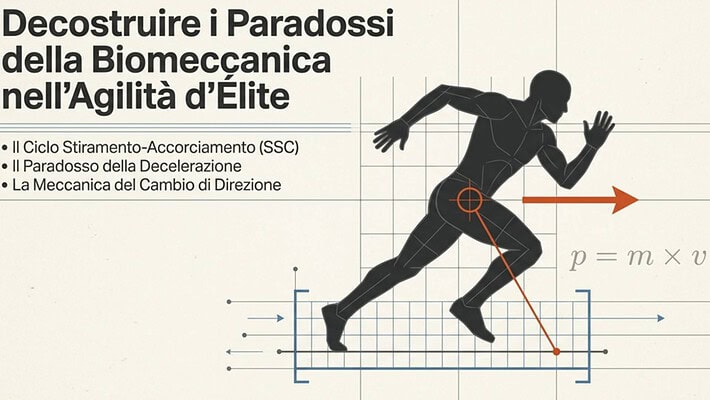
Elite agility: why changing direction isn’t just a matter of strength
Introduction: Agility is not just about being quick on your feet. When we talk about agility, the temptation [...]
30
Jun
Jun
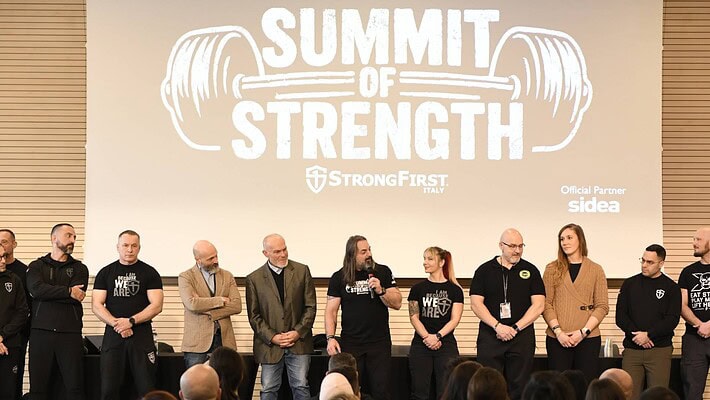
Maximum strength and team sports
When strength becomes performance: Dr Mauro Franzetti’s contribution to the Summit of Strength [...]
26
Jun
Jun
ATHX Games 2026: what it is, how it works and how to prepare for the hybrid competition
The evolution of HYBRID training In recent years, competitive fitness has evolved towards formats that are increasingly [...]
18
Jun
Jun
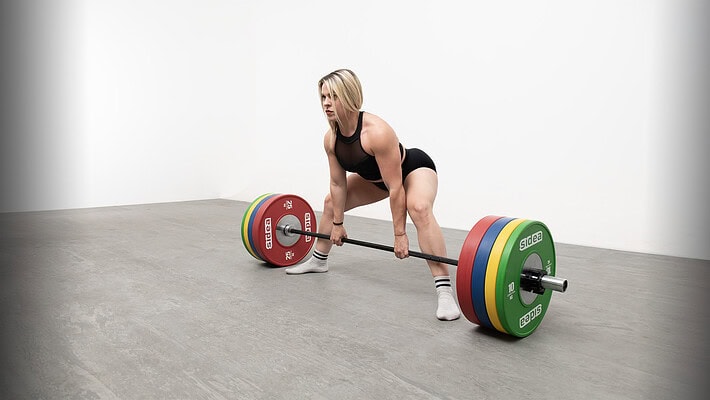
Definitive Guide to Bumper Plate Selection: How Not to Get Your First Set Wrong and Optimise Performance
The truth that no one tells you? Choosing a bumper disc is not just a matter [...]
29
May
May
 Defibrillator AED
 Gift CardSidea
 Spare parts