















Strength, stability and freedom of movement: find out why the Hex Bar is an interesting alternative to the traditional barbell and how to make the most of it.
The deadlift is one of the most effective exercises for building strength, power and muscle mass. At the same time, it is also one of the movements that raises the most questions, particularly amongst those new to weight training.
How should you position your back? How much should you bend your knees? How do you keep the barbell close to your body whilst lifting?
Sometimes, to make an exercise more accessible, you don’t need to change the movement itself, but simply change the way the load is distributed in relation to the body.
It is precisely this principle that lies behind the use of the Hex Bar, also known as the Trap Bar or hexagonal barbell: a piece of equipment that allows you to build strength using a different configuration to that of the traditional Olympic barbell.
But what are its real benefits? What exercises can we do? And, above all, which model should we choose to suit our needs?
Let’s find out together.
What is the Hex Bar and how does it work?
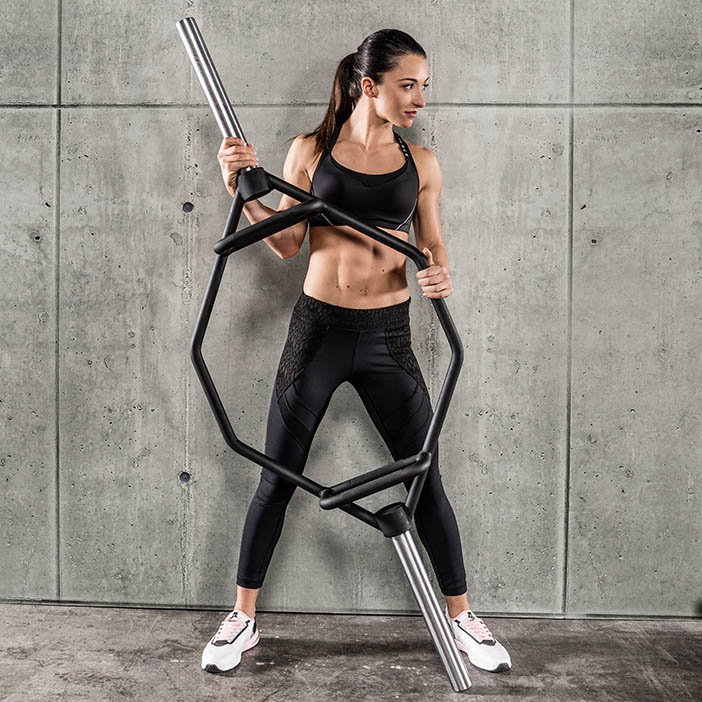
The Hex Bar is a special type of barbell characterised by a generally hexagonal structure, within which the athlete positions themselves whilst performing the exercise.
Unlike a traditional barbell, where the load is held in front of the body, the Hex Bar allows you to position yourself in the centre of the bar, with the weights distributed to either side.
This difference alters the relationship between the athlete and the load, offering new possibilities for executing and controlling the movement.
The side grips also allow you to use a neutral grip, with your palms facing inwards towards your body – a position that is often more comfortable for your wrists, elbows and shoulders.
The result is a particularly versatile piece of equipment, used in fitness, athletic training and strength training programmes.
Hex Bar or traditional barbell: why might deadlifts be easier?
The Hex Bar does not automatically make an exercise safe or technically correct. However, its distinctive shape can make it easier to learn and perform certain movements.
Let’s see why.
-
The load is distributed across the sides of the body
During a traditional barbell deadlift, the athlete must keep the bar close to their legs, carefully controlling its path throughout the lift.
With the Hex Bar, on the other hand, the body is positioned within the frame and the load can be managed with a distribution that is closer to the body’s centre of gravity.
This often allows for a more upright upper-body position and can reduce the mechanical stress on the lower back compared with some variations of the conventional deadlift.
This does not mean that the back stops working, but rather that the conditions under which it has to stabilise movement change.
-
The neutral grip promotes a natural arm position
The hands grip the handles from the side, with the palms facing the thighs.
This grip may feel more intuitive than the overhand or mixed grip used in the traditional deadlift.
This is a particularly attractive benefit for those who are starting to work with heavy loads or wish to vary their training stimuli.
-
It’s practical and can make it easier to load the discs
Another interesting feature of the Hex Bar is its ease of use, particularly when loading and unloading the discs.
Anyone who trains regularly with heavy weights is well aware of this difficulty: when the barbell is resting on the floor, adding or removing plates may require you to lift the bar slightly or use special supports.
Some Hex Bar models are specifically designed to simplify these operations, thanks to different design features.
Within the Sidea range, there are three particularly interesting examples:
- 9012/3 Low Hex Bar: the unique horizontal arrangement of the discs allows them to be loaded and removed from above, without having to lift the structure.
- 9012/1 Super Hex Bar: the raised loading sleeves keep the discs off the floor, making them easier to insert and remove.
- 9012/4 Open Hex Bar: thanks to its design, it can be positioned vertically on the designated support points, keeping the sleeves raised and making loading and unloading particularly convenient.
These features offer a real advantage, particularly in gyms and sports training centres, where equipment is used frequently and the loads need to be adjusted several times during a session.
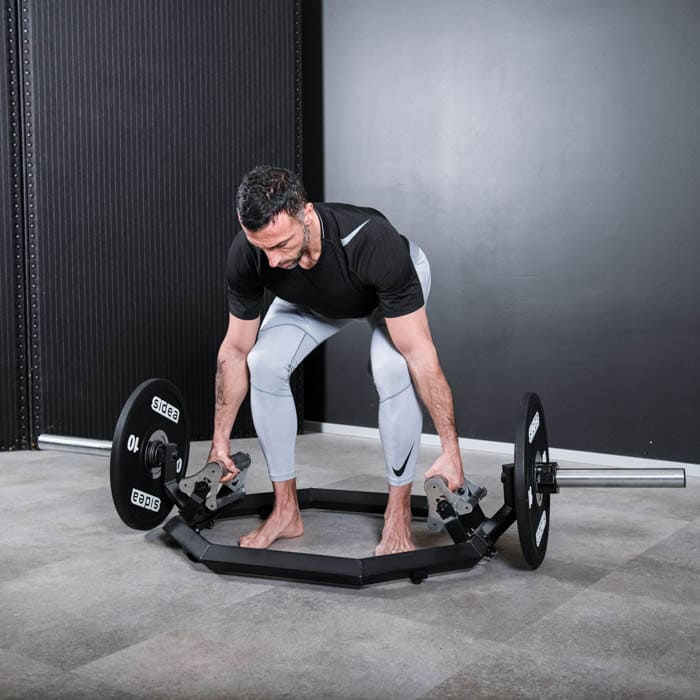
5 Hex Bar exercises to build strength and power
To think of the Hex Bar solely as a deadlift tool is to severely limit its potential.
Depending on the model’s geometry, we can use it to train strength, stability, grip strength and lower-body power.
-
Hex Bar Deadlift: the deadlift
It is the best-known exercise and is an excellent starting point for getting to grips with the equipment.
How to do it:
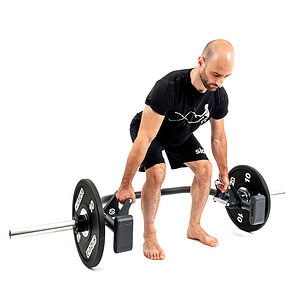
- Stand in the centre of the bar, with your feet roughly hip-width apart.
- Bend your knees and hips until you reach the handles.
- Keep your spine in a stable and controlled position.
- Push your feet against the floor, straightening your legs and knees at the same time.
- Return to the starting position without losing control of the movement.
The deadlift is a multi-joint exercise that significantly engages the posterior kinetic chain, particularly the glutes, hamstrings and spinal extensors, with the quadriceps and core stabilisers also playing a part.
Compared to the traditional barbell deadlift, the Hex Bar’s unique load distribution often allows you to keep your upper body more upright and increases the contribution of the quadriceps during the lift.
These features make the Hex Bar an attractive option for building lower-body strength, providing a different kind of muscular stimulus whilst ensuring significant engagement of the posterior chain.
-
Hex Bar Squat: another take on the squat
By adjusting your starting position and bending your knees further, you can perform a movement that is more like a squat.
The load remains at the sides of the body, rather than resting on the shoulders as it does in the back squat.
This allows you to train your lower limbs in a different way, with significant engagement of the quadriceps.
The depth of the movement depends on individual flexibility, technique and the geometry of the bar.
-
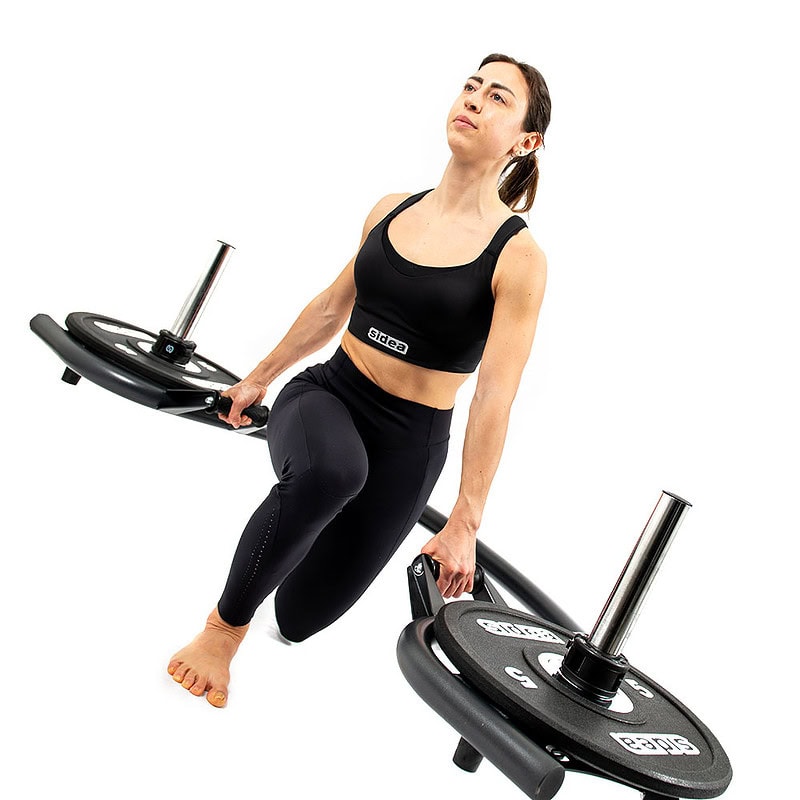
Hex Bar Lunges: Strength and Single-Leg Control
Lunges are essential in athletic training because they enable you to work on the strength and stability of the lower limbs, even when standing on one leg.
With a suitable Hex Bar – particularly one with an open design – you can perform reverse lunges and other variations without having to rest the weight on your shoulders.
This allows children to try out different paths, gradually introducing challenges relating to balance and coordination.
It is important to choose a model that allows sufficient freedom of movement and to check that the bar does not get in the way of your legs.
-
Farmer’s Walk: training grip strength, core strength and endurance
The Farmer’s Walk involves lifting a weight and carrying it whilst walking a set distance.
With a suitable Hex Bar, the athlete can maintain the load laterally, focusing on posture, core stabilisation and grip strength.
It is a simple exercise in concept, but extremely demanding as the load and duration increase.
Before you start, it is essential to check that the route is clear of obstacles and that there is sufficient space available.
-
Jump Squats with a Hex Bar: developing explosive power
The Jump Squat introduces a dynamic element: the athlete performs a squat followed by a vertical jump.
Using a suitable Hex Bar, this exercise can be incorporated into advanced athletic training programmes, using light weights and with particular attention paid to the quality of execution.
In this case, it is essential that the discs are securely fastened. Safety collars, such as the Sidea 9016/1 on compatible models, prevent the weights from shifting during dynamic movements.
This is an exercise that should be planned carefully, preferably under the supervision of a qualified trainer.
Not all Hex Bars are the same: let’s take a look at the 5 Sidea models
The geometry of the bar has a significant impact on the range of training options.
The dimensions, the position of the handles, the arrangement of the discs and whether the design is open or closed may make one model more suitable than another for specific requirements.
That is why Sidea has developed a range of five Hex Bars, each with its own specific characteristics.
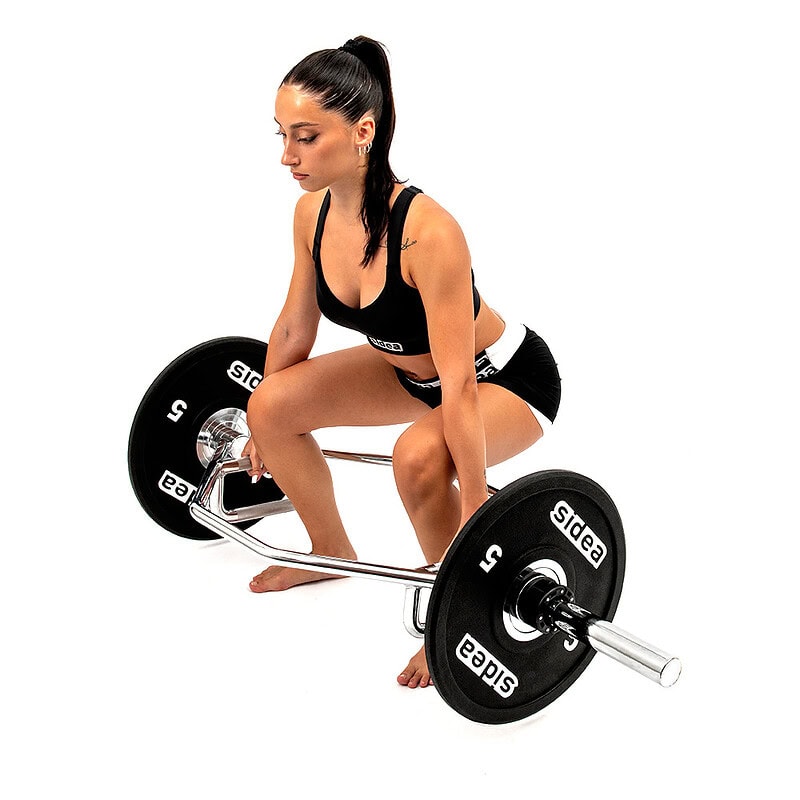
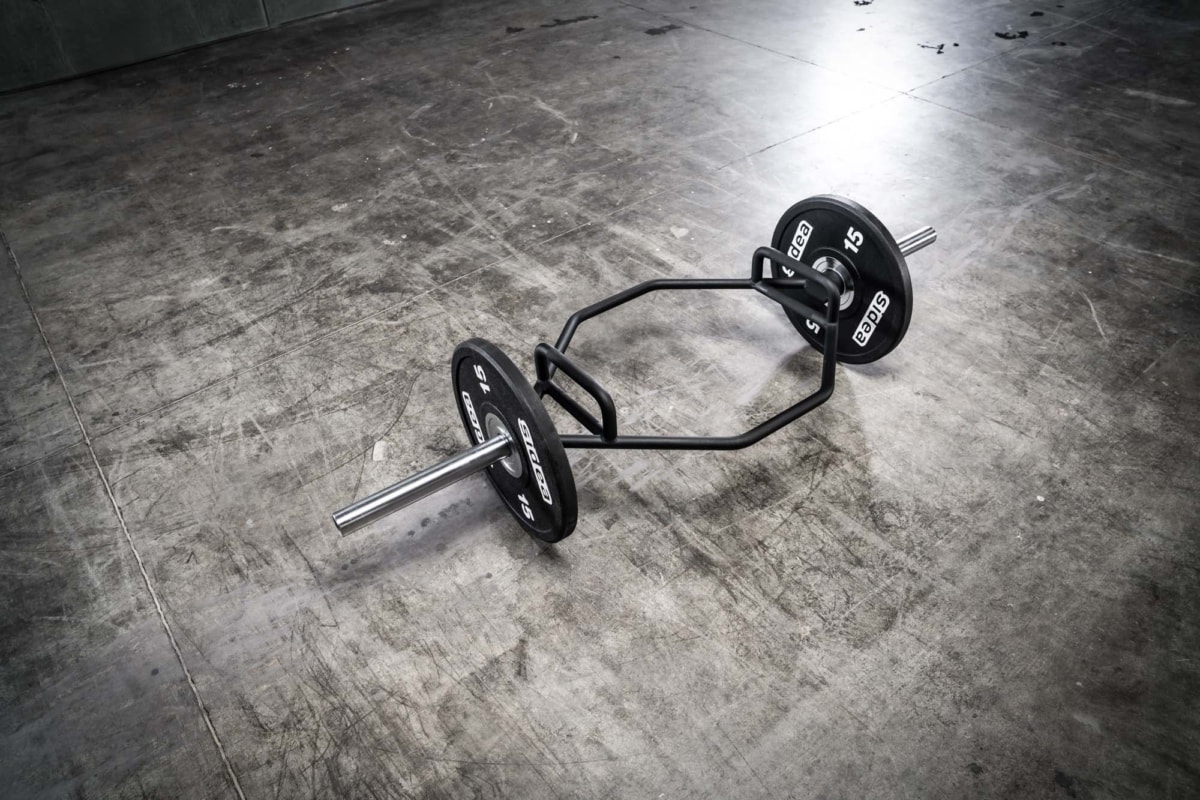
9012 Olympic Hex Bar: the classic choice
La 9012 Olympic Hex Bar It represents the traditional interpretation of the hexagonal barbell.
The enclosed design allows you to position yourself in the centre of the equipment and perform lifting exercises with a neutral grip.
The 400 mm long disc sleeves allow you to use discs with a particularly wide flange.
With a kerb weight of 31 kg, it is a suitable solution for gyms, well-equipped home gyms and strength training programmes focused primarily on deadlifts.
Discover the 9012 Olympic Hex Bar
9012/1 Super Hex Bar: easier to load
When the equipment is used frequently, the ease of loading and unloading also becomes important.
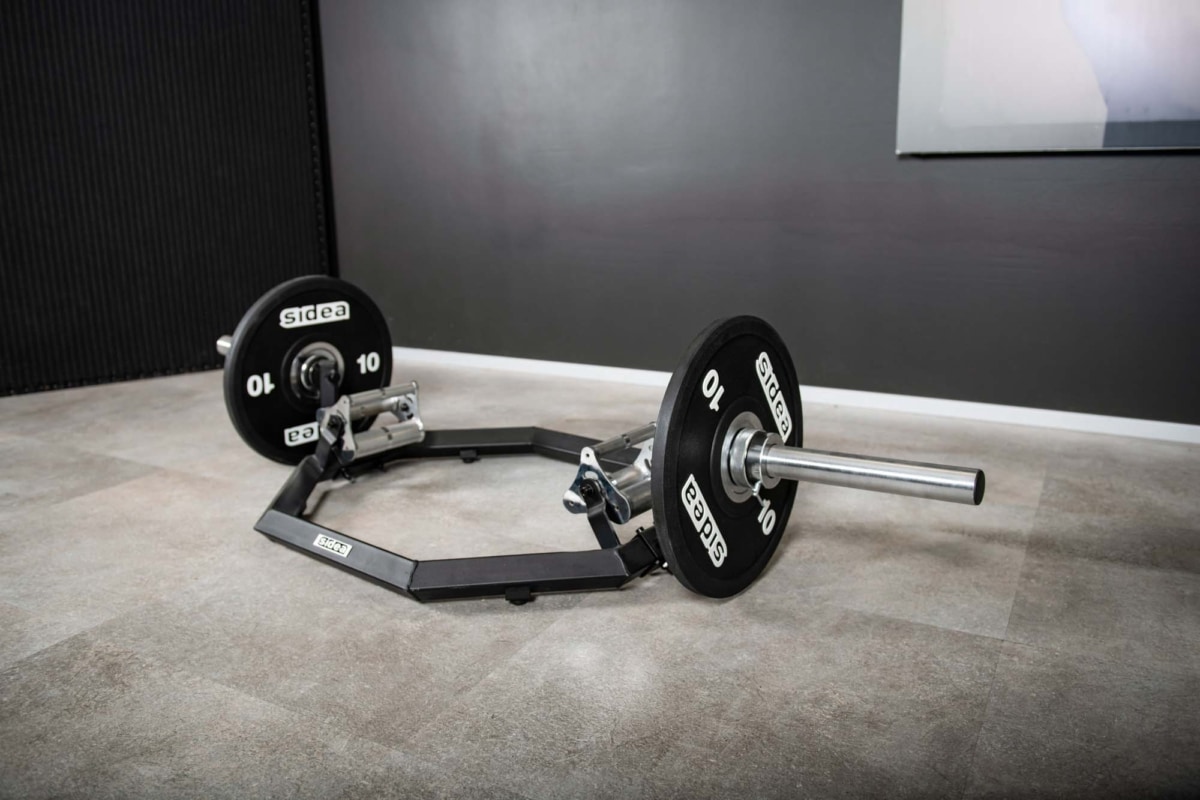
La 9012/1 Super Hex Bar It is fitted with raised sleeves, designed to make it easier to insert and remove the discs.
Another distinctive feature is the rotating handles, which are available in three different diameters: 25, 38 and 50 mm.
This solution allows you to vary the resistance on the grip and adapt the exercise to different objectives.
It is particularly useful in professional settings, where the same tool is used by people with different needs.
Discover the 9012/1 Super Hex Bar
9012/2 Compact Olympic Hex Bar: takes up less space, same design philosophy
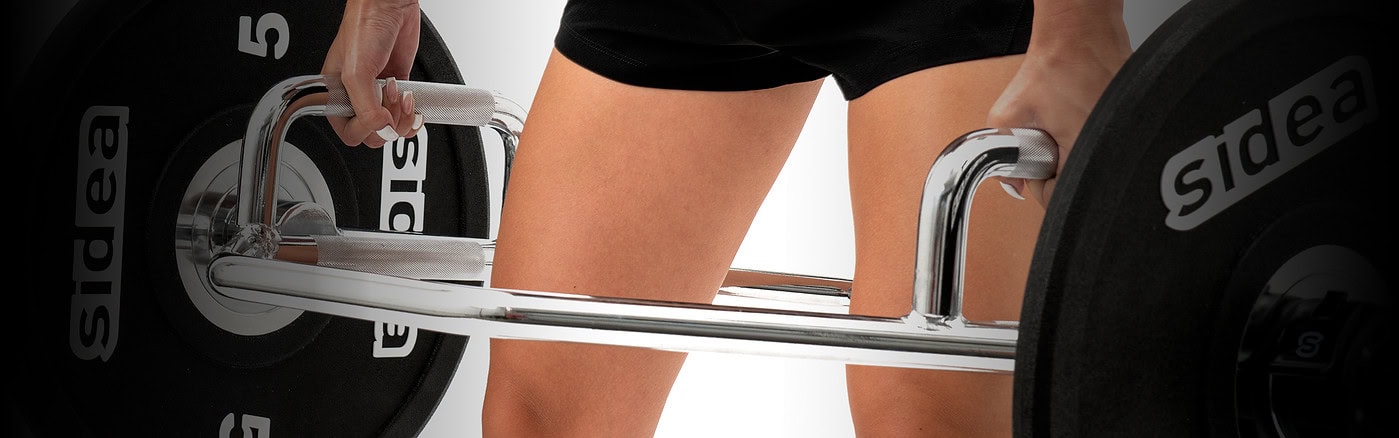
La 9012/2 Olympic Hex Bar Compact It retains the classic design but reduces the overall dimensions.
Measuring 1,590 mm in length and with 330 mm sleeves, it is an attractive option when space is limited.
It is ideal for those looking for a traditional hexagonal barbell with a more compact design.
Discover the 9012/2 Olympic Compact Hex Bar
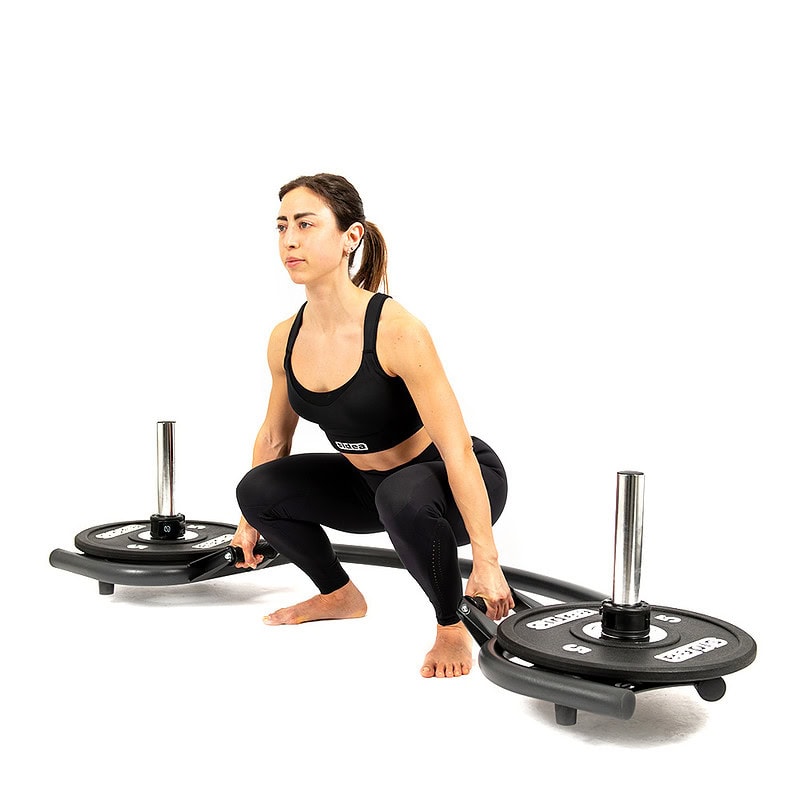
9012/3 Low Hex Bar: when movement takes centre stage
With the 9012/3 Low Hex Bar, Sidea has reimagined the very concept of the hexagonal barbell.
The most obvious difference concerns the arrangement of the discs: rather than being stacked vertically, they are positioned horizontally, meaning that the handles are approximately 13 cm above the floor, compared with around 33 cm on a traditional Hex Bar.
This set-up increases your range of motion, allowing for deeper squats, lunges and single-leg exercises.
But what really sets the Low Hex Bar apart is not just the depth it can reach.
The project was in fact developed as part of research into functional movement and athletic training, with the aim of linking three fundamental abilities: strength, mobility and stability.
The open design and the anatomically shaped, rubber-coated handles allow exercises to be performed across different planes of movement, introducing challenges in terms of motor control and coordination.
One example is the Back Lunge with torso rotation, which combines lower-body work with the control of rotational forces.
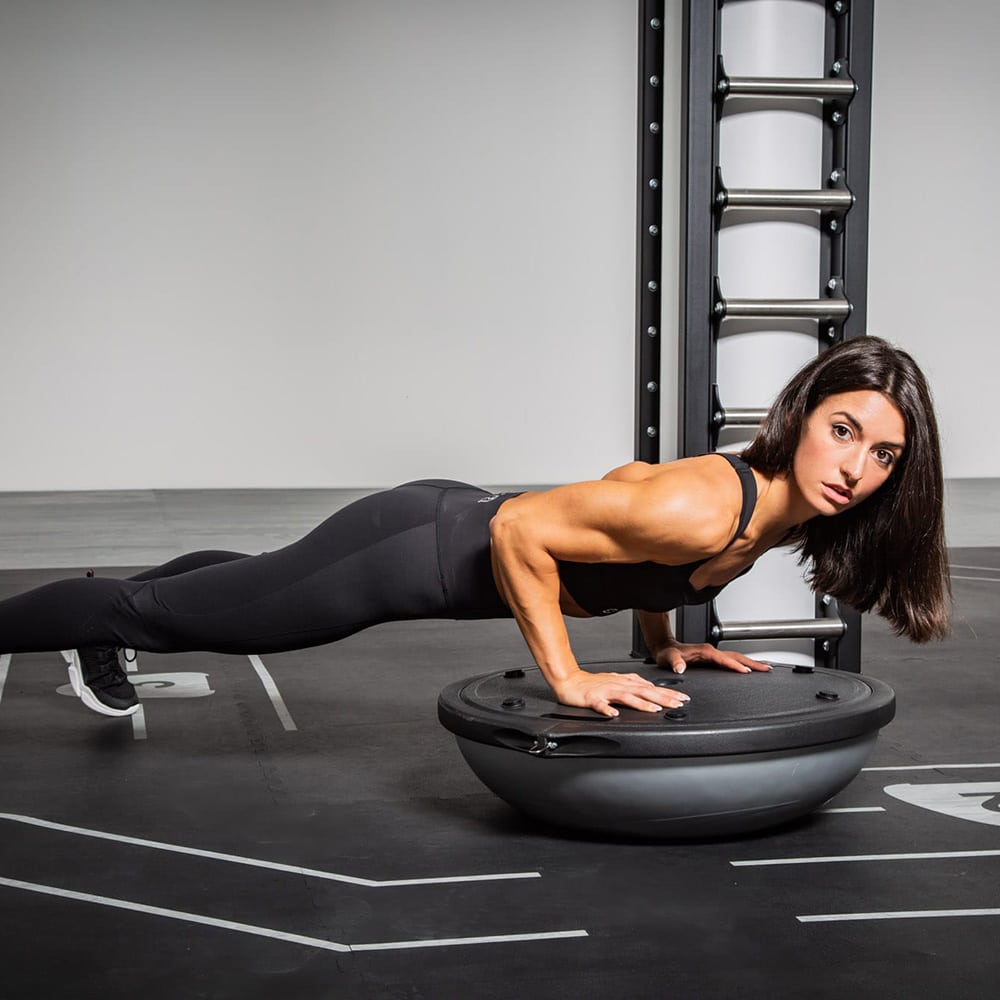
The Low Hex Bar can also be used as a support for specific bodyweight exercises, including variations on push-ups, whilst always ensuring the equipment is stable.
With the 9012/3B Hamstring Bar accessory, its versatility is further enhanced, offering new ways to train the lower-body muscles.
It is therefore a particularly useful tool for athletic trainers, personal trainers and functional training professionals.
Discover the 9012/3 Low Hex Bar
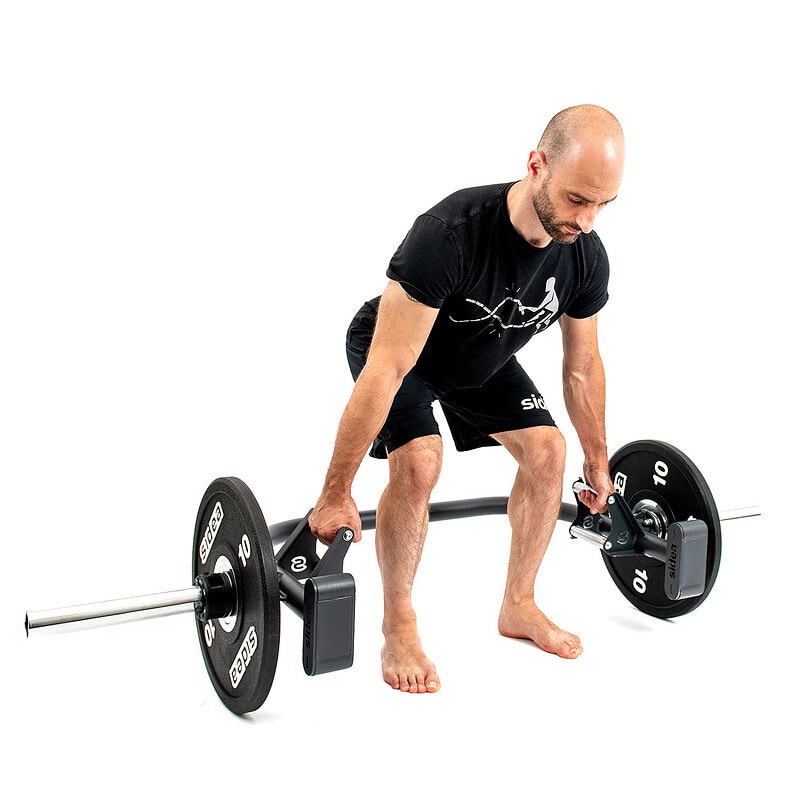
9012/4 Open Hex Bar: a new take on versatility
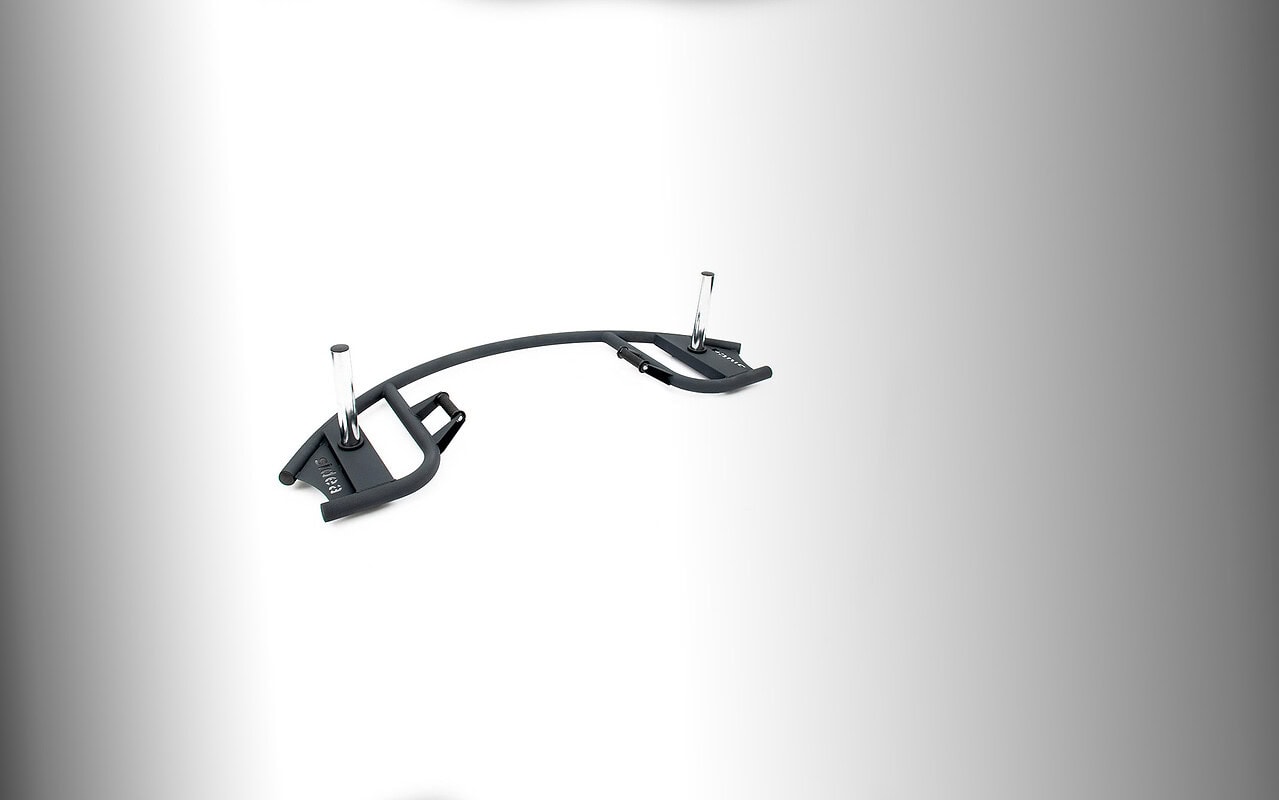
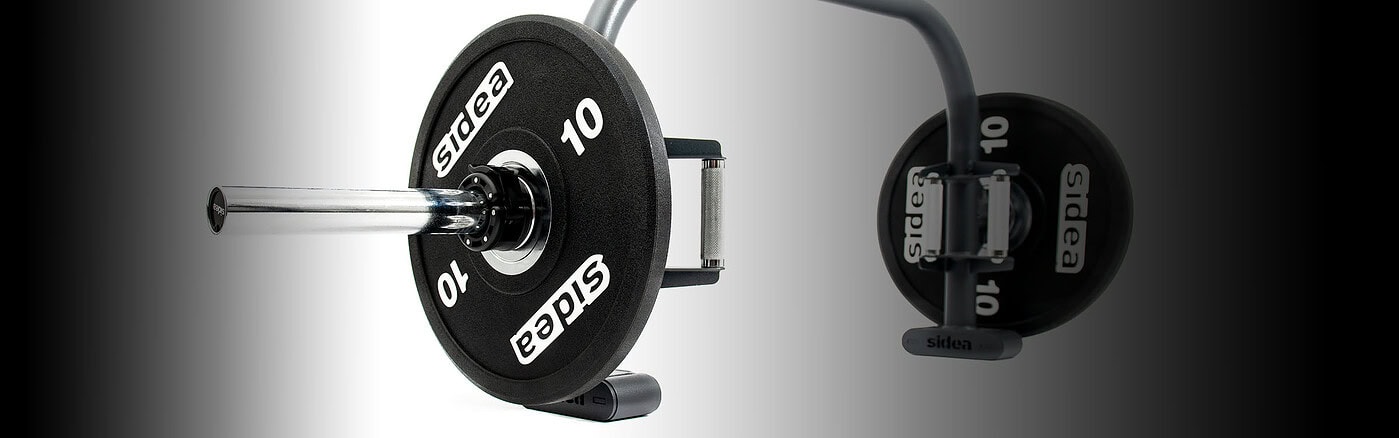
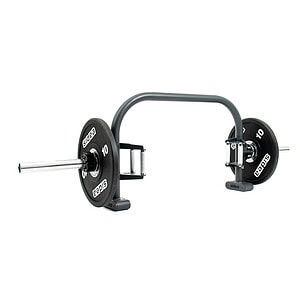
La 9012/4 Open Hex Bar It represents one of the most interesting developments in the Sidea range.
Its distinctive feature is its open structure, designed to overcome certain operational limitations of traditional Hex Bars.
The absence of one side of the frame offers greater freedom during certain dynamic exercises and allows you to perform movements that might be more difficult with a fully enclosed frame.
The bar also features two grip heights, allowing you to adjust your starting position to suit your training needs.
Another particularly practical feature concerns loading the discs: thanks to the special support points, the Open Hex Bar can be positioned vertically, making it easier to load the weights, including 45 cm diameter bumper plates.
With a kerb weight of approximately 21.9 kg, 29 mm rubberised grips and 400 mm handles, it combines features designed for strength training with remarkable ease of use.
An interesting option for anyone looking for a single piece of equipment that can be used in a variety of settings, from home gyms to professional athletic training.
Discover the new 9012/4 Open Hex Bar
Which Hex Bar should I choose?
There is no such thing as the absolute best Hex Bar: there is simply the one best suited to the exercises we want to do, the space available and our training goals.
| Requirement | Recommended model |
| Traditional deadlifts and strength training | 9012 Olympic Hex Bar |
| Frequent loading and unloading, different gripping methods | 9012/1 Super Hex Bar |
| Compact spaces and traditional use | 9012/2 Olympic Hex Bar Compact |
| Athletic training, mobility and multi-planar exercises | 9012/3 Low Hex Bar |
| Versatility, an open layout and practicality in use | 9012/4 Open Hex Bar |
When making your choice, it is also important to take into account the weight of the equipment when empty, as this already represents the initial load for the exercise.
For a complete beginner, a barbell weighing over 20 kg may require a gradual build-up using lighter equipment.
When is it best to use a traditional barbell?
Despite its many advantages, the Hex Bar is not a complete replacement for the Olympic barbell.
Those who practise powerlifting, for example, must train the straight-bar deadlift, as this is the discipline featured in competitions.
Similarly, exercises such as the bench press, military press and Olympic lifts require specific equipment and movement patterns.
The Hex Bar should therefore be regarded as a complementary piece of equipment, capable of broadening the scope of your training, rather than as a universal substitute.
Conclusions: changing equipment to discover new ways of moving
The Hex Bar demonstrates how a different piece of equipment’s geometry can significantly alter the training experience.
From squats to lunges, from the Farmer’s Walk to explosive exercises, it offers numerous opportunities to work on strength, stability and motor control.
Choosing the right model allows you to make the most of these features in line with your individual goals.
With the new 9012/4 Open Hex Bar, Sidea further expands the possibilities offered by hexagonal barbells, providing a solution that combines an open design, different grip heights and ease of loading.
Would you like to find out which Hex Bar is best suited to your training?
Discover the 9012/4 Open Hex Bar and all its features
SIDEA — Move Smarter, Get Stronger, Live Better.
NEW
Weightlifting/Powerlifting barbells
297,38€ VAT included, shipping calculated at checkout


Weightlifting/Powerlifting barbells
297,38€ VAT included, shipping calculated at checkout
NEW


Weightlifting/Powerlifting barbells
199,00€ VAT included, shipping calculated at checkout
Hex Bar: what it is, which exercises to do and how to choose the right one
Strength, stability and freedom of movement: find out why the Hex Bar is an interesting alternative to [...]
09
Oct
Oct
Does strength come from the ground? The Military Press and the body’s hidden synergy
Before you can push, you need something to push against. Before force comes support. [...]
29
Sep
Sep
PHA and Jump Sets on the 9089K1 Cable Station: train strength, circulation and muscle density all in one station
PHA and Jump Sets on the 9089K1 Cable Station: build strength, improve microcirculation by increasing [...]
28
Jul
Jul
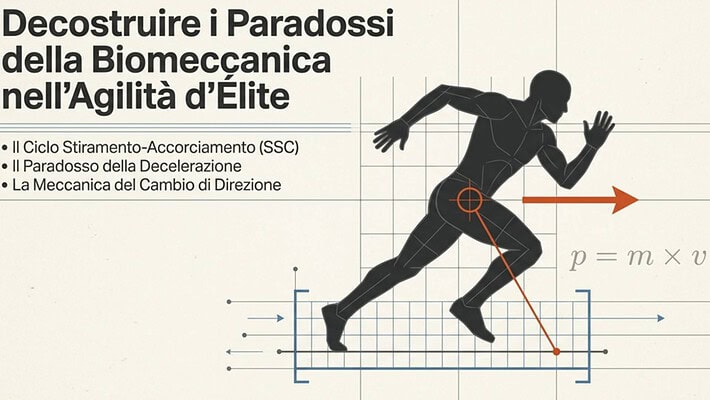
Elite agility: why changing direction isn’t just a matter of strength
Introduction: Agility is not just about being quick on your feet. When we talk about agility, the temptation [...]
30
Jun
Jun

Maximum strength and team sports
When strength becomes performance: Dr Mauro Franzetti’s contribution to the Summit of Strength [...]
26
Jun
Jun
ATHX Games 2026: what it is, how it works and how to prepare for the hybrid competition
The evolution of HYBRID training In recent years, competitive fitness has evolved towards formats that are increasingly [...]
18
Jun
Jun
Definitive Guide to Bumper Plate Selection: How Not to Get Your First Set Wrong and Optimise Performance
The truth that no one tells you? Choosing a bumper disc is not just a matter [...]
29
May
May

Structure Governs Function: Dr Luca Franzon at the Summit of Strength in Cesena
A journey into the myofascial system that is revolutionising strength, movement and performance - from 1 [...]
26
May
May
 Defibrillator AED
 Gift CardSidea
 Spare parts