
















The art of integration: when strength is built and when it is managed
In the world of professional physical training, SIDEA has always upheld a clear principle: strength is not just a question of load, but of control, quality and transferability of movement. Designing equipment means designing motor possibilities. And designing motor possibilities means understanding how the body produces and manages force.
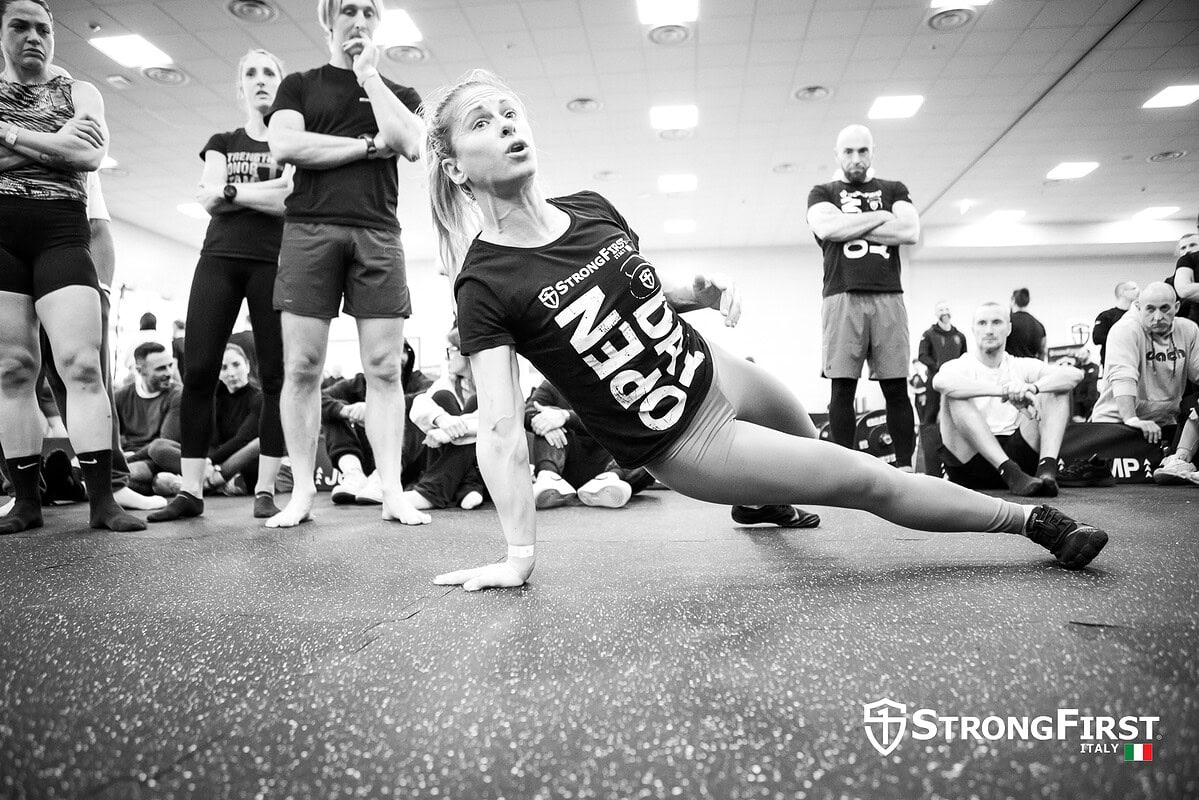
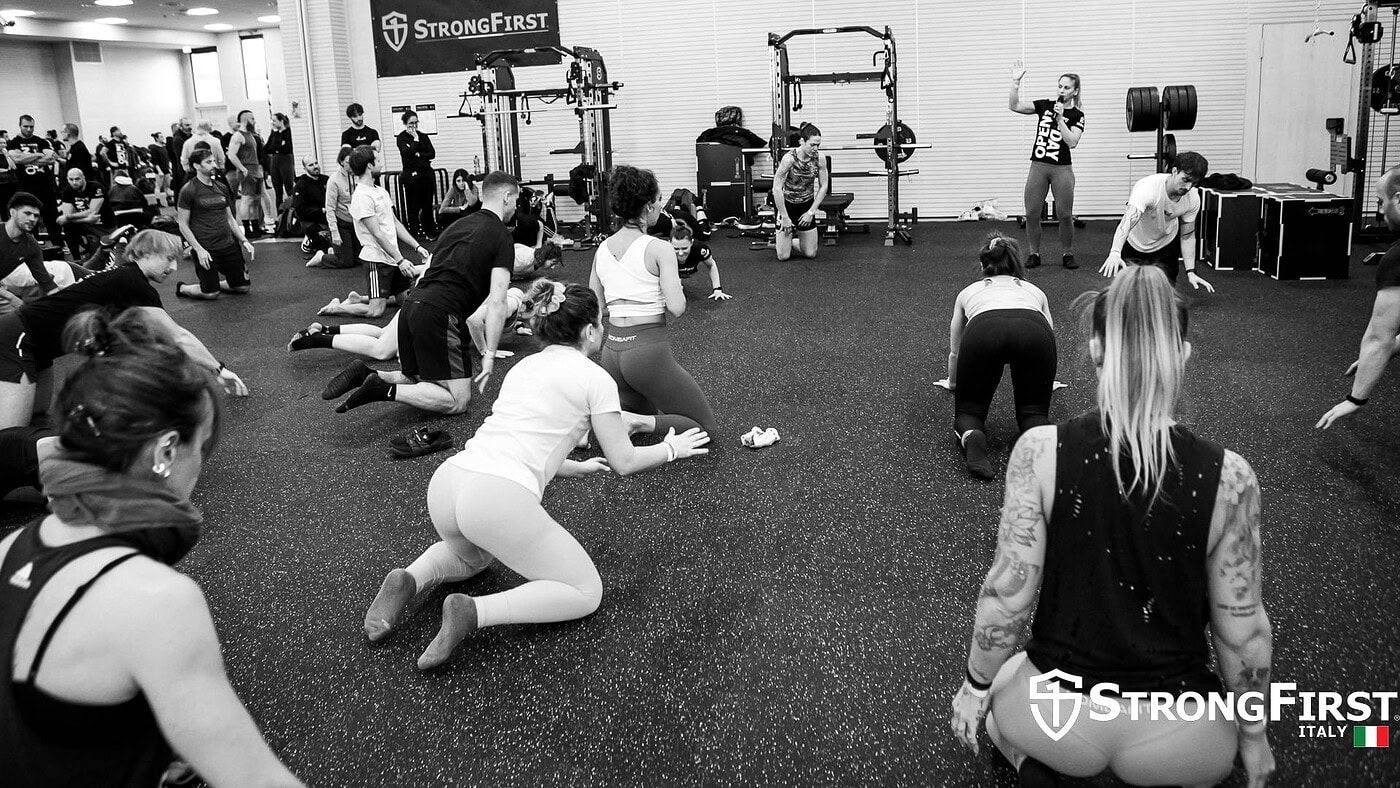
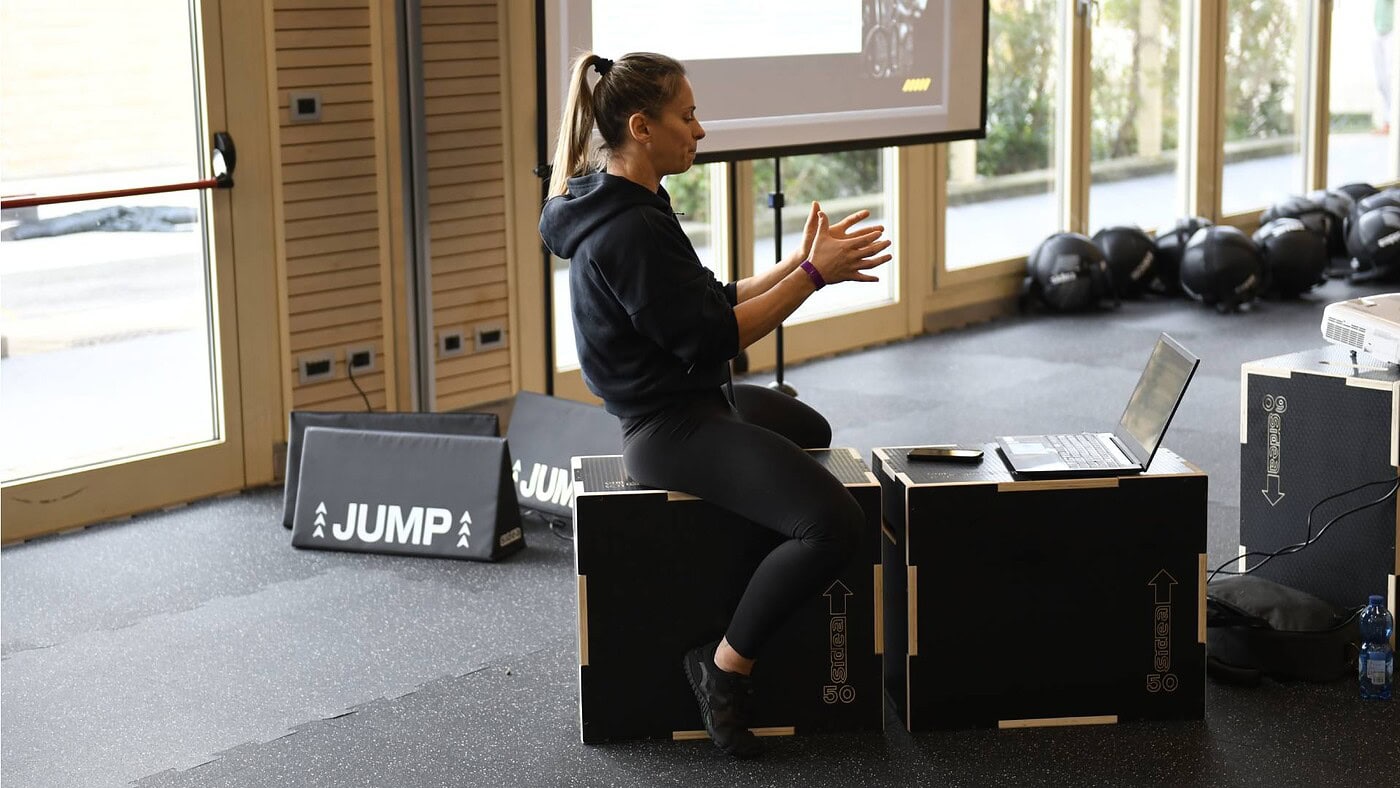
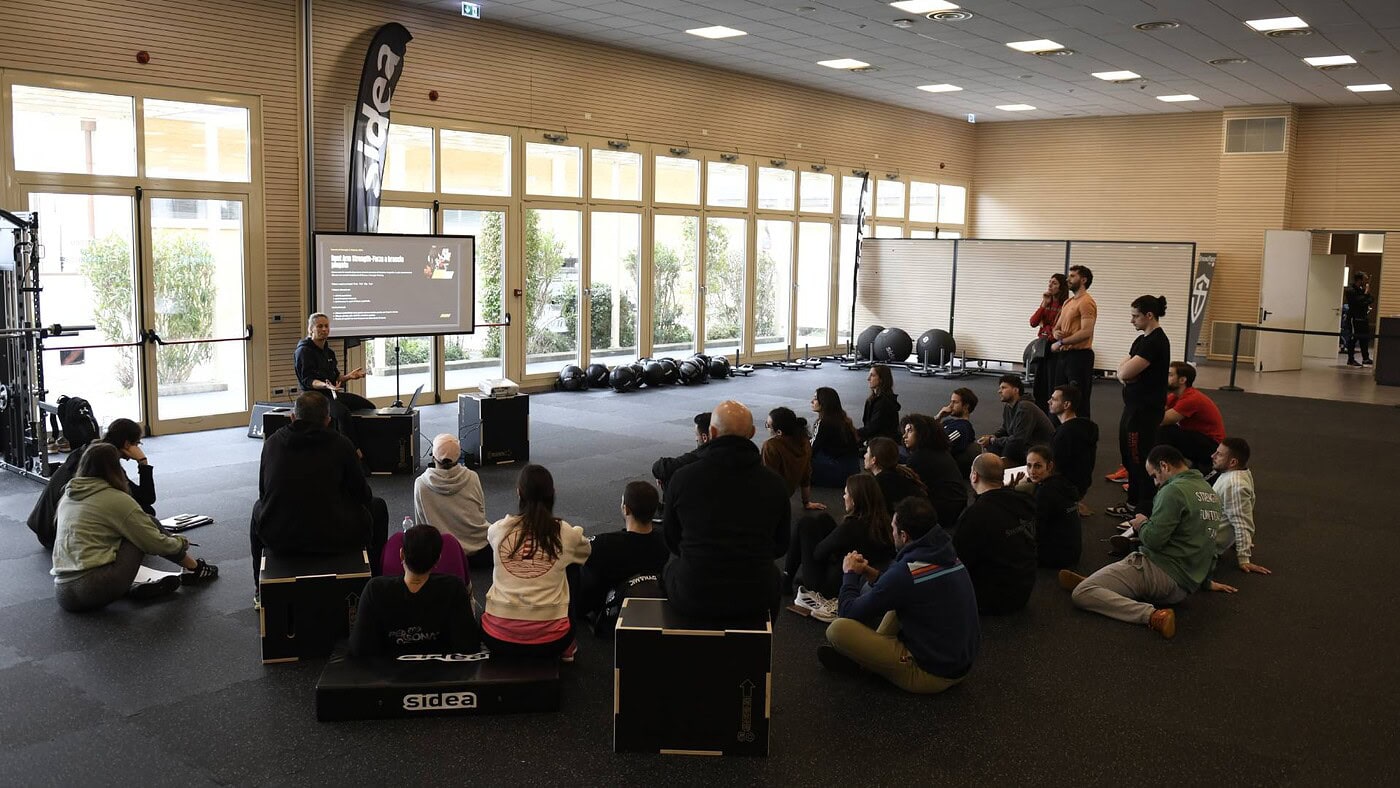
It is precisely on this terrain that Serena Dalle Palle's speech at the StrongFirst Summit of Strength 2026, international event that took place in Cesena on 31 January and 1 February 2026, bringing together coaches, strength trainers and movement professionals from all over Europe.
The title of his speech - “Push and pull patterns: SAS and BAS integration” - may sound technical. It actually addresses one of the most central issues in modern strength programming: the relationship between Bent Arm Strength (BAS) and Straight Arm Strength (SAS).
Bent Arm Strength and Straight Arm Strength: Building vs. Managing Strength
In the language of athletic training, the Bent Arm Strength represents the most widespread and traditional way of training the upper body.
Push-ups, dips, pull-ups, curls, bench press, rowing: these are all examples of short lever movements in which elbow flexion allows a high expression of strength and a significant metabolic demand.
It is the strength we build.
It is the strength that dominates in powerlifting, bodybuilding and many strength training methodologies.
But it is not the only form of strength that counts.
La Straight Arm Strength works on a different level: it does not merely produce force, but organises and transmits it through more complex structures.
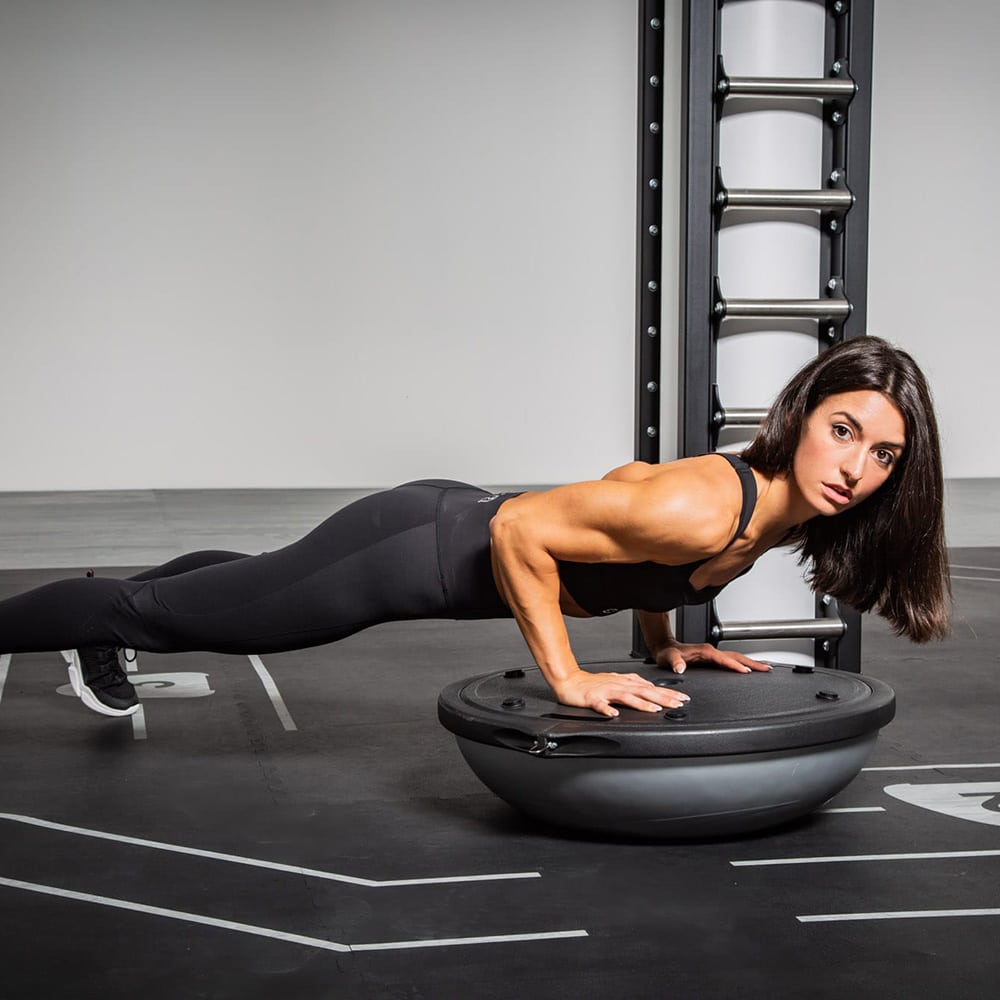
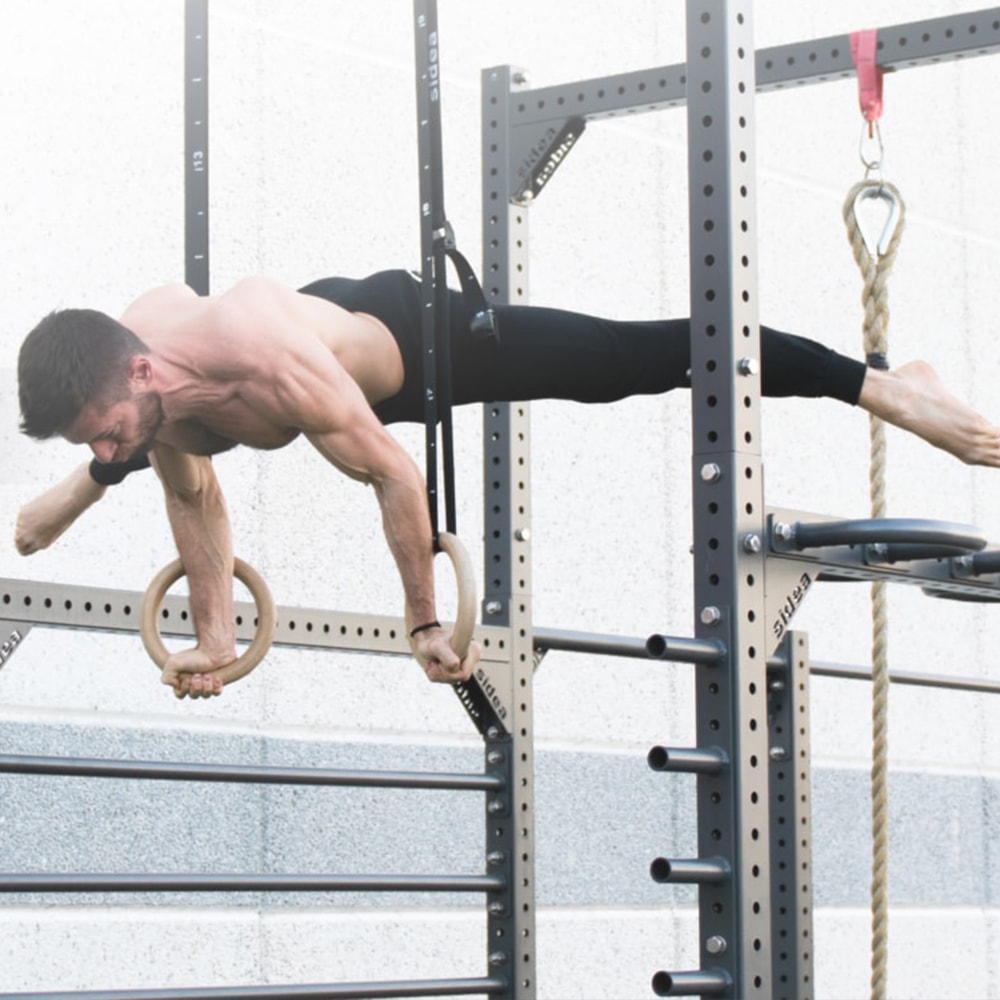
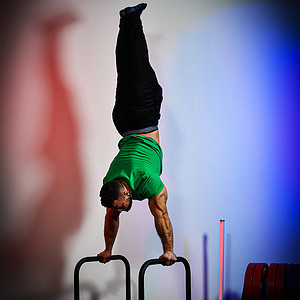
Active planks, ring supports, L-sits, handstands, hollow bodies, levers: here the elbow is extended, the lever is lengthened and the demand becomes predominantly neural and stabilising.
It is the force that teaches how to manage.
And this distinction is not theoretical: it is biomechanical, neuromuscular and articular.
Why integrate SAS and BAS into force planning
One of the most powerful messages that emerged during the Summit was that training only one of the two modes creates adaptive limitations.
An approach solely focused on Bent Arm Strength can generate:
- lack of scapular stability;
- joint overloads in the medium to long term;
- poor transferability to complex gestures or advanced skills.
In contrast, an approach focused only on Straight Arm Strength can:
- limit the expression of dynamic force;
- reduce the traditional pushing and pulling capacity;
- slow down the development of maximal strength.
The solution is not to choose. It is to integrate.
And this integration is perfectly consistent with an evolved vision of physical preparation: to build a truly functional body, capable not only of moving high loads, but of controlling them in every corner of the joint range.
Straight Arm Strength and Shoulder Health: The key role of the scapula
One of the most technically interesting passages of Serena's speech concerned the concept of Scapular Strength.
In Straight Arm Strength, the scapular complex becomes the control centre of the movement. The force is no longer concentrated exclusively in the large motors (grand dorsi, pectoralis major), but is distributed over smaller stabilisers that are often neglected in traditional training, such as the middle/lower trapezius and anterior dentate.
This has two fundamental implications for coaches and personal trainers:
- The development of SAS takes time, because small stabilisers have to adapt to new loads and tensions.
- Integration of SAS improves shoulder health by reducing imbalances between large motors and stabilisers.
In a context in which anterior shoulder pain, impingement and overloads are extremely common, incorporating outstretched arm work into the weekly schedule is not an aesthetic choice. It is a strategic choice.
Biomechanical differences: short lever vs. long lever
From a technical point of view, the differences between BAS and SAS are clear.
Bent Arm Strength
- Short lever → greater ability to express absolute force
- High metabolic demand
- Pattern more easily learnable
Straight Arm Strength
- Long lever → greater joint stress
- High demand for scapular and core control
- High neural demand
Understanding these differences is crucial for proper strength training programming, especially in the professional field.
It is not about making the exercises “harder”, but about progressing on precise variables: leverage, alignment, time under tension (TUT) and control.
Force programming: quality before fatigue
Another central point of intervention concerns the organisation of the micro- and macro-cycle.
Bent Arm and Straight Arm do not alternate at random.
Their distribution depends on four key variables:
- level of the subject;
- objective of the phase;
- joint tolerance;
- motor control skills.
Among the proposals that emerged:
- 5-day structure with priority barbell and complementary SAS (high frequency, high volume);
- 4-day structure with priority to SAS and balance in maintenance (high quality, high recovery);
- Monthly cycles with technical accumulation, integration and consolidation phases.
A particularly relevant concept for those working with barbells and high loads: straight arm strength must not be brought to failure and must not compete with big lifts.
Organisation is by quality, not by effort.
This principle is extremely consistent with a professional approach to strength & conditioning: fatigue is a tool, not a goal.
Skill before Strength: first the skill, then the load
One passage that aroused great interest was the principle: “Skillwork before Strengthwork”.
Complex skills - handstands, advanced supports, levers - must be trained before traditional strength work.
Technical blocks of 10-20 minutes in controlled mode, neural focus, attention to alignment.
Only then do we move on to series and repetitions with external loads.
Because strength, especially in professional contexts, is not just mechanical output. It is coordination. It is control. It is economy of gesture.
The Force Architecture Manifesto
The closing of the speech was summarised in three sentences that represent a true statement of method:
- Bent Arm Strength builds strength.
- Straight Arm Strength teaches how to manage it.
- A good programme does not choose, it integrates.
Apply logic, not chance.
A message that resonates deeply with the SIDEA philosophy: equipment is a tool, but it is programming that turns it into a result.
What it means for coaches, personal trainers and gyms
For those working in the world of professional fitness, functional training and athletic training, the takeaway is clear:
- Integrating bent arm work and outstretched arms improves overall performance.
- It improves joint health, particularly of the shoulder.
- Increases the transferability of strength to advanced skills.
- It builds more complete and resilient athletes.
In an ever-changing industry, where the search for new stimuli sometimes risks replacing logic with fashion, Serena Dalle Palle's speech at the Summit of Strength 2026 brought attention back to what really matters:
A strong body is not the one that moves the most load, but the one that handles and masters it the best.
When programming becomes movement architecture, strength is not just power. It is quality. It is control. It is sustainable performance over time.

The speaker: academic expertise and experience in the field
Serena Dalle Palle's intervention does not stem from an isolated theoretical reflection, but from a structured professional and sporting path.
An adjunct university lecturer at the University of Padua in the Degree Course in Exercise and Sport Sciences, Serena conducts theoretical-practical courses in Functional Training. Her academic activity goes hand in hand with an intense training activity aimed at movement technicians, athletic trainers and fitness professionals, through workshops, seminars and specialised courses.
Her approach integrates strength, mobility and motor control, with a constant focus on injury prevention, re-athletisation and performance improvement. Over the years, she has held positions of technical responsibility as an athletic trainer and functional training area manager, consolidating a method that combines scientific soundness and practical application.
A former wrestling athlete at competitive level, runner-up Italian champion in 2001 and 2002, she brings direct experience of competition and real-life load management to her view of training.
It is precisely this synthesis of university, field and competitive sport that makes his contribution to the Summit of Strength 2026 particularly fitting with an evolved vision of professional physical preparation.
Dr Giacomo Collini
-20%
PROMOTION

Smart Racks
Catalogue Products
45,00€ FEES and TAXES NOT INCLUDED

PHA and Jump Sets on the 9089K1 Cable Station: train strength, circulation and muscle density all in one station
PHA and Jump Sets on the 9089K1 Cable Station: build strength, improve microcirculation by increasing [...]
28
Jul
Jul
Elite agility: why changing direction isn’t just a matter of strength
Introduction: Agility is not just about being quick on your feet. When we talk about agility, the temptation [...]
30
Jun
Jun
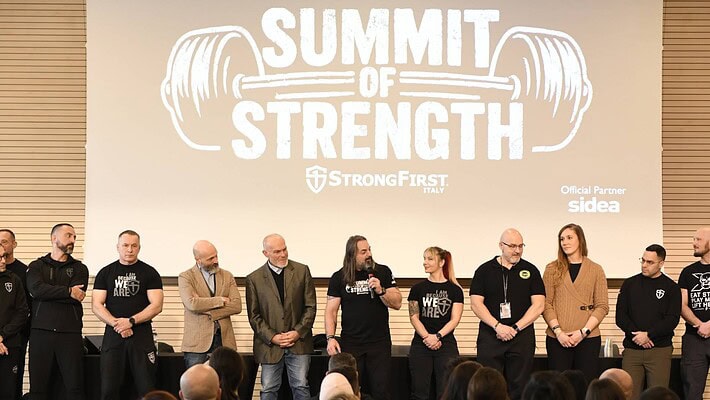
Maximum strength and team sports
When strength becomes performance: Dr Mauro Franzetti’s contribution to the Summit of [...]
26
Jun
Jun
ATHX Games 2026: what it is, how it works and how to prepare for the hybrid competition
The evolution of HYBRID training In recent years, competitive fitness has evolved towards formats that are increasingly [...]
18
Jun
Jun
Definitive Guide to Bumper Plate Selection: How Not to Get Your First Set Wrong and Optimise Performance
The truth that no one tells you? Choosing a bumper disc is not just a matter [...]
29
May
May
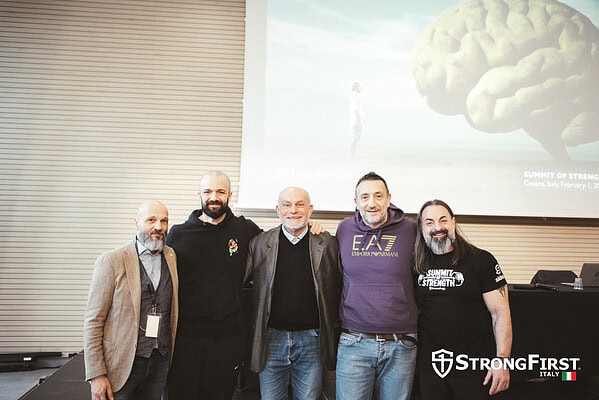
Structure Governs Function: Dr Luca Franzon at the Summit of Strength in Cesena
A journey into the myofascial system that is revolutionising strength, movement and performance - from 1 [...]
26
May
May

The Ultimate Guide to Choosing SIDEA Handlebars
How and why choosing the right dumbbell for your workout The Dumbbell As An Investment [...]
22
May
May
Hypertrophy and strength: does being more muscular really mean being stronger?
From the Summit of Strength 2026 in Cesena the new scientific evidence explained by Prof. Antonio [...]
15
May
May
 Defibrillator AED
 Gift CardSidea
 Spare parts