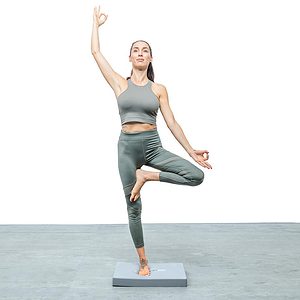
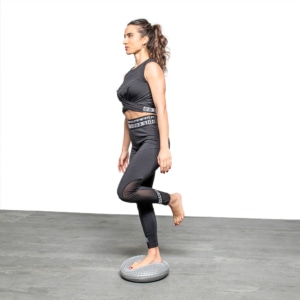
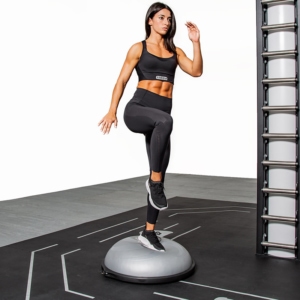
Balance boards, duneball boards, bump discs, balance pads, proprioceptive boards
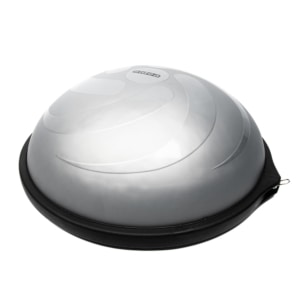
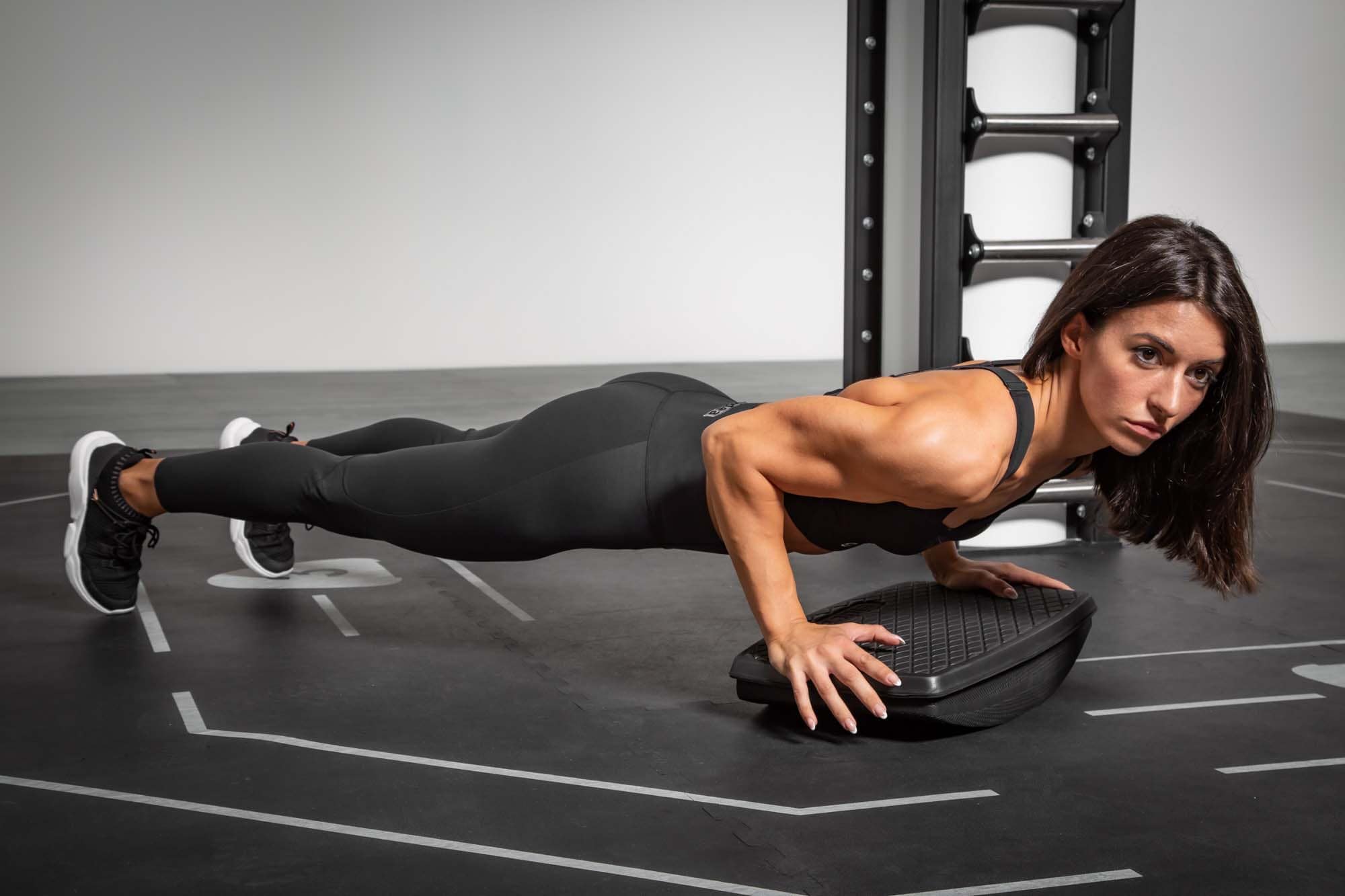
Proprioceptive Board, or Freeman Board, if you prefer, those with a hemisphere applied underneath the board itself, cause instability.
Balance boards are used for both rehabilitation and prevention, practices that are primarily aimed at athletes, be they amateurs or professionals.
How is proprioception stimulated?
In the meantime, one must remember what the proprioceptors do. They send messages to the central nervous system to provide feedback information, signalling to the brain the movements the body is making.
Balance boards are therefore used to recover (or strengthen) the ankle and knee joints, restoring motor patterns that ensure static and dynamic balance.
This model of neuromotor stimulation is also extremely important in an elderly person, who can improve many muscular and nervous faculties with the use of the board.
Here are a few exercises listed on the basis of difficulty:
- when seated, one foot on the board to mobilise the ankle (very easy)
- one foot on the ground and one on the board to mobilise the ankle (easy)
- both feet on the tablet to try to maintain balance (medium)
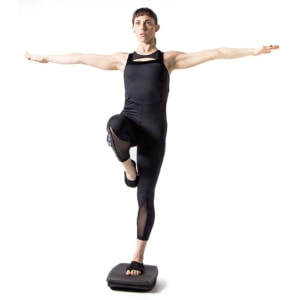
- one foot on the tablet (difficult)
- two feet on the tablet with eyes closed (very difficult)
- as above with the operator disturbing the subject with small pushes (very difficult)
Obviously, the difficulty must be measured on the subject being trained and with respect to where they are in their rehabilitation.
In the case of a healthy subject, the last three proposals can be used for prevention and improvement of proprioception.
Domande frequenti - Balance board
-
The balance board stimulates the proprioceptors in the ankle, knee and hip by creating an unstable surface. The central nervous system receives continuous feedback and reorganises motor patterns to maintain balance. It is used in post-sprain rehabilitation, in the prevention of joint injuries and in neuromotor strengthening for athletes of all levels, from amateurs to professional fitness trainers.
-
The round balance board allows for 360° multidirectional instability, which is useful for advanced proprioceptive training of the ankle. The square version limits movement to specific axes, making it easier to manage during the early stages of rehabilitation or with older people. In a rehabilitation programme, one often starts with the square version and moves on to the round one once motor control has been established.
-
The weightlifting balance board is a board designed to accommodate both feet in a squat or clean position. It is used to practise barbell control in conditions of controlled instability, improving ankle and knee stability in the fundamental movements of Olympic weightlifting. It should only be introduced once technique has been firmly established on a stable surface.
-
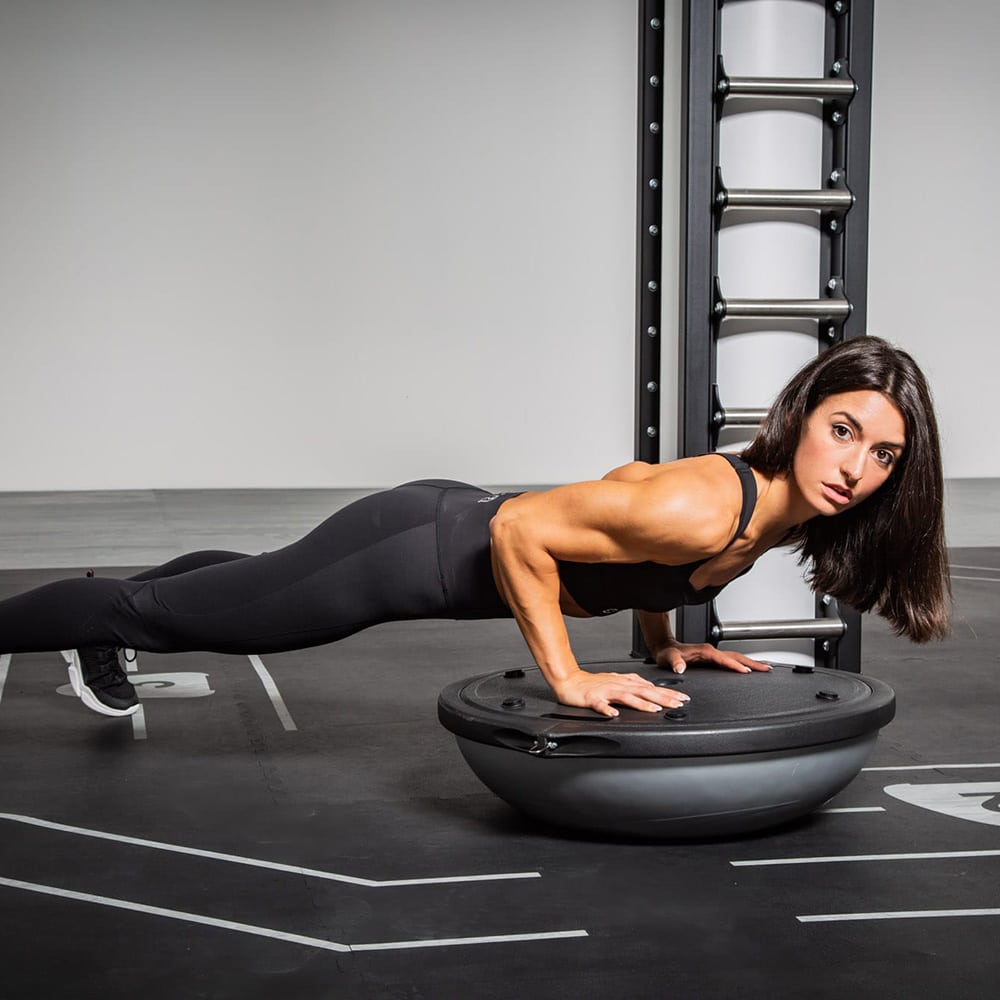
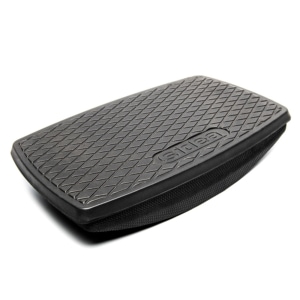
The Dune Ball Board is an unstable base consisting of a rigid board mounted on a rubber hemisphere. It generates progressive multidirectional instability and is used in both orthopaedic rehabilitation and proprioceptive training for team sports. It allows for exercises whilst seated, on one foot or on both feet, with the level of difficulty adjustable according to the individual’s ability.
-
The EVA balance pad offers gentle, cushioned instability, making it suitable for older people, early-stage rehabilitation and barefoot exercises in holistic or Pilates settings. The wooden board with a hemisphere creates a more pronounced and responsive instability, which is required in athletic and sporting contexts. In structured training programmes, the two tools are integrated throughout the progression.
-
Yes. Regular proprioceptive training reduces the incidence of ankle sprains, particularly in sports involving changes of direction such as basketball, football, volleyball and tennis. Protocols lasting 10–15 minutes, carried out three times a week, improve the neuromuscular reaction time of the peroneal muscles and the dynamic stability of the tibiotarsal joint.
-
For healthy, already active individuals, yes – starting with the simplest exercises: standing on both feet on a wide surface, then on one foot, and finally with eyes closed. In cases of recent post-traumatic conditions, joint disorders or chronic instability, the programme should be designed by a physiotherapist or fitness coach. Progression should always be managed according to the level of control achieved, not by the duration of the training session.
-
A balance board is generally a rigid board mounted on a pivot or half-sphere, providing immediate and responsive instability. The Bosu is an inflatable half-sphere with a flat surface on top; it offers more cushioned instability and is also used for light plyometric exercises. The balance board is more specifically suited to proprioceptive training of the ankle; the Bosu is suitable for more general applications.
-
The Sidea wooden boards are made from plywood designed for professional use in commercial gyms and physiotherapy practices. The load capacity is suitable for use with adult athletes, even under dynamic loading conditions. The weightlifting version is designed for use with a barbell loaded in accordance with standard weightlifting protocols.
-
The Bump Stimulating Disc is an inflatable cushion with a textured surface. It provides simultaneous proprioceptive instability and plantar stimulation. It is used whilst seated as an active core exercise cushion, whilst standing for balance exercises, or as part of gentle exercise and rehabilitation programmes. Adjusting the air pressure modulates the degree of instability.
-
Sidea offers a range of instalment payment options to make it easier to purchase professional equipment. Please see the dedicated page: Payment options Sidea.
-
If you work in the fitness or sports sector, register on the website as a Professional or as an ASD to gain access to the price list reserved for industry professionals. Pro registration allows you to view exclusive discounts and special terms across the entire Sidea catalogue.
-
Yes, Sidea is an authorised supplier on the MEPA (Public Administration Electronic Marketplace). Public bodies, schools, universities, local authorities and public sports facilities can purchase Sidea equipment via the platform Public Sector Online Procurement. For information on product codes and direct MEPA orders, please contact Sidea customer service.
-
Sidea guarantees the right to cancel within 14 days of delivery for all online purchases, in accordance with current legislation. Products must be returned undamaged and in their original packaging. For full details on returns, refunds and the warranty, please see the page Terms and Conditions of Sale.
-
Sidea has been designing and distributing professional fitness equipment since 1999: over 25 years’ experience serving gyms, sports coaches, CrossFit boxes, personal training studios and enthusiasts of advanced home fitness. Official distributor StrongFirst e Luxiaojun, which is exhibiting at the FIBO international trade fair and is the technical sponsor of the Summit of Strength. Every product is designed with durability, functionality and suitability for real-world operational contexts in mind. The service Gym Design Offers bespoke design services with 3D renderings. A warehouse covering over 4,000 m² in Gambettola (FC) to ensure rapid order fulfilment, direct technical advice and a special price list for professionals and amateur sports clubs.

8030 Dune Ball Board
R9080/16 Aio Right J HOOK - 10