Fitness Balls: A Comprehensive Guide
Fitness balls are spherical pieces of equipment that cover a very wide range of exercises: from breathing exercises in Pilates to the explosive power of slams in CrossFit boxes. The Sidea category includes 13 products, ranging from lightweight Pilates balls and puncture-resistant gym balls for group classes to rubber-coated medicine balls with and without handles, smash D-balls for ground throws, and giant medicine balls weighing up to 50 kg for strongman training. Each type is designed for a specific technical purpose: controlled bounce, impact absorption, a stable grip, or dead weight for portage and wall throws. Below you’ll find the operational distinctions, selection criteria based on intended use, and a comparison of the different models.
What is a fitness ball: definition and function
The term ‘fitness ball’ refers to any spherical piece of equipment designed for physical training, regardless of its material, weight or diameter. There are four main technical functions: controlled instability (gym ball, sitting ball, soft Pilates ball), dynamic resistance (classic medicine ball and medicine ball with handles), impact absorption for slamming onto the ground (smash D-ball), and heavy loads for carrying and throwing (giant medicine ball).
The material determines how the ball behaves under stress. The anti-burst PVC used in gym balls deflates slowly if punctured, rather than bursting. The vulcanised rubber of medicine balls ensures a predictable bounce. The reinforced PU of D-balls absorbs impact without bouncing, which is essential for repeated slams.
Types of fitness balls
Gym balls and Pilates balls
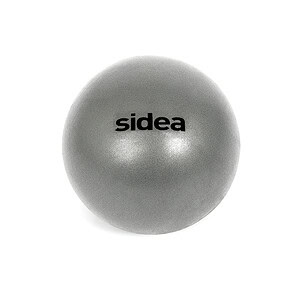
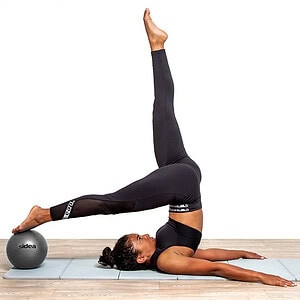
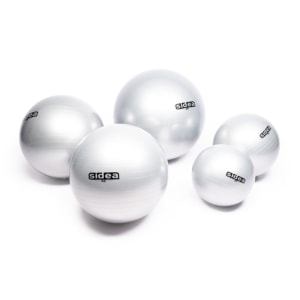
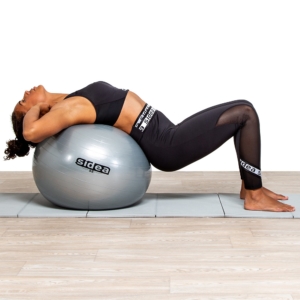
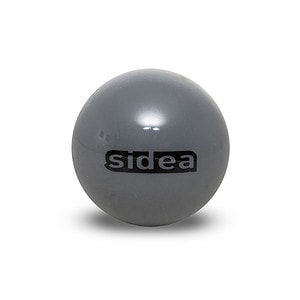
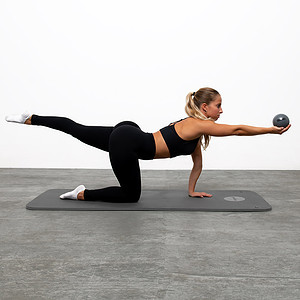
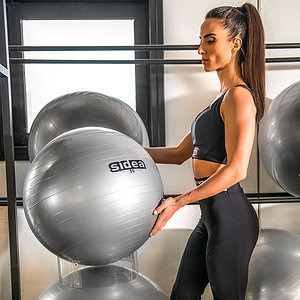
Puncture-proof gym balls in diameters ranging from 45 to 85 cm for group classes, Pilates, rehabilitation and core training. The 1 kg Pilates ball (≃11 cm) targets the abdomen, adductors and posterior chain in isolation. The larger soft ball (≃(26 cm) is used in Pilates matwork sequences and for diaphragmatic breathing exercises.
Medicine balls and medicine balls with handles
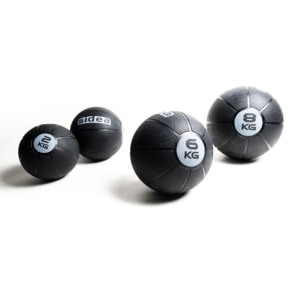
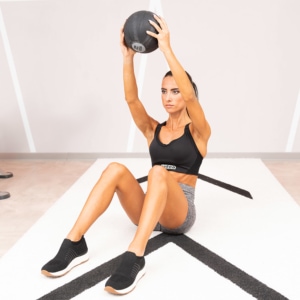
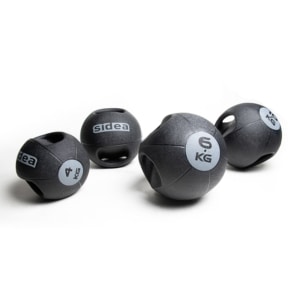
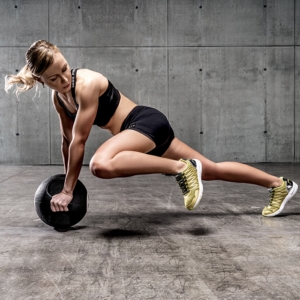
Classic rubber medicine ball for wall throws, Russian twists, wood chops and partner exercises. The version with handles extends the range of movement to include swings, ground-to-overhead movements and pulling exercises. Weights available from 2 to 8 kg for the classic version, and up to 10 kg for the version with handles. Controlled bounce, allowing for wall ball drills and catch drills.
Smash D-ball and strongman ball
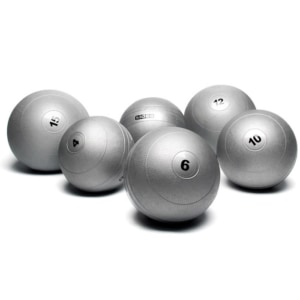
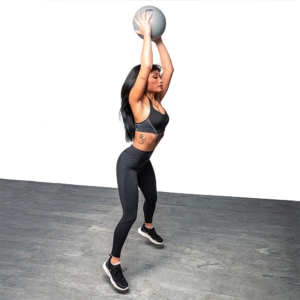
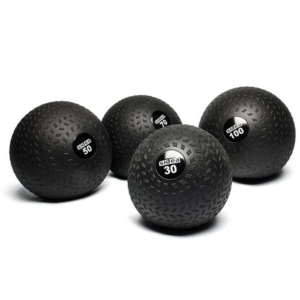
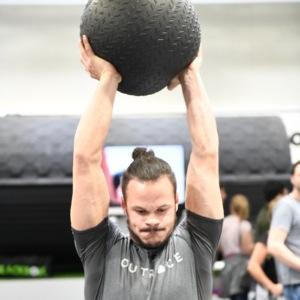
D-ball smashes do not bounce: they are designed for repeated slams onto the ground in WODs and metabolic conditioning circuits. They range from 2 to 20 kg. Strongman D-balls are available in heavier weights (from 30 to 100 kg) for exercises such as the Atlas stone lift, ground-to-shoulder lifts and carries. They are used in CrossFit boxes and in'strong fitness training.
Giant medicine ball
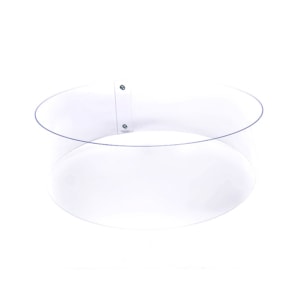
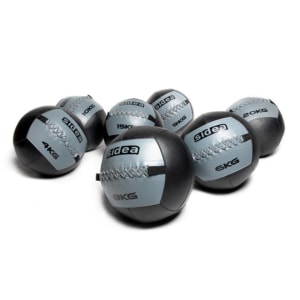
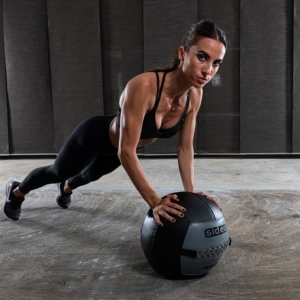
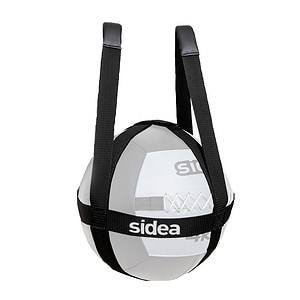
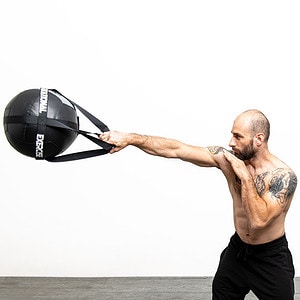
The giant medicine ball (up to 20 kg) is designed for bear hug carries, front squats with a hug, and heavy wall throws. It should be used in conjunction with the giant medicine ball strap for ballistic exercises and harmonic torsional exercises.
sitting ball
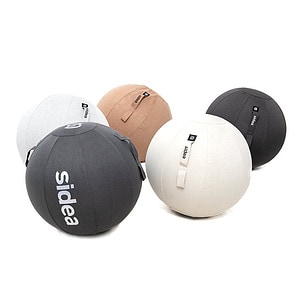
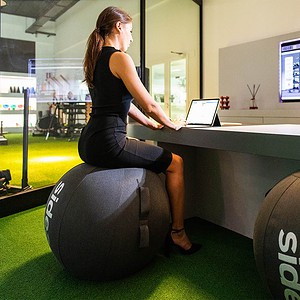
The sitting ball is a coloured fabric gym ball used as an active seat in an office or personal trainer’s studio to provide continuous postural stimulation, thereby ensuring constant activation of the core and postural muscles throughout the entire sitting period.
How to choose: a guide to use cases
Commercial gyms and exercise studios. Prioritise burst-proof gym balls in the three most commonly used diameters (55/65/75 cm), plus vertical display units for tidy storage. Add Pilates balls and soft balls for postural classes, and a set of 2–6 kg medicine balls for functional training classes. Also consider foam roller to complete the holistic centre.
CrossFit box and functional training. Smash D-balls ranging from 4 to 20 kg for slam exercises, plus giant medicine balls for wall ball exercises and specific conditioning work. In this context, traditional medicine balls are less useful than Smash D-balls and giant medicine balls.
PT and rehabilitation clinics. 65 cm gym balls as the average anthropometric standard; soft balls for isolated exercises; 2–4 kg medicine balls for return-to-activity protocols. It is useful to combine elastic bands in gradual stages.
Home gyms and garage gyms. Essential kit: a burst-proof gym ball with a diameter suited to your height, a 6–8 kg medicine ball with handles for versatility, and a 4–8 kg smash D-ball if you do high-metabolic-impact WODs at home. In 90% of cases, that’s all you need.
Technical glossary
- ANTI-BURST
- The construction technology used in PVC gym balls ensures that, in the event of a puncture, the ball deflates slowly rather than bursting instantly. This is a mandatory safety standard for commercial use in gyms and studios.
- WALL BALL
- An exercise involving throwing a medicine ball vertically against a wall at a specific target (typically 10 ft/3 m). It combines a squat and an overhead throw, a standard element in CrossFit WODs.
- SLAM
- A powerful move involving throwing the ball vertically onto the ground from an overhead position. It requires a non-bouncing ball (smash D-ball) to absorb the impact without causing a dangerous bounce.
- BEAR HUG CARRY
- Carrying a giant medicine ball held close to the chest over set distances. This exercise trains core stability, isometric grip strength and general conditioning, typical of strongman training.
- ATLAS STONE LIFT
- Heavy ball lift from the ground to a platform, which can be adapted for training using a giant medicine ball or a Strongman Smash D-ball. It engages the posterior muscle chain and involves a cross-body grip.
- CORE STABILITY
- The ability to maintain neutral spinal alignment under disturbance. The gym ball introduces instability, which increases the neuromuscular demand in exercises such as the plank, bridge and dead bug.
- PROPRIOCEPTION
- Awareness of the body’s position in space. Gym balls, sitting balls and soft balls stimulate proprioception through continuous micro-adjustments to posture on an unstable surface.
- ROTATIONAL POWER
- Power generated in the transverse plane, developed through exercises such as Russian twists, wood chops and lateral medicine ball throws. Essential in throwing sports and combat sports.
Comparison of Sidea fitness ball models
| Model | SKU | Weight/Diameter | Material | Main use |
|---|
| Grey Pilates Ball | 0451 | 1 kg / ≃11 cm | Soft PVC | Pilates matwork, isolated core |
| Soft Ball | SOFTBALL | ≃26 cm | Soft PVC | Pilates, rehabilitation |
| Gym Ball | GYMBALL | 45–85 cm anti-burst | Burst-resistant PVC | Classes, posture, core |
| Active Sitting Ball | ACTIVE-1 / ACTIVE-2 | ≃65 cm, lined | Fabric + PVC | Active ergonomic seat |
| Medical Ball | MEDBALL | 2–8 kg | Vulcanised rubber | Wall ball, twist, throw |
| Medicine Balls with Handles | MEDBALLMAN | 4–10 kg | Rubber + handles | Swing, ground-to-overhead |
| Smash D-Ball | SMASHBALL | 2–20 kg | Reinforced, non-bounce PU | Slam, WOD conditioning |
| Strongman Smash D-Ball | STRONGBALL | 30–100 kg | Reinforced PU | Atlas stones, heavy carries |
| Giant Medicine Ball | GIANTBALL | 2–20 kg | Synthetic rubber | Bear hug carry, wall throw |
| Giant Med Ball Strap | 0509 | Accessory | Reinforced strap | Transport of giant balls |
| Gym Ball Display | 0459 | Vertical structure | Metal | Gym ball storage |
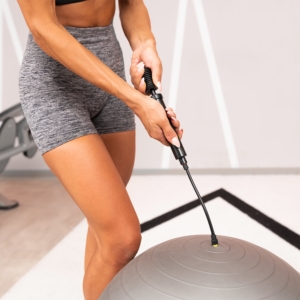
| Dual Function Pump | 0419 | Accessory | Reinforced plastic | Inflating a gym ball |
Frequently Asked Questions about fitness balls
Answers to the most frequently asked questions about the correct diameter of a gym ball, the differences between a medicine ball and a Smash D-ball, and inflation and maintenance can be found in the FAQ section at the bottom of the page.
Why choose Sidea
Sidea has been manufacturing and distributing fitness equipment since 1999. It is based in Gambettola (FC) and has a warehouse covering over 4,000 m² for immediate delivery. The range of fitness balls has been carefully selected to cater for all uses: from Pilates studios to CrossFit boxes, from rehabilitation departments to private home gyms. As an official StrongFirst distributor and Luxiaojun Based in Italy and a regular exhibitor at FIBO, Sidea selects equipment that is designed to meet real-world training protocols, rather than marketing trends. The Gym Design service, featuring 3D renderings, enables gyms and CrossFit boxes to plan the storage of fitness balls in a way that integrates seamlessly with the rest of their functional training equipment.













 0255 Speed Hurdle height 30 cm
1 × 13,73€
0255 Speed Hurdle height 30 cm
1 × 13,73€ 0257 Speed Hurdles height 50 cm
1 × 19,83€
0257 Speed Hurdles height 50 cm
1 × 19,83€ 0403 Monoblock EVA Mat 100 cm Black
1 × 32,03€
0403 Monoblock EVA Mat 100 cm Black
1 × 32,03€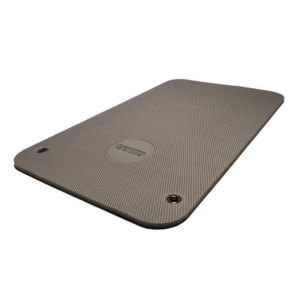 0403/1 Monoblock EVA Mat 100 cm Grey
1 × 32,03€
0403/1 Monoblock EVA Mat 100 cm Grey
1 × 32,03€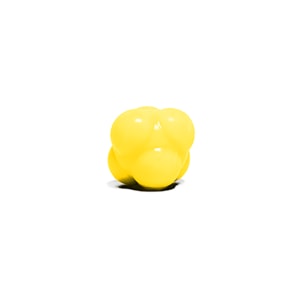 0465 Reaction Ball
1 × 7,63€
0465 Reaction Ball
1 × 7,63€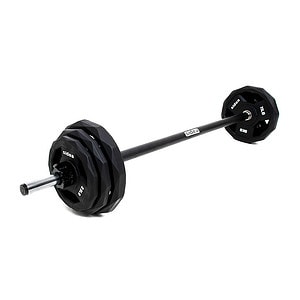 1129 PU Super Pump Kit 19.5 kg
1 × 123,53€
1129 PU Super Pump Kit 19.5 kg
1 × 123,53€ 1133 Vinyl Super Pump Kit 18 Kg
1 × 89,98€
1133 Vinyl Super Pump Kit 18 Kg
1 × 89,98€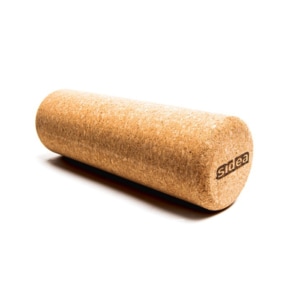 2499 Cork Roller
1 × 23,64€
2499 Cork Roller
1 × 23,64€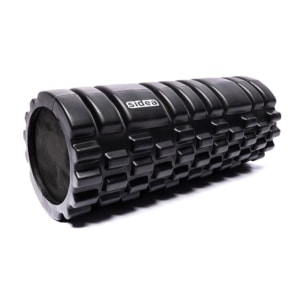 2500 Massage Roller
1 × 31,26€
2500 Massage Roller
1 × 31,26€ 2703 Control Jump Rope
1 × 6,10€
2703 Control Jump Rope
1 × 6,10€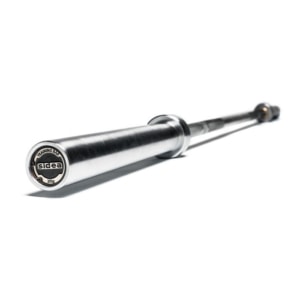 9015/8 Olympic Training Barbell
1 × 199,01€
9015/8 Olympic Training Barbell
1 × 199,01€ 9016/1 Lock Collar - Pair of collars Ø 50 mm
2 × 15,25€
9016/1 Lock Collar - Pair of collars Ø 50 mm
2 × 15,25€ 9018 Parallettes 80 cm
1 × 94,55€
9018 Parallettes 80 cm
1 × 94,55€ 9018/1 Parallettes 35 cm
2 × 85,40€
9018/1 Parallettes 35 cm
2 × 85,40€ 9029/1 V-Handle
1 × 79,30€
9029/1 V-Handle
1 × 79,30€ 9040/7K100 Crumb Bumper Plate 100 Kg Kit
1 × 357,28€
9040/7K100 Crumb Bumper Plate 100 Kg Kit
1 × 357,28€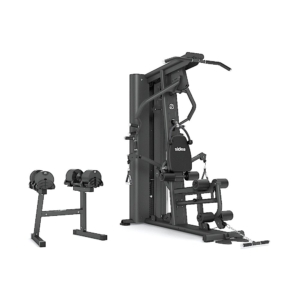 9087K2 AIOM – Nüobell® Dumbbell Pack
1 × 2.782,62€
9087K2 AIOM – Nüobell® Dumbbell Pack
1 × 2.782,62€ 9089A Cable Station Premium
1 × 1.830,00€
9089A Cable Station Premium
1 × 1.830,00€ 9089B Single Station Foot
1 × 152,50€
9089B Single Station Foot
1 × 152,50€ 9089K1 Cable Station Premium Smart
1 × 2.353,08€
9089K1 Cable Station Premium Smart
1 × 2.353,08€ 9102 Functional Wall Bars Pro
1 × 295,85€
9102 Functional Wall Bars Pro
1 × 295,85€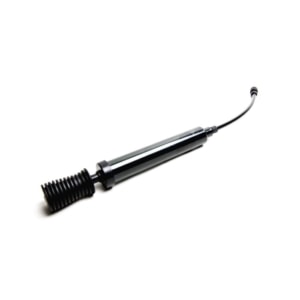 0419 Dual Function Pump
1 × 7,63€
0419 Dual Function Pump
1 × 7,63€

 Defibrillator AED
 Gift CardSidea
 Spare parts