












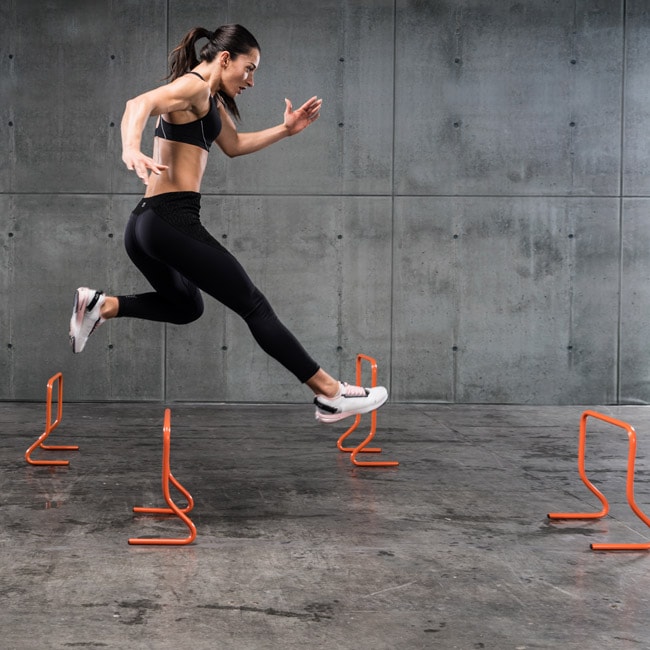
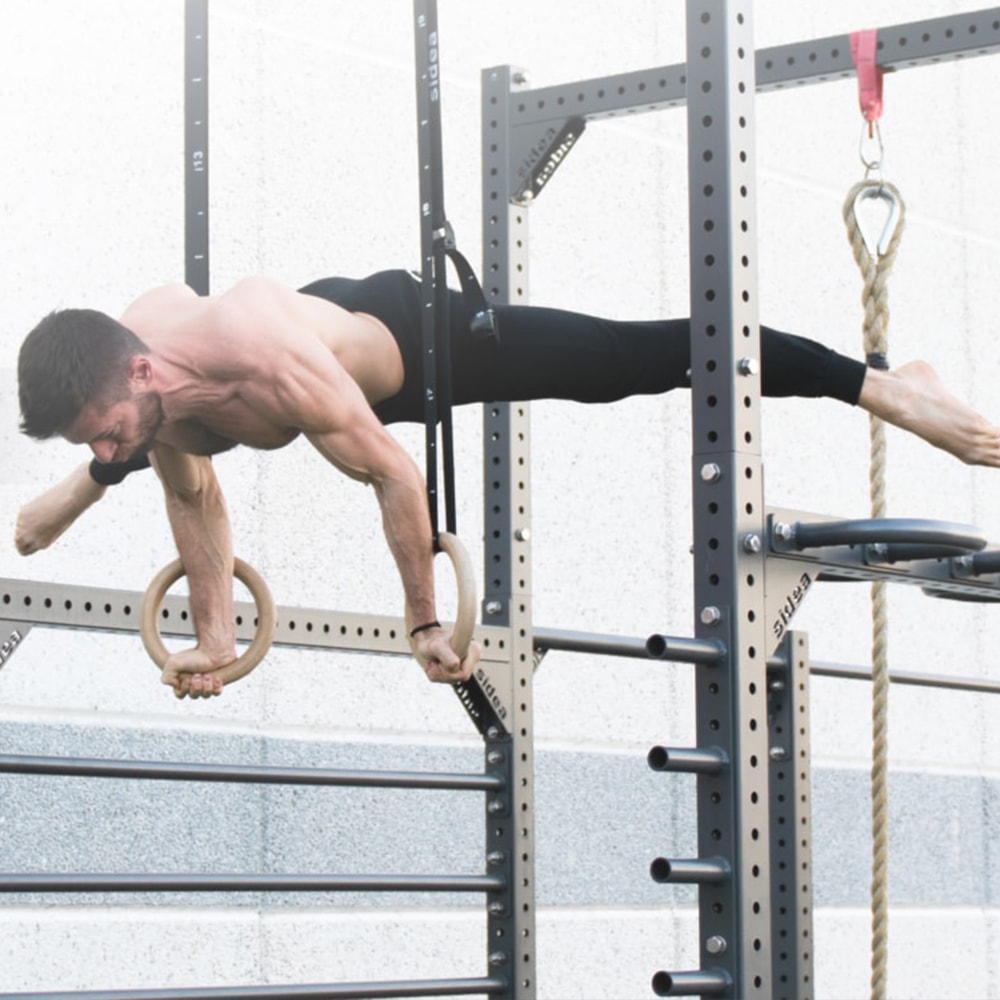



Sudden changes in speed and direction, an athletic performance at a very high intensity and on an inevitably unstable base such as a snow-covered slope: snowboarding taken to a competitive level certainly requires muscular and articular preparation of the highest magnitude to allow one to reach one's maximum potential, but also just to avoid potential damage and injury.
Snowboarding and the functional for Nadya Ochner
Nadya Ochner, snowboarder for the Fiamme Oro and Italian national team, is certainly aware of this. [LINK].The 25-year-old from South Tyrol, who came to Sidea to take part in the Fuori Fiera, says: "For me, functional training certainly plays an important role in the athletic preparation for snowboarding. Functional training allows us to train different muscles from the usual ones, including the smaller ones, which, however, play an important role in stabilising the main ones and consequently the entire muscular system. When snowboarding, this is certainly very useful, especially when the slope is ruined: in such cases, stability becomes fundamental in order not to suffer all the 'blows' of the terrain, thus avoiding falling. More generally though, the more stable you are on the piste and the more you are able to control your movements, the faster you will be able to go. There are actually very different opinions about this: some, a few to be honest, don't do functional training at all. Personally, I feel that doing it is good for me, so I'm in favour of it.
Training and phases of athletic preparation for snowboarding
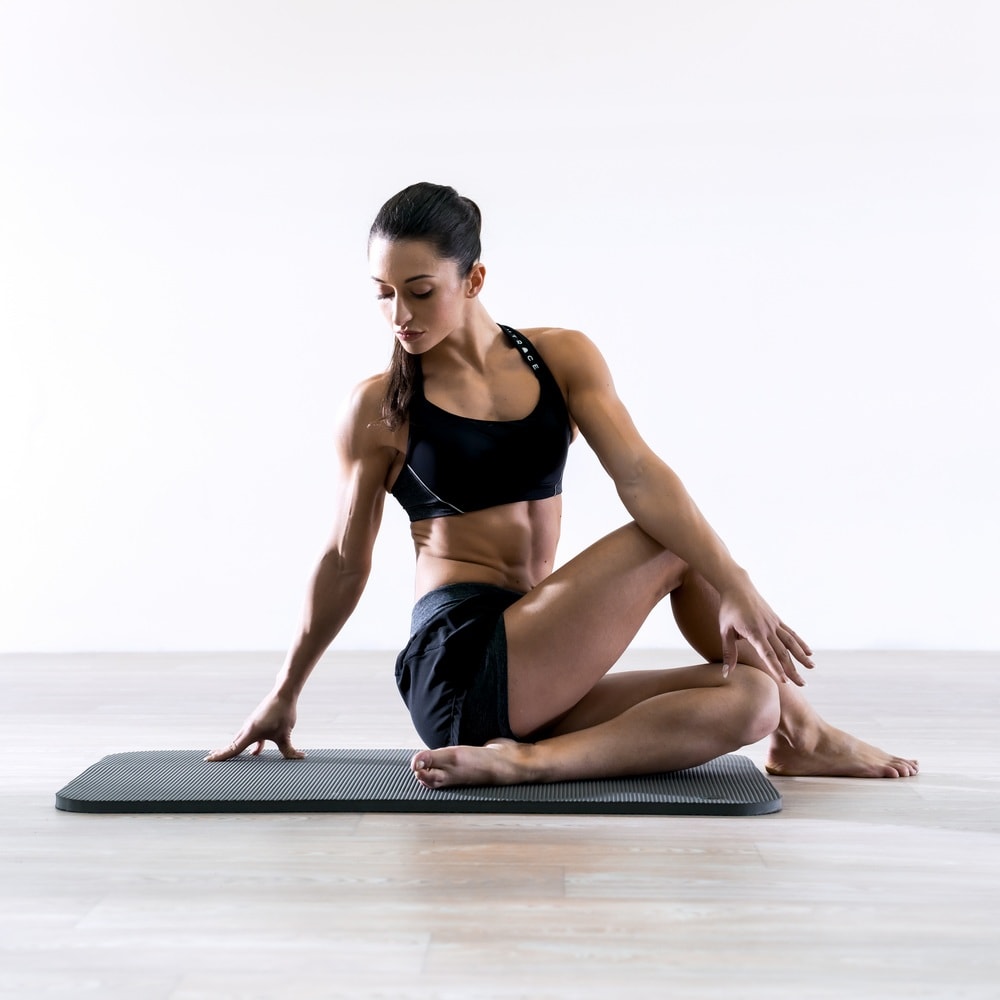
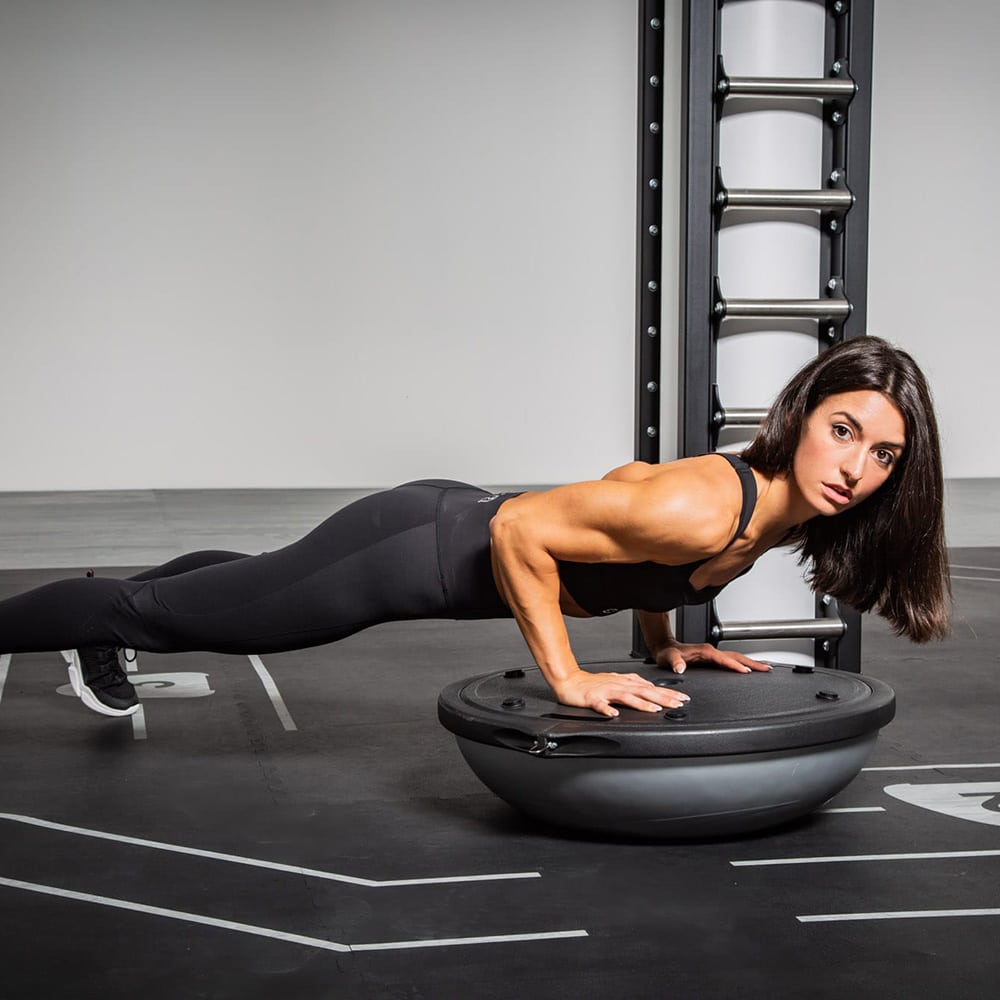
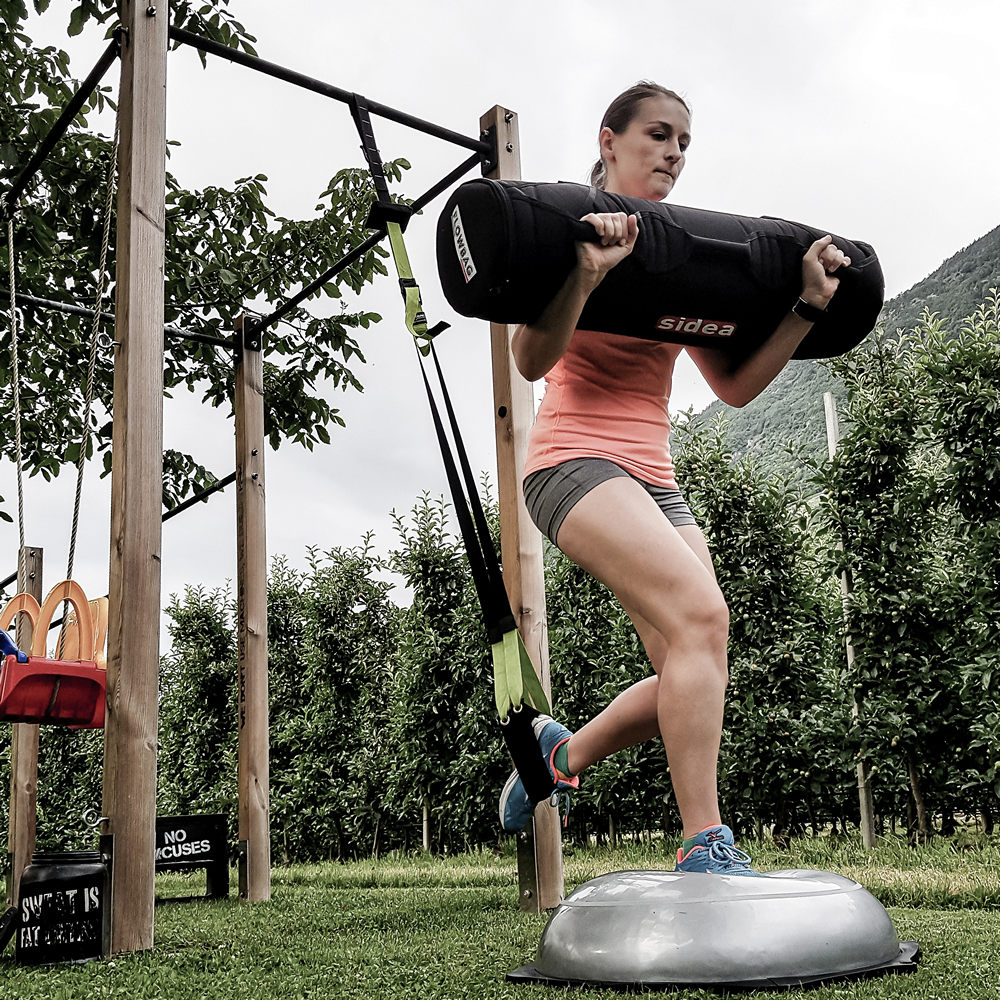
Athletic training in snowboarding is, however, obviously marked out differently over the course of the year, varying in training methods and intensity as the winter season approaches: 'On average, I train about five hours a day, five to six days a week,' Nadya continues. 'In the summer, I train athletically for between one and a half and three hours in the morning and the same in the afternoon. As far as functional training is concerned [LINK].I focus mainly on proprioceptive exercises on unstable bases [LINK]. (such as Duneball, tablets, pads, Flying [LINK]. etc.) in combination with light weights or Flowbags [LINK].This mainly strengthens the legs, abdominals and adductors. From September onwards, however, the rhythm changes, because the snow training begins: about 3-4 hours of snowboarding in the morning and 1-2 in the afternoon. I also followed this pattern to prepare for the PyeongChang Olympics, because it makes me feel good physically.
Nadya's achievements and the origins of her passion for sport
Already part of the Olympic team in the previous edition in Sochi 2014, Nadya Ochner also participated in the World Championships in Stoneham 2013, Lachtal 2015 and Sierra Nevada 2017, also achieving 6 podiums in the World Cup, including 3 victories in the Parallel-Mixed-Team-Slalom speciality. As with almost all athletes, Nadya's passion for snowboarding goes back a long way, however: "When I was five years old, I used to see my father going down the slopes and training between the poles with his friends, and I liked it so much that I decided to try it myself. I still remember the falls and the tears while I was learning, but I never wanted to stop: I wanted to improve, and that is still the case today".
Objectives in the near future
In this regard, Nadya also spoke about the next challenges that await her: "The next big goal is definitely the World Championships in Park City, which will start in the USA in February 2019. I am trying to prepare myself as well as possible both athletically and technically, in order to start with some good World Cup races from December onwards and arrive ready for the World Championships."
THE FIVE MUST-HAVES: FUNCTIONAL TRAINING FOR SNOWBOARDING
As Nadya Ochner rightly points out, snowboarding is a discipline of balance, stability, but also strength and reactivity in movement. Functional training can therefore play a fundamental role in preparing the athlete and providing him or her with the foundations on which to build at a technical level. Precisely for this purpose, before dedicating oneself to specific training on the movements that are most stressed in snowboarding, it is essential to work on improving joint mobility, proprioception and finally general strength. The exercises on an unstable base or with Flying and Flowbag mentioned by Nadya, which train proprioception and reactivity, can perfectly fit into this phase. Only at a later stage is it advisable to continue with more specific objectives, localised according to the stresses of the discipline in question. In this sense, the 'Five Musts' identified by WTA trainer Evgenia Babrovskaia (former trainer of Italian snowboarder Corinna Boccacini) for this sport are the Flyo [LINK]. Side Balance, the Kettlebell [LINK]. Side Skiing Squat, the Kettlebell [LINK]. Swing, the Flowbag [LINK]. Front Snatch & Lunge and the Flowbag [LINK]. Side Swing & Halo.
- Flyo Side Balanceperfect for introducing you to the control of your centre of gravity while performing a dynamic movement on an unstable base. The platform, due to its properties, is in fact particularly suitable for reproducing the conditions of snow sports.
- Kettlebell Side Skiing SquatIt allows you to train to transfer the fulcrum of the movement in the transverse plane to the hips, while keeping the knees as stable as possible, which could otherwise wear out and cause ligament injuries.
- Kettlebell SwingIt is part of a general preparation programme, being able to complete the flexion and extension movement of the hips that in snowboarding is perfectly matched to the alternating movements of slalom. Through this exercise, it is indeed possible to train the power of hip extension.
- Flowbag Front Snatch & LungeIt allows coordination of the hips and shoulders in the saggittal and frontal planes, increasing control of the body centre to counter instability.
- Flowbag Side Swing & HaloIt connects the lower and upper parts of the body, but in this case on a more complex plane of movement than the Front Snatch & Lunge, i.e. the transverse plane, which is particularly exploited in snowboarding. This coordinates the power of the hips (swing) with work on the mobility and traction force of the shoulders (halo).

 Defibrillator AED
 Gift CardSidea
 Spare parts