


















-
×
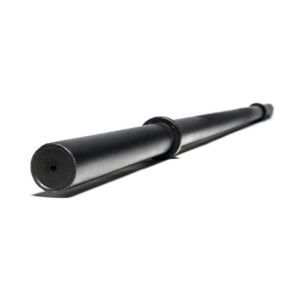 9015/7 Axle 50 Barbell
1 × 148,69€
9015/7 Axle 50 Barbell
1 × 148,69€ -
×
 HC001 Curve Run
1 × 4.068,75€
HC001 Curve Run
1 × 4.068,75€
The mind beats fatigue: training the brain to increase endurance
Mental fatigue and athletic performance
You know that empty-headed feeling after a long day of study or work, where even the idea of going for a run exhausts you? It's not just laziness: it's mental fatigue. This fatigue of the mind can affect our physical performance as much as (if not more than) muscle fatigue. When the brain is fatigued, concentration and lucidity drop, and every effort seems heavier.
The result? Even an athlete in top form can perform less if he arrives at training mentally drained.
Sports psychologists have discovered that the mind plays a key role at times of maximum fatigue. In other words, it is the brain - not the body - that decides when to stop. Often, the perception of effort makes us give up before the muscles are really at their limit.
So the question arises: what if we could train the brain to resist fatigue in exactly the same way as we train our muscles? That's where Brain Endurance Training comes in.
What is Brain Endurance Training?
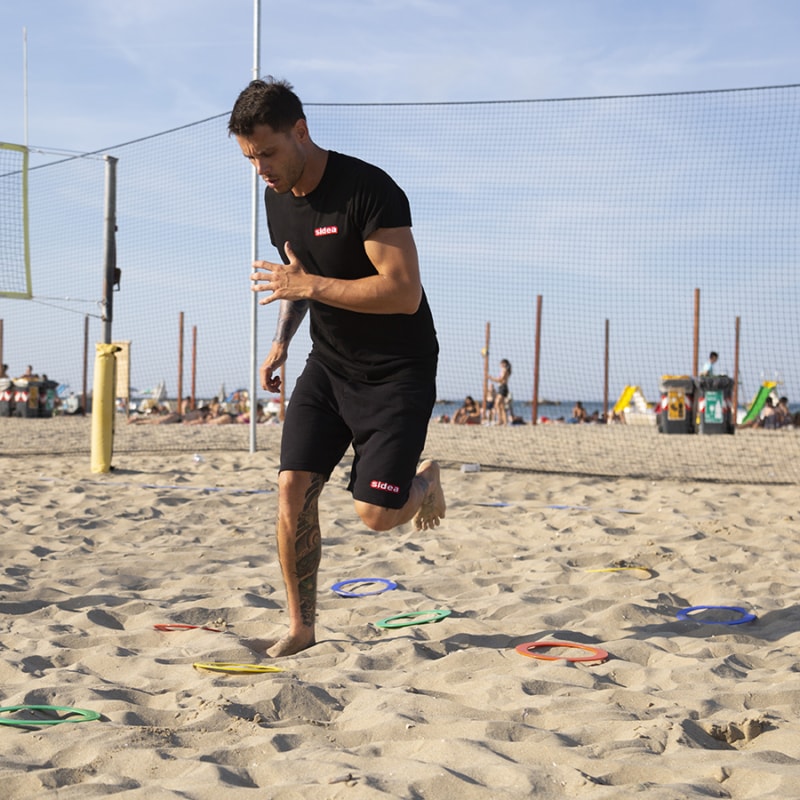
Brain Endurance Training (BET), literally 'brain resistance training', is an innovative method that combines mental and physical exercises in the same session. The basic idea is simple: just as we train muscles to make them stronger and more resilient, we can train the brain to be more resilient to fatigue.
In practice, during a BET training session, the athlete is asked to perform cognitively demanding tasks (such as puzzles, memory games or attention tests) while performing physical exercises, or immediately before or after the physical activity.
Imagine, for example, pedalling a bike and at the same time having to solve short puzzles on the screen, or doing series of squats interspersed with a few minutes of a Sudoku-type game. These 'double tasks' put the mind and body under simultaneous strain. Training the mind like a muscle means getting it used to maintaining high attention and control even when tired. Over time, the brain 'learns' not to sabotage performance when it feels fatigue, much like a trained muscle learns to withstand increasing loads.
The scientific study in brief: Dallaway et al., 2024
A group of researchers from the University of Birmingham led by Neil Dallaway wanted to put BET to the test in the laboratory.
The researchers recruited a few volunteers and divided them into two groups for a training programme lasting a few weeks: One group trained with the BET method (physical exercises combined with demanding mental tasks), the other group performed traditional physical exercises alone. Before and after the training period, all participants were tested with a series of physical exercises both after performing a strenuous mental task (to induce mental fatigue) and with a fresh mind. In this way, the researchers could assess whether the brain training made the athletes more resistant to psychological fatigue.
The results were enlightening. After a few weeks, the group that had practised Brain Endurance Training was able to do more repetitions in exercises such as push-ups, burpees and jump squats than the control group.
In other words, despite the mental fatigue induced by the test, those in the BET group had more 'petrol in the tank' at their disposal than the members of the control group. Curiously, the difference was most noticeable in dynamic exercises (repeated movements) and not in static ones: for example, in maintaining the plank position or sitting at the wall (wall-sit), the two groups were more or less even.
It should also be noted that adding mental tasks did not 'exhaust' the athletes: the BET participants did not feel more tired or perceive the exercise to be harder than their peers, despite the extra mental load. In short, this study showed that training the brain to cope with fatigue brings real and measurable benefits to physical performance, at least for certain types of exercise.
(For the curious: the authors also observed an improvement in some cognitive tests in the BET group. Basically, those who also trained mentally became slightly better at the proposed mind games, a sign of a 'double' benefit).
Why does it work? The mechanisms behind the benefits
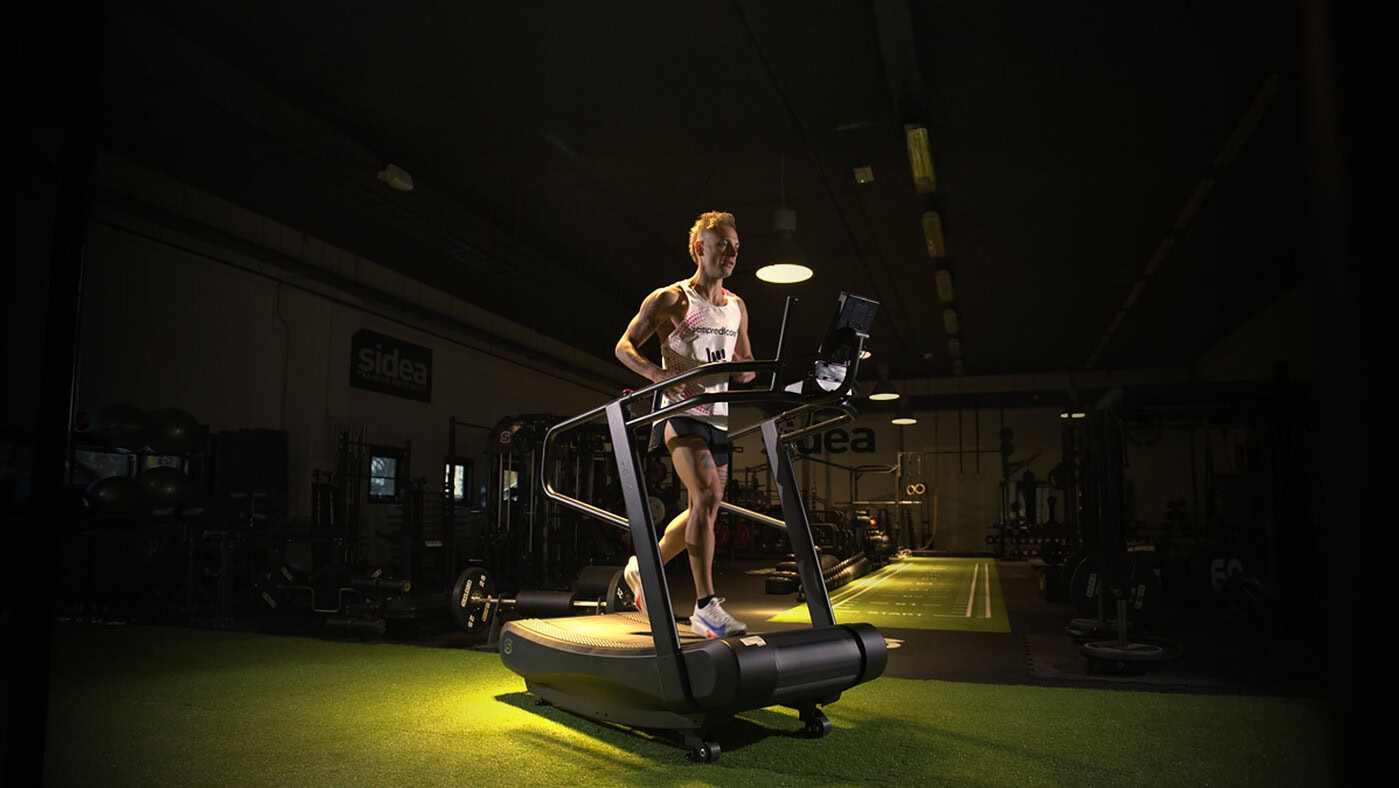
To understand why Brain Endurance Training is effective, let's think about how mental fatigue affects our bodies. When you are mentally fatigued, doing physical activity seems more difficult than it really is. This happens because brain fatigue distorts and increases our perception of effort: the brain sends stop signals to the body well before our actual physical limit.
In practice, a tired mind convinces you to slow down or even stop, even though your muscles would still have energy to give.
BET acts on this very mechanism. By training the brain to tolerate fatigue, you move the threshold of that unbearable perception of effort forward. It is like teaching your mind not to give up so soon. During combined training, the brain gradually learns to cope better with complex tasks even when it is already under physical strain, increasing its tolerance to mental exhaustion.
The result? In competition or training, the athlete who has done BET stays clear-headed and motivated for longer, because his or her brain is 'used to' the feeling of mental fatigue and does not immediately trigger the surrender signal. In other words, BET helps to reduce the gap between physical and mental endurance, allowing the muscular potential built up through traditional training to be fully utilised.
Practical applications: how to integrate BET into training
One question arises: How can we apply Brain Endurance Training in real life? Here are some practical examples of how athletes - and even ordinary people - can incorporate this technique into their daily training:
- During endurance training: If you are a runner or cyclist, try incorporating short mental exercises during cardio sessions. For example, on a treadmill or indoor exercise bike, you could solve memory quizzes or simple puzzles on the tablet during slow recovery phases. This way you train your mind to stay active while your body is under stress (and avoid dangerous distractions that you would have outdoors).
- In the gym between sets: Even those who do weights or circuit training can add a dash of BET. You could keep a mind games app on your phone handy: between one set of squats and the next, do 2-3 minutes of a logic game or mental calculation exercise. This way you simulate cognitive fatigue during recovery, making the next set more challenging for the mind. For example, some athletes perform weight-lifting sequences and, instead of resting completely, concentrate on a cognitively demanding task before resuming the exercises.
- In everyday life: The great thing about BET is that you don't have to be a professional athlete to experience it. If you have ever gone to the gym after a long, stressful day, you have already experienced the principle of BET: you were challenging your body e your fatigued brain. You can voluntarily try it every now and then as a workout: for example, after an afternoon of intense study, go for a run or practice your favourite sport. It will be hard at first, but over time you may notice improvements in your ability to stay focused and perform despite mental fatigue.
An important tip from the experts: Brain Endurance Training should be incorporated judiciously. Being rather strenuous, it is better to use it like a 'fine spice' in a recipe and do it in an already well-established preparation, rather like the infamous icing on the cake. Coach and sports psychologist Christopher Ring warns that BET "makes training even harder" and is especially suitable for highly motivated athletes.
Before embarking on double tasks, therefore, make sure that you have built a good base of physical preparation and that you manage all aspects of preparation such as: motor patterns, nutrition, recovery and sleep - the foundations of any performance. Only after you have taken care of these aspects can you add some mental exercises to your workouts, perhaps in the periods away from competitions when you can afford to get more tired.
Concluding reflections
In an age when we look for every possible advantage to improve performance, Brain Endurance Training reminds us that the brain also has its 'gym'. Training the mind to resist fatigue is becoming the new frontier for endurance athletes, professional sportsmen and fitness enthusiasts. We have seen how mental fatigue can affect physical performance and how practising tolerance can bring important benefits: more repetitions completed, greater clarity at critical moments and, in general, a feeling of control over one's fatigue. The brain, just like the muscles, responds to training stimuli by adapting and becoming stronger.
The great thing is that this scientific discovery does not remain the preserve of laboratory studies: with a few tricks, we can all try to train our mental stamina a little in everyday activities. In the future we might see more and more athletes doing puzzle sessions after training or cyclists with tablets on their handlebars solving games during indoor cycling. Who knows, maybe the next personal best you break will not depend on a new purely physical exercise, but on how you have hardened your mind not to throw in the towel. After all, body and mind make a team: challenging your mind could be the key to taking your physical performance to the next level.
Dr. Michael Maraldi


HISTORY OF TRAINING: THE SCIENCE OF MOVEMENT
Strength training and its evolution throughout history: from the athletes of ancient Greece to modern [...]
16
Oct
Oct
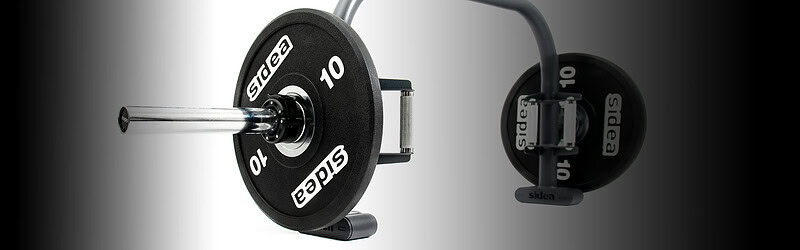
Hex Bar: what it is, which exercises to do and how to choose the right one
Strength, stability and freedom of movement: find out why the Hex Bar is an interesting alternative to [...]
09
Oct
Oct

Does strength come from the ground? The Military Press and the body’s hidden synergy
Before you can push, you need something to push against. Before force comes support. [...]
29
Sep
Sep
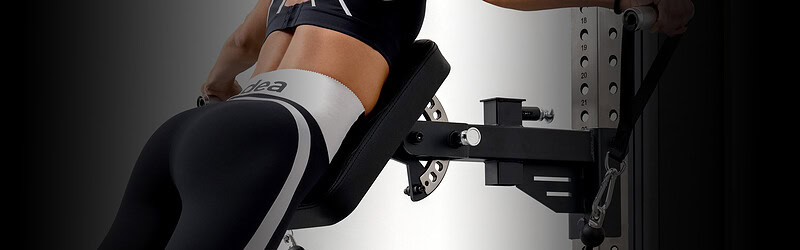
PHA and Jump Sets on the 9089K1 Cable Station: train strength, circulation and muscle density all in one station
PHA and Jump Sets on the 9089K1 Cable Station: build strength, improve microcirculation by increasing [...]
28
Jul
Jul
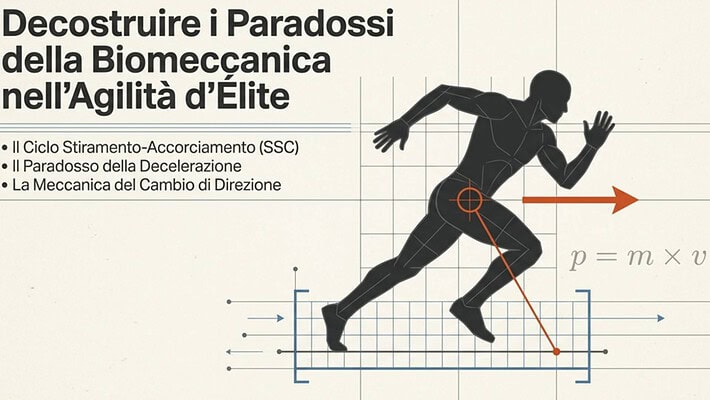
Elite agility: why changing direction isn’t just a matter of strength
Introduction: Agility is not just about being quick on your feet. When we talk about agility, the temptation [...]
30
Jun
Jun

Maximum strength and team sports
When strength becomes performance: Dr Mauro Franzetti’s contribution to the Summit of Strength [...]
26
Jun
Jun
ATHX Games 2026: what it is, how it works and how to prepare for the hybrid competition
The evolution of HYBRID training In recent years, competitive fitness has evolved towards formats that are increasingly [...]
18
Jun
Jun

Definitive Guide to Bumper Plate Selection: How Not to Get Your First Set Wrong and Optimise Performance
The truth that no one tells you? Choosing a bumper disc is not just a matter [...]
29
May
May
Sources
- Brain Endurance Training Improves Physical, Cognitive, and Multitasking Performance in Professional Football Players - Walter Staiano, Michele Merlini, Marco Romagnoli, Ulrich Kirk, Christopher Ring, Samuele Marcora (Int. J. Sports Physiol. Perform., 2022).
- Prior brain endurance training improves endurance exercise performance - Neil Dallaway, Sam Lucas, Joesph Marks, Christopher Ring (Eur. J. Sport Sci., 2023)
- Brain Endurance Training Improves and Maintains Chest Press and Squat Jump Performance When Fatigued - Jesús Díaz-García, Miguel Ángel López-Gajardo, José A. Parraca, Nunho Batalha, Rubén López-Rodríguez, Christopher Ring (J. Strength Cond. Res., 2024)
- The Effects of Mental Fatigue on Physical Performance: A Systematic Review - Jeroen Van Cutsem, Samuele Marcora, Kevin De Pauw, Stephen Bailey, Romain Meeusen, Bart Roelands (Sports Medicine, 2017)
- Mental Fatigue Might Not Be So Bad for Exercise Performance After All: A Systematic Review and Bias-Sensitive Meta-Analysis - Darías Holgado, Daniel Sanabria, José C. Perales, Miguel A. Vadillo (Journal of Cognition, 2020)
- Cognitive tasks elicit mental fatigue and impair subsequent physical task endurance: Effects of task duration and type - Neil Dallaway, Sam J. E. Lucas, Christopher Ring (Psychophysiology, 2022)


 Defibrillator AED
 Gift CardSidea
 Spare parts