



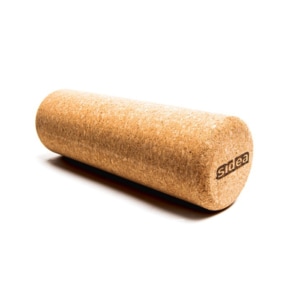
Massage rollers and balls for myofascial release before and after a session: made from natural cork, rubber and EVA, they offer surfaces of varying densities. Eight products designed for neuromuscular warm-ups, spinal mobility, release of plantar trigger points and post-WOD recovery in CrossFit boxes, commercial weight rooms and home gyms.
Natural cork for balls, peanut balls and rollers. Smooth rubber balls, spikes for the glutes and for plantar, hamstring and paravertebral stimulation
Compact sizes that fit in a PT bag or athlete’s kit
Balance training
Guida completa: Massage Roller & Ball
Massage Rollers & Balls: A Complete Guide
Myofascial self-massage tools are designed to reduce soft tissue tension, improve joint range of motion and prepare the neuromuscular system for stimulation. The Sidea range comprises eight products made from cork and technical materials, from cork rollers to spike balls, designed to target large muscle groups such as the posterior chain or specific areas such as the foot, glutes or rhomboids. They are used during both warm-up and cool-down phases, integrating SMR (Self-Myofascial Release) protocols with active mobility exercises. These are cost-effective tools that have a place in any serious training programme.
What is a Massage Roller & Ball: definition and function
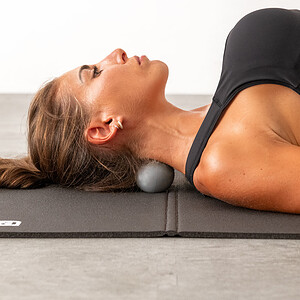
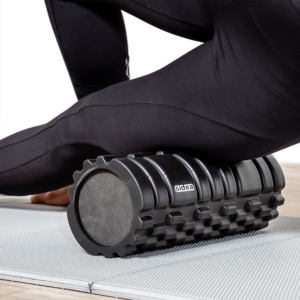
The term ‘Massage Roller & Ball’ refers to a range of cylindrical and spherical tools used for myofascial self-massage. The pressure exerted by body weight on the tool generates a mechanical stimulus on the fascia and the underlying muscle tissue. The aim is not therapeutic in the medical sense: it is an intervention targeting tissue quality and neuromuscular perception, useful for reducing muscle tone at rest and restoring range of motion.
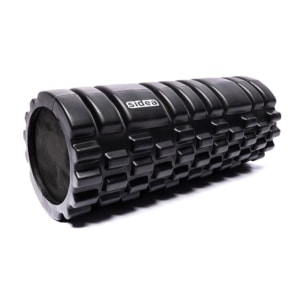
Compared with the EVA and polyethylene foam roller, cork models offer a higher density and a firmer feel, making them suitable for athletes seeking firm stimulation. The balls, on the other hand, allow for targeted massage that the roller, due to its shape, cannot replicate.
Types of Massage Rollers & Balls
Cork Roller — natural cork rollers
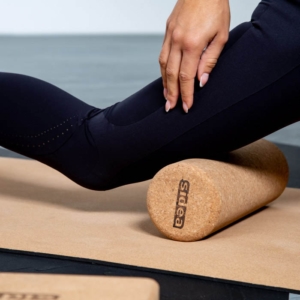
The cork roller uses cork as its main material: it has a compact surface, provides a consistent grip even when sweaty, and has a medium-to-high density. The 2499 model is designed for working the posterior chain, quadriceps and latissimus dorsi. Unlike EVA, cork does not lose its shape over time, maintaining constant pressure throughout months of intensive use.
Cork Ball and Peanut Ball
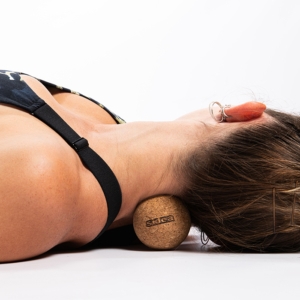
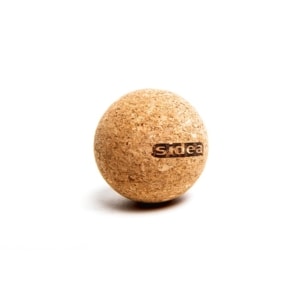
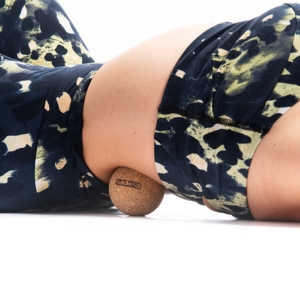
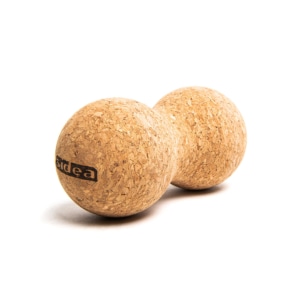
The cork balls (1274 Cork Ball) are used to target specific points: the sole of the foot, the gluteus medius and the subscapularis. The peanut-shaped ball (0282 Cork Peanut Ball) is designed to nestle against the sides of the spinous processes, allowing the paravertebral muscles to be worked without compressing the spine. It is the tool of choice for the cervical-dorsal region.
Massage Roller and Spike Ball
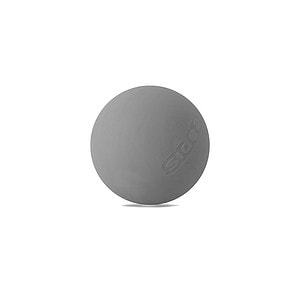
The 2500 Massage Roller and the 1276 Spike Massage Ball, made of rubber with a spiked surface, provide a more intense massage, suitable for superficial fascia stimulation and for warming up the soles of the feet. The 1275 Hard Massage Ball, on the other hand, features a smooth, high-density surface for deep pressure.
Kit and Balance Pot
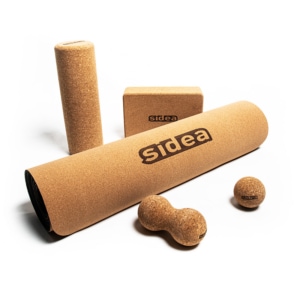
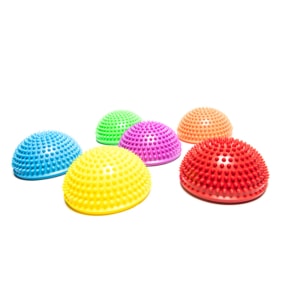
The 0282K Holistic Cork kit combines a roller, ball and peanut in a single solution for mobile physiotherapists and holistic practices. The Bump Stimulating Balance Pots (BALPOTS) combine proprioceptive work and plantar stimulation, integrating with protocols for balance training.
How to choose: a guide to use cases
Commercial gyms and weight rooms
You need sturdy equipment that can withstand daily use by dozens of users. Cork rollers and cork balls are the most sensible choice: the material does not absorb sweat to any significant extent and withstands sanitisation cycles well. It is best to have spare sets to avoid queues in the stretching area.
Personal Trainer Courses
Mobile PTs need compact, portable tools. The 0282K kit covers all your myofascial therapy needs in a single case. The balls are ideal for guided trigger point work during one-to-one sessions.
CrossFit Box
After a WOD, athletes look to quickly release tension in their quadriceps, glutes and latissimus dorsi. Cork rollers and hard balls are the most popular tools. They are also useful before weightlifting sessions to improve thoracic mobility.
Home gyms and garage gyms
All you need are two or three pieces of equipment, chosen to address your individual weaknesses: a roller, a hard lacrosse-style ball and a peanut ball for the spine. The cost is minimal compared to the impact on the quality of your training.
Technical glossary
- SMR (Self-Myofascial Release)
- A self-massage technique in which the athlete uses their own body weight on a piece of equipment to apply pressure to fascia and muscles. The aim is to reduce muscle tone and improve tissue quality.
- Trigger points
- A hyperirritable point within a taut muscle band, which is tender to pressure and may be responsible for referred pain. Small-diameter balls are the specific tool used to treat it by applying sustained pressure.
- Myofascial band
- Connective tissue that surrounds muscles, muscle groups and organs. Its elasticsFlexibility and smoothness directly influence joint range of motion and the transmission of forces during athletic movement.
- Shore hardness
- A parameter that measures the hardness of plastic and rubber-like materials. In massage balls, it determines the level of pressure applied: higher values indicate a stiffer surface and deeper stimulation.
- Pin and stretch
- A technique in which pressure is maintained with the ball on a specific point whilst actively mobilising the downstream joint segment. It is used to work simultaneously on soft tissue and joint range of motion.
- Peanut ball
- A double, peanut-shaped ball designed to sit on either side of the spine without compressing the spinous processes. Used to release the cervical, thoracic and lumbar paravertebral muscles.
- Neuromuscular warm-up
- A preparatory phase combining mobility, activation and proprioceptive stimulation. Brief use of foam rollers and exercise balls before high-intensity training improves neuromuscular response without impairing performance.
Comparison of the Massage Roller & Ball Sidea models
| Code | Product | Material | Main use |
|---|---|---|---|
| 2499 | Cork Roller | Natural cork | SMR for the hamstrings, quadriceps and latissimus dorsi |
| 1274 | Cork Ball | Natural cork | Trigger points in the glutes and the sole of the foot |
| 0282 | Cork Peanut Ball | Natural cork | Cervical and thoracic paravertebral muscles |
| 0282K | Holistic Cork Kit | Natural cork | Complete set for personal trainers and holistic practices |
| 2500 | Massage Roller | Engineering rubber | Warm-up and superficial release |
| 1276 | Spike Massage Ball | Rubber with spikes | Plantar and proprioceptive stimulation |
| 1275 | Hard Massage Ball | High-density rubber | Deep pressure on trigger points |
| BALPOTS | Bump Stimulating Balance Pot | Bump rubber | Balance training and plantar stimulation |
Frequently Asked Questions about Massage Rollers & Balls
Answers to the most frequently asked questions about how to use the equipment, differences between materials, incorporating it into training programmes and maintenance are set out in the dedicated FAQ section.
Why choose Sidea
Sidea has been operating since 1999 in the distribution of professional fitness equipment. The selection of rollers and balls follows the same approach as that applied to the product range strength: essential equipment, densities appropriate to the intended use, and materials that can withstand daily use in commercial settings. The technical team works alongside gyms and CrossFit boxes to help them choose the right set based on the number of users and the training protocols employed. The partnership with StrongFirst and Luxiaojun It reinforces the brand’s positioning in weight training and serious athletic preparation.
Domande frequenti - Massage Roller & Ball
-
Cork is denser and provides a more consistent level of pressure over time, without deforming. EVA offers a softer, more yielding feel, suitable for those new to myofascial work or looking for a less intense stimulus. In professional settings, cork is preferred because it retains its original shape even after months of daily use.
-
The peanut ball should be placed on the floor with the athlete lying on their back, so that the two spheres are positioned on either side of the spinous processes. A slow rolling movement of the spine is performed, maintaining pressure on the paravertebral muscles without ever compressing the vertebrae. A duration of 60–90 seconds per area is recommended, with slow, diaphragmatic breathing.
-
During the warm-up phase, a total of 5–8 minutes is sufficient, focusing on the muscle groups involved in the session. Longer pre-workout warm-ups may temporarily impair neuromuscular activation. Extensive release work should be carried out on rest days or at the end of the session, when it can last 15–20 minutes across several muscle groups.
-
Moderate discomfort is normal at active trigger points. However, the pain should not be sharp or radiating: if it is, you are working too aggressively. A good guideline is a score of 6–7 out of 10 on the subjective pain scale. If the tissue remains sore the following day, the intensity or duration should be reduced.
-
Yes, the 1274 cork ball is recommended for releasing the plantar fascia. The athlete stands with their foot on the ball and rolls it from the heel to the metatarsal heads for 60–90 seconds on each side. This plantar exercise directly influences the mobility of the posterior chain, with measurable effects on the forward trunk flexion test.
-
No. These are complementary techniques, not alternatives to the work of a healthcare professional. Myofascial self-massage addresses tissue quality and mobility under conditions of normal function. In the event of persistent pain, significant joint restrictions or injuries, you should always consult a physiotherapist or doctor before continuing with self-massage.
-
Cork should be cleaned with a slightly damp cloth and mild soap, avoiding prolonged soaking or harsh detergents which may damage the surface. In commercial settings with multiple users, we recommend wiping the surface with a non-alcoholic disinfectant wipe after each use. Cork is naturally antimicrobial but not waterproof: it should be left to air-dry.
-
For a personal trainer who works mainly with adult clients focusing on mobility and recovery, the 0282K kit covers the basic requirements with a roller, ball and peanut. High-volume training centres or advanced athletes should supplement their kit with a hard ball (1275) and a spike ball (1276) to increase the variety of stimuli available.
-
BALPOTS serve a dual purpose: they provide proprioceptive feedback when stood on barefoot, and stimulate the soles of the feet thanks to their rubber bumps. They are used in foot reactivation programmes for older people, as part of runners' warm-ups, and in foot stabilisation circuits as part of athletic training.
-
Those trying myofascial self-massage for the first time can start with EVA to get used to the sensation, then move on to cork once the sensitivity has decreased. Those who already have experience of intense training and are looking for a permanent solution can start directly with cork, skipping the intermediate stage.
-
Sidea offers a range of instalment payment options to make it easier to purchase professional equipment. Please see the dedicated page: Sidea Payment Options.
-
If you work in the fitness or sports sector, register on the website as a Professional or as an ASD to gain access to the price list reserved for industry professionals. Pro registration allows you to view exclusive discounts and special terms across the entire Sidea catalogue.
-
Yes, Sidea is an authorised supplier on the MEPA (Public Administration Electronic Marketplace). Public bodies, schools, universities, local authorities and public sports facilities can purchase Sidea equipment via the Acquisti in Rete PA platform. For information on product codes and direct MEPA orders, please contact Sidea customer service.
-
Sidea guarantees the right to cancel within 14 days of delivery for all online purchases, in accordance with current legislation. Products must be returned undamaged and in their original packaging. For full details on returns, refunds and the warranty, please see the Terms and Conditions of Sale page.
-
Sidea has been designing and distributing professional fitness equipment since 1999: over 25 years’ experience serving gyms, sports coaches, CrossFit boxes, personal training studios and enthusiasts of advanced home fitness. Official distributor for StrongFirst and Luxiaojun, exhibiting at the FIBO international trade fair and technical sponsor of the Summit of Strength. Every product is developed with a focus on durability, functionality and suitability for real-world use. The Gym Design service offers bespoke design with 3D renderings. A warehouse covering over 4,000 m² in Gambettola (FC) ensures rapid order fulfilment, direct technical advice and a special price list for professionals and amateur sports clubs (ASD).

9012/4 OPEN HEX BAR
2499 Cork Roller