
















A sport that is followed and practised all over the world, handball has garnered many fans among sportsmen and sportswomen. Of very remote origins (the Romans already practised it under the name of harpastum), is one of the team sports in the indoor category and is the one with the largest court. Like all sports, handball also needs specific athletic preparation as it has characteristics that make it unique in its practice. Without adequate technical and athletic preparation, the risk of injury would be high, as it is an activity with a high impact on both joints and muscles.
Handball characteristics
Handball is played 7 vs 7, in a field 40 metres long x 20 metres wide: the distance to be covered is not small and even if the team consists of 7 players, the energy expenditure is high. Precisely because of this characteristic, one can think that on a metabolic level this activity can be very similar to basketball, with short, fast actions, jumps and sudden changes of direction.
Handball is part of the alternating aerobic-anaerobic activities, which is why athletic preparation plays an absolutely important role as it requires a good muscular component in addition to the cardio-respiratory one.
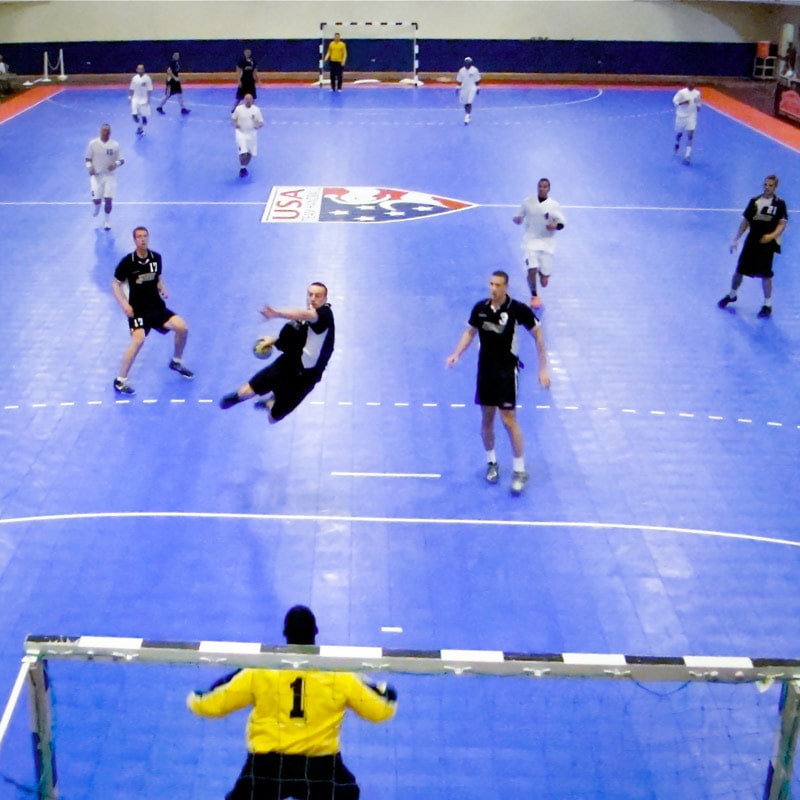
Athletic preparation for handball: aerobic power and muscle strengthening
To best prepare for handball, we can consider two macro-sets in athletic preparation, the part concerning aerobic strengthening and the more specific part concerning muscle development and strengthening.
Aerobic power: what it is and how to train it
Aerobic power represents the maximum volume of oxygen that can be utilised by the body in the unit of time during a maximal effort; once the maximum limit is reached, each increase in intensity does not cause an increase in oxygen intake.
"The aerobic mechanism is important in the recovery phases to pay off oxygen debts more quickly". (The Optimal Workout, Weineck)
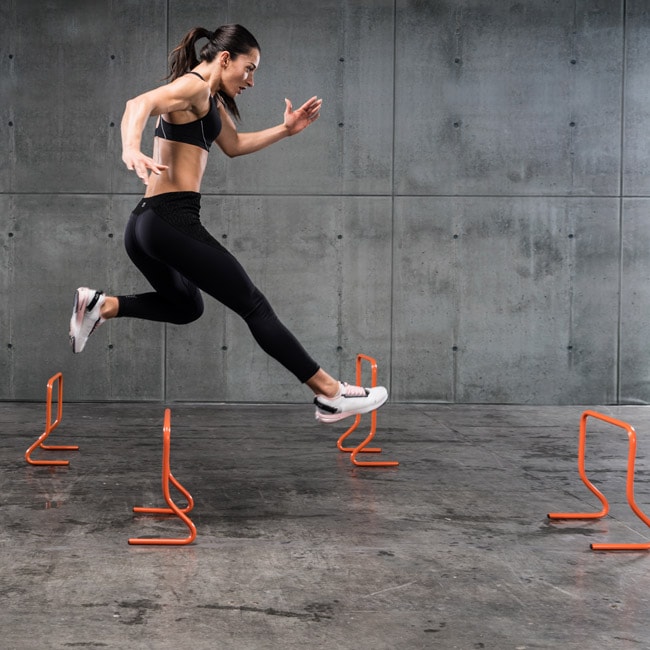
One of the most frequently used methods of improving aerobic power is intermittent training. This method consists of performing repeated sprints, shuttles or game actions for about 15-20 seconds and with recoveries that can be equal to the work time (1:1) or even reduced by half (2:1).
If you decide to work with non-full recoveries, this will help you to accustom your body to disposing of lactate and maintaining a constant oxygen debt. The choice of square footage is always at the athletic trainer's discretion, but my advice is to work on a maximum of 25 metres, which can represent a restart or goal cover in the case of a defensive phase. Many trainers prefer to work on smaller distances, 10-15 metres, while carrying out shuttles. This method has a very strong impact on the muscles because braking and restarts require good muscle tone capable of contracting in an eccentric manner and releasing energy in an explosive manner in order to restart.
The report work:rest can undergo variations during the year, in the preparation period incomplete recoveries can be implemented, while during the year, with the addition of championship competitions, the recovery time can be kept equal to the work time, in order to maintain that muscular 'brilliance' that all coaches seek in their athletes. In any case, the working time should never exceed 3-4 minutes of intermittent work. Between sets, recovery should always be complete, and the performance of low-intensity exercises such as joint mobility or stretching can help to dispose of the accumulation of fatigue.
Muscle strengthening
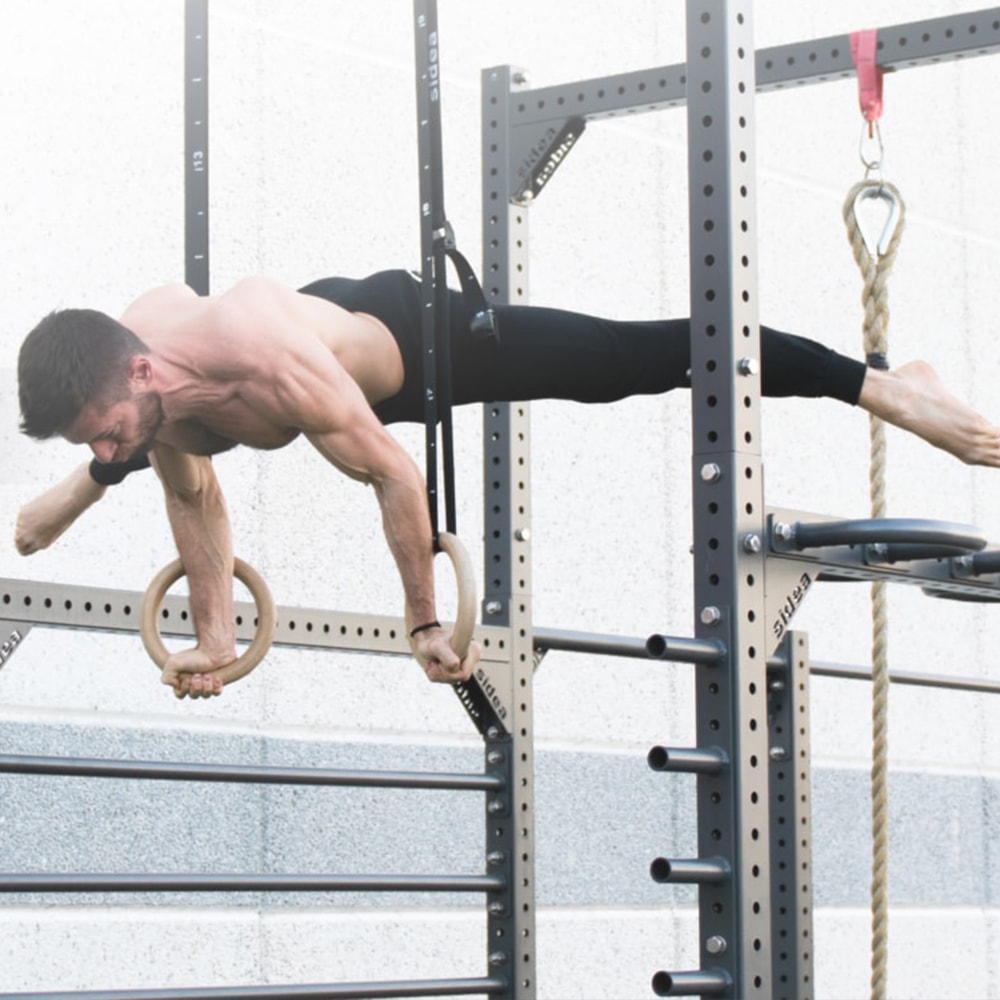
With regard to muscle strengthening, one can perform 'dry' exercises or exercises in the field. Dry' exercises, i.e. everything performed with weights in the gym, should be functional to the muscular demands presented by the specific activity. Jumps, changes of direction, throws and twists are the movements that occur in each action.
In the off-season, more emphasis could be placed on volume, increasing the number of sets and repetitions to learn technique and tone the muscles, while during the rest of the year the choice should be on intensity, a few repetitions but with a high load (75-80% 1RM) to go for maximum explosiveness.
Many are the coaches who decide to train this with the same method as intermittent training. Small circuits of 5-6 exercises in which athletes take turns performing these movements for 20-30 seconds and changing exercises each time. My advice is to use both exercises performed with overload and movements performed directly on the field such as sprints, restarts or jumps. There is no specific exercise, but the sum total of all the skills that this sport requires.
Prevention
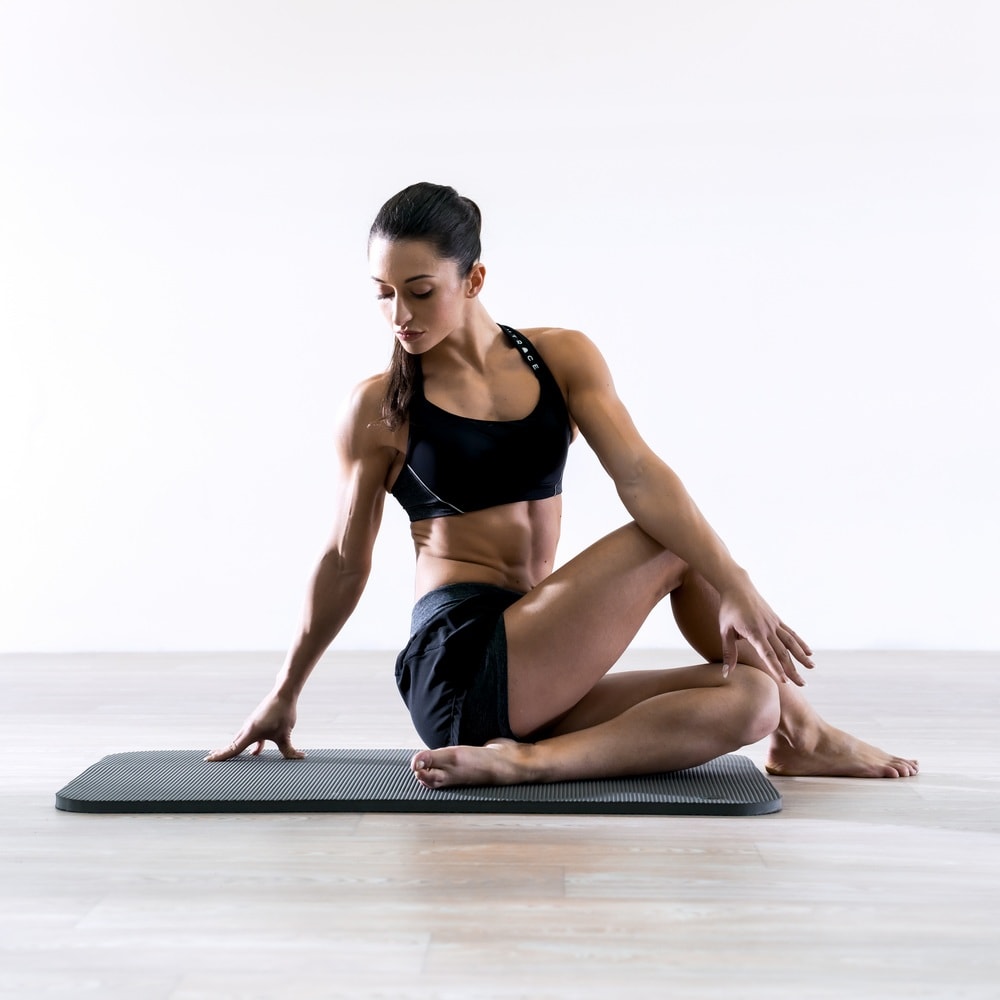
In addition to the development and improvement of these two macro-sets we have analysed, prevention is the basis for improving and maintaining our sports performance. Performing mobility exercises before and after training will help you maintain correct posture without incurring unbalanced or overloaded muscles.
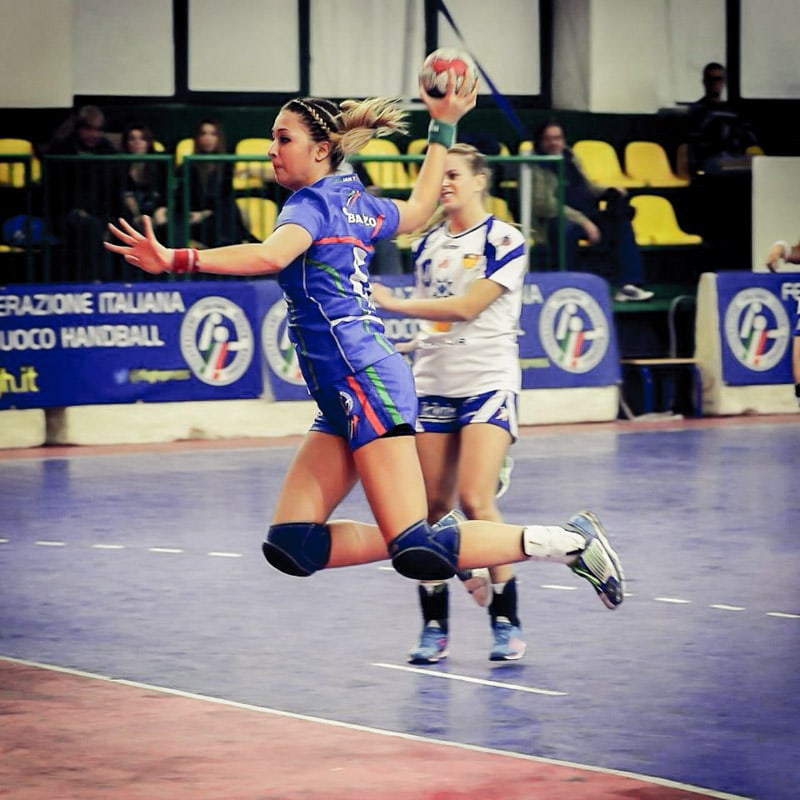
The large number of passes, throws and shots on goal place no small stress on your shoulder and torso as these movements occur most of the time in torsion. Core stability, mobility and stretching must be a constant in your training as they prepare the body for the stresses involved in sport.
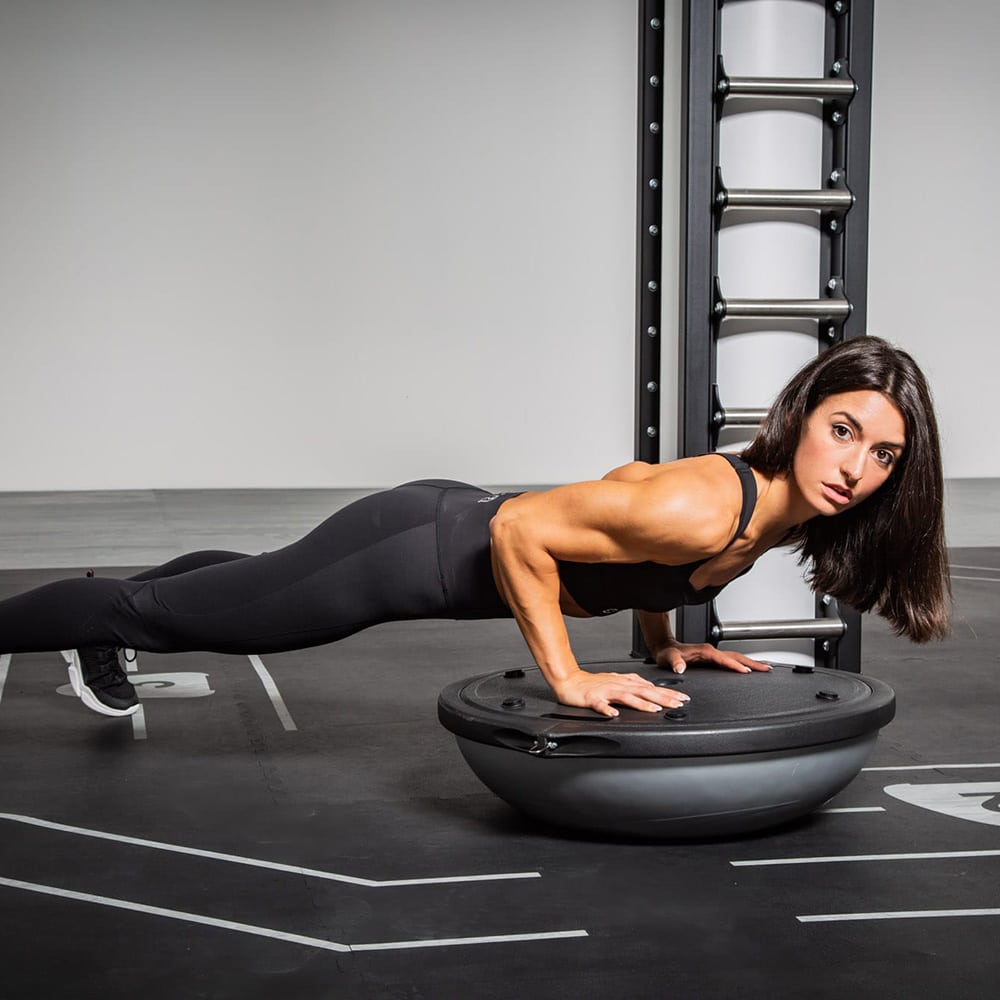
Before each workout, always remember to perform 5-10 minutes of shoulder-specific warm-up with elasticsweights or tools that add instability, such as the Flow Bag. This joint can very easily incur injuries because, as in volleyball, it is stressed throughout the entire match and throws, performed at maximum power, place eccentric stress on all the stabilising muscles of the shoulder.
Handball training examples:
Off-season:
- Warm-up (mobility - core stability - prevention):10 minutes
- Weight training, functional circuits: 20 minutes
- Training for aerobic power development: 4 sets of 4 minutes of intermittent work with 2-3 minutes recovery (25/30 minutes)
- Technical part: 25 minutes
- Defatigue: 10 minutes
On-season:
- Warm-up (mobility - core stability - prevention): 10 minutes
- Weight training (1/2 times a week): 15/20 minutes
- Field training for specific aerobic power development or with technical exercises: 20 minutes
- Technical part: 20 minutes
- Defatigue: 10 minutes

Matteo Zoffoli
- Professional athletic trainer and expert in high-intensity training.
- Athletic trainer for Cesena Calcio in the 2015-16, 2016-17, 2017-18 seasons with the role of strength and conditioning coach.
- Fitness consultant for programming and evaluation of functional training activities, athletic preparation and online coaching.


 Defibrillator AED
 Gift CardSidea
 Spare parts