



















8033-8041 Strongman Bag
146,40€ 333,98€Fascia di prezzo: da 146,40€ a 333,98€ FEES and TAXES NOT INCLUDED
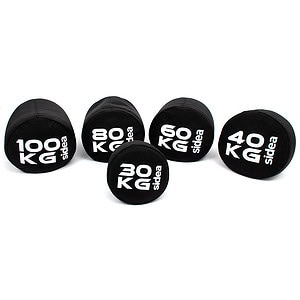
Pre-filled bags specially designed for strongman training in the gym. They are not to be confused with the inconvenient and inefficient bags sold empty, to be filled with sand, and to be handled due to the inevitable spills. Strongman Bags 8033-8041 are a real structured tool for indoor power training, endurance strength and mental toughness.
Available models:
cod. 8033 Strongman Bag 30 kg
cod. 8035 Strongman Bag 40 kg
cod. 8037 Strongman Bag 60 kg
cod. 8039 Strongman Bag 80 kg
cod. 8041 Strongman Bag 100 kg
See also:
Sidea Promotion
fino a Monday 19 October, 23:59
10% discount on the entire online catalogue
Not included in the promotion
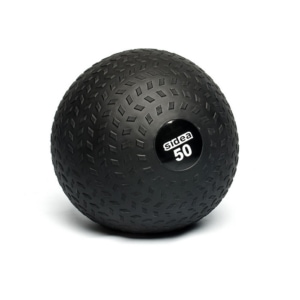
1 × 0478-0484 Strongman Smash D-Ball - 50Kg(cod. 0480)
Disponibile
118,19€ FEES and TAXES NOT INCLUDED

New installations - Gym Design projects
Contact usStatutory guarantee of conformity: 2 years for consumers. See the official notice - Read the page - europa.eu/youreurope/guarantees

Spare parts and repairs: Spare parts for this product are available in the section Spare parts, with up-to-date availability and prices. Maintenance instructions can be found in the manual supplied with the product. There are no restrictions on repairs.
8033-8041 Strongman Bag
The evolution of the Strongman Bag
Strongman bags are high-weight bags for athletic training and strongman exercises. Strong, non-bouncing, they are exceptional for achieving high levels of performance through power training, with particular reference to the strength component, which is indispensable in every sporting discipline and skill.
At the turn of the 19th and 20th centuries, a very special discipline began to make its appearance; men who performed by spectacularly lifting very heavy loads. Spectacles that aroused amazement and admiration, so much so that competitions, federations and such disciplines became a sporting activity during the 20th century.
Apart from competitions, it is interesting to note that some of the exercises derived from this sport are also adopted in modern athletic training and fitness precisely through the adoption of Strongman medicine balls.
Strongman bags are very versatile tools dedicated to strength training, with the particularity of having structural and surface characteristics specifically designed for high weight and grip. The athletic trainer's choice of this equipment certainly occurs at the moment when the trained athlete reaches a high level of preparation.
Strongman Bag exercises focus on power training, where the strength component is certainly the main one, but good proprioception and an excellent knowledge of lifting techniques must be added to it.
It is a global, total training, involving the recruitment of all muscles and physical qualities. Let's take an example by trying to explain lifting (Atlas Lift) and throwing a heavy rubber medicine ball of 30, 50, 70 or even 100 kg backwards.
Exercise example: Atlas Lift and throw backwards

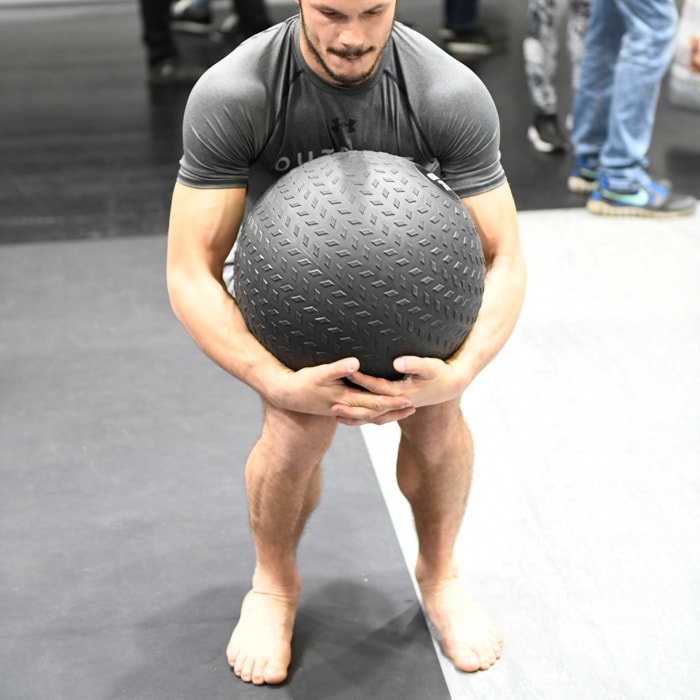
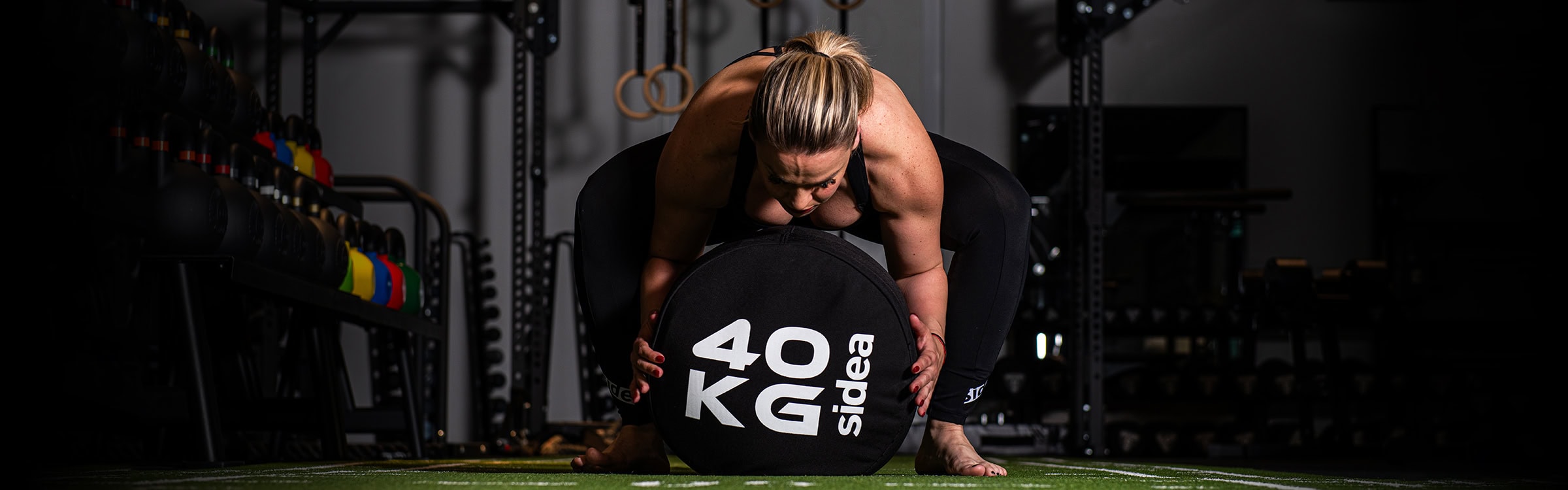
The athlete positions himself in a crouch with the medial malleoli next to the ball. The leg width will therefore be slightly greater than the outer diameter of the ball itself. Using the inner part of the forearm, he should wrap the bag, taking care to position his hands wide open in line with the elbow, without interlacing the fingers.
With an action guided by the forearm and legs, but involving all the muscles of the body, the athlete will have to raise the ball above his knees, blocking it. In this phase, considered to be the most technical, he will then have to adjust his grip and prepare to perform the salient gesture of the exercise: the lift.
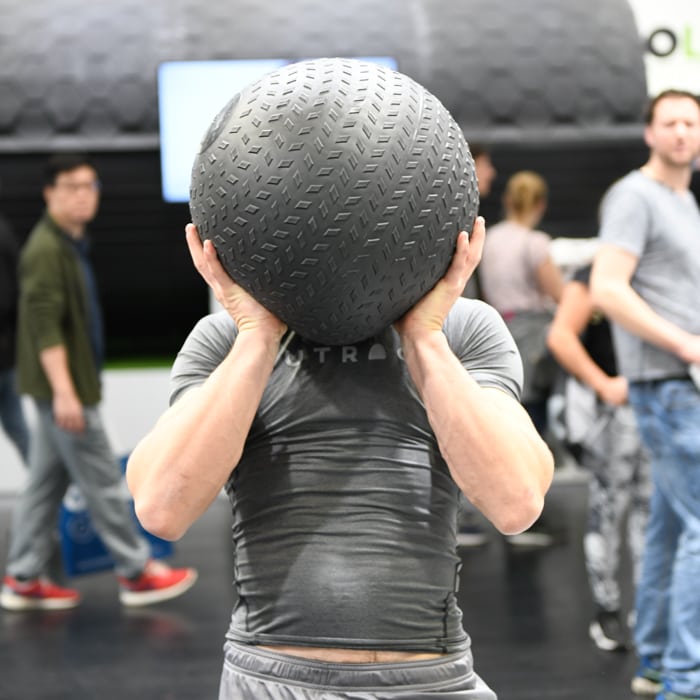
It is a matter of looking within oneself for the 'muscular connections' capable of rolling the heavy ball on the body towards a shoulder through a global movement centred on the action of the arms and legs. The action of the legs, after a concentric squat phase, ends with a full push and full extension.
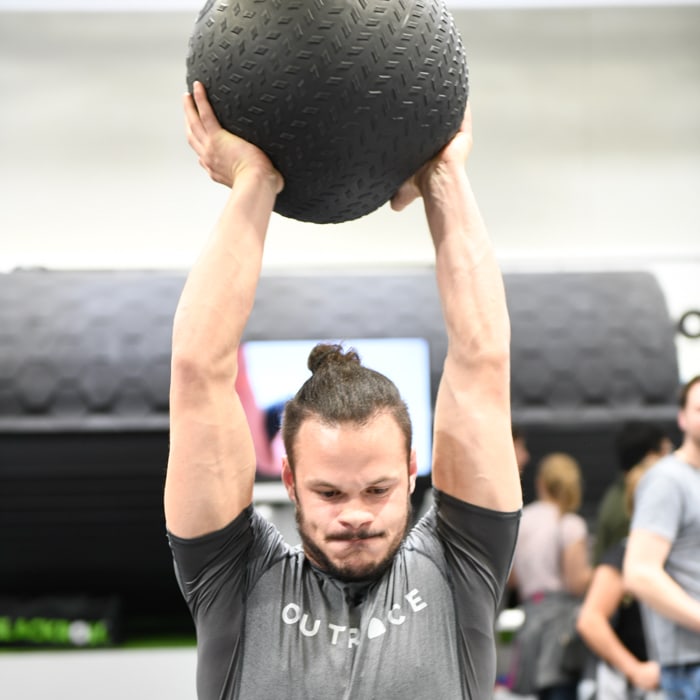
The athlete is now left with the final part of the exercise, relating to pushing the ball behind the back.
We were therefore saying a power exercise where the strength component is the main one, and in fact the weight lifted is the main one, not the time spent lifting, not the speed of execution. A work, we repeat, muscular but not only because it focuses precisely on the exercise of all neuromotor capacities.
In the explanation of the exercise, for example, it is emphasised that the grip of the hand is an important detail. The grip stimulates fundamental nervous processes inherent in coordination and proprioception. A discourse that could extend to every part of the body, think of the work of the feet (preferably barefoot) in this type of exercise.
Available models:
cod. 8033 Strongman Bag 30 kg
cod. 8035 Strongman Bag 40 kg
cod. 8037 Strongman Bag 60 kg
cod. 8039 Strongman Bag 80 kg
cod. 8041 Strongman Bag 100 kg
| Weight | ND |
|---|---|
| weight | complete series, 30Kg(code 8033), 40Kg(code 8035), 60Kg(code 8037), 80Kg(code 8039), 100Kg(code 8041) |
TECHNICAL SHEET


Related products
Fitness balls
32,03€ 71,68€Fascia di prezzo: da 32,03€ a 71,68€ FEES and TAXES NOT INCLUDED
Questo prodotto ha più varianti. Le opzioni possono essere scelte nella pagina del prodotto
Fitness balls
53,38€ 96,84€Fascia di prezzo: da 53,38€ a 96,84€ FEES and TAXES NOT INCLUDED
Questo prodotto ha più varianti. Le opzioni possono essere scelte nella pagina del prodotto
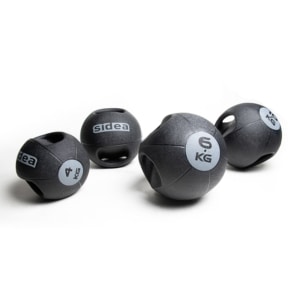
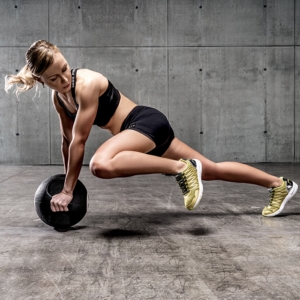
Fitness balls
58,71€ 105,99€Fascia di prezzo: da 58,71€ a 105,99€ FEES and TAXES NOT INCLUDED
Questo prodotto ha più varianti. Le opzioni possono essere scelte nella pagina del prodotto
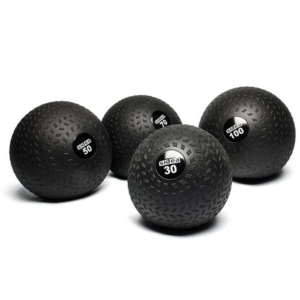
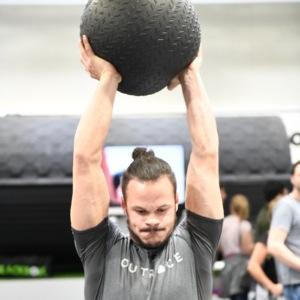
Fitness balls
79,30€ 197,49€Fascia di prezzo: da 79,30€ a 197,49€ FEES and TAXES NOT INCLUDED
Questo prodotto ha più varianti. Le opzioni possono essere scelte nella pagina del prodotto
Fitness balls
16,78€ 62,53€Fascia di prezzo: da 16,78€ a 62,53€ FEES and TAXES NOT INCLUDED
Questo prodotto ha più varianti. Le opzioni possono essere scelte nella pagina del prodotto
 Defibrillator AED
 Gift CardSidea
 Spare parts