Balance: the Sidea selection
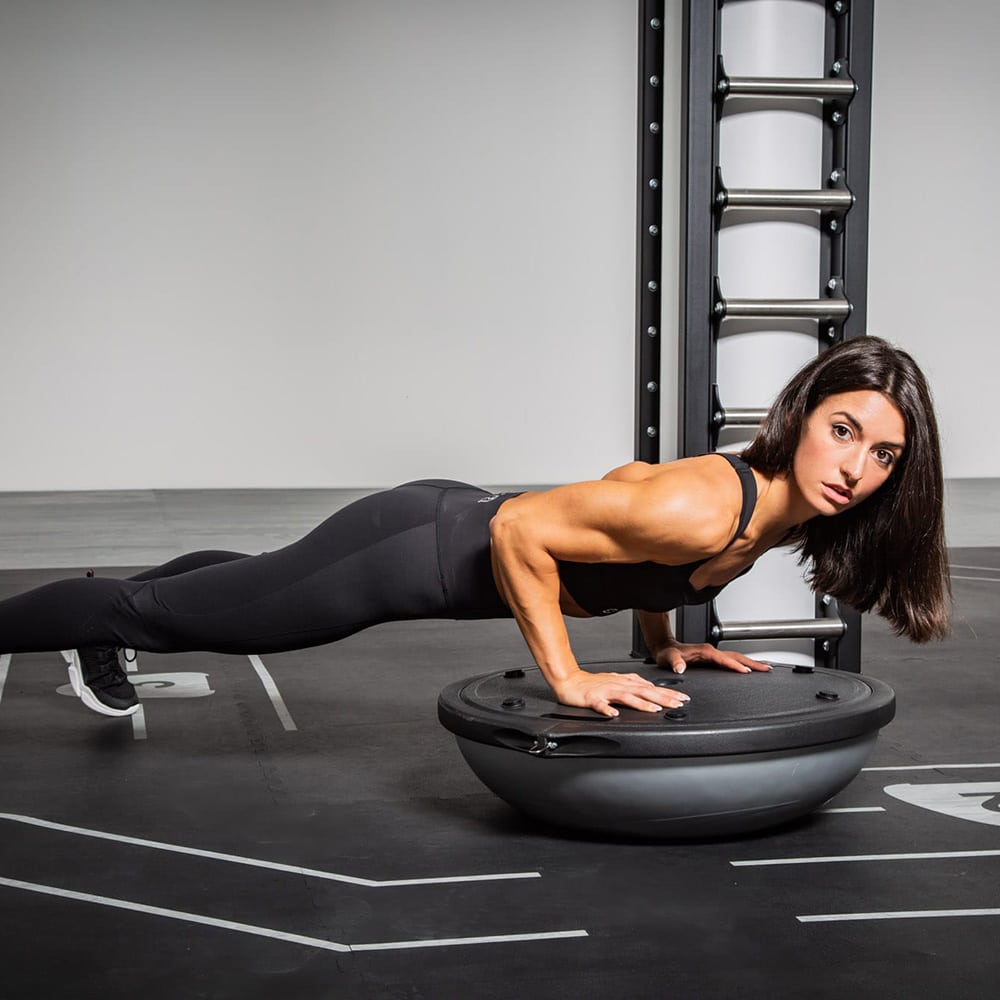
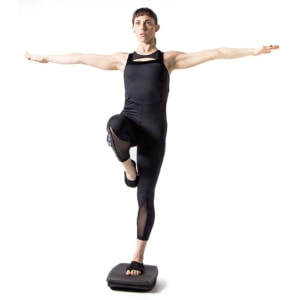
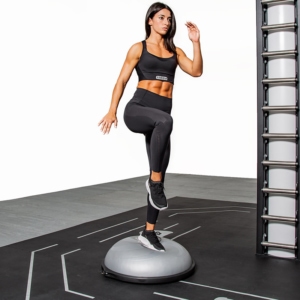
Balance training encompasses all those tools that introduce controlled instability into the performance of exercises. The common principle is simple: removing the stable surface from under the feet — or under the hands — forces the nervous system to engage stabilising muscles that remain largely inactive on a stable surface. Balance board, Bump Disks, Balance Pads, Dune Ball Boards and Slidisk are all different pieces of equipment in terms of their shape and degree of instability, but they all share this principle. Sidea offers a range of 15 products designed to meet the needs of athletic preparation, functional rehabilitation, group sessions and individual training.
Who is Balance for?
The range of users is wider than one might think. A fitness coach working with unilateral sports — skiing, tennis, martial arts — uses the balance board to replicate the instability patterns typical of the sport. A physiotherapist or personal trainer working in a rehabilitation setting introduces the bump disc or balance pad during the intermediate stages of recovery following a knee or ankle injury, where proprioceptive training is clinically proven to componentand essential to a return to athletic movement.
CrossFit boxes and functional training studios find ball boards and slidisks to be useful tools for adding variety to their sessions balance training in a group setting, boosting engagement and introducing unconventional stimuli. Those who train in a home gym or garage gym can create an effective programme using just a single round or square balance board, incorporating it into circuit training or mobility and core stability sessions. Finally, Pilates and postural exercise instructors find that the balance pad and the EVA Multifunctional Board provide surfaces that enhance core activation during exercises that would otherwise be relatively unchallenging.
How to choose
The first criterion is the degree of instability required. A wooden balance board with a fixed hemispherical base offers a predictable and repeatable range of oscillation: it is the right choice for beginners or for those who wish to work on specific lateral or anteroposterior loading patterns. The version with interchangeable rockers — as in the Balance Board Rack — allows the difficulty to be progressively adjusted, moving from single-axis to dual-axis oscillation, making it ideal in settings where multiple users of different ability levels share the same piece of equipment.
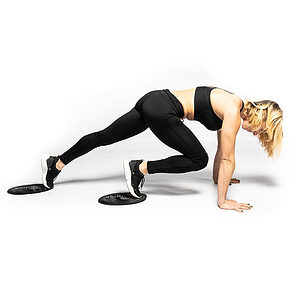
The Dune Ball Board offers a greater degree of freedom than a traditional board: the moving ball beneath the board creates multi-planar instability, which more closely resembles the real-world conditions of the sport. It requires a longer adaptation period and is not suitable as a starting point for those who have never trained on unstable surfaces. Bump disks and balance pads, on the other hand, are low-threshold tools: their deformable surface stimulates plantar proprioception without placing high joint loads, making them suitable even for early-stage rehabilitation or for older people. The Slidisk, on the other hand, operates on a different level: it reduces friction and forces the user to control the trajectory of their movement, which is useful for lateral lunges, pikes, knee curls and plank variations.
One final factor to consider is the context of use. For sessions of group activity It is best to opt for products that are easy to stack and can withstand heavy use. For a single-operator PT studio, a complete kit comprising a board and accessories in a single package optimises space and versatility.
Sidea products for Balance
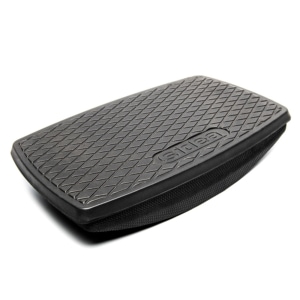
Wooden balance boards (round and square): available in two sizes — the round 1011/1011V and the square 1012/1012V — with a wooden top and a shock-absorbing base. Sturdy and compact, suitable for both gyms and home gyms. Certified for heavy-duty use.
Weightlifting Balance Board (1013/1013V): specifically designed for technical training in Olympic lifts. It enables stability training during the catch phase of the snatch and clean & jerk, simulating the subtle postural adjustments that occur under load. A niche product, highly sought-after in contexts of functional training advanced and weightlifting.
Balance Board Rack (1014/1014V) and Balance Board Kit (1014K): the rack is the version featuring a modular system of interchangeable rockers, allowing you to adjust the axis and the degree of instability. The kit combines the board and accessories in a single pack, designed for those who wish to cover multiple levels of difficulty without having to make separate purchases.
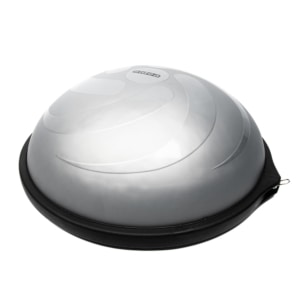
Dune Ball Board (8030): a board with a moving ball underneath, designed to create multi-planar instability. Used in functional circuits and advanced balance sessions. Particularly suitable for sports that require quick reactions when changing direction.
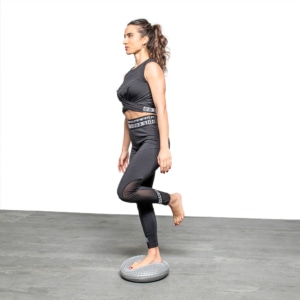
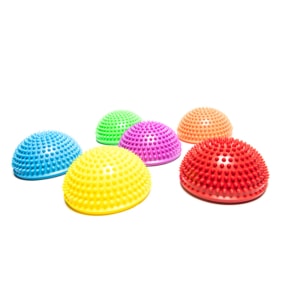
Bump Stimulating Disc (3001) and Bump Stimulating Balance Pot (7510-7511): discs and pots with an uneven surface that stimulate plantar proprioception. The pots are designed for sensorimotor circuits and can be used in pairs or in series, both in the gym and in physiotherapy settings.
Slidisk (2090): a sliding disc for smooth surfaces. Main uses: lateral lunges, leg curls, pike and plank variations. Lightweight, compact and suitable for group training.
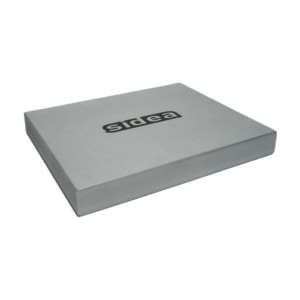
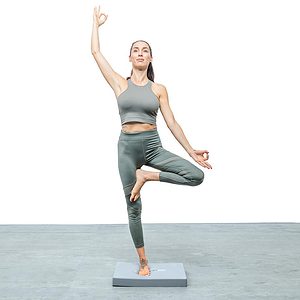
Eva Multifunctional Board (2907) and Balance Pad (2909): EVA surfaces of varying densities. The multifunctional board offers multiple points of support and positions for use. The balance pad is the classic tool for single-leg exercises, activation of the tibialis anterior and post-sprain rehabilitation programmes.
Why choose Sidea
Sidea has been operating in the professional fitness equipment sector since 1999, with a warehouse covering over 4,000 m² in Gambettola and a technical team that supports gyms, trainers and personal training studios in selecting the equipment best suited to their needs. The balance training range is carefully selected with real operational needs in mind: durability under continuous use, safety under load and ease of maintenance. The Gym Design service, featuring 3D renderings, allows the proprioceptive area to be integrated into the overall layout of the gym, optimising traffic flow and space utilisation. Sidea is an official StrongFirst distributor and Luxiaojun, exhibiting at FIBO and a sponsor of the Summit of Strength StrongFirst.














 1013 Weightlifting Balance board
2 × 54,90€
1013 Weightlifting Balance board
2 × 54,90€ 1014K Balance Board Kit
2 × 149,45€
1014K Balance Board Kit
2 × 149,45€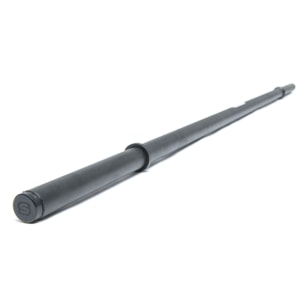 1660/1 Super Pump Iron Barbell
1 × 22,11€
1660/1 Super Pump Iron Barbell
1 × 22,11€ 9201/2P EcoGym Puzzle 1cm Premium - CORNER
1 × 10,68€
9201/2P EcoGym Puzzle 1cm Premium - CORNER
1 × 10,68€ 9204 Tatami Eva 4 cm - Red-Blue
2 × 42,70€
9204 Tatami Eva 4 cm - Red-Blue
2 × 42,70€ 9205 Tatami Eva 2 cm - Red-Blue
1 × 21,35€
9205 Tatami Eva 2 cm - Red-Blue
1 × 21,35€ R9123/3 Replacement Cylinder for Ghd & Sissy Squat - Hamstring Bench
2 × 27,45€
R9123/3 Replacement Cylinder for Ghd & Sissy Squat - Hamstring Bench
2 × 27,45€




 Defibrillator AED
 Gift CardSidea
 Spare parts