Bumper Rack: the Sidea selection
Organising bumper plates is not merely a matter of aesthetics: it is a practical decision that affects safety, the speed of changing weights and the lifespan of the plates themselves. The Sidea bumper racks belong to the category Rack tool and the line Universal storage rack: three products that differ in shape and dimensions, all designed to hold 50 mm rubber or urethane discs. The range covers the main layout requirements — vertical column storage, horizontal shelving and pyramid-style storage for progressive loading — with steel structures sized to support the cumulative weight of entire sets of bumpers.
What these products have in common is their underlying philosophy: to lift the plates off the floor, make them accessible during a workout and extend their useful life by preventing them from being stacked incorrectly or coming into contact with abrasive surfaces.
Who is the Bumper Rack for?
The most common setting for their use is the CrossFit box, where bumper plates are moved, stacked and repositioned dozens of times a day. In such environments, a plate rack reduces clutter between WODs and allows athletes to quickly identify the plate they need to load without wasting time.
In gyms with a dedicated weightlifting area — particularly those where snatches, clean and jerks or cleans are practised — the bumper rack is an integral part of the set-up, just like the weightlifting platforms. The same applies to personal trainers who run semi-private sessions: having the weight plates organised by weight, accessible from both sides and out of the way of the movement, is a practical requirement, not an option.
Even for those setting up a home gym with professional equipment — Olympic barbells, rubber or urethane bumper plates — a dedicated storage rack radically changes how you manage your space. In a garage measuring 20–25 m², every centimetre counts, and a vertical column rack takes up less than 0.3 m² of floor space.
How to choose the right bumper rack
The first criterion is the number and type of discs to be stored. Those with a full competition set — typically 6–10 pairs of discs ranging from 5 to 25 kg — will need a rack with a high load capacity and more pins or shelves. Those working with 3–4 pairs can opt for more compact solutions.
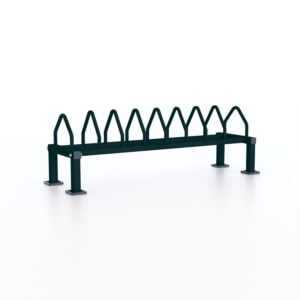
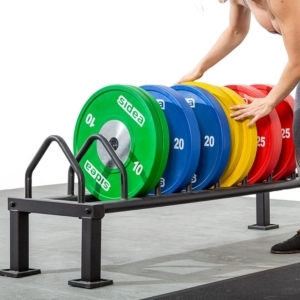
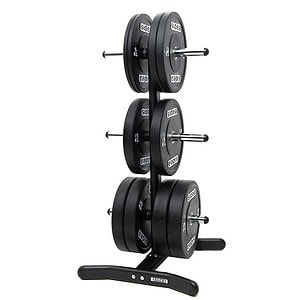
The layout of the available space determines which of the three configurations to choose. The horizontal rack (4147) extends across the width of the room and allows you to see at a glance the weight of the discs arranged flat; it is ideal when there is a free wall or you wish to integrate the rack into a perimeter area. The vertical standing rack (9039) takes up little floor space and allows the weight plates to be stacked in columns on vertical pins; it is the most common solution in gyms and compact weight rooms. The pyramid rack (9047) combines stability and accessibility, with the heaviest discs at the base and the lightest at the top: this reduces the risk of tipping over and makes it easier to select discs during training.
One aspect that is often overlooked is dimensional compatibility: it is essential to check the internal diameter of the pins or mounts against the thickness of the plates being used. Urethane bumper plates, for example, are thinner than cheaper rubber bumper plates of the same weight, so the same rack can hold a significantly different number of plates.
Sidea Products for Bumper Racks
The selection comprises three solutions, all of which are listed among the Rack tool Sidea:
- 4147 Horizontal Bumper Rack — a horizontal shelving unit, ideal for those who prefer a flat arrangement of discs with immediate front access. Suitable for perimeter areas or fixed positions along a wall.
- 9039 Standing Bumper Plate Rack — freestanding vertical rack, the classic vertical-pin configuration that allows the plates to be organised by weight pair. Compact footprint, maximum flexibility in positioning.
- 9047 Pyramid Plate Rack — pyramid-shaped with a wide base and narrow top, designed to ensure stable weight distribution and intuitive selection of plates from heaviest to lightest.
All three models are compatible with the rubber-coated plates and bumper plates featured in the Sidea catalogue, including the competitively priced urethane ranges.
Why choose Sidea
Sidea has been operating in the professional fitness equipment sector since 1999, with a warehouse covering over 4,000 m² and direct technical advice provided for every installation project. The choice of a bumper rack is never made in isolation: it forms part of a wider project that includes barbells, platforms, technical flooring and training facilities. The Gym Design service, featuring 3D renderings, allows you to simulate the optimal arrangement of the racks within the available space, thereby avoiding layout errors before purchase. This integration of product, consultancy and design is why professional gyms, affiliated CrossFit boxes and athletic trainers choose Sidea as their technical partner.















 4147 Horizontal Bumper Rack
3 × 280,60€
4147 Horizontal Bumper Rack
3 × 280,60€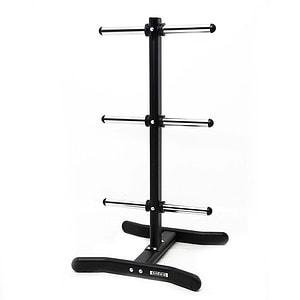 9039 Standing Bumper Plate Rack
4 × 303,48€
9039 Standing Bumper Plate Rack
4 × 303,48€ 9047 Pyramid Plate Rack
1 × 149,45€
9047 Pyramid Plate Rack
1 × 149,45€

 Defibrillator AED
 Gift CardSidea
 Spare parts