









-
×
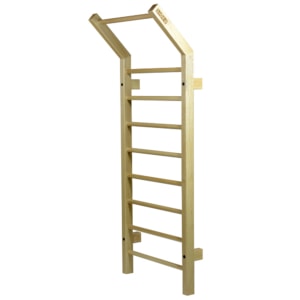 9099 Functional backrest
2 × 527,65€
9099 Functional backrest
2 × 527,65€


Subscribe to our newsletter to receive news, promotions and insights into the world of Sidea



 9099 Functional backrest

Showing all 6 results
Wall bars — Swedish and functional wall bars — are among the most versatile pieces of equipment in athletic training and rehabilitation: they allow you to work on mobility, relative strength, postural control and bodyweight progression, whilst taking up minimal space on the wall.
Traditional wooden designs and functional versions with optional accessories
Suitable for professional gyms, CrossFit boxes, personal training studios and well-equipped home gyms
Suitable for calisthenics, gymnastics, physiotherapy and general athletic training
Swedish and functional Wall Bars
Swedish and functional Wall Bars
The walls bars — known in Italy as espaliers Swedish wall bars — these are wall-mounted pieces of equipment consisting of vertical uprights and equidistant horizontal crossbars. Their origins date back to 19th-century Swedish gymnastics, but their practical usefulness has never waned. Today, they are used in both physiotherapy and calisthenics training more advanced. Sidea offers four models covering the entire range of uses: from the classic wooden wall bars to the pro versions with modular anchoring, right through to the functional model designed for those who wish to integrate the wall bars into a wider training system.
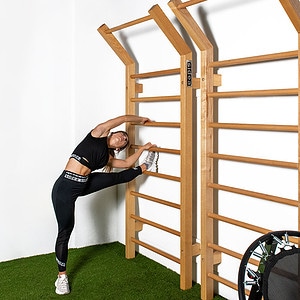
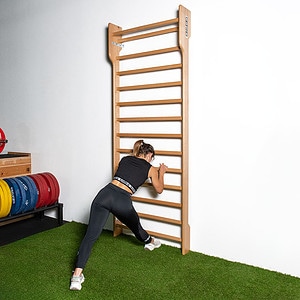
Wall bars are used in an unusually wide range of contexts. In a rehabilitation setting, physiotherapists and sports coaches use them for guided stretching exercises, suspended spinal decompression and proprioceptive training. It is not uncommon to find wall bars in orthopaedic and sports physiotherapy centres, where the wall-mounted structure provides a stable grip that no portable piece of equipment can replicate.
In professional gyms and CrossFit boxes, wall bars serve as a station for toes-to-bar, hollow holds, L-sit progression and dragon flags. Those who follow methods such as MovNat or basic artistic gymnastics consider them indispensable. Even for personal trainers working in a compact studio, a wall-mounted wall bar takes up less than 0.5 m² of depth and allows for dozens of different exercises.
The home gym setting is just as important: those who set up a dedicated space in their garage or in a specially equipped room often choose wall bars as their first permanent fixture, precisely because of their versatility and ability to adapt to users of very different builds and fitness levels.
The first factor is the wall’s load-bearing structure. Fixed pull-up bars require a solid anchor point — solid masonry or a reinforced stud wall — with wall plugs suitable for the load. Before installation, it is essential to check the wall’s load-bearing capacity, particularly for dynamic exercises such as explosive pull-ups or toes-to-bar with heavier athletes.
The second criterion concerns the primary intended use. For rehabilitation or mobility work, a traditional wooden wall bar — such as the 9100 — is often sufficient and offers the classic tactile sensation appreciated by those who have worked in the field of physiotherapy. If, on the other hand, the aim is to integrate the wall bars into a more comprehensive functional training system, with attachments for rings, ropes, elastics or additional pull-up bars, the Wall Bars Pro (9101) and Functional Wall Bars Pro (9102) models offer extra anchor points and compatibility with modular accessories.
The width of the panel affects whether it is used in pairs or in multiple circuits: installing several wall bars in sequence allows you to create a continuous wall-mounted set-up, a common solution in school gyms and multi-sports centres. Also consider the available headroom in the room: the Pro models can reach a vertical height of 2.3–2.4 m, a crucial factor for exercises such as full pull-ups and handstand variations.
The range available in this category a practical Swedish wall bar It comprises four models with progressive features.
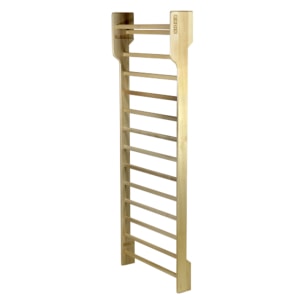
9100 Swedish wall bars — the classic wooden model, a staple in schools, traditional gyms and rehabilitation settings. A simple, sturdy structure with turned beech wood crossbars of circular cross-section. Suitable for installation in a series.
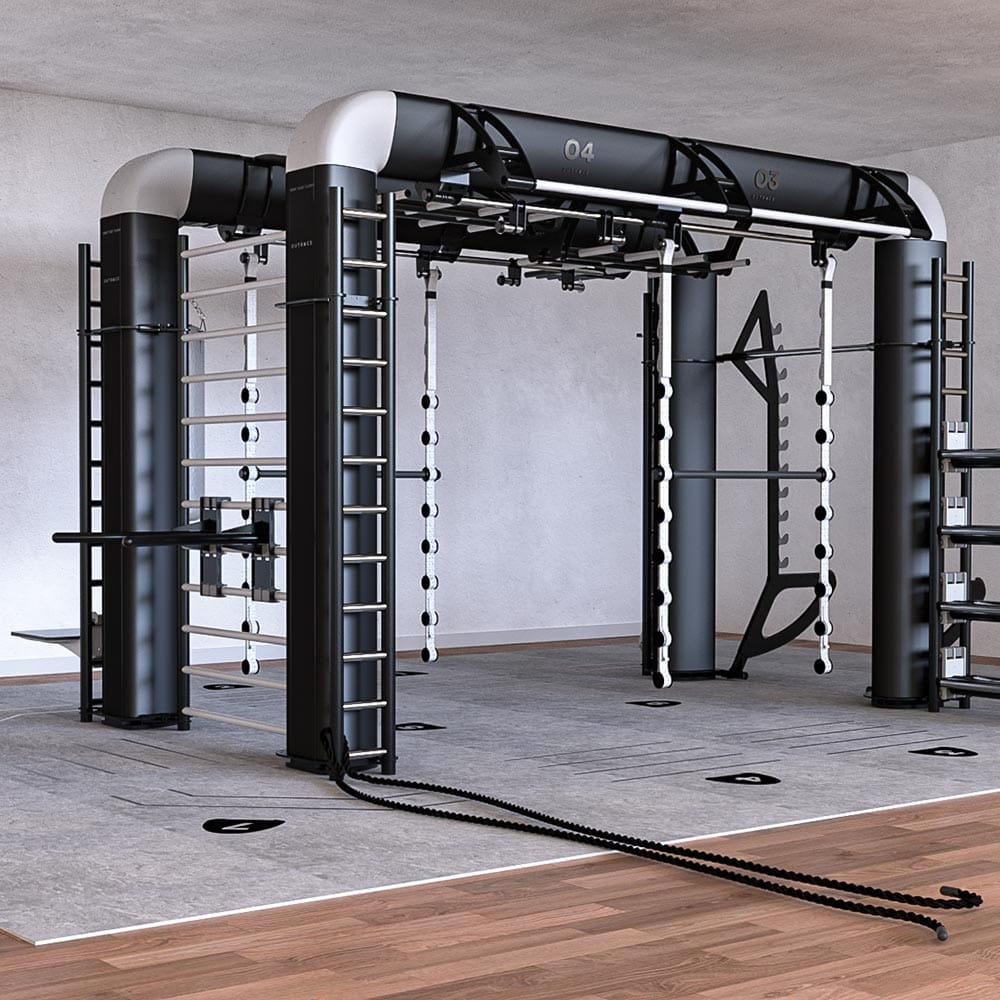
9099 Functional wall bars — an advanced version of the traditional wall bars, designed to accommodate accessories and expand the range of exercises. Suitable for those who want a solid foundation with scope for personalisation.
9101 Wall Bars Pro — a professional-grade structure with reinforced uprights and an enhanced anchoring system. Designed for intensive use in gyms and CrossFit boxes, it can withstand high dynamic loads and is suitable for installation in a row.
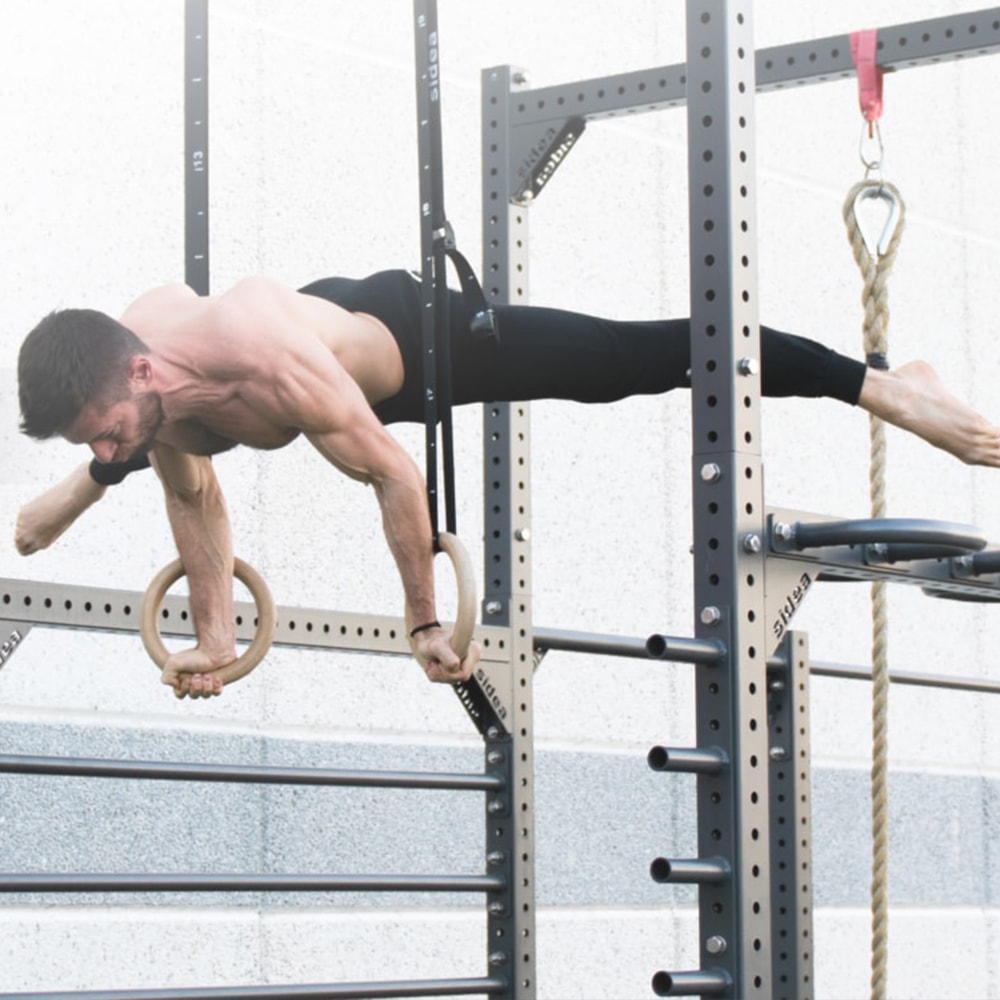
9102 Functional Wall Bars Pro — the go-to model for those seeking maximum functionality. It features multiple attachment points for gymnastic rings, resistance bands, ropes and suspension accessories, transforming the wall bars into a truly multi-purpose wall-mounted workout station.
All models fall within the scope of the calisthenics training and are available as products in the catalogue Available to order for collection from the Gambettola warehouse.
Sidea has been operating in the professional fitness equipment sector since 1999, with over 25 years’ direct experience in supplying gyms, sports centres, schools and athletic trainers. The 4,000 m² warehouse in Gambettola (FC) ensures reliable stock availability and short lead times. For complex installations or multiple set-ups, the in-house Gym Design service offers bespoke 3D rendering, which helps to optimise the layout of the wall bars in relation to other equipment and the architectural features of the premises. Direct technical advice enables customers to choose between models based on specific criteria, rather than relying on generic descriptions.


 Defibrillator AED
 Gift CardSidea
 Spare parts