












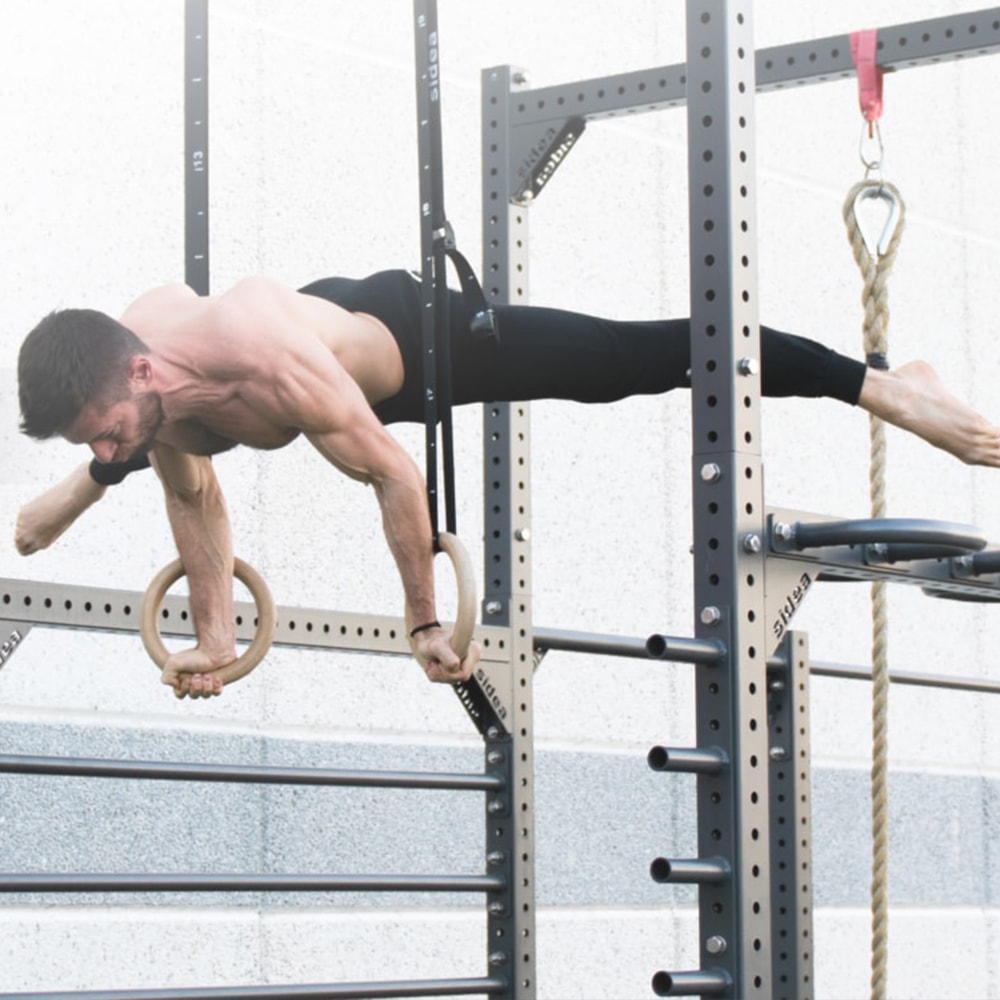



The Sidea training ropes cover a wide range of uses: from gym ropes for wave exercises and metabolic training, to climbing ropes for calisthenics, right through to sled ropes for sled pulling and replacement parts for cardio machines.
Gym ropes made from polypropylene yarn, available in 9 m and 15 m lengths, with an ‘Easy’ version for boxes and P studios
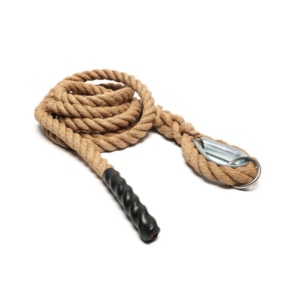
Climbing ropes made of hemp or synthetic material for ceiling installations
Sled-pulling rope and rope protector to complete the sled setup

Ropes functional training
68,63€ 88,45€Fascia di prezzo: da 68,63€ a 88,45€ FEES and TAXES NOT INCLUDED
Questo prodotto ha più varianti. Le opzioni possono essere scelte nella pagina del prodotto
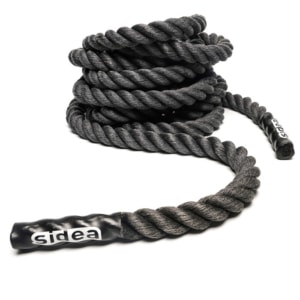
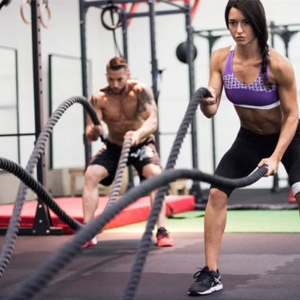


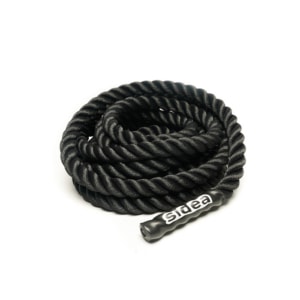
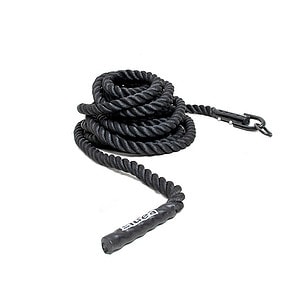
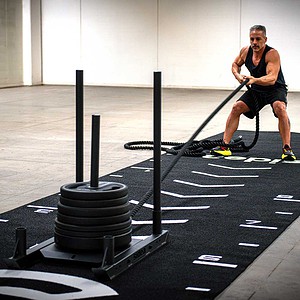

Rope: the Sidea selection
The term rope In the professional fitness sector, this term does not refer to a single piece of equipment, but to a diverse range of ropes with very different functions, materials and contexts of use. Sidea brings together six products under this theme, ranging from the classic gym rope for functional training to the climbing rope for calisthenics, passing through the sled The pulling rope and the replacement cable for the Curve Run. What they have in common is the use of inertial load and neuromuscular control as the main drivers of physical adaptation: no selector, no mechanical guide, just the athlete’s ability to manage tension and speed.
Who is Rope for?
Training ropes are suitable for a wide variety of settings, each with its own specific requirements.
Professional gyms and CrossFit boxes. The gym rope A 15-metre rope is the standard for high-intensity AMRAP and EMOM circuits. In a box with 10–15 athletes training at the same time, at least two or three ropes are required, preferably secured to a wall or pillar. The slightly lighter Easy Gym Rope version is well suited to group sessions or for those who are still learning the movement.
Strength and conditioning coaches and team sports. The sled-pulling rope — combined with pulls for pulling exercises — is a well-established tool for developing lower-body power and the force generated during acceleration. It is used in sports such as rugby, football, sprinting and ice hockey.
Gyms offering ‘Strong Fitness’ training. As part of the strong fitness training, the ropes are incorporated into metabolic conditioning programmes combined with kettlebells, sandbags and power exercises. The variable load generated by the waves created with the gym rope stimulates the stabilising muscles in a way that is difficult to replicate with guided equipment.
PT studios and advanced home gyms. The climbing rope requires a fixed ceiling installation with a recommended minimum height of 4–5 m: it is better suited to dedicated fitness spaces than to domestic settings. The gym rope, on the other hand, can also be used outdoors with a simple anchor point.
How to choose
Choosing the right rope depends on three main factors: the type of exercise, the athlete’s level and the characteristics of the space.
Length and diameter of the gym rope. Standard lengths are 9 m and 15 m, with diameters of 38 mm or 50 mm. A shorter rope reduces the workload per repetition and is easier to handle in confined spaces. A larger diameter increases the demand on grip strength and the forearm muscles, but requires an adequate level of strength. For beginners or mixed-ability group sessions, the 38 mm diameter is generally preferable.
Easy Gym Rope vs Standard Gym Rope. The Easy version is designed for those trying out gym ropes for the first time, or for settings where athletes of very different fitness levels take turns using them. The standard gym rope is better suited to intensive conditioning sessions with athletes who are already fit.
Protection and anchoring. The Rope Protector (SKU 1710/1) is an essential accessory when the rope runs around metal posts, racks or structures with sharp edges. It significantly extends the rope’s service life and protects the surfaces of the tubular sections. It is not an optional extra: it should be considered an integral part of the setup.
Climbing rope. Available in 5-metre and 6-metre lengths, this piece of equipment requires certified, safe installation. The choice between natural hemp and synthetic rope mainly comes down to grip: hemp provides greater friction but is more sensitive to moisture; synthetic rope is more weather-resistant and requires less maintenance.
Sled rope. This must be used in conjunction with the supplied sled. The length of the rope determines the pulling distance for each set: an 8–10-metre rope allows for acceleration phases with sufficient space to fully utilise the force development phase.
Sidea Products for Rope
The Sidea range for this theme comprises six products across different categories.
Gym ropes and accessories. The Gym Rope 1710 is a braided polypropylene marine rope available in standard lengths. The Easy Gym Rope 1711 This is the entry-level version, designed for more straightforward use. The Rope Protector 1710/1 It is the protective fitting for the anchor.
Climbing rope. The code FUNI (1204–1206) includes the climbing ropes available in the catalogue, in a range of lengths and materials. These fall within the scope of the functional training and calisthenics.
Sled-pulling rope. The Sled Pulling Rope 1712 It is specifically designed for use with traction sledges. It differs from gym ropes in its construction: it is designed for linear tensile loads, not for wave-like movements.
Replacement cable for the Curve Run. The part number RHC001/15 This is a replacement resistance cable for the Sidea Curve Run machine. It is included in the tag rope due to its nature as a flexible tension element, but technically falls into the category of machine spare parts cardio.
Why choose Sidea
Sidea has been supplying professional fitness equipment since 1999, with over 25 years’ experience in supporting gyms, fitness trainers, CrossFit boxes and sports schools. The rope catalogue forms part of a comprehensive range covering the entire spectrum of functional training and strength training, with products selected for their durability and ease of use in high-traffic environments. With a warehouse spanning over 4,000 m², we can guarantee short delivery times even for large orders. For complex installations — such as climbing ropes in public facilities or sled set-ups in dedicated spaces — the Sidea technical team is available to provide direct advice.
Domande frequenti - Rope
-
The terms are often used interchangeably. In Italy, people tend to refer to them as 'corda navale' or 'gym rope', whilst 'battle rope' is the English term commonly used in the context of CrossFit and functional training. There is no standardised technical difference: both terms refer to 9- or 15-metre ropes made of braided polypropylene or nylon, used for wave, slam and rotation exercises.
-
It depends on the frequency of use and the type of anchor point. In a gym with daily use and an unprotected anchor point, the inner filaments may wear out within 12–18 months. Using a rope protector on the anchor point significantly reduces mechanical stress and extends the rope’s service life by as much as 30–50%. Replacement is necessary when broken strands are visible on the surface or the rope loses its cross-sectional shape.
-
Yes. The ceiling anchor point must be inspected by a qualified technician, particularly in facilities open to the public. The dynamic load generated whilst climbing can be significantly greater than the climber’s body weight. In Italy, for public sports facilities, compliance with the UNI EN 12572 standard or equivalent standards, depending on the specific use, is required.
-
Exercises with the gym rope do not require a great deal of height: the waves travel horizontally. The main constraints are the space required to the sides and the length available in a straight line. A 9-metre rope requires around 5–6 metres of usable space in front of the athlete. For garages with limited width, the 9-metre version is generally easier to manage than the 15-metre one.
-
Wave exercises primarily engage the shoulder muscles (deltoids, supraspinatus), the latissimus dorsi, the biceps and the forearm extensors. Core stabilisation is required throughout the entire movement. In short HIIT protocols (20–30 seconds of high-intensity work), the cardiorespiratory demand is comparable to that of a sprint, with a peak heart rate that can exceed 90% of the maximum heart rate.
-
No. The sled pulling rope is designed for linear pulling when used with a loaded sledge. It is not suitable for vertical bodyweight pull-ups, for which a climbing rope secured to a fixed point on the ceiling is required. The two types of rope have different construction characteristics, optimised for distinct mechanical stresses.
-
Sidea offers a range of instalment payment options to make it easier to purchase professional equipment. Please see the dedicated page: Payment options Sidea.
-
If you work in the fitness or sports sector, register on the website as a Professional or as an ASD to gain access to the price list reserved for industry professionals. Pro registration allows you to view exclusive discounts and special terms across the entire Sidea catalogue.
-
Yes, Sidea is an authorised supplier on the MEPA (Public Administration Electronic Marketplace). Public bodies, schools, universities, local authorities and public sports facilities can purchase Sidea equipment via the platform Public Sector Online Procurement. For information on product codes and direct MEPA orders, please contact Sidea customer service.
-
Sidea guarantees the right to cancel within 14 days of delivery for all online purchases, in accordance with current legislation. Products must be returned undamaged and in their original packaging. For full details on returns, refunds and the warranty, please see the page Terms and Conditions of Sale.
-
Sidea has been designing and distributing professional fitness equipment since 1999: over 25 years’ experience serving gyms, sports coaches, CrossFit boxes, personal training studios and enthusiasts of advanced home fitness. Official distributor StrongFirst e Luxiaojun, which is exhibiting at the FIBO international trade fair and is the technical sponsor of the Summit of Strength. Every product is designed with durability, functionality and suitability for real-world operational contexts in mind. The service Gym Design Offers bespoke design services with 3D renderings. A warehouse covering over 4,000 m² in Gambettola (FC) to ensure rapid order fulfilment, direct technical advice and a special price list for professionals and amateur sports clubs.
 Defibrillator AED
 Gift CardSidea
 Spare parts