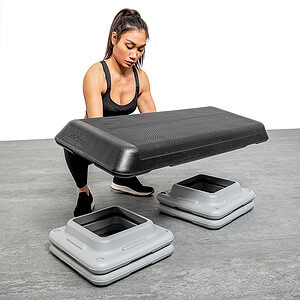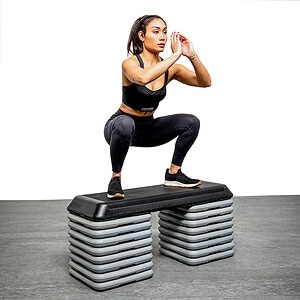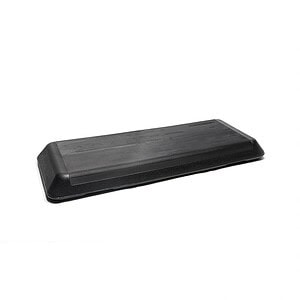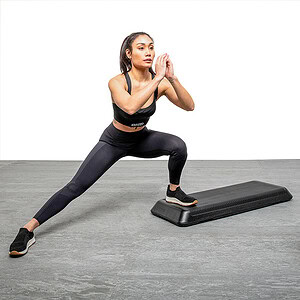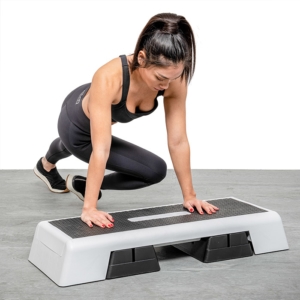




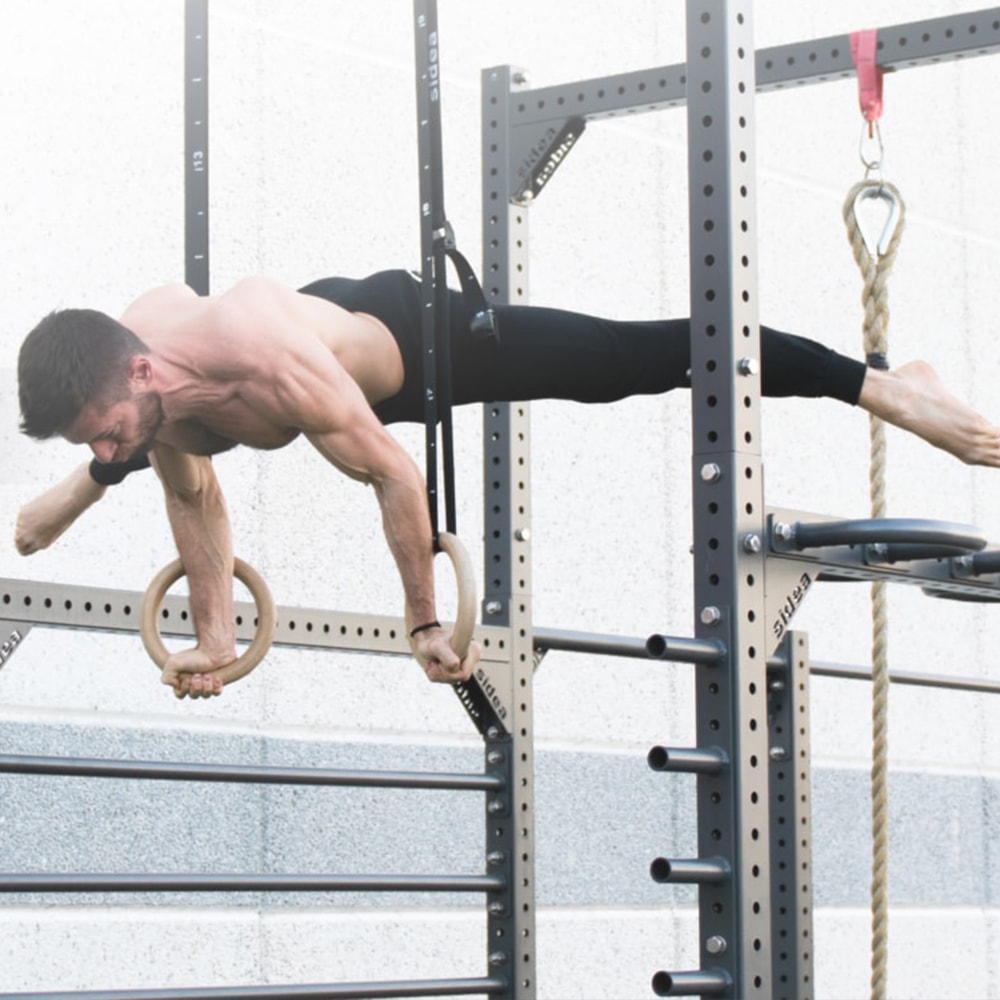
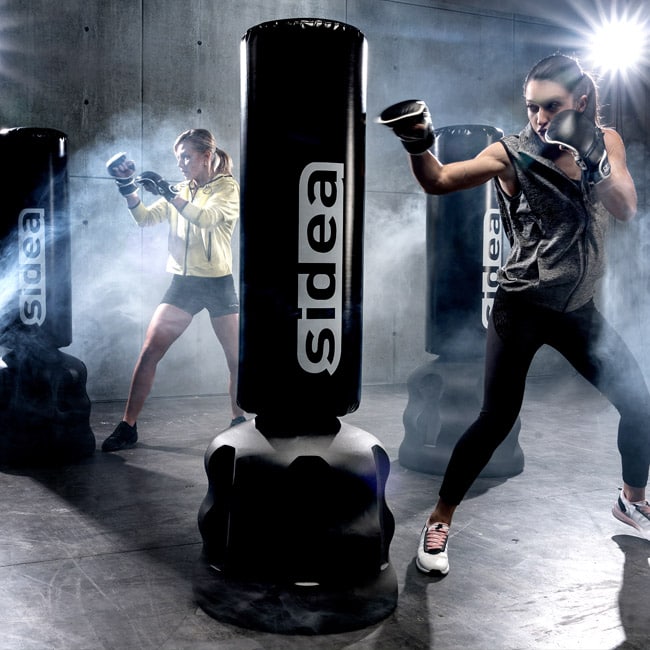
The step is one of the most versatile pieces of fitness equipment: used in group classes, functional training, athletic preparation and home workouts, it caters to a wide range of goals whilst taking up very little space.
Height-adjustable aerobics steps for group classes and cardiovascular training
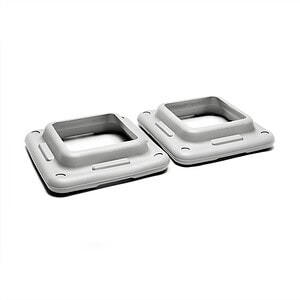
Mini step platforms and compact step platforms for squat deficit exercises and plyometrics
Training kit with integrated step for comprehensive functional training programmes

High-end professional Step and Plyobox

0212W SiStep White

105,23 FEES and TAXES NOT INCLUDED

High-end professional Step and Plyobox

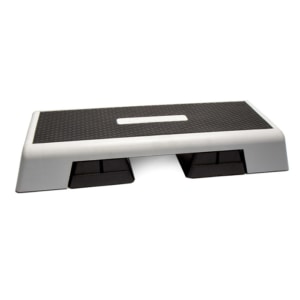
0230 Aerobic Step

135,73 FEES and TAXES NOT INCLUDED

High-end professional Step and Plyobox

0230/1 Aerobic Step – 16 steps

303,48 FEES and TAXES NOT INCLUDED

High-end professional Step and Plyobox

0231 Easy Aerobic Step

74,73 FEES and TAXES NOT INCLUDED

Catalogue Products

0231/1 Aerobic Step

30,50 FEES and TAXES NOT INCLUDED

High-end professional Step and Plyobox

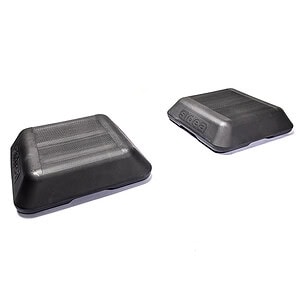
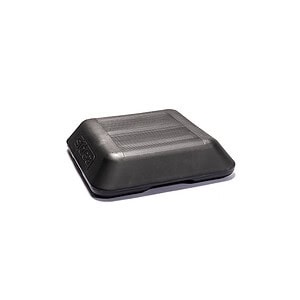
0231/2 Mini Aerobic Step

30,50 FEES and TAXES NOT INCLUDED
-20%
Promotional kit

High-end professional Step and Plyobox

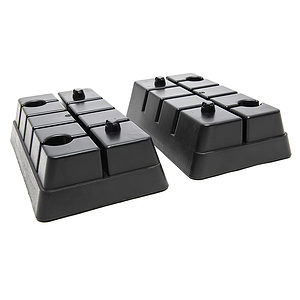
0231/2K Deficit Sumo Squat Kit

122,00 97,60 FEES and TAXES NOT INCLUDED

High-end professional Step and Plyobox

0235 Premium Step

131,15 FEES and TAXES NOT INCLUDED

High-end professional Step and Plyobox

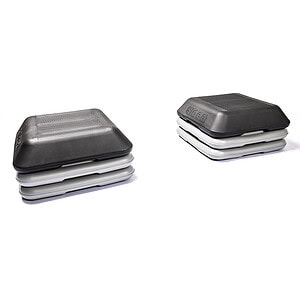
0235/1 Pair of Premium Steps

28,98 FEES and TAXES NOT INCLUDED

High-end professional Step and Plyobox

0239 Ecofit Step

57,95 FEES and TAXES NOT INCLUDED

Step: the Sidea selection

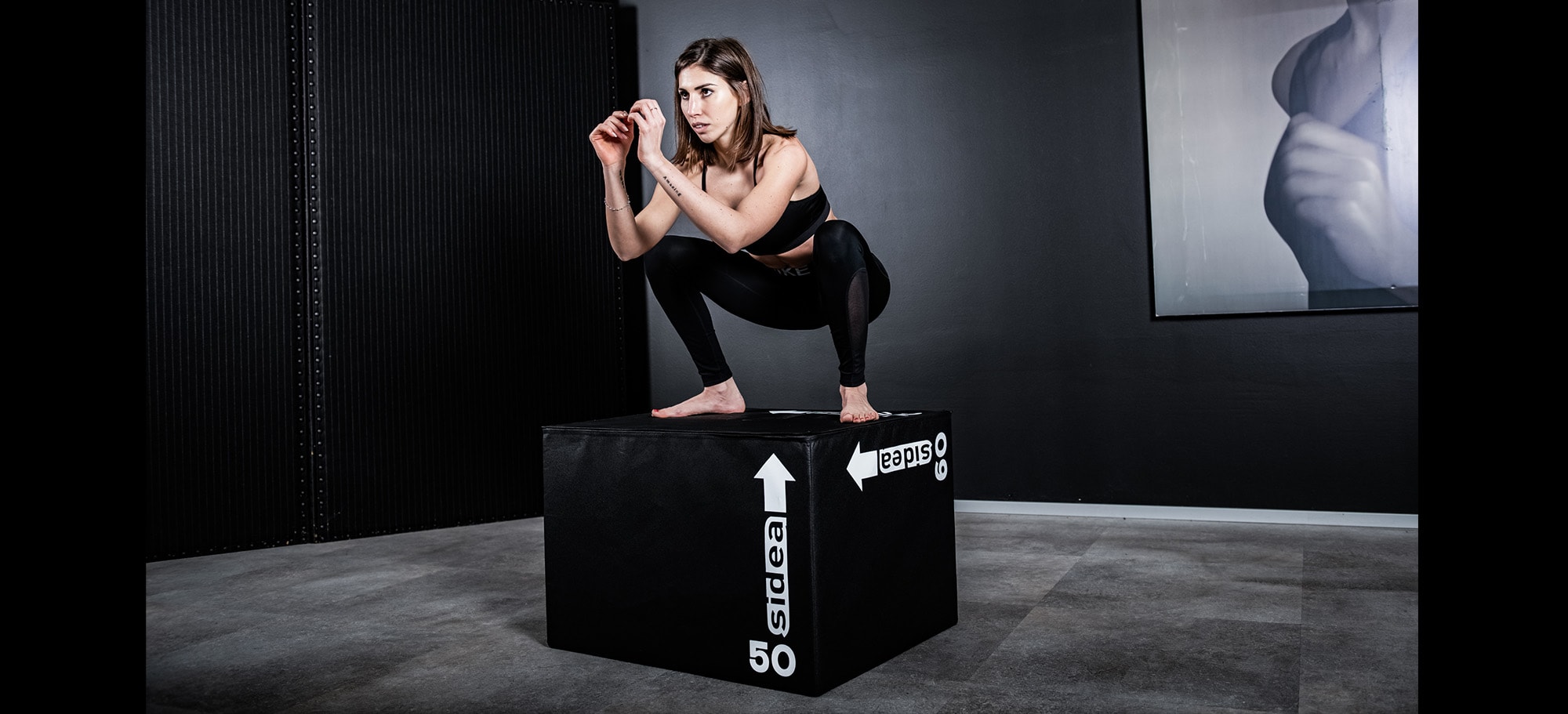
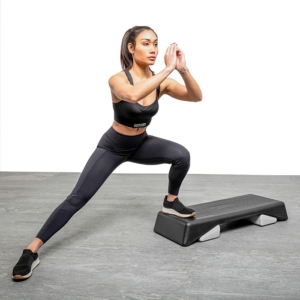
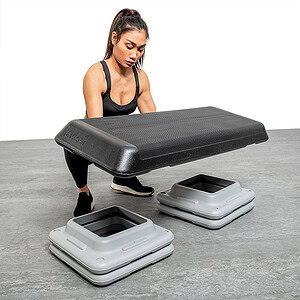
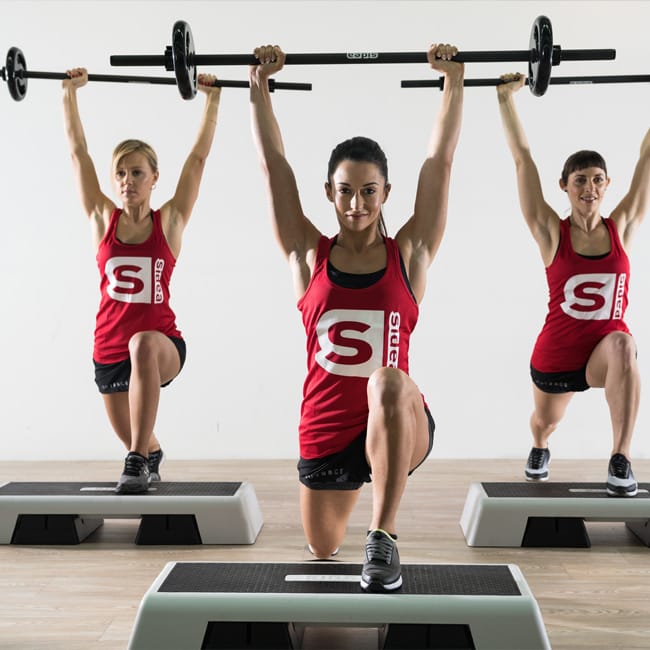
The term step It encompasses equipment with very different designs and uses. There is the classic aerobic step – a rectangular platform with height-adjustable steps – which was developed in the 1990s for group classes and remains central to programmes of group activity. Then there are the mini step, the deficit step – used for squats and deadlifts with an extended range of motion – and the hybrid versions, which also serve as low-height plyo boxes. What all these products have in common is their ability to vary the support surface, creating controlled elevation changes that alter the mechanics of movement and increase the functional load without adding external weight. The Sidea range covers all these variants, available as single units and as componentand of training kit structured.

Who is this step for?

In gyms offering group classes, step aerobics is an absolute classic. Step-based routines require uniform platforms, reliable non-slip surfaces and steps that remain stable even after hundreds of cycles of stepping up and down. A fleet of 20–30 step machines must be manageable in terms of storage and quick handling.

Fitness coaches and personal trainers use the step in a variety of ways: deficit split squats, Bulgarian squats with the rear foot raised, weighted step-ups and low-height box jumps. In these contexts, what matters is the sturdiness of the equipment, its stability under dynamic load and its compatibility with barbells and dumbbells.

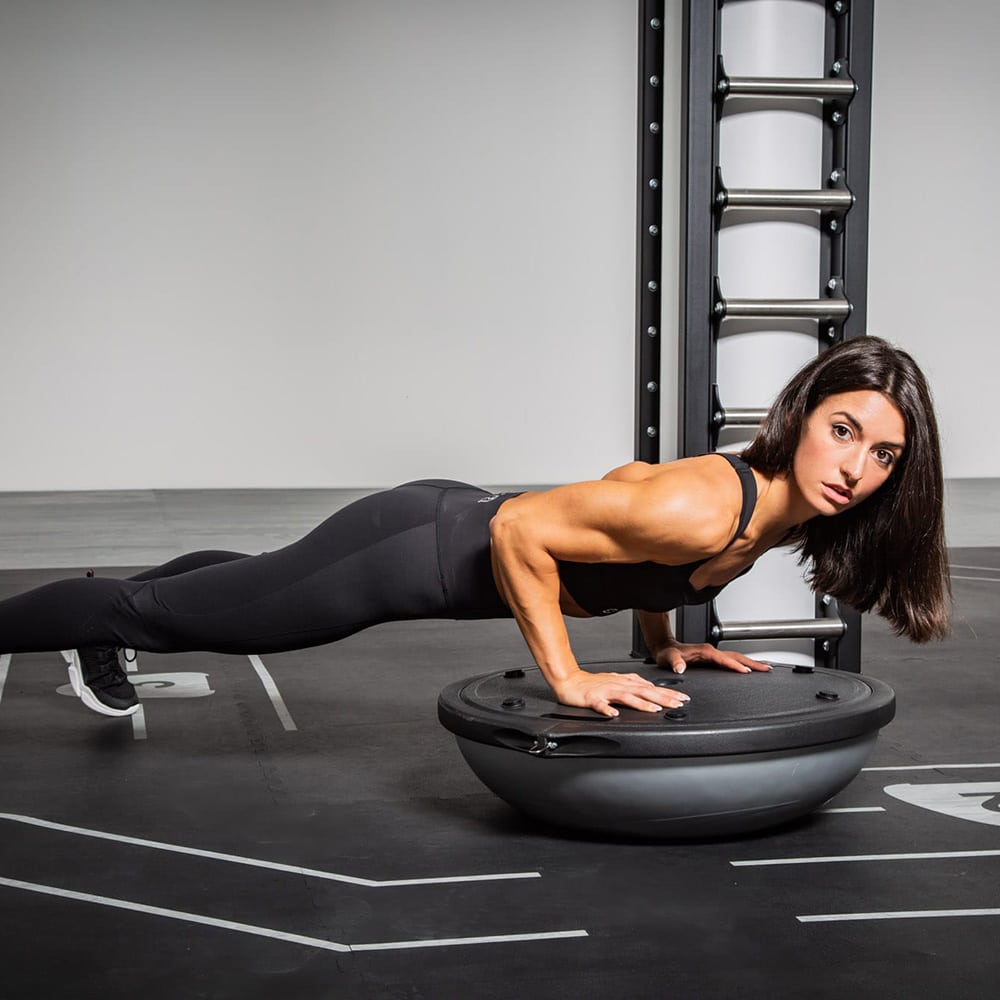
In CrossFit boxes and at functional training The step is incorporated into metabolic circuits — step-ups, burpees over the step, elevated push-ups — often combined with other equipment such as resistance bands, kettlebells or flowbag.

Anyone who works out in a home gym or garage gym will appreciate a compact, multi-functional step that can be used for both cardio and as a deficit platform for strength exercises, without taking up valuable space.

How to choose

The first criterion is the intended use. For traditional aerobics and step classes, platforms with stepped rungs, a wide surface (generally around 100×35 cm) and adjustable to at least three heights are required. For deficit training, more compact step platforms are often sufficient — even a single pair of steps — provided they remain stable under axial load.

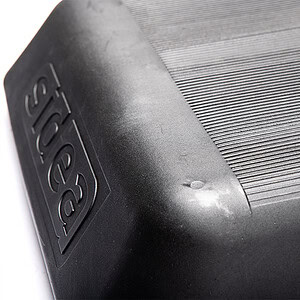
The second criterion is frequency of use and the number of users. A step used in a professional gym must be able to withstand hundreds of sessions a week. The quality of the materials — high-density polypropylene, a textured surface, and non-slip rubber pads under the steps — makes all the difference over time.

Third element: versatility. Some Sidea steps are designed as components of kits (Plyo Kit, Deficit Sumo Squat Kit, Dynamic Kit) and can be integrated with other equipment in specific training programmes. If you are working with structured programmes or wish to get the most out of your investment, a kit is often more efficient than a single piece of equipment.

Finally, consider storage. Classic step platforms can be stacked vertically; mini steps and deficit platforms take up less space but do not always stack easily. Assess the space available before deciding on the quantity.

Sidea Products by Step

The main reference category is <a href=
Domande frequenti - Step

  • The classic aerobic step is a wide rectangular platform (typically 100×35 cm) with height-adjustable steps, designed for group choreography and cardiovascular training. The mini step is more compact, often with a fixed height, and is mainly used for deficit training — squats, deadlifts, split squats — where a stable height difference under load is required rather than a large surface area for the feet.
  • For structured group classes, it is useful to have at least three height settings (typically 10, 15 and 20 cm), so that each participant can adjust the intensity to suit their own level. Some models offer as many as four or five settings. Adjustment must be quick and secure: click-lock steps are more reliable than clip-on systems in high-use environments with multiple daily sessions.
  • It is used regularly for strength training. The deficit squat, the deficit Romanian deadlift, the Bulgarian split squat with the rear foot elevated, and the step-up with dumbbells or a barbell are all exercises in which the step acts as a platform under load. In these cases, structural stability is paramount: the step must withstand dynamic loads without giving way or slipping.
  • Deficit training involves performing movements such as squats or deadlifts with your feet positioned on a platform raised above the floor. The height difference — usually 3–10 cm — increases the range of motion of the exercise, placing greater strain on the posterior chain and the quadriceps during the eccentric phase. It is a common technique in athletic training and powerlifting to develop strength in the lower part of the movement.
  • The key parameters are the platform material (high-density polypropylene is the industry standard), the quality of the non-slip surface, the step attachment system (a snap-fit system is more robust than a clip-on system) and the stated load capacity. A professional gym step must be able to withstand at least 120–150 kg of dynamic load without deformation. The presence of non-slip rubber pads under the side steps is also an indication of build quality.
  • It depends on the context. If you’re working with structured programmes that combine step platforms, resistance bands, kettlebells or other equipment, a pre-configured kit such as the Plyo Kit or the Dynamic Kit offers carefully designed combinations that work well together. For a gym that needs to set up a step class for 20–30 people, buying individual platforms offers greater flexibility. The kits are particularly suitable for home gyms, personal trainers and CrossFit boxes with limited space.
  • Sidea offers a range of instalment payment options to make it easier to purchase professional equipment. Please see the dedicated page: Payment options Sidea.
  • If you work in the fitness or sports sector, register on the website as a Professional or as an ASD to gain access to the price list reserved for industry professionals. Pro registration allows you to view exclusive discounts and special terms across the entire Sidea catalogue.
  • Yes, Sidea is an authorised supplier on the MEPA (Public Administration Electronic Marketplace). Public bodies, schools, universities, local authorities and public sports facilities can purchase Sidea equipment via the platform Public Sector Online Procurement. For information on product codes and direct MEPA orders, please contact Sidea customer service.
  • Sidea guarantees the right to cancel within 14 days of delivery for all online purchases, in accordance with current legislation. Products must be returned undamaged and in their original packaging. For full details on returns, refunds and the warranty, please see the page Terms and Conditions of Sale.
  • Sidea has been designing and distributing professional fitness equipment since 1999: over 25 years’ experience serving gyms, sports coaches, CrossFit boxes, personal training studios and enthusiasts of advanced home fitness. Official distributor StrongFirst e Luxiaojun, which is exhibiting at the FIBO international trade fair and is the technical sponsor of the Summit of Strength. Every product is designed with durability, functionality and suitability for real-world operational contexts in mind. The service Gym Design Offers bespoke design services with 3D renderings. A warehouse covering over 4,000 m² in Gambettola (FC) to ensure rapid order fulfilment, direct technical advice and a special price list for professionals and amateur sports clubs.