
















Before you can push, you need something to push against
Before strength comes support.
It is a seemingly trivial concept, almost self-evident. Yet it describes one of the most interesting principles of human movement.
In bioenergetics, Alexander Lowen used the term “grounding” – literally ‘rooting’ – to describe the individual’s relationship with the ground through the feet. The meaning Lowen attributed to the term belonged primarily to the psychophysical sphere rather than to modern sports biomechanics. Yet the image it conjures is evocative: the foot represents the point at which our body encounters something that does not move with us but enables us to move.
The land.
When we walk, run, jump, throw or lift a weight, that contact also takes on a strictly mechanical significance. And what appears to be merely a point of contact becomes a fundamental prerequisite for organising the movement.
Let’s consider the military press.
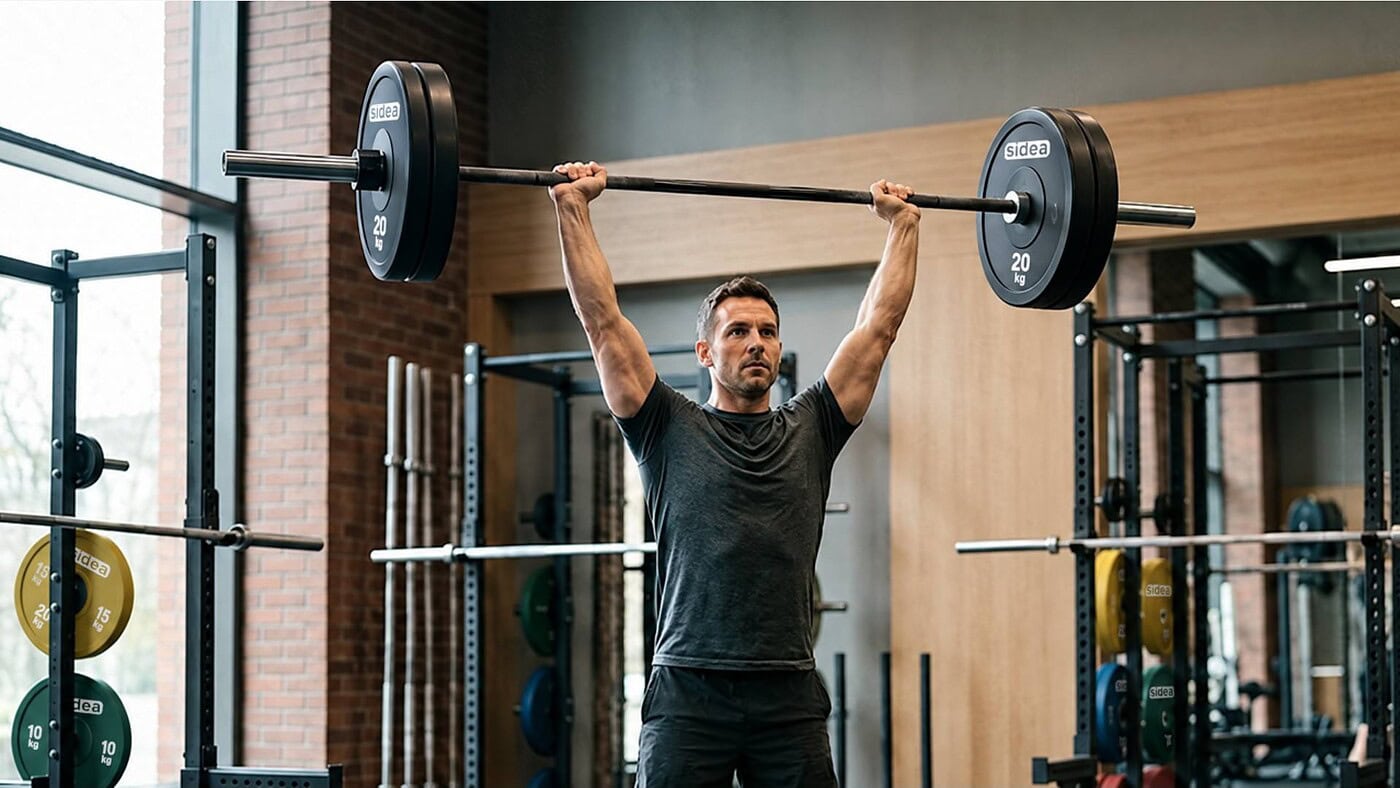
We have a barbell resting on our shoulders and we want to lift it above our heads.
Instinctively, we look at the arms. Deltoids, triceps, trapezius. After all, it is these muscles that primarily generate the force which moves the barbell and thus produces the external mechanical work that we observe
But let’s try to imagine moving down the body.
From the hand to the shoulder.
From the shoulder to the torso.
From the torso to the pelvis.
From the pelvis to the legs.
From the legs to the feet.
And finally, from the foot to the floor.
At that point, an interesting question arises:
How effective can the force generated by the arms be if everything beneath them is unable to support it?
The answer takes us beyond the individual muscle and into one of the fundamental concepts of biomechanics: the force we observe at the end of a chain also depends on the ability of the entire system to create the conditions necessary for that force to be exerted.
The military press isn’t just an exercise for the shoulders
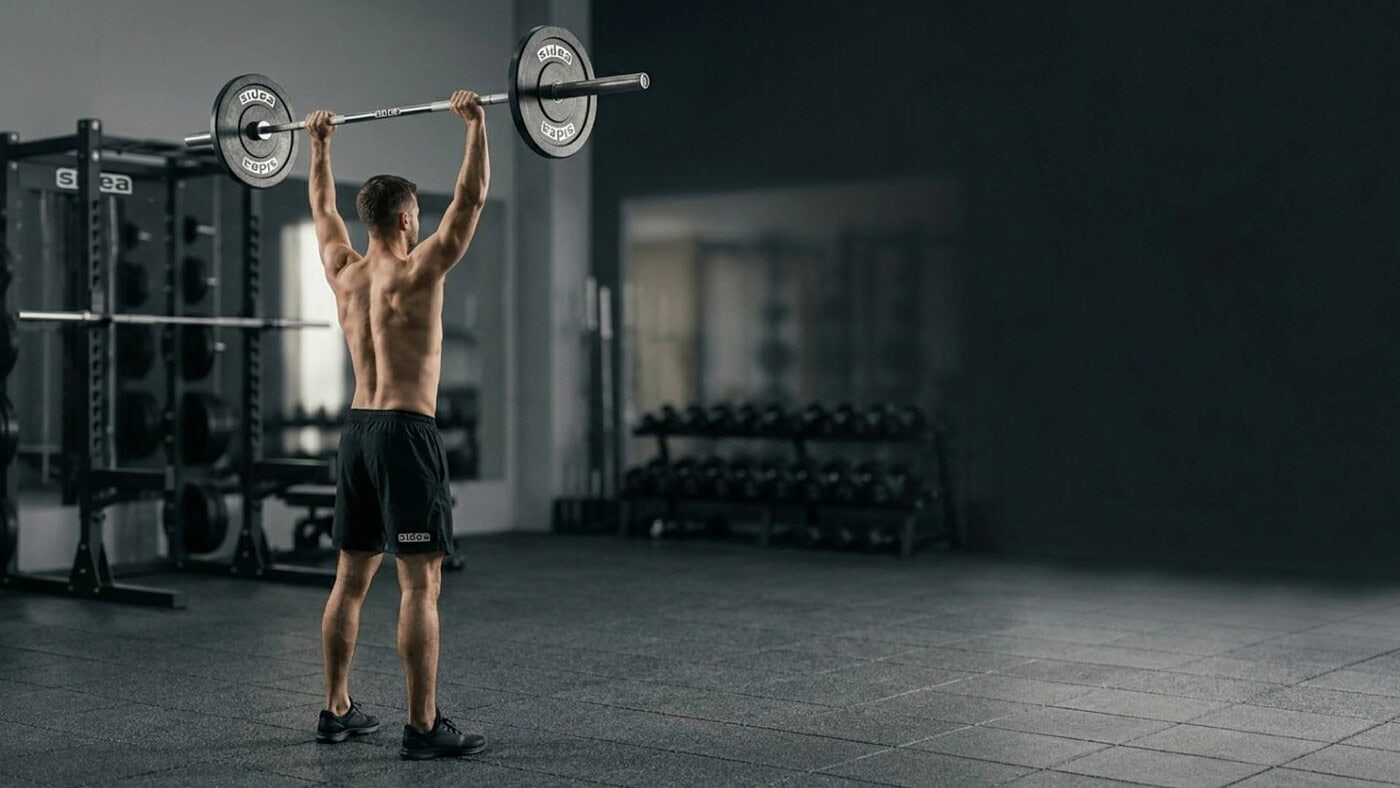
Classifying the military press as a “shoulder exercise” is correct from a practical point of view, but incomplete from a biomechanical perspective.
In the strict standing press, it is primarily the upper body that imparts the acceleration required to overcome gravity to the barbell.
Unlike in the push press, the legs should not deliberately generate the propulsive phase through a rapid extension of the hips and knees.
And yet they work.
The torso should not bend or extend noticeably.
And yet it works.
The feet don’t seem to be doing anything.
And yet they are the point through which the entire system interacts with the ground.
The literature on overhead pressing variations describes the standing press as an exercise in which, whilst the upper-body muscles generate the movement of the load, the trunk and lower body contribute to the stability required to perform it [1].
This distinction is crucial.
Not all the muscles involved in a movement necessarily produce the movement that we see.
Some people have to do something just as important:
to prevent unwanted movements from occurring.
To move something, something else must remain stable
Let’s imagine we have to push a very heavy door with all our might.
With our feet firmly planted on the ground, we can position our body, brace our torso and effectively direct our movement towards the goal.
Now let’s imagine the same situation with our feet on an extremely unstable surface.
Our muscle strength hasn’t suddenly disappeared.
The bibs are the same.
The triceps are the same.
The shoulders are the same.
And yet, the ability to apply force effectively against the goal varies.
Some of the system’s resources must now be used to control the instability.
This principle is also widely recognised in the literature on resistance training: conditions of greater instability can increase the demands on stabilisation whilst simultaneously reducing the strength, power or speed that can be expressed externally [2–4].
The point, then, is not simply to have muscles capable of generating a great deal of force.
We also need to have a structure in place capable of managing it.
And this is where the Military Press becomes particularly interesting.
The foot: where the body meets the outside world
The foot forms the supporting base of the system.
But simply saying “you have to keep your balance” doesn’t do justice to what’s actually happening.
Even when a person appears to be completely still, their body is not actually still.
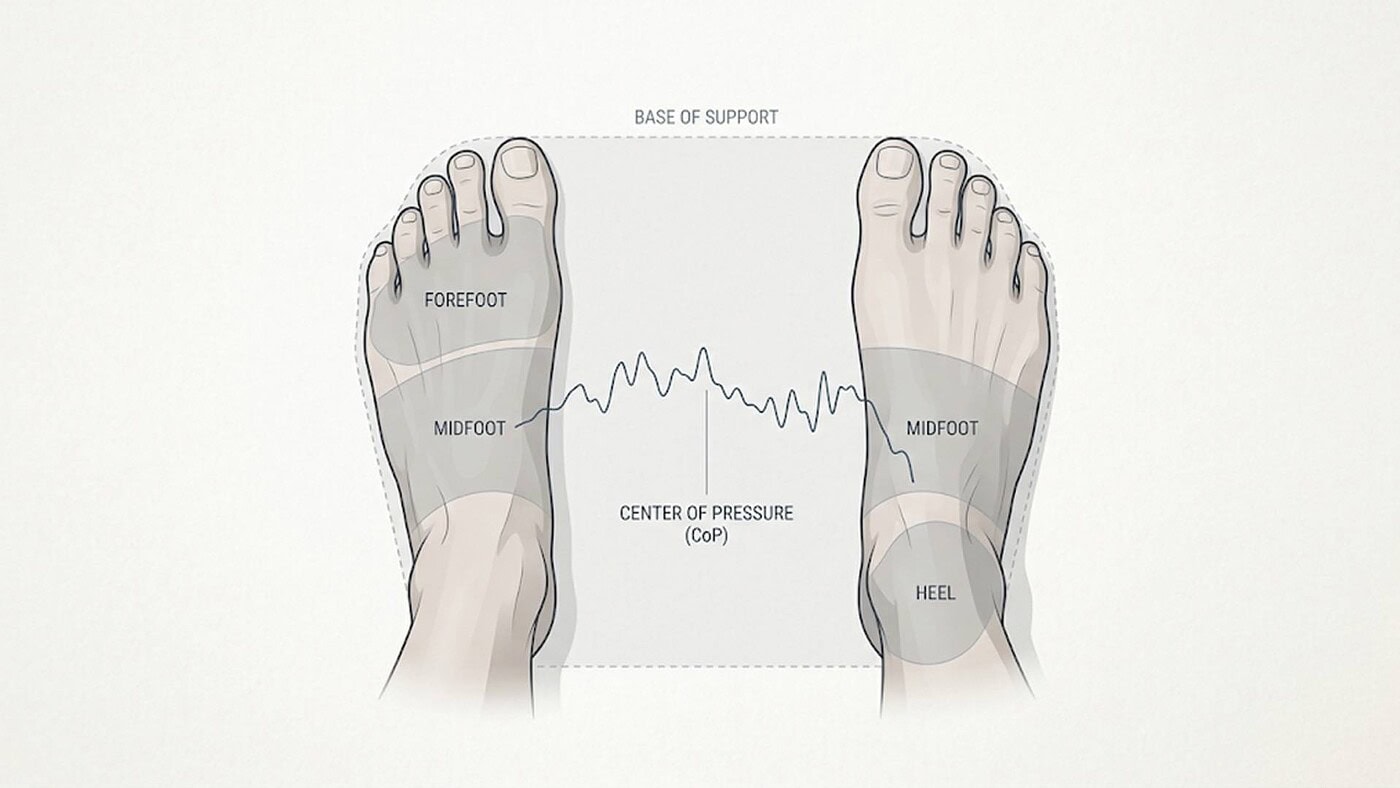
The centre of mass (Centre of Mass, CoM) and the centre of pressure (Centre of Pressure, CoP) are involved in a continuous process of postural control. The CoP, which can be measured using force plates, represents the resultant of the interaction between the forces exerted against the ground and is widely used in the study of balance [5,6].
In other words, when we are standing, our body is already working to prevent us from falling.
Now let’s put a barbell in his hands.
And let’s get them to shift that weight from the front of their shoulders up to above their heads.
The overall body and barbell configuration changes.
The system must constantly adapt.
Lifting a load effectively represents an internal disturbance of equilibrium, to which the body responds by altering the distribution of forces on the ground and its postural control [7].
The Military Press does not, therefore, take place above a passive support base.
This is achieved through a system that continuously monitors its relationship with that support base.
The forefoot, the heel and that subtle search for the centre
Let’s get back to the feet.
During a standing barbell overhead press, the NSCA’s technical literature recommends keeping the body rigid and maintaining balance primarily on the midfoot, whilst avoiding a marked shift towards the toes [8].
This does not mean that the pressure on the sole of the foot must remain mathematically fixed at a single point.
That would be physiologically unrealistic.
The body sways. It corrects. It anticipates. It compensates.
Stability is dynamic.
But let’s imagine that, during a high-intensity workout, the body gradually starts to shift too much onto the forefoot.
The margin previously available to cope with further disturbances is diminishing. The body must adjust its configuration to keep its centre of mass controllable relative to the base of support.
If, on the other hand, we shift our weight too far towards the heel, the problem arises in the opposite direction.
The issue, therefore, is not to find some mythical “perfect spot” on the foot on which to concentrate all the pressure.
It is about creating a foundation that is sufficiently balanced and manageable to enable the rest of the chain to fulfil its role.
And so here is the evocative concept of grounding The concept we started with takes on – without confusing it with its scientific meaning – a curious mechanical correspondence:
Before checking what is above our heads, we must check the point at which we are connected to the ground.
From the foot to the hand: a chain that needs to be organised
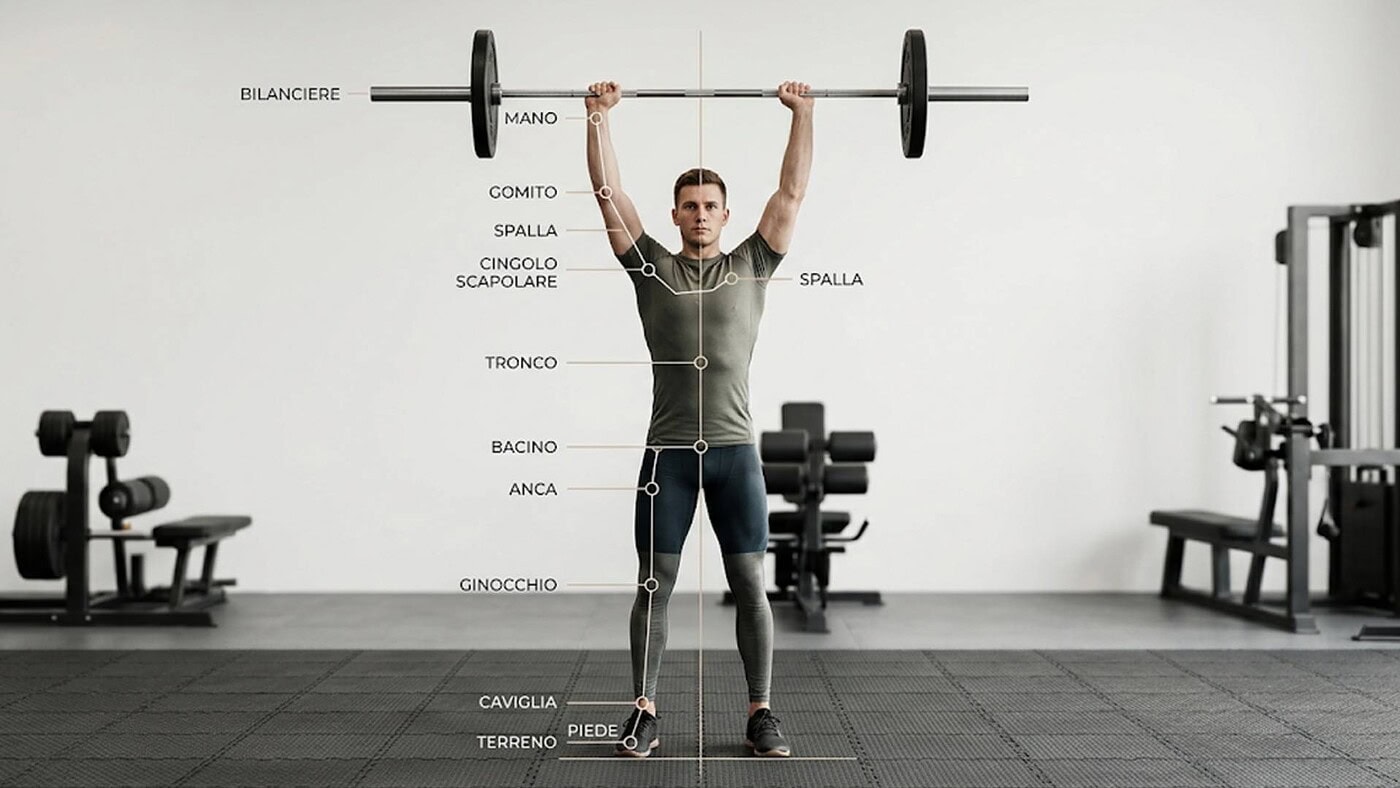
We can represent the system schematically as follows:
LAND
↓
FOOT
↓
ANKLE
↓
KNEE
↓
ANCA
↓
BASIN
↓
TRUNK
↓
SHOULDER STRAP
↓
SHOULDER
↓
ELBOW
↓
HAND
↓
BUDGETARY
This illustration does not mean that the force in the military press is “generated by the ground” and magically transmitted to the barbell.
That would be an oversimplification.
It means something more interesting.
Each segment must create mechanical conditions that are compatible with the function of the next segment.
The literature on kinetic chain, which has been extensively studied in relation to overhead athletes, highlights precisely the need to coordinate different segments so that the generation, transfer and control of forces occur effectively throughout the system [9,10].
In the Military Press, we can see this principle in action in a particular way.
Your legs do not necessarily have to accelerate the barbell.
Above all, they must ensure that the base supporting the trunk does not become ineffective.
The core should not lift the barbell.
It must create a sufficiently stable condition so that the force generated further distally can be applied without being dissipated through unwanted movements of the trunk.
The scapular complex, in turn, must create the conditions necessary for the humerus to function.
And finally, the hand and the lever represent the visible ends of the system.
The core: rather than generating strength, it must enable you to exert it
And so we come to the centre of the chain.
The term “core stability” is often reduced to the vague notion of ‘having strong abs’.
The literature offers a far more interesting definition.
Silfies and colleagues describe core stability in terms of the ability to control the position and movement of the trunk, thereby facilitating the generation, transfer and control of forces between the upper and lower limbs [11].
Alberto Andorlini likes to describe human beings as core-centred entities and movement as core-dependent.
In the Military Press, this becomes immediately clear.
Let’s imagine that the deltoids and triceps generate a great deal of force against the barbell.
If, at the same time, the trunk loses its normal shape, the required configuration may also manifest itself through:
- excessive lumbar extension;
- trunk tilt;
- pelvic displacement;
- change to the rocker arm’s path;
- the need for further postural corrections.
The problem is not necessarily that the shoulder muscle has become “less strong”.
The structure through which that force is to be expressed has changed.
This is why trunk bracing plays an important role.
The co-activation of the trunk muscles and the increase in intra-abdominal pressure help to regulate the stiffness of the lumbopelvic complex during weight-bearing activities [3,12].
The core therefore acts as a sort of mechanical bridge.
And whilst a bridge may be built using extremely strong materials, if it sways excessively when a load passes over it, the ability of the entire structure to fulfil its purpose is compromised.
An interesting experiment: let’s remove stability
The relationship between stability and force production becomes clear when comparing different variations of the shoulder press.
Saeterbakken and Fimland compared the following press runs:
- seated and standing;
- with a barbell and with dumbbells.
The condition characterised by the greatest demands on stability – the standing dumbbell press – resulted in high neuromuscular activation but, at the same time, yielded a lower 1RM compared with the more stable conditions [2].
This figure is important because it highlights a distinction that is often overlooked:
Greater muscle activation does not automatically mean greater external force.
Some of this neuromuscular activity may be necessary precisely to control the system.
A 2025 study on the Standing Overhead Press also compared the exercise performed with a free barbell and on a machine, finding that the free-weight version placed greater demands on body movement and the activation of certain muscles involved in trunk control, including the spinal erectors [13].
The machine provides some of the stability.
The barbell, no.
When we remove the external constraint, it is the body that must internally develop the control that was previously provided by the implement.
Stability does not mean absolute rigidity
We must avoid any misunderstanding here.
To say that the system must be stable does not mean imagining the athlete as a completely immobile structure.
Human behaviour doesn’t work like that.
Whilst standing, the body undergoes continuous small oscillations and changes in the centre of pressure (CoP) [5,6].
Adjustments are also necessary during the military press.
Stability should therefore be understood as the ability to control movement, not as the complete absence of movement.
A stable structure is not one in which nothing can move.
It is the one in which what needs to move does so, whilst what should not move is kept sufficiently under control.
This distinction completely changes the way we look at an exercise.
In the Military Press:
the shoulder must move;
the elbow must be extended;
the scapula must be involved in the overhead movement;
whilst other components must restrict movements that would make the action less efficient.
Mobility and stability are not opposites.
They work together.
Military Press and Push Press: two different ways of using the floor
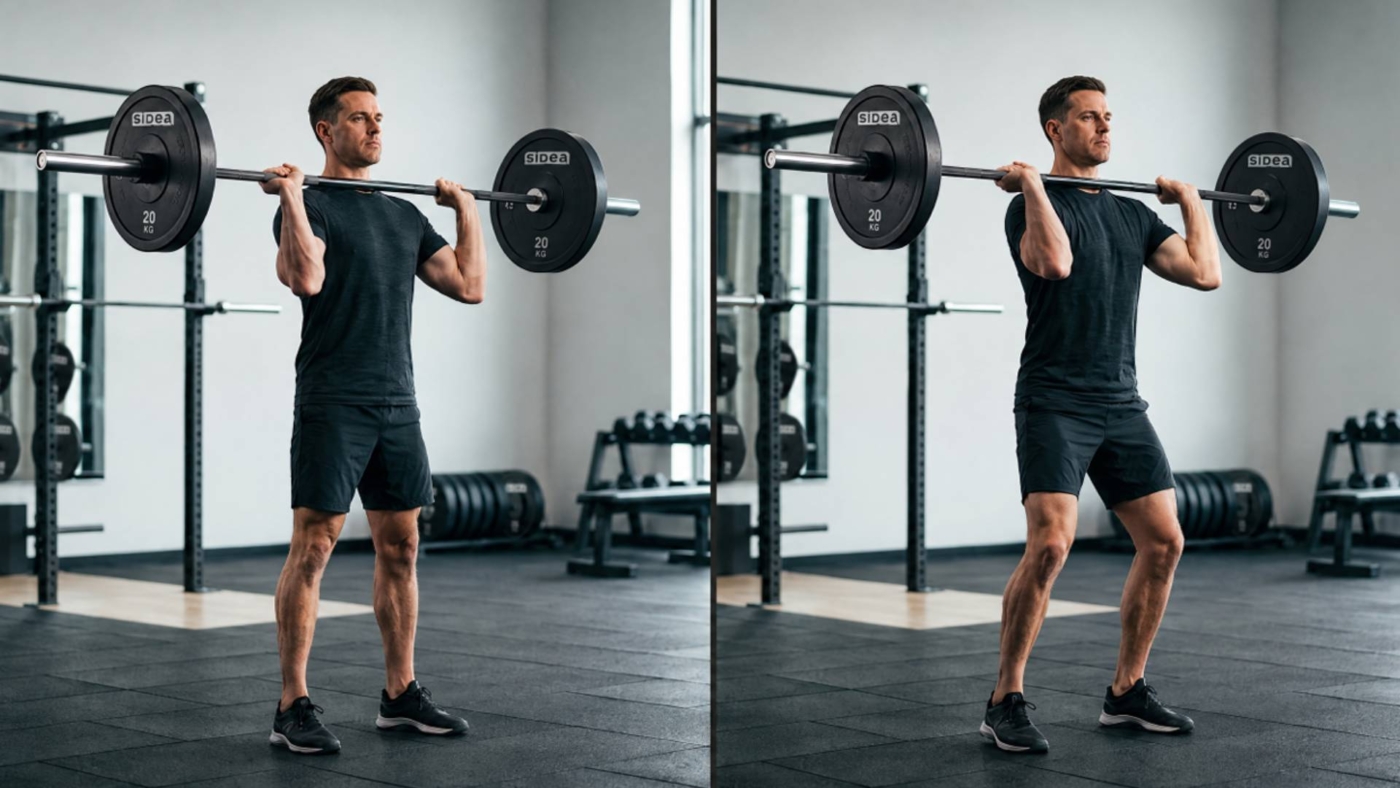
Comparing it with the Push Press makes the concept even clearer.
In the Push Press, the lower limbs play an active role in propulsion.
A rapid bending movement followed by the extension of the hips and knees contributes to the momentum that is transferred to the barbell via the kinetic chain [1].
In the Military Press, this propulsive element is deliberately omitted.
But ruling out leg propulsion does not mean eliminating their contribution.
It means changing its function.
We can summarise it as follows:
In the Push Press, the legs play a direct part in accelerating the barbell.
In the Military Press, they primarily help to create the conditions that allow the upper body to accelerate the movement.
It is a subtle but fundamental difference.
And it turns the strict press into something of a biomechanical experiment in stability.
The heavier the burden on us becomes, the more evident it becomes just how important what lies beneath us is.
The strength we can see and the stability we cannot see
When we watch an athlete performing a heavy military press, our attention is inevitably drawn to the barbell.
Salt or no salt.
That is the visible result.
But beneath that barbell lies an enormous amount of work that we rarely notice.
The foot controls the interaction with the ground.
The ankle, knee and hip all help to control the base.
The catchment area must be managed.
The trunk creates stiffness.
The shoulder girdle coordinates overhead movement.
The elbow extends.
The hand transfers force to the barbell.
There is only one repetition, but the system that produces it is the whole body.
And this is perhaps the limitation of observing human movement solely through the muscles that produce the most obvious movement.
The deltoid muscle can be extremely strong.
The triceps can be very strong.
But neither of them works in a vacuum.
Their strength is expressed within a structure.
“A chain is only as strong as its weakest link.”
Back on solid ground
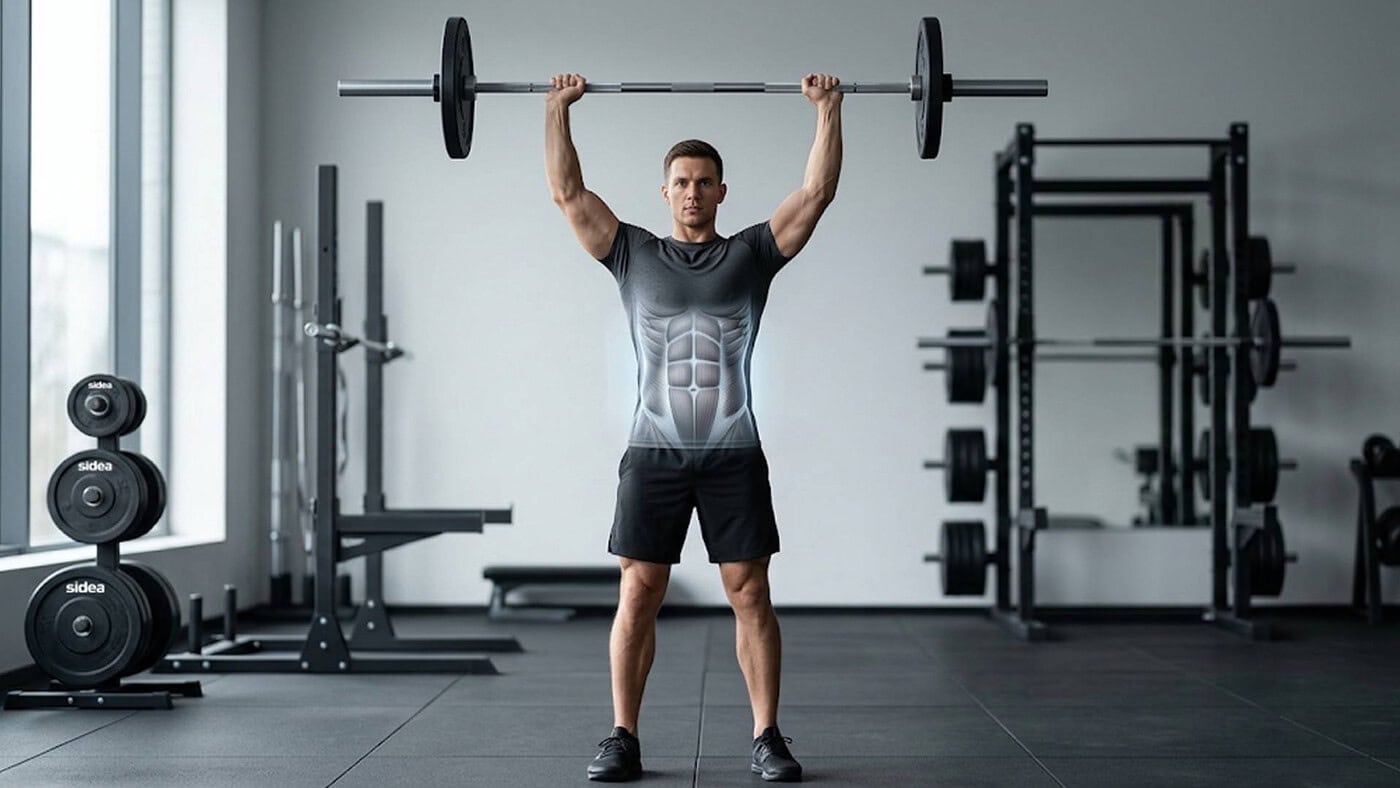
We can therefore return to the image we started with.
The grounding Lowen’s approach belonged to a different discipline and had different aims. We do not need to retroactively turn it into a biomechanical principle.
We can, however, hold on to that evocative image.
To be grounded.
Be aware of your contact with the ground.
Because, in sport, the ground is not simply what prevents our bodies from falling downwards.
It is the physical boundary against which we can organise our actions.
The foot touches the ground.
The ground reacts.
The system regulates that relationship through continuous adjustments.
And on that base, we can run, jump, throw, shoot or push.
Right up to lifting a barbell above your head.
Perhaps, then, when we watch someone doing a military press, we should stop looking at the barbell for a moment.
Work your way down the arms.
Cross over the shoulders.
The trunk.
The basin.
The legs.
Right down to the feet.
Because the strength we exert with our hands also depends on the whole body’s ability to support it.
And before we even ask our body just how far it can push itself, it might be worth asking it:
How much of that pressure can you handle?
The aim of these pages is not, after all, to discuss the Military Press.
The Military Press is merely a pretext for observing something broader: the way in which the body organises itself to perform an action.
Because the body is not simply the sum of its parts, but a system of interrelationships. And what we see — the barbell rising — is merely the final outcome of what the body has already managed to organise.
Perhaps that is precisely the point: to stop focusing solely on the result and learn to look at the conditions that make it possible.
Performance, then, is not merely what the body is capable of doing, but the way in which it organises itself to do so.
Move smarter. Get stronger. Live better.


Rack Station
477,50€ 1.206,25€Fascia di prezzo: da 477,50€ a 1.206,25€ FEES and TAXES NOT INCLUDED
Questo prodotto ha più varianti. Le opzioni possono essere scelte nella pagina del prodotto


Benches & Powerlifting
367,00€ FEES and TAXES NOT INCLUDED
Does strength come from the ground? The Military Press and the body’s hidden synergy
Before you can push, you need something to push against. Before force comes support. [...]
29
Sep
Sep
PHA and Jump Sets on the 9089K1 Cable Station: train strength, circulation and muscle density all in one station
PHA and Jump Sets on the 9089K1 Cable Station: build strength, improve microcirculation by increasing [...]
28
Jul
Jul
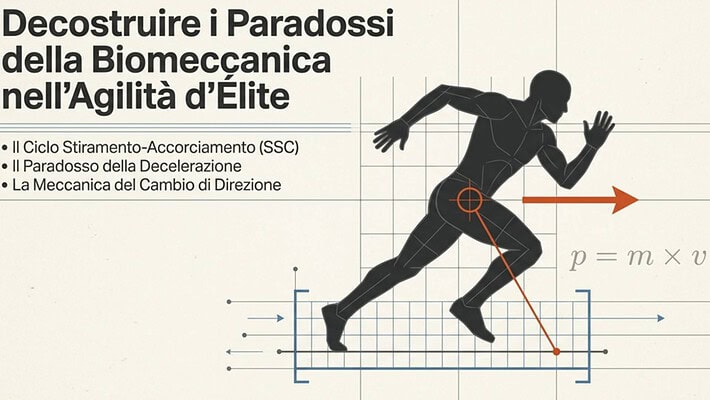
Elite agility: why changing direction isn’t just a matter of strength
Introduction: Agility is not just about being quick on your feet. When we talk about agility, the temptation [...]
30
Jun
Jun

Maximum strength and team sports
When strength becomes performance: Dr Mauro Franzetti’s contribution to the Summit of Strength [...]
26
Jun
Jun
ATHX Games 2026: what it is, how it works and how to prepare for the hybrid competition
The evolution of HYBRID training In recent years, competitive fitness has evolved towards formats that are increasingly [...]
18
Jun
Jun
Definitive Guide to Bumper Plate Selection: How Not to Get Your First Set Wrong and Optimise Performance
The truth that no one tells you? Choosing a bumper disc is not just a matter [...]
29
May
May

Structure Governs Function: Dr Luca Franzon at the Summit of Strength in Cesena
A journey into the myofascial system that is revolutionising strength, movement and performance - from 1 [...]
26
May
May

The Ultimate Guide to Choosing SIDEA Handlebars
How and why choosing the right dumbbell for your workout The Dumbbell As An Investment [...]
22
May
May
References
[1] Soriano MA, Suchomel TJ, Comfort P. Weightlifting Overhead Press Variations: A Review of the Literature. Sports Medicine. 2019.
[2] Saeterbakken AH, Fimland MS. Effects of Body Position and Loading Method on Muscle Activity and Strength in Shoulder Presses. Journal of Strength and Conditioning Research. 2013;27(7):1824–1831.
[3] Behm DG, Drinkwater EJ, Willardson JM, Cowley PM. The Use of Instability to Train the Core Muscles. Applied Physiology, Nutrition, and Metabolism. 2010.
[4] Behm DG, Anderson KG. The Role of Instability in Resistance Training. Journal of Strength and Conditioning Research. 2006;20(3):716–722.
[5] Richmond SB et al. Research into the relationship between the centre of mass, the centre of pressure and postural control. Journal of Biomechanics. 2021.
[6] Hébert-Losier K, Murray L. Research into the assessment of plantar pressure/COP and postural control. Gait & Posture. 2020.
[7] Kollmitzer J, Oddsson L, Ebenbichler G, Giphart JE, DeLuca CJ. Postural Control during Lifting. Journal of Biomechanics. 2002.
[8] Kroell J, Mike J. Exploring the Standing Barbell Overhead Press. Strength & Conditioning Journal.
[9] Kibler WB et al. Literature on the kinetic chain in overhead athletic movements.
[10] Reviews of the role of hip and core function within the kinetic chain of overhead athletes. 2024.
[11] Silfies SP et al. A Critical Review of the Impact of Core Stability on Upper Limb Sports Injuries and Performance. Brazilian Journal of Physical Therapy. 2015.
[12] Literature on intra-abdominal pressure, co-activation of the trunk muscles and spinal stability during lifting tasks.
[13] An et al. Comparison of Body Kinematic Variables, Weight Load and Muscle Activation between Barbell and Machine Conditions during the Standing Overhead Press. Korea Journal of Applied Biomechanics. 2025.
 Defibrillator AED
 Gift CardSidea
 Spare parts