










-
×
 1011 Wooden Round Balance Board
2 × 25,93€
1011 Wooden Round Balance Board
2 × 25,93€ -
×
 1013 Weightlifting Balance board
2 × 54,90€
1013 Weightlifting Balance board
2 × 54,90€


Subscribe to our newsletter to receive news, promotions and insights into the world of Sidea



 1011 Wooden Round Balance Board
1013 Weightlifting Balance board
1011 Wooden Round Balance Board
1013 Weightlifting Balance board

Showing 1–18 of 34 results
Balance training brings together equipment that works on stability, proprioception and motor control: unstable surfaces such as wooden balance boards, dune balls, gym balls and proprioceptive cushions, used in athletic training, rehabilitation, Pilates and functional training.
Proprioceptive equipment for gyms, personal training studios, physiotherapy clinics and home gyms. Balance boards also designed for weightlifting to help control the barbell
Soft, firm and semi-firm surfaces for gradual increases in stability
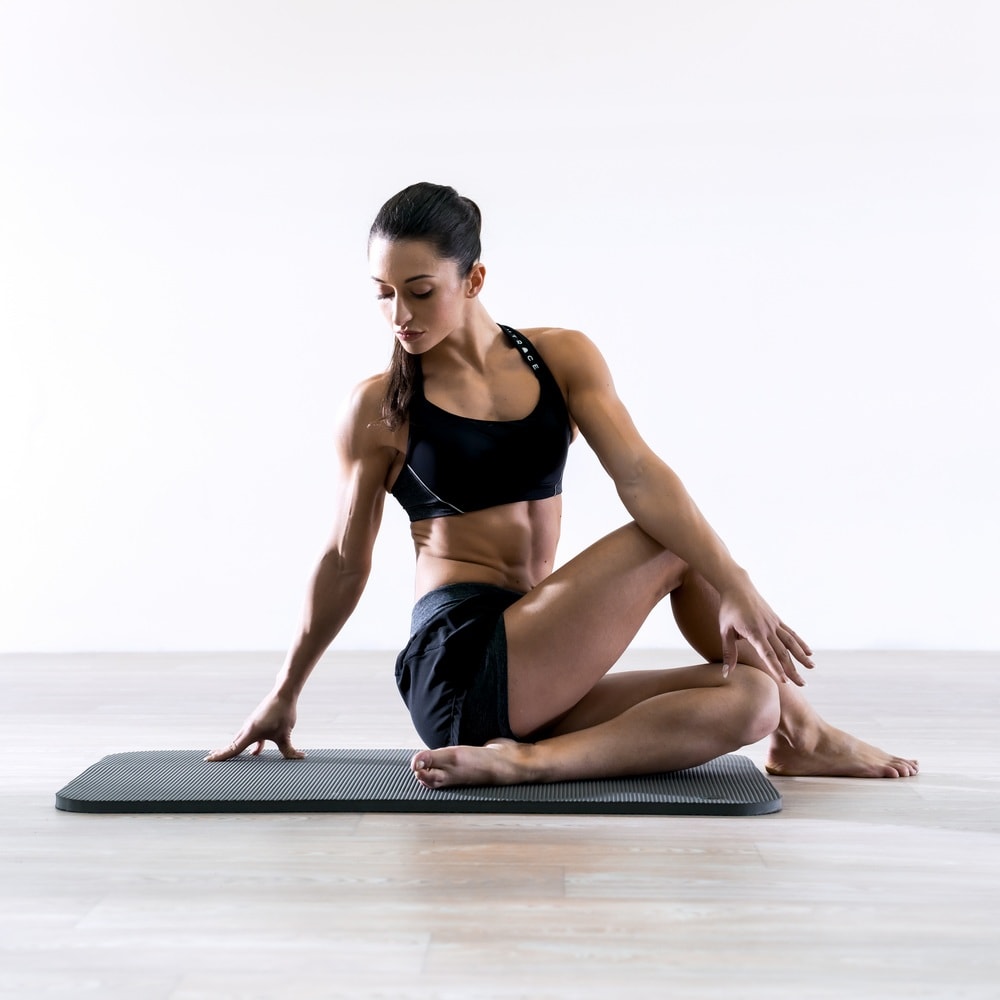
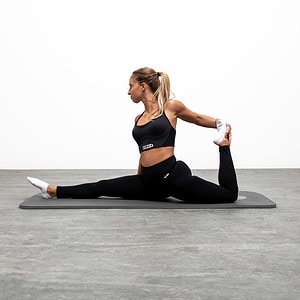
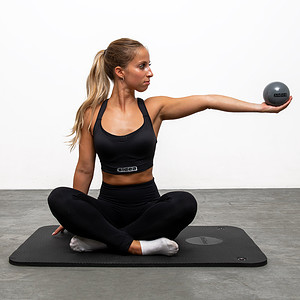
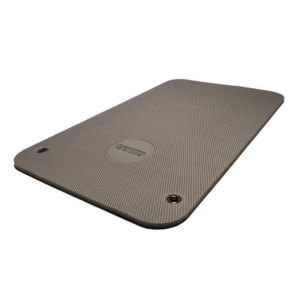
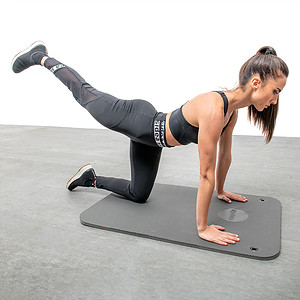
Yoga-pilates mats
Yoga-pilates mats
Fitness balls
Fitness balls

Balance training is a category of equipment that trains balance, proprioception and joint stability using unstable surfaces. It includes balance board round and square wooden balls, Dune Balls, bump discs, gym balls, proprioceptive cushions, Pilates mats and tatami mats. It is used in athletic training to improve motor control, in post-injury rehabilitation, in Pilates sessions and in weightlifting to strengthen ankle, knee and core stability. Sidea distributes thirty models designed for professional gyms, personal training studios, CrossFit boxes, physiotherapy centres and advanced home gyms. The choice of equipment depends on the user’s level, the context of use and their objectives: rehabilitation, performance or holistic training.
Balance training is a method that uses unstable surfaces to activate the proprioceptive receptors in joints, tendons and muscles. When the support surface moves, the central nervous system must rapidly and effectively recruit the deep stabilising muscle fibres to maintain optimal posture. The result is improved neuromuscular control, inter-segmental coordination and the prevention of joint injuries.
In a clinical context, proprioception is regarded as the sense of the body’s position in space. Training it helps to reduce reaction times to destabilising stimuli caused by external disturbances, which is particularly important following ankle sprains or knee surgery. In sport, the same principle applies to those performing squats, deadlifts or Olympic lifts: a stable ankle transfers force to the ground more effectively. Balance training can be incorporated into warm-ups, circuit training sessions functional training, Pilates sessions or functional rehabilitation programmes.
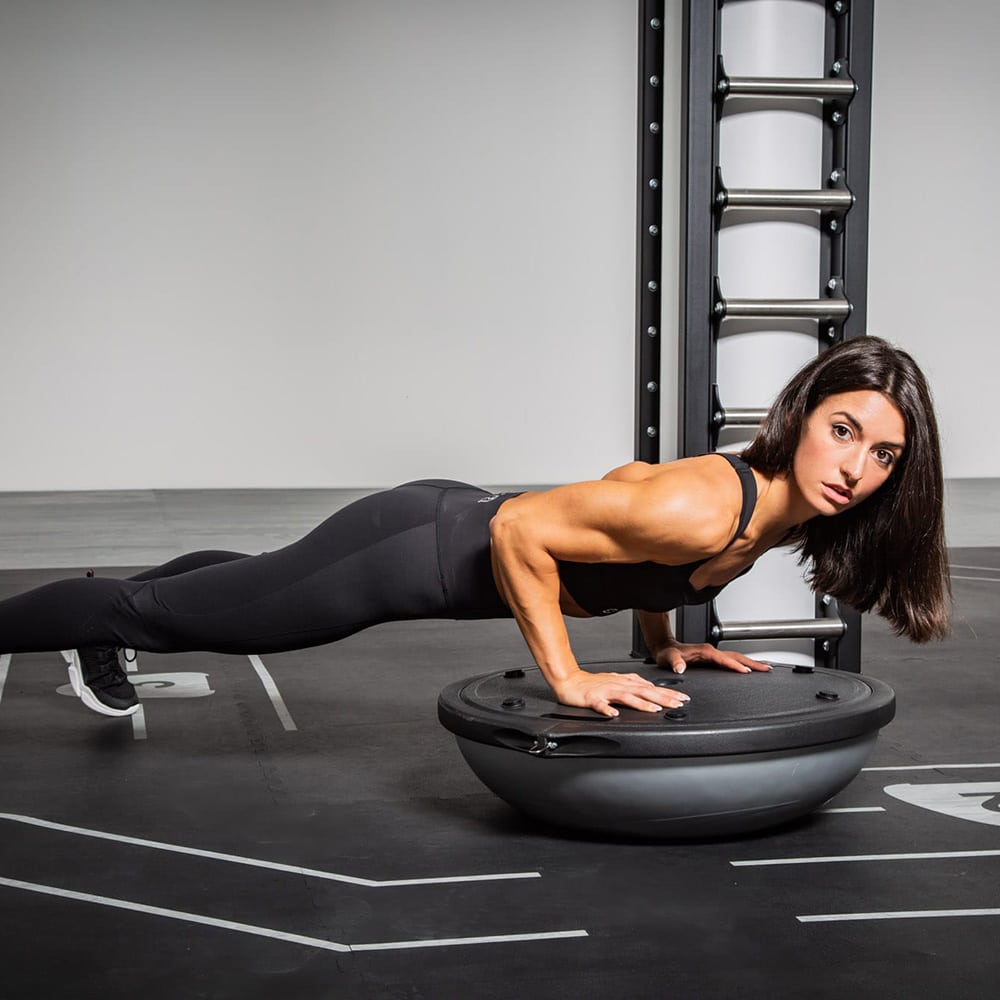
Plates with a hemispherical or cylindrical base that generate multidirectional instability (round) or instability along a single axis (square/cylindrical). The round 1011V and 1011 models require 360° control, whilst the square 1012V and 1012 models primarily work on the anteroposterior or lateral-lateral axes. Used in physiotherapy, Pilates and athletic training.
Models 1013 and 1013V are designed to train kinesthetic sensitivity and proprioception in weightlifters. Their generous dimensions have been specifically engineered for movements such as overhead squats, deadlifts and light lifts on an unstable surface. The design is engineered to accommodate both feet and support moderate loads. They are useful for training ankle stability under load and for improving the athlete’s reaction time to disturbances.
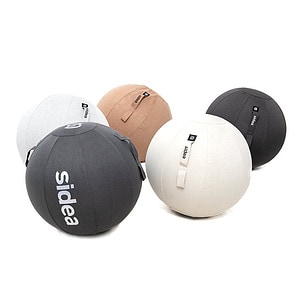
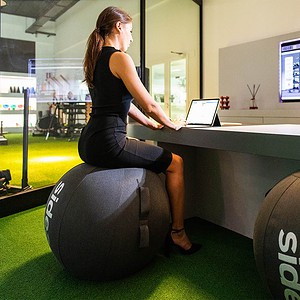
The Dune Ball Board 8030, the Bump Stimulating Disc 3001 and the Bump Stimulating Balance Pots 7510–7511 introduce gentle, progressive instability. The EVA Balance Pad 2909 is the gentlest option, suitable for rehabilitation and early stages of training. In this case, the instability does not arise from a change in the object’s position, but from its deformation under the user’s weight. This deformation forces the user to react continuously in order to keep the system in balance. The Active Sitting Ball acts as an active seat to stimulate the core, even in the office.
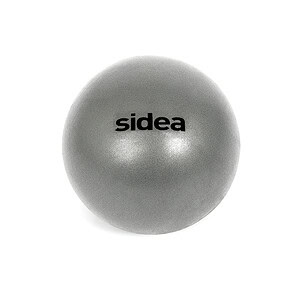
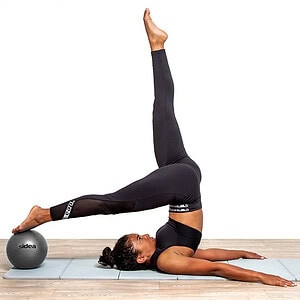
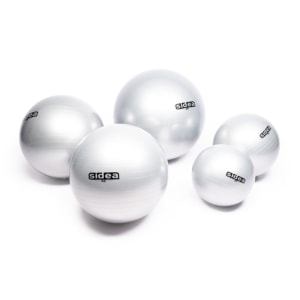
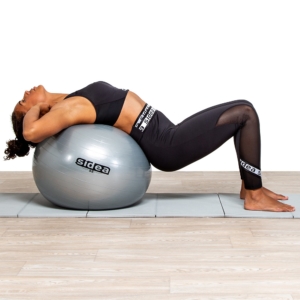
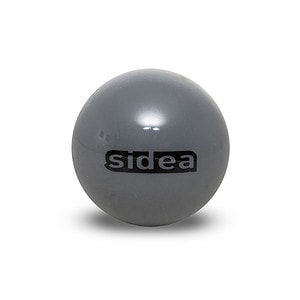
Inflatable balls of varying diameters (Gym Ball 0428–0446, Soft Ball 0415–0418, Pilates Ball 0451) for core stability, mobility and Pilates exercises. Designed to complement the rigid bases, they cover the area of the holistic training and bodyweight exercises. See also fitness balls for the full range.
For a weight room used by a mixed group of users, you’ll need a mix: two or three wooden balance boards (1011/1012), a couple of EVA balance pads for the warm-up, and gym balls of different diameters. The Balance Board Rack 1014 or the Kit 1014K allow you to store multiple boards neatly without taking up floor space.
PTs working with a diverse client base (post-rehabilitation, over-65s, amateur athletes) can benefit from the full range: balance pads for beginners, round balance boards for intermediate users, and weightlifting balance boards for those already working with a light barbell. A set of massage balls (1275, 1276) completes the package for myofascial release.
In a gym, their use is more targeted: weightlifting balance boards are used in accessory exercises designed to improve ankle and knee stability, often as preparation for the snatch and clean. The tatami (9204, 9230, 9231) is useful for mobility areas. To be used in combination with foam roller for recovery.
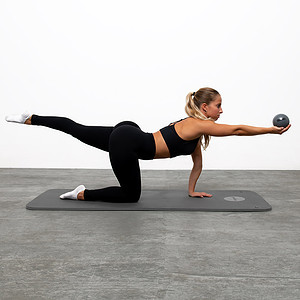
Those who train at home usually start with a round or square wooden balance board and a yoga/Pilates mat (3025, 3016). It takes up very little space, and the equipment lasts for years. Those who wish to incorporate Pilates can add a soft ball and a 1 kg Pilates ball.
The standard programme starts with the EVA balance pad (2909), moves on to the EVA Multifunctional Board 2907, and only progresses to wooden balance boards in the advanced stages. Bump discs and active sitting balls are low-intensity tools for seated exercises or recovery work.
| Model | Type | Material | Main use |
|---|---|---|---|
| 1011 / 1011V | Round balance board | Plywood | 360° instability, rehabilitation and training |
| 1012 / 1012V | Square balance board | Plywood | Uniaxial instability: first steps |
| 1013 / 1013V | Weightlifting balance board | Reinforced wood | Squats and light lifts on an unstable base |
| 1014 / 1014V / 1014K | Racks and balance board kits | Metal + wood | Storage and management of equipment in the gym |
| 8030 | Dune Ball Board | Soft inflatable base | Progressive instability, core stability |
| 2909 | Balance Pad | High-density EVA | Rehabilitation, warm-up, over-60s |
| 2907 | Eva Multifunctional Board | EVA | Educational use, Pilates, basic proprioception |
| 3001 | Bump Stimulating Disc | Inflatable PVC | Balance whilst standing on one or both feet |
| 7510 / 7511 | Bump Stimulating Balance Pot | PVC | Advanced proprioceptive exercises |
| 0448/5 - 0448/9 | Active Sitting Ball | Burst-resistant PVC | Active sitting, core exercises at the office |
| 0428-0446 | Gym Ball | PVC | Pilates, core, mobility |
| 0415-0418 | Soft Ball | Soft PVC | Pilates, assisted exercises |
| 0451 | Pilates Ball 1 kg | Ballast tyre | Toning, Pilates, upper limb rehabilitation |
| 2090 | Slidisk | Sliding plastic | Core sliding, dynamic stability |
| 1275 / 1276 | Hard/spiked massage ball | Rubber | Trigger points, recovery |
| 3016 / 3025 / 0409 | Yoga-pilates mats | NBR / TPE | Work surface |
| 9204-9207 / 9230-9231 | EVA tatami mats | High-density EVA | Flooring for the balance/mobility area |
In the FAQs below, you’ll find answers to the most common questions about choosing the right equipment, progressing through the exercises, the differences between round and square balance boards, their use in rehabilitation, and how to incorporate them into weightlifting and Pilates.
Sidea has been manufacturing and distributing fitness equipment since 1999. Its warehouse in Gambettola covers more than 4,000 m², and the balance training range has been developed over time, incorporating feedback from Italian gyms, sports coaches and physiotherapists. As official distributors of StrongFirst and Luxiaojun Every year, we engage with international trainers at FIBO and the Summit of Strength: the result is a catalogue in which balance boards designed for weightlifting are not merely a marketing gimmick but a genuine piece of equipment used by our clients in their Olympic training. The Gym Design service, featuring 3D renderings, allows those designing a proprioception area to visualise the space requirements and layout before making a purchase. Technical advice is provided directly, with no call centres acting as intermediaries.





 Defibrillator AED
 Gift CardSidea
 Spare parts