


Parallettes are pairs of raised handles made from 38–50 mm tubular steel, which allow you to perform push-ups, L-sits, handstands, tuck planches and calisthenics progressions with your wrists in a neutral position and a greater range of motion than when exercising on the floor.
Steel tubing, 38–50 mm; heights from 35 cm to 113 cm. Suitable for indoor and outdoor use and floor installation
Suitable for calisthenics, gymnastics, streetlifting and functional training.
Public Island
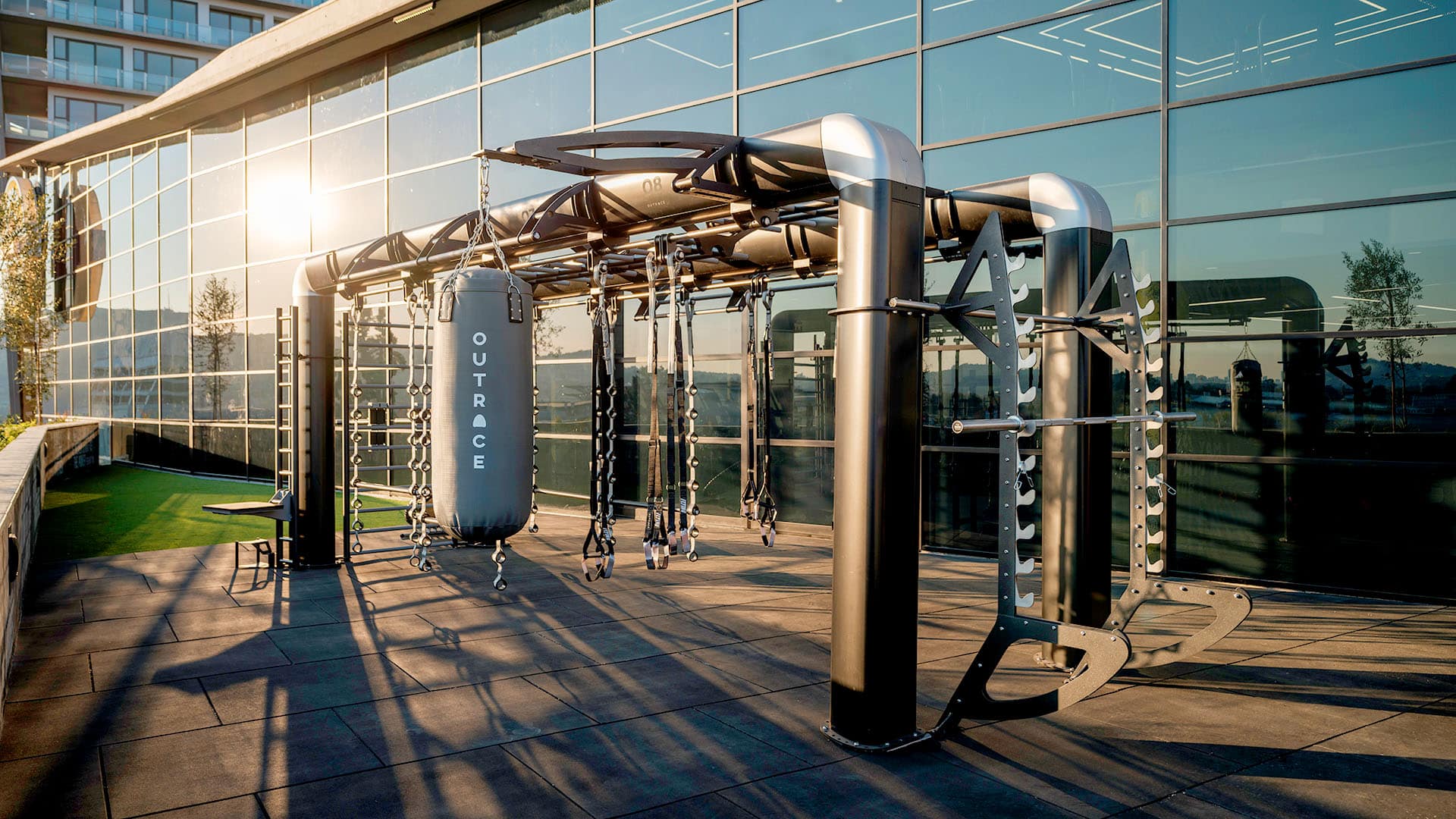
Rack Station
Guida completa: Parallettes & Push-up
Parallel Bars & Push-ups: A Complete Guide
The Sidea parallel bars are floor-mounted pieces of equipment made from 38–50 mm steel tubing, available in low (35 cm) and high (80 cm) versions, up to 130 cm for fixed installations. They are used for performing neutral-grip push-ups, L-sits, handstand push-ups, tuck planches, floor dips and artistic gymnastics progressions applied to fitness training. The range includes portable models for personal training studios and gyms, and fixed versions for calisthenics training and the solution Public Island Designed for outdoor fitness areas. The choice depends on the athlete’s height, the type of skill being developed and the setting: a weights room, a functional training area or a permanent outdoor installation.
What are Parallettes & Push-ups: definition and function
Parallel bars are pairs of parallel handles raised above the floor, supported by a stable base. Their main function is twofold: on the one hand, to keep the wrist in a neutral position during push-ups, reducing the strain compared to floor push-ups; on the other hand, to create space beneath the shoulders to perform skills that require compression or moving the torso beyond the line of the hands, such as the L-sit, V-sit, tuck planche and handstand with full protraction.
The low version (35 cm) is the standard choice for calisthenics floor work. The high version (80 cm) replicates the Olympic parallel bars and allows for deep dips, swings and transitions typical of artistic gymnastics. The difference is not merely aesthetic: it actually changes the discipline you can train in.
Types of Parallel Bars & Push-ups
Low parallel bars, 35 cm
Model 9018/1. Low-profile design ideal for floor calisthenics, neutral-grip push-ups, L-sits and planche progressions. 38 mm tubular frame with a wide base for stability during vertical loading.
80 cm high parallel bars
Model 9018. A tall version that functionally replicates Olympic parallel bars. It allows for full-range dips, swings, suspended L-sits and specific strength training for gymnastics. Suitable for strength and conditioning coaches who incorporate skill work into their conditioning programmes.
Movable parallel bars for the training area
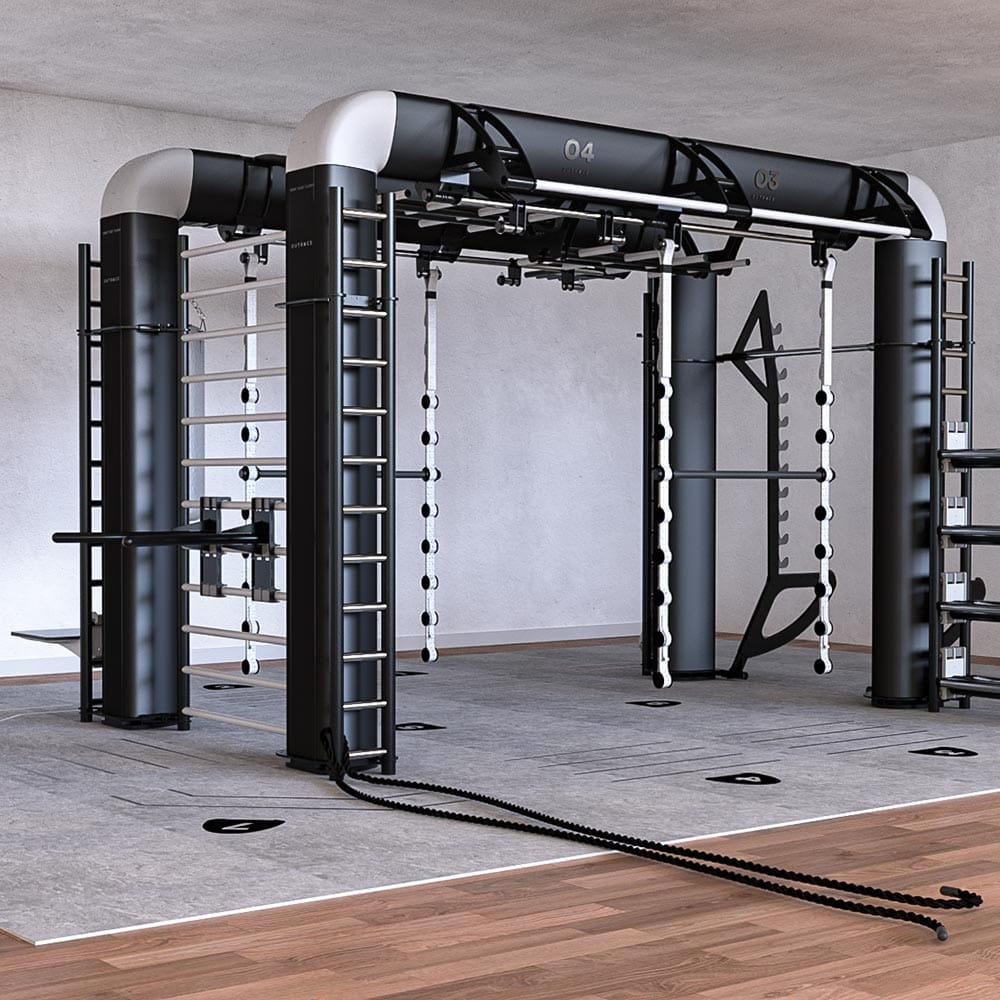
Model 9095/1 Parallel. A solution that can be positioned within functional areas, CrossFit boxes or personal training studios without the need for permanent fixing. It meets the needs of diverse groups who alternate between bodyweight exercises and mixed circuits.
Parallel bars for outdoor areas
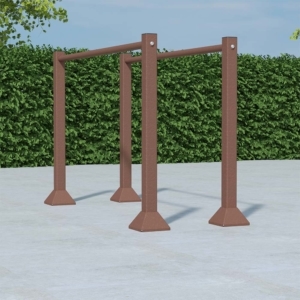
Model 9085/3 Public Island Parallel. Designed for permanent installation in parks, public fitness areas, schools and sports centres (relevant for purchases via MEPA). Materials and finishes selected to withstand continuous exposure to the elements.
How to choose: a guide to use cases
Commercial gyms and functional training studios
You’ll need a pair of 35 cm-high bars for the general public doing push-ups and core exercises, plus a pair of 80 cm-high bars for advanced users performing deep dips or skill work. The 9095/1 mobile model offers greater flexibility when rotating between stations.
PT Studies and Athletic Training
The 35 cm parallel bars are sufficient for most training programmes: shoulder mobility, horizontal and vertical pushing strength, and isometric exercises. If you’re working with gymnasts or advanced calisthenics athletes, add the 80 cm version for dips and swings.
CrossFit Box
The tall version is the most popular choice for floor ring dips, deficit HSPUs and strict dips in WOD-style training. It’s best to have at least 4–6 sets to avoid bottlenecks during workouts that include dips.
Home and garage gym
A 35 cm-high pair is suitable for push-ups, L-sits and basic planche progressions. Intermediate to advanced calisthenics practitioners will benefit from the addition of the 80 cm version for full-range dips.
Schools, public sports centres, outdoor areas
The Public Island model is designed for permanent installation. It should be considered during the design phase alongside other technical elements and outdoor components to create coherent fitness circuits.
Technical glossary
- L-SIT
- An isometric position in which the body is supported by the arms, with the legs stretched out parallel to the floor. On parallettes, the movement is smoother because the greater height off the ground prevents the heels from touching the floor.
- HANDSTAND PUSH-UP
- A vertical bend performed with the body upside down. On parallel bars, this allows for a greater range of motion and provides a greater eccentric stimulus than the floor version.
- TUCK PLANCHE
- A basic variation of the plank, in which the knees are drawn up to the chest and the arms are held out straight to support the full body weight. Using parallel bars reduces the strain on the wrists compared to the floor version.
- DIPS
- Arm bends with the body suspended between two supports. The 80 cm high parallel bars allow for full-range dips without the feet touching the floor.
- NEUTRAL GRIP
- Hand position with the wrist aligned with the forearm, without dorsiflexion. This reduces joint stress during prolonged push-ups and high-volume sets.
- SCAPULAR PROTRUSION
- A movement in which the shoulder blades move away from the spine, wrapping around the chest. This is essential for push-based exercises (planks, HSPUs) and is most effectively performed when the hands are raised above the floor.
- SWING ON THE PARALLEL BARS
- An oscillating movement performed in a straight or pike position between two high handles, typical of artistic gymnastics. Requires the 80 cm version to allow space beneath the shoulders.
- FLOOR-BASED CALISTHENICS
- A set of skills and progressions performed on the floor without high bars: L-sit, planche, handstand, front lever tuck. Low parallel bars are the primary piece of equipment.
Comparison of Parallettes & Push-up models Sidea
| Model | Code | Height | Context of use | Key skills |
|---|---|---|---|---|
| Parallettes 35 cm | 9018/1 | 35 cm | Personal training studios, home gyms, functional training studios | Push-ups, L-sits, tuck planches |
| Parallettes 80 cm | 9018 | 80 cm | CrossFit, gymnastics, advanced calisthenics | Dips, deficit handstand push-ups |
| Parallel | 9095/1 | (Mobile configuration) 130 cm | Multipurpose functional areas | Rotation between stations, calisthenics, high-intensity training |
| Public Island Parallel | 9085/3 | (Permanent installation) 123 cm | Outdoor areas, MEPA, schools | Public fitness trails |
Frequently Asked Questions about Parallettes & Push-ups
Answers to the most common questions about heights, materials, training and use cases are set out in the dedicated FAQ section below.
Why choose Sidea
Sidea has been manufacturing and distributing professional fitness equipment since 1999 from its warehouse in Gambettola (FC), which spans over 4,000 m² dedicated to storage and logistics. The parallettes form part of a range of functional training equipment designed in collaboration with athletic trainers and calisthenics instructors. Sidea is an official StrongFirst distributor and Luxiaojun, is exhibiting at FIBO and is sponsoring the Summit of Strength StrongFirst. The Gym Design service provides bespoke 3D renderings for gyms, CrossFit boxes and outdoor areas, which are useful for correctly determining the number of parallettes required based on the expected number of users.
Domande frequenti - Parallettes & Push-up
-
The 35 cm parallettes are the standard for calisthenics floor work: neutral-wrist push-ups, L-sits, planche progressions and handstands with protraction. The 80 cm parallel bars replicate the Olympic parallel bars and are used for full-range dips, swings and artistic gymnastics skills that require space beneath the shoulders. They are not interchangeable: the specific skills you can train with them differ.
-
Yes, for two technical reasons. The wrist remains in a neutral position, reducing the joint stress typically associated with high-volume floor push-ups. This creates more space beneath the chest, allowing for a deeper descent and greater activation of the pectoral muscles during the eccentric phase. They are also a prerequisite for the L-sit and planche progressions.
-
The 35 cm low version (9018/1) covers all the basic skills: push-ups with a neutral grip, L-sits, tuck planches and handstand progressions. It is only when you reach the stage of working on full-range dips, swings or skills typical of artistic gymnastics that it makes sense to add the 80 cm high version.
-
The 38 mm metal tube and the wide base are designed for vertical work with full scapular protraction. Stability also depends on the surface on which the device is placed: a smooth, even rubberised floor is ideal. Performance varies on soft mats or uneven surfaces.
-
In practical terms, yes, for most strength training exercises: dips, hanging L-sits, basic swings and isometric holds. They do not replicate the elasticity of the fibre-reinforced Olympic parallel bars used in top-level artistic gymnastics, but they cover all the skill work required for conditioning and advanced calisthenics.
-
Yes, the 9085/3 Public Island Parallel model is specifically designed for permanent installation in parks, public fitness areas, schools and municipal sports centres. The materials and finishes used are selected to withstand continuous exposure to the elements. It is one of the solutions considered during the design phase of outdoor fitness circuits.
-
It depends on the number of athletes per class and how often dips or HSPUs feature in the programme. As a practical guide, for classes of 12–14 athletes, at least 4–6 sets of 80 cm-high dip stations are required to avoid bottlenecks during WODs involving timed dips. The 35 cm low versions are used alongside these for skill work and warm-ups.
-
Throughout the progression up to the straddle planche, yes. The height of 35 cm provides the necessary space for full scapular protraction without the head touching the floor during the initial holds. Those practising the full planche at a competitive level sometimes use higher set-ups for the sake of joint comfort, but this is not a technical requirement.
-
Yes, they are a common tool for scapular activation, shoulder mobility and warming up the wrists. Some warm-up routines include slow push-ups on parallettes, support holds and transitions into the tuck L-sit before the main workout. They are suitable for warm-ups in gymnastics, calisthenics and Olympic weightlifting.
-
The 38 mm metal tube with a wide base is designed for heavier athletes performing push-ups, dips and isometric holds. The widened base prevents the bar from tipping over during the eccentric phase of dips. For vertical use (handstands), the quality of the support surface and a clean entry technique remain essential.
-
Sidea offers a range of instalment payment options to make it easier to purchase professional equipment. Please see the dedicated page: Sidea Payment Options.
-
If you work in the fitness or sports sector, register on the website as a Professional or as an ASD to gain access to the price list reserved for industry professionals. Pro registration allows you to view exclusive discounts and special terms across the entire Sidea catalogue.
-
Yes, Sidea is an authorised supplier on the MEPA (Public Administration Electronic Marketplace). Public bodies, schools, universities, local authorities and public sports facilities can purchase Sidea equipment via the Acquisti in Rete PA platform. For information on product codes and direct MEPA orders, please contact Sidea customer service.
-
Sidea guarantees the right to cancel within 14 days of delivery for all online purchases, in accordance with current legislation. Products must be returned undamaged and in their original packaging. For full details on returns, refunds and the warranty, please see the Terms and Conditions of Sale page.
-
Sidea has been designing and distributing professional fitness equipment since 1999: over 25 years’ experience serving gyms, sports coaches, CrossFit boxes, personal training studios and enthusiasts of advanced home fitness. Official distributor for StrongFirst and Luxiaojun, exhibiting at the FIBO international trade fair and technical sponsor of the Summit of Strength. Every product is developed with a focus on durability, functionality and suitability for real-world use. The Gym Design service offers bespoke design with 3D renderings. A warehouse covering over 4,000 m² in Gambettola (FC) ensures rapid order fulfilment, direct technical advice and a special price list for professionals and amateur sports clubs (ASD).

9018 Parallettes 80 cm
9018/1 Parallettes 35 cm