















LOW HEX BAR. WHEN THE SHAPE BROADENS THE HORIZON OF THE FUNCTION.
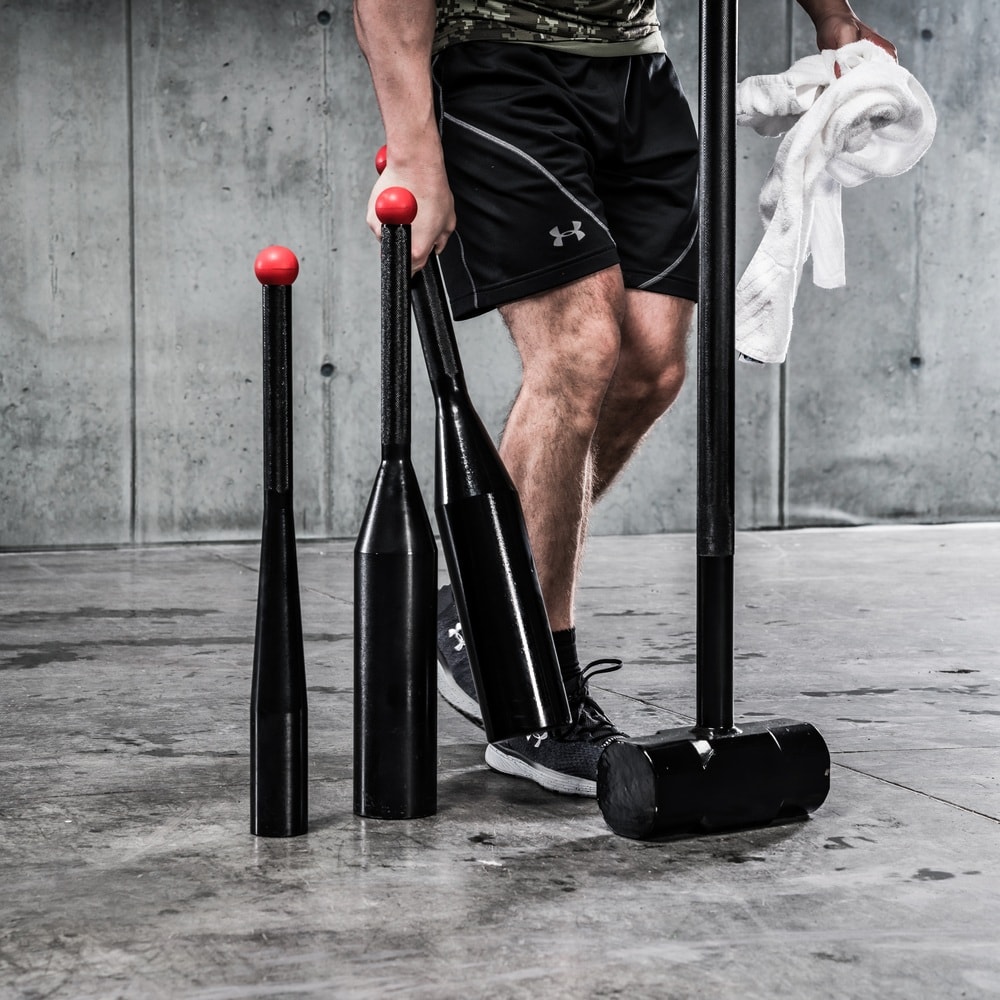
Intuitive. Innovative. Unexplored. These are the first three definitions that leap to mind when one looks for the first time at the '9012/3 Low Hex Bar', Sidea's new design in the field of Overload Tools.
A decidedly innovative form, which nevertheless results in an intuitive approach to its use, opening up an unexplored domain of possibilities for use, movements, and training stimuli.
We have already had occasion to consider in the world of Functional Training the three essential cornerstones of Movement: Strength, Mobility, Stability. The new Low Hex Bar 9012/3 places these three aspects in a new, very close correlation, thanks to an approach to Movement that is free in its multiplanarity despite a solid bond with the athlete, who is placed at the centre of a true 'strength cage'.
So, it was inspired by Strength, Movement and Stability that we experimented with a short routine with the Low Hex Bar.
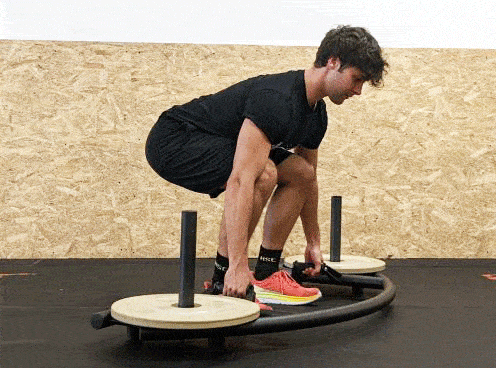
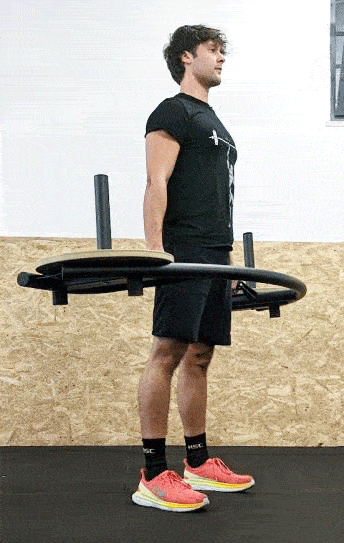
The initial approach is of a grip that inspires strength and power, in a neutral grip, an obsolete element in the use of traditional barbells. A wide grip, from which the first, intuitive movement begins: the Stacco from the ground.
The feeling of stability you get from handling the overload with a grip like the one just described is incredible.
The hands, clasped on the handles in their physiological position, together with the arms perfectly perpendicular to the frontal plane of the body and held in slight abduction by the 9012/3 itself, transfer to the Low Hex Bar all the force that the legs offer in their thrust, without compromise or dispersive force vectors.
Hence, the exploration of a movement specific to this tool: the execution of a Back Lunge with the torsion of the torso in the direction ipsilateral to the supporting leg, performed on both sides.
Torsion which, in addition to the Mobility implied by the movement itself, further stresses the athlete's Stability and tests his ability to overcome the inertial rotational forces that the Low Hex Bar generates during its movement.
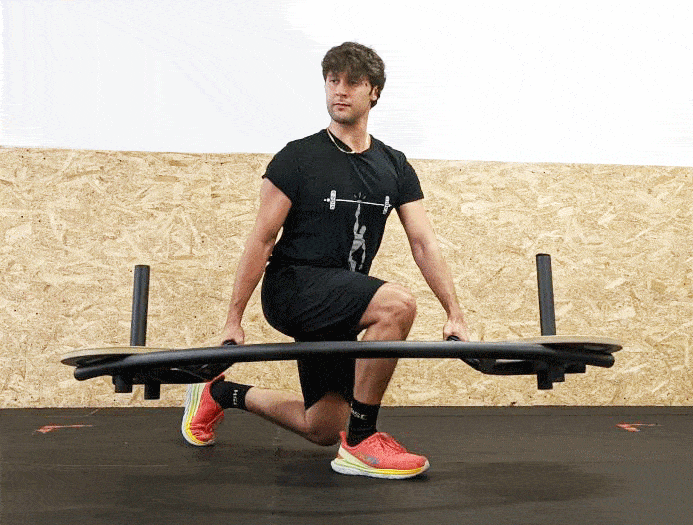
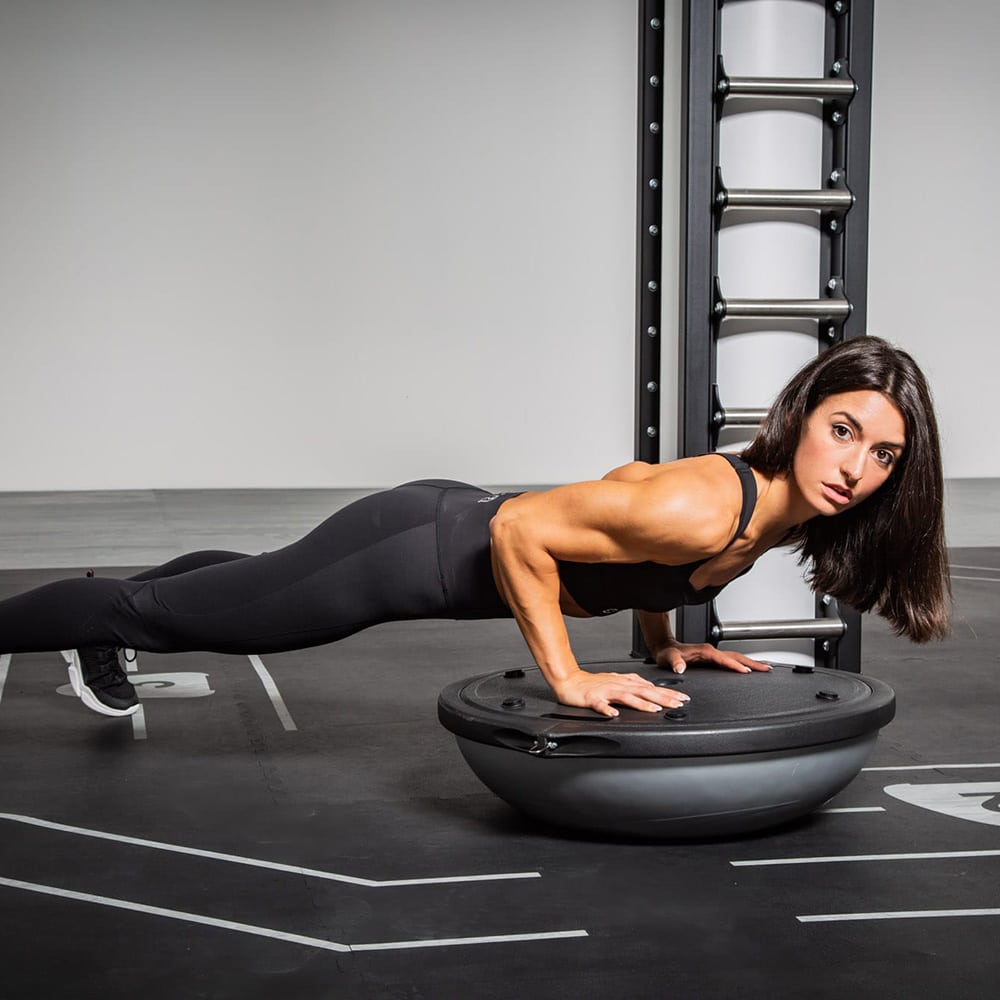
The phase of the athlete's return to a standing position and then to the ground of the Low Hex Bar, offers the possibility of a stable and favourable support for an immediate relaxation in Plank.
A push-up performed with a support that is advantageous in terms of weight - given the slight inclined plane that is created - but at the same time challenging in terms of the position in which the hands express the force generated by the anterior push-up kinetic chain, creates a sudden coupling effect between 'lower & upper body movements'.
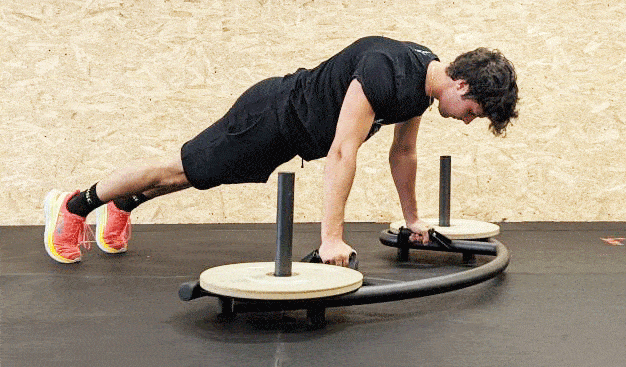
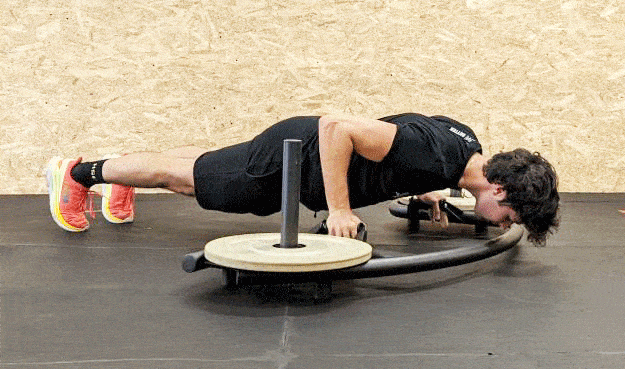
The illustrated routine is only one of countless possibilities that the trainer can and must explore with skill and creativity.
Because, let us remember once again, the Low Hex Bar is definitely the tool that was missing in the domain of functional overloads.
A unique and simply Intuitive, Innovative and Undiscovered tool.
PIERLUIGI MAURO
 He has around thirty years of experience in the field of Athletic Preparation and Physical Activity. A former A.M. officer, in parallel with his studies in Electronic Engineering, he dedicated himself to Functional Training, starting as early as 1998 to use kettlebells for athletic preparation in Canoeing and Kayaking.
For several years he has been interested in the use of the Macebell, and has studied and codified different training methodologies based exclusively on this instrument, becoming a profound connoisseur of the physical and biomechanical dynamics associated with it and the main Italian exponent of Macebell Training.
3rd Level Technician "Master - Sport Specialist" of the Italian Weightlifting Federation with qualification "Kettlebell Specialist"He is F.I.PE. National Technical Manager and Federal Lecturer for the "Functional Strength and is a member of the National Union of Sports Kinesiologists. Author of the book 'Functional Strength - High Intensity Functional Training Method' published by Calzetti & Mariucci for the Strength Academy F.I.PE.
He is the creator and founder of the 'Crossout Functional Training' community, a reality present throughout the country with more than 150 professionally trained trainers in just the first three years of diffusion.

HISTORY OF TRAINING: THE SCIENCE OF MOVEMENT
Strength training and its evolution throughout history: from the athletes of ancient Greece to modern [...]
16
Oct
Oct
Does strength come from the ground? The Military Press and the body’s hidden synergy
Before you can push, you need something to push against. Before force comes support. [...]
29
Sep
Sep
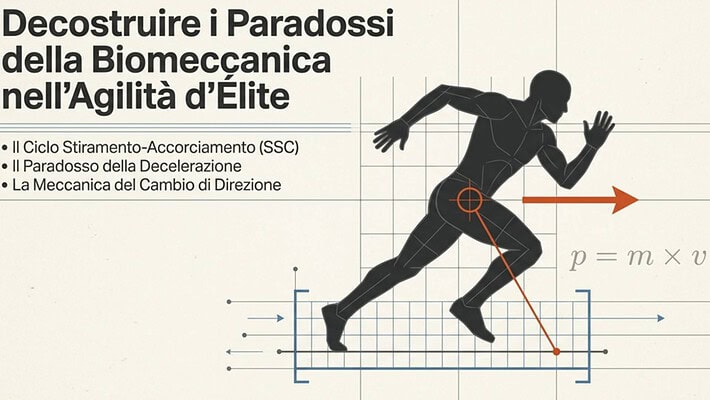
Elite agility: why changing direction isn’t just a matter of strength
Introduction: Agility is not just about being quick on your feet. When we talk about agility, the temptation [...]
30
Jun
Jun
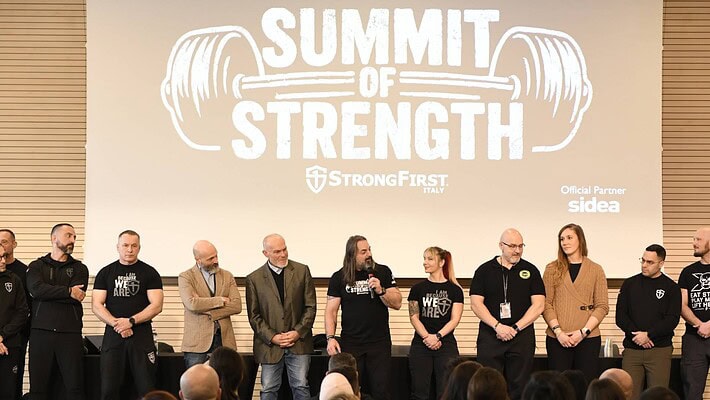
Maximum strength and team sports
When strength becomes performance: Dr Mauro Franzetti’s contribution to the Summit of Strength [...]
26
Jun
Jun
ATHX Games 2026: what it is, how it works and how to prepare for the hybrid competition
The evolution of HYBRID training In recent years, competitive fitness has evolved towards formats that are increasingly [...]
18
Jun
Jun
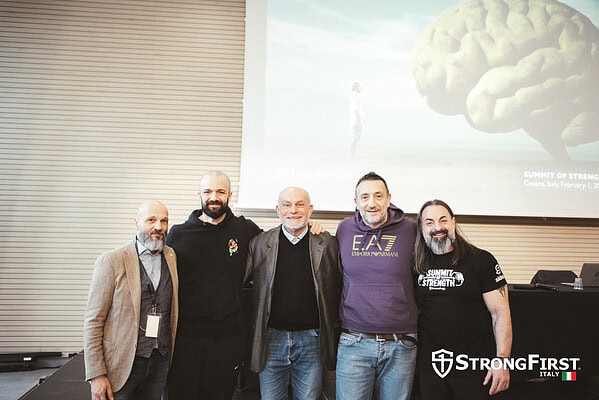
Structure Governs Function: Dr Luca Franzon at the Summit of Strength in Cesena
A journey into the myofascial system that is revolutionising strength, movement and performance - from 1 [...]
26
May
May
Hypertrophy and strength: does being more muscular really mean being stronger?
From the Summit of Strength 2026 in Cesena the new scientific evidence explained by Prof. Antonio [...]
15
May
May
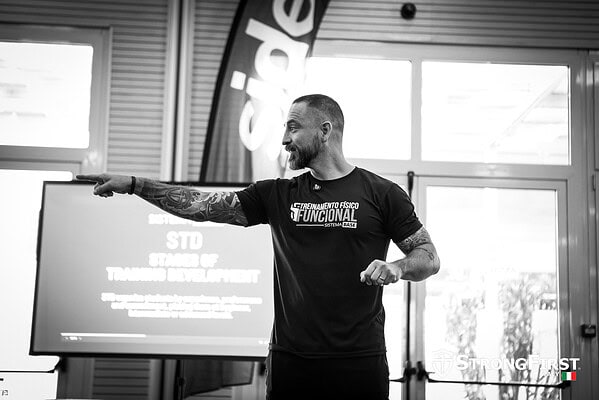
StrongFirst Summit of Strength 2026 in Cesena: Tiago Proença's BASE System
When “functional training” stops being a slogan Functional training is probably one of the most [...]
15
Apr
Apr

 Defibrillator AED
 Gift CardSidea
 Spare parts