











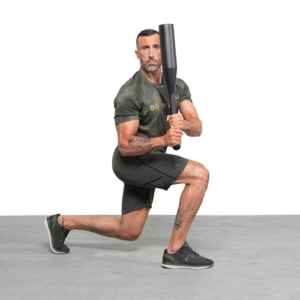
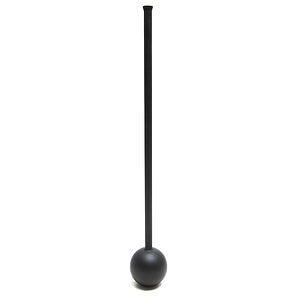
2149-2166 Si-Club
14,49€ 298,90€Fascia di prezzo: da 14,49€ a 298,90€ FEES and TAXES NOT INCLUDED
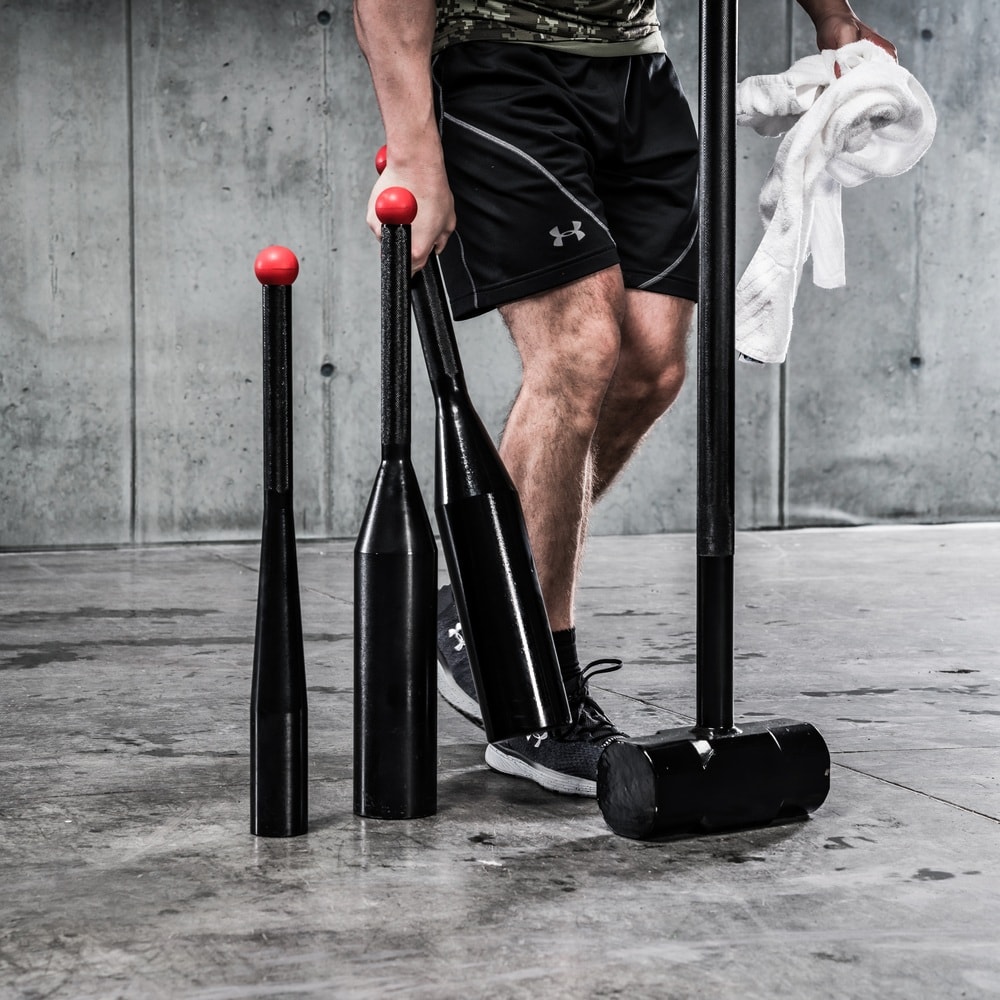
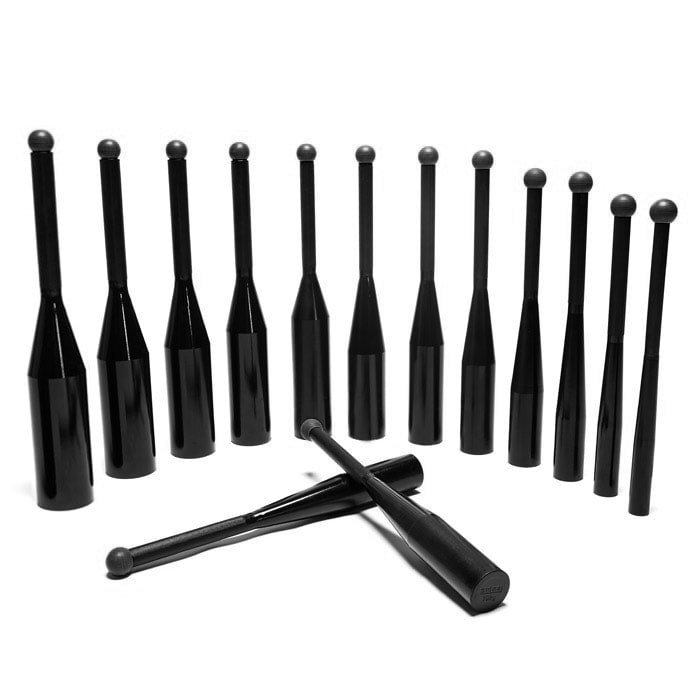
Produced since 2010, Sidea clubs are a benchmark in clubbell training and rotational functional training.
Made of steel, with medium knurling and a high-strength micaceous finish, they offer high performance thanks to optimised proportions and technical features that improve balance and grip, even in the most dynamic movements.
Available from 1 to 30 kg, they adapt to every level and technical need, promoting the development of strength, mobility and coordination.
SEE ALSO:
Sidea Promotion
fino a Monday 19 October, 23:59
10% discount on the entire online catalogue
Not included in the promotion

New installations - Gym Design projects
Contact usStatutory guarantee of conformity: 2 years for consumers. See the official notice - Read the page - europa.eu/youreurope/guarantees

Spare parts and repairs: Spare parts for this product are available in the section Spare parts, with up-to-date availability and prices. Maintenance instructions can be found in the manual supplied with the product. There are no restrictions on repairs.
SI-CLUB - Functional training clubs
Clave Sidea - Technique, experience and leadership in rotational functional training
Produced since 2010, Sidea clubs represent the fruit of years of technical development and practical application, born out of collaboration with trainers, professionals and athletes specialising in functional training with a rotational component, also known as clubbell training.
No other company in Europe has invested as much as Sidea in promoting integrated functional training through the production of professional equipment and the organisation of courses, events and training workshops. Our systemic approach involves equipment such as clubs, macebells, kettlebells, Flying (suspension training), parallel bars, sandbags, barbells and other tools designed for three-dimensional functional training.
The experience gained in the field and the ongoing commitment to the development of functional training geared towards performance, well-being and aesthetics are reflected in the quality of our products. Sidea is today recognised as the most coherent, competent and active European company in the sector, as demonstrated by its achievements at international level.

Si-Club - Le clave Sidea
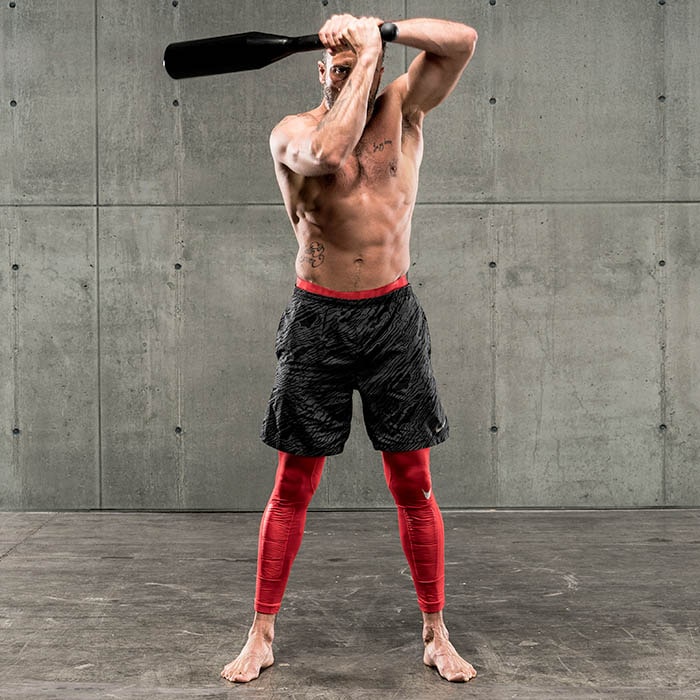
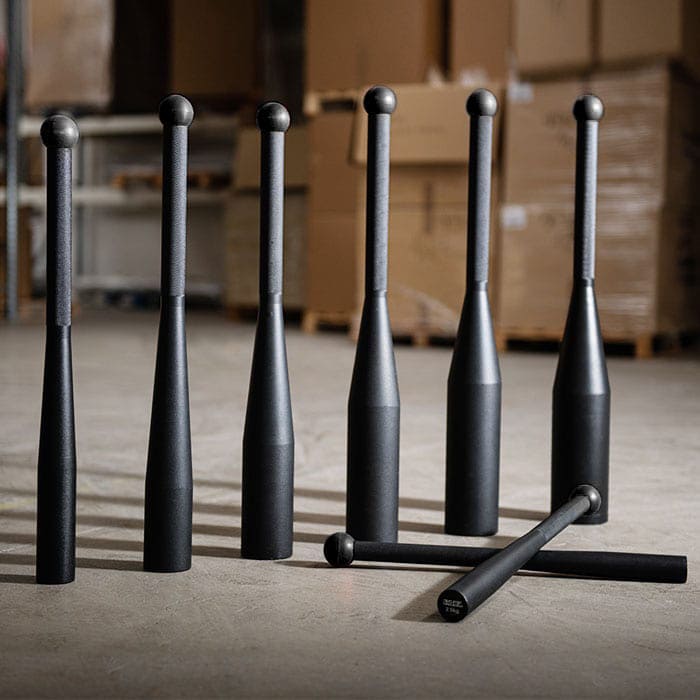
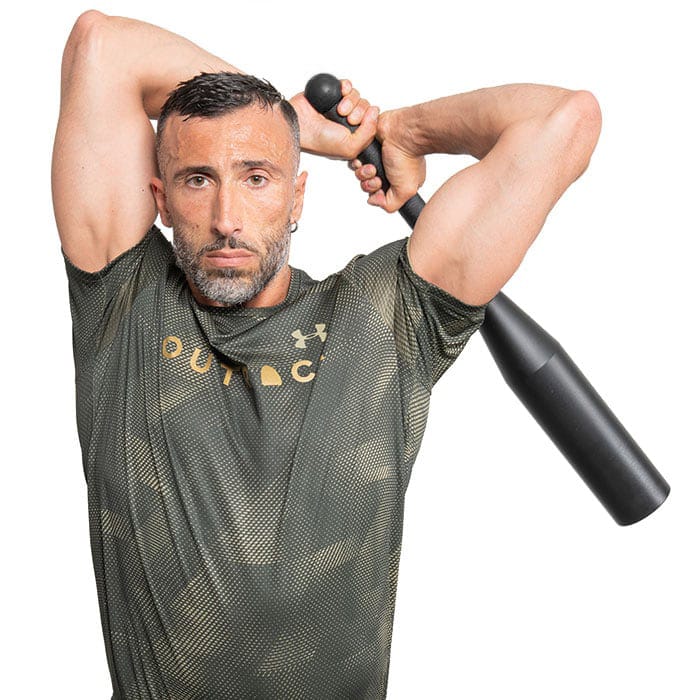
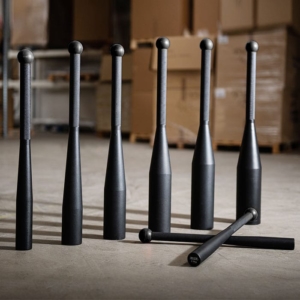
The Si-Club, Sidea's original clubs, are made entirely of steel and finished with high-strength micaceous paint, designed to guarantee durability and comfortable grip even during the most dynamic exercises. The handle has a medium-deep knurling, designed to provide a secure grip, reducing palm stress even during ballistic, rotational and flow training movements.
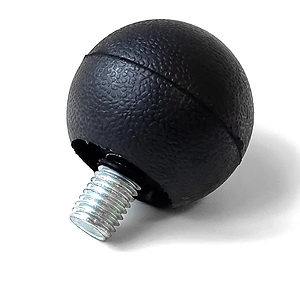
The careful design of the length, balance and diameter of the end knob allows for smooth and controlled execution, avoiding interference with the wrist and improving technical effectiveness in exercises such as swings, 360°, mills, spins, transitions and throws. A distinctive element of the Si-Clubs is the end knob, a design detail that is essential to guarantee comfort, control and reliability during use. Its size and design features make it ideal for handling transitions, rotations and dynamic movements typical of clubbell training. It is made of high-strength rubber and firmly attached to the handle by means of a threaded stud, a solution that ensures structural strength, but also ease of replacement.
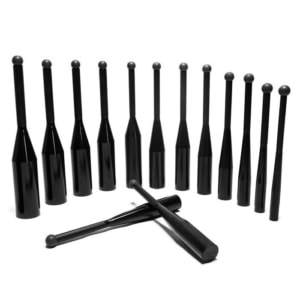
Available in a comprehensive range from 1 to 30 kg, Si-Clubs are suitable for every level: from the novice user to the advanced athlete. Even the lightest weights offer a high degree of intensity and muscular involvement, making each session useful for developing functional strength, joint mobility, neuromuscular coordination and grip strength.
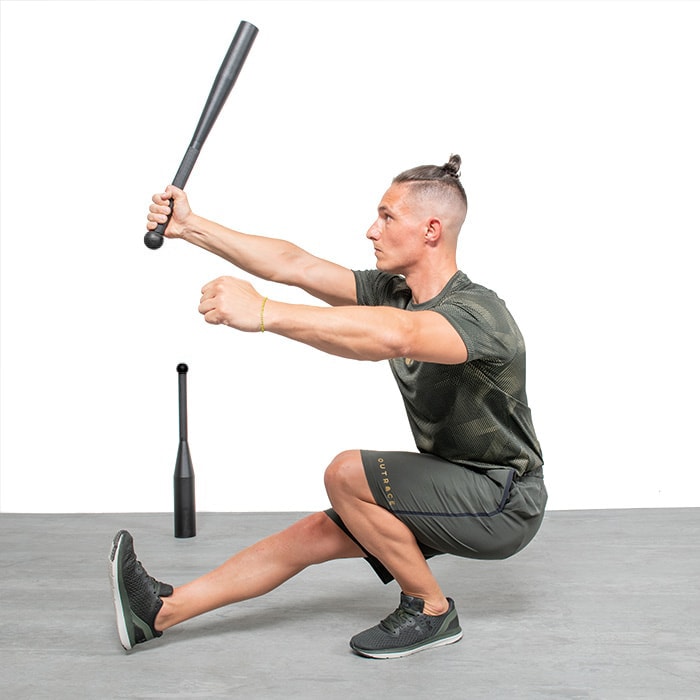
Sidea clubs are used in a variety of contexts: from general physical training, to specific training, to three-dimensional functional training programmes, e.g. TACFIT and motor health programmes. Their versatility makes them reference tools for those seeking high performance and concrete results.
Available weights:
- cod. 2149 Si-Club kg 1
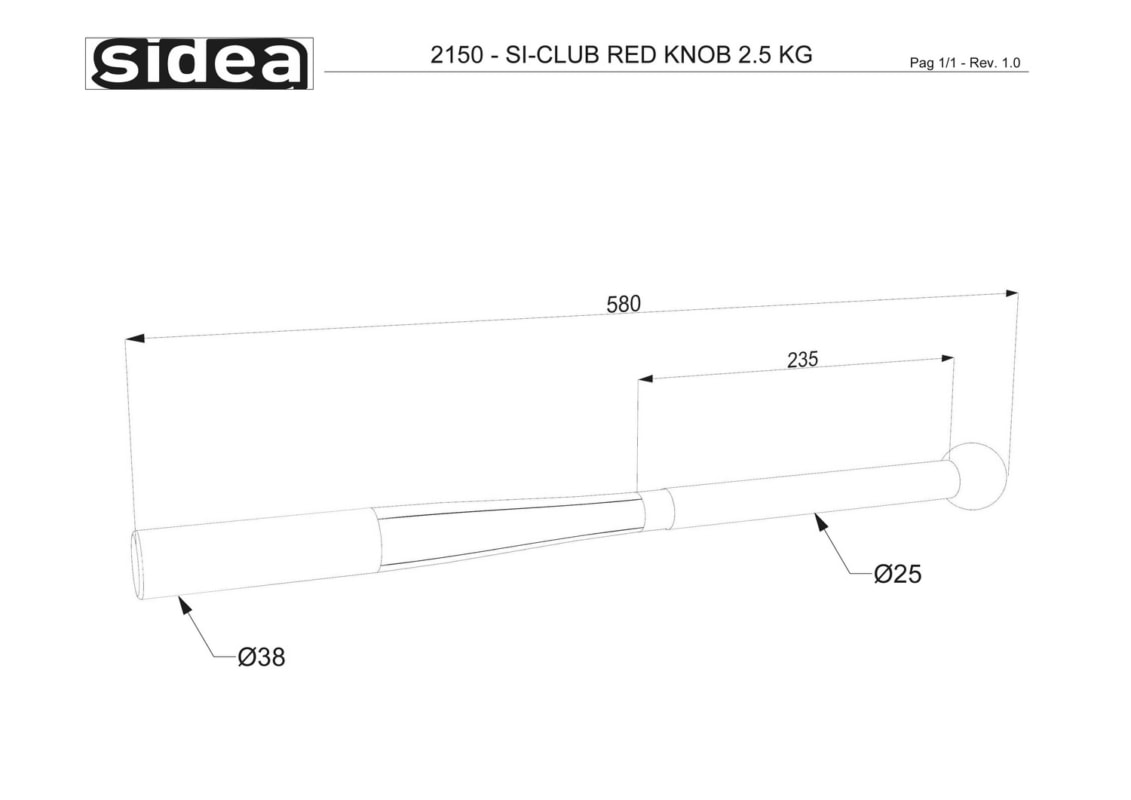
- cod. 2150 Si-Club kg 2.5
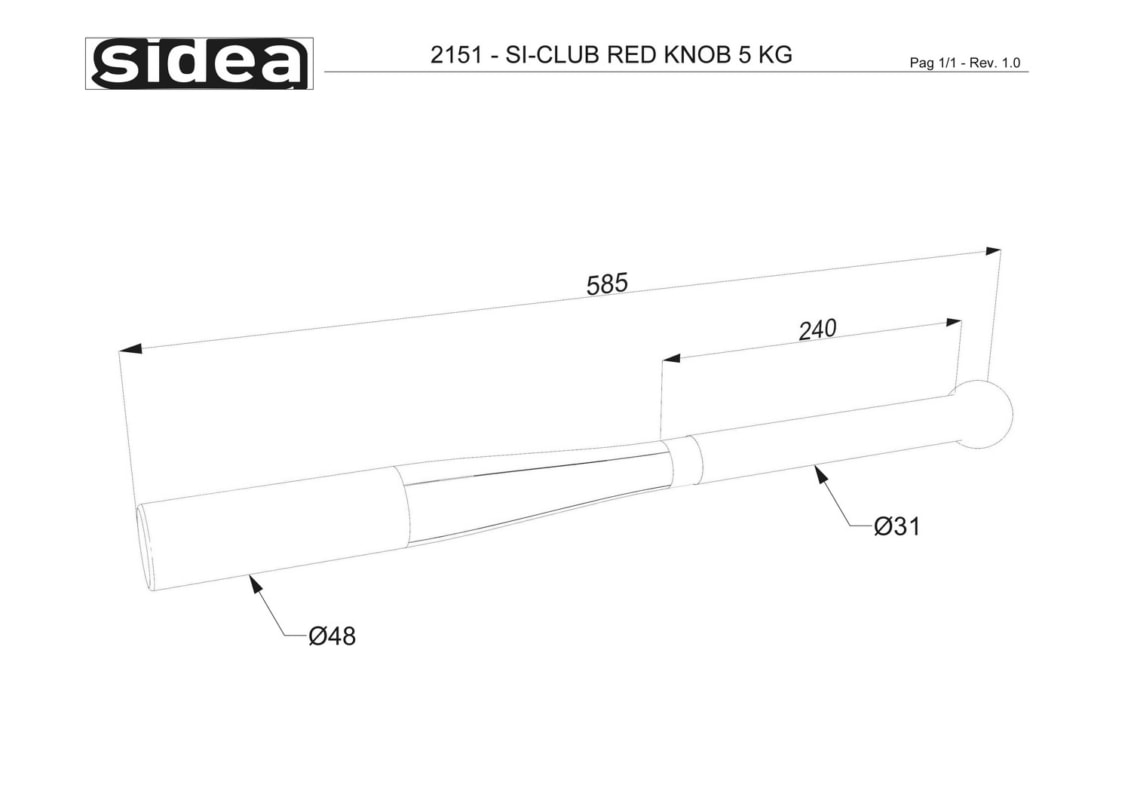
- cod. 2151 Si-Club kg 5
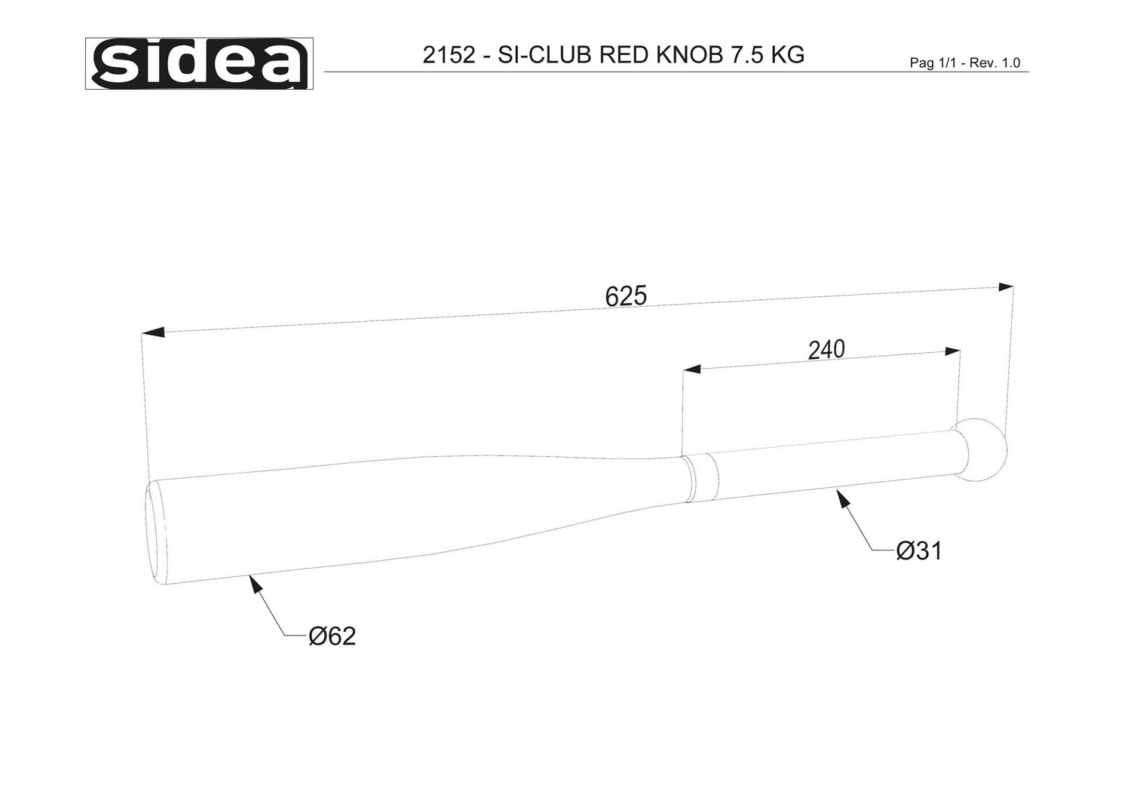
- cod. 2152 Si-Club kg 7.5
- cod. 2153 Si-Club kg 10
- cod. 2154 Si-Club kg 12.5
- cod. 2155 Si-Club kg 15
- cod. 2156 Si-Club kg 17.5
- cod. 2157 Si-Club kg 20
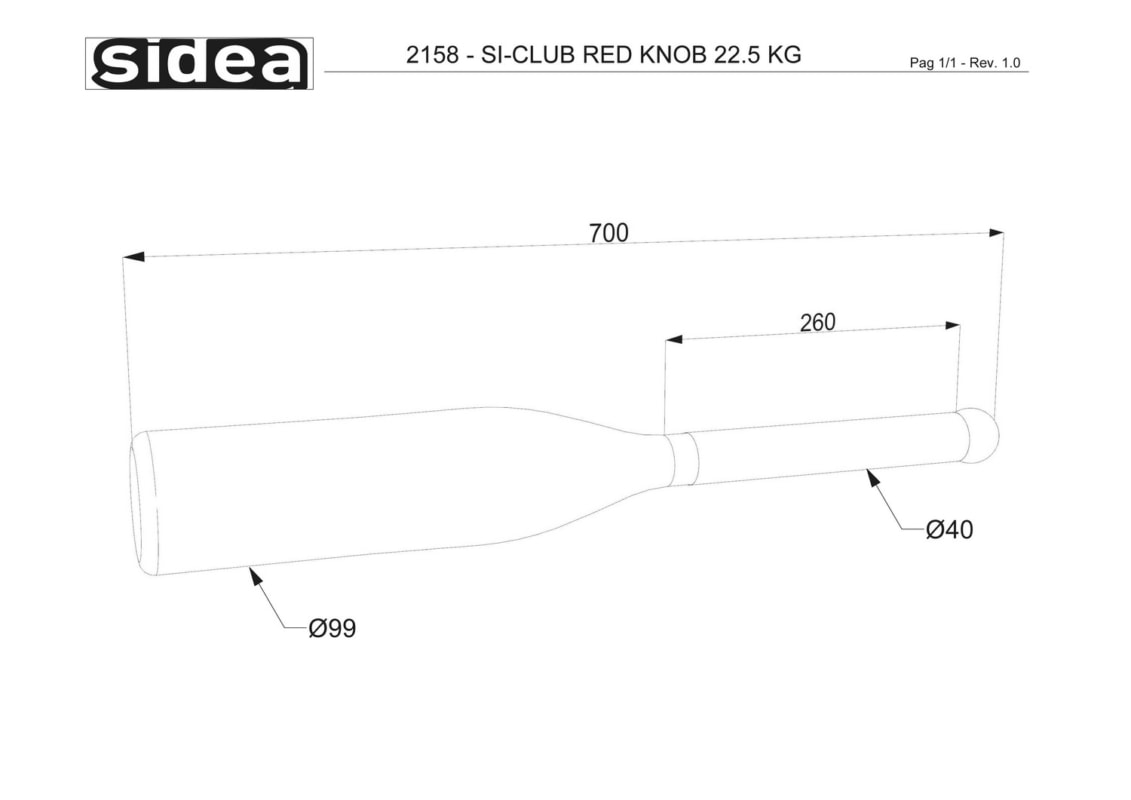
- cod. 2158 Si-Club kg 22.5
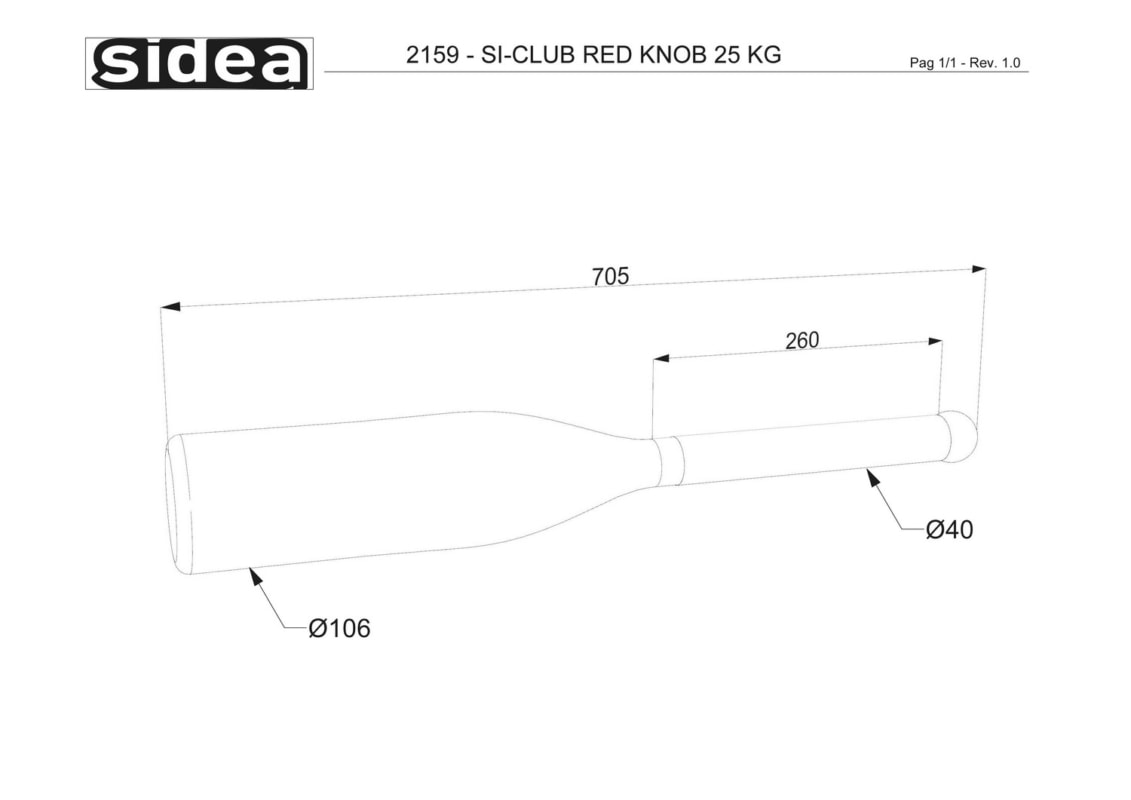
- cod. 2159 Si-Club kg 25
- cod. 2165 Si-Club kg 27.5
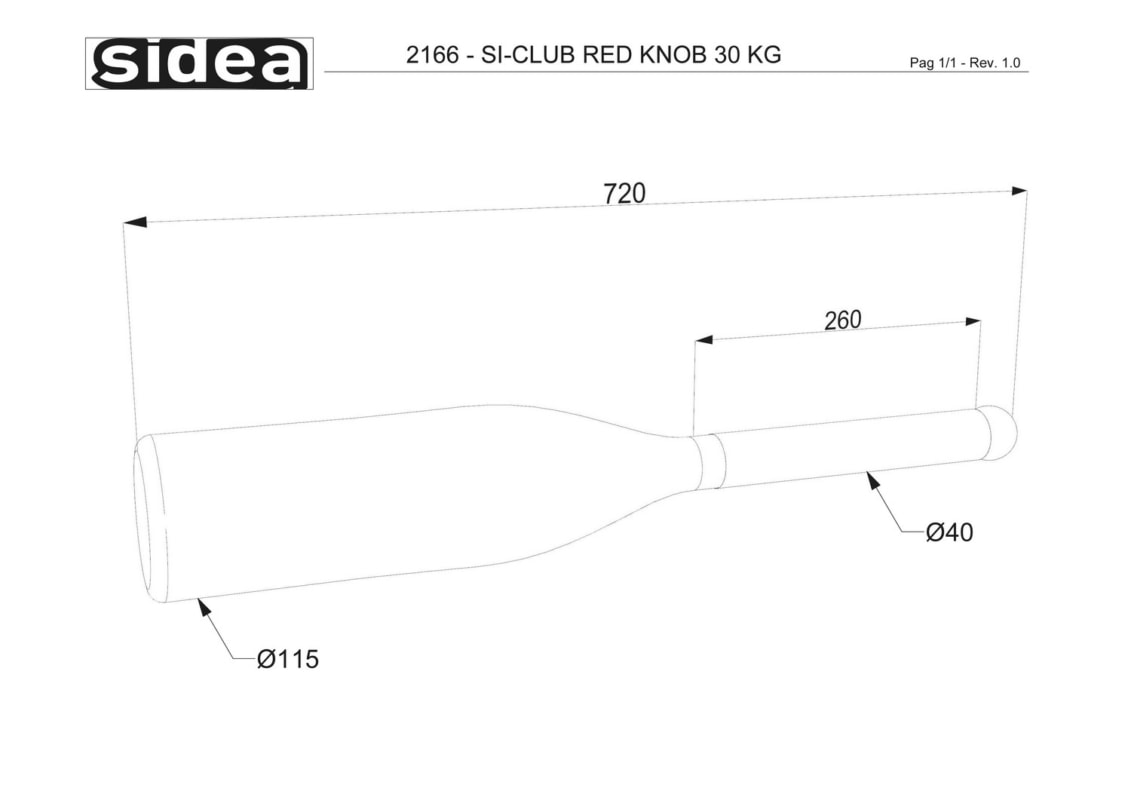
- cod. 2166 Si-Club kg 30
-
Spare parts:
cod. R2149 Replacement knob for Si-Club
Si-Clubs: equipment with unique features in Functional Training
If by now the kettlebell have become commonly used equipment in almost all gyms and sports contexts, the clave are certainly still largely unknown and consequently little appreciated. Once you have learnt to use them, however, you are immediately able to realise how useful these tools can be in any form of training and physical conditioning, being able to show limits of which you were probably not even aware before using them.
Training characteristics
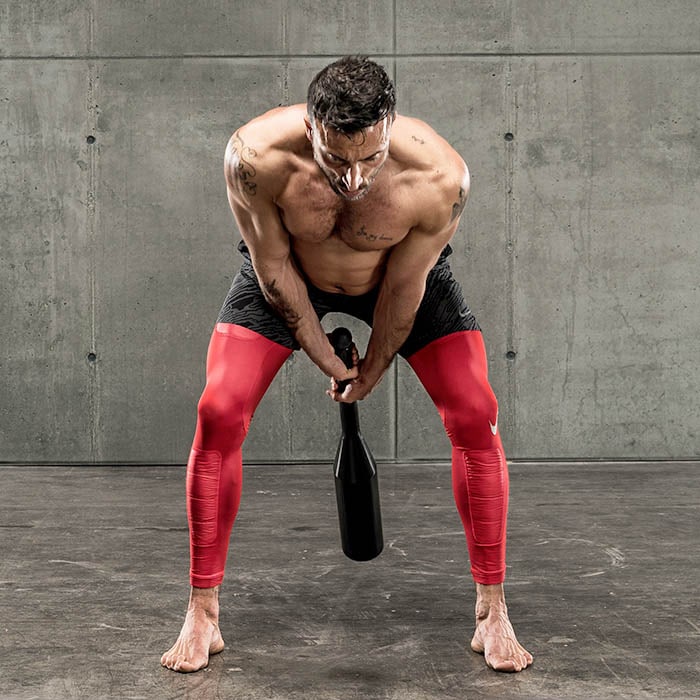
La mass off-centre in relation to the handle makes the tool highly unstable. A first consequence of this characteristic is that from the outset one does not have an immediate understanding of how to move it from the ground: one instinctively comes to lift it by pulling it with one's arms, and this makes one perceive a strange, unstable weight to handle. In some respects, one is surprised at how much a Clava weighing only 7.5 or 10 kg can weigh. Not knowing how to use it in a technical and profitable way, one generally tries to handle it with arm strength, in the same way as a dumbbell.
Another technical shortcoming that often emerges when first using clubs is the socket. In some cases, you suddenly realise how poorly your forearms and grip muscles are trained, so much so that you cannot close your fingers for hours after the first few sessions. It is precisely these characteristics, however, that are the added bonus of club training, making this tool one-of-a-kind.
The choice of weight
Currently, clubs range from 1 kg to 30 kg, range which allows the most varied use in both single and double grip and for every level of training. For a trained man who is used to performing strength work with heavy barbells, for example, a 10 kg single grip club or a 20 kg double grip club are more than enough to allow incredible gains in strength, stability and muscle quality. However, clubs are not only used in common aesthetic-functional training in the gym: due to their extreme versatility they also find unique applications in the field of prevention e rehabilitationas well as in the athletic preparation.
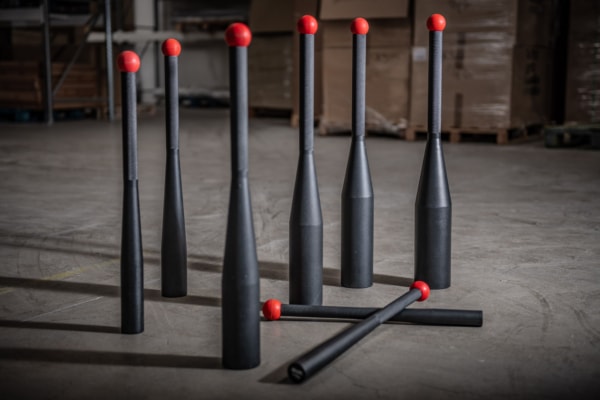
The structural characteristics of the clubs determine their technical characteristics: the weight is strongly off-centre with respect to the portion of the club where the grip is exertedmuch more than tools such as the kettlebell. Unlike the latter, moreover, there is no real grip, but rather a simple section where great force is applied to hold it firmly. This becomes all the more crucial considering that the clubs are not lifted, but rather slung, so they take on great speed during the execution of the exercises and only by means of an excellent grip can one avoid losing control of them and throwing them to the ground.
Benefits of training with Si-Clubs
Off-centre mass and implement momentum are the fundamentals of club trainingthis makes it possible to simultaneously condition both the grip strengththat the Scapular girdle stabilitybut during the momentum phase it also improves the joint mobility in joint decompression and thefascial elasticity in the muscle chain.
Here, clubs, properly used, are fundamental in preventing injuries and also in post-injury recovery. Mobility, Stability, Proprioception and Co-ordination are indeed fundamental physical characteristics for both of these training goals, making them valuable tools in the hands of physiotherapists, rehabilitators and athletic trainers.
Clubs in athletic training
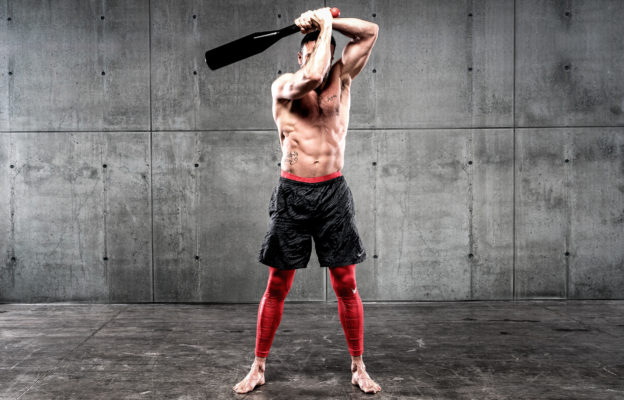
With clubs you build strong, stable and functional shoulders in all three planes of movement, which makes them particularly suitable for sports characterised by fast and powerful arm movements (combat sports, throwing sports, swimming, baseball, golf, tennis, volleyball, rock climbingetc.). Having said that, being slung through the motor fulcrum of the hips and stabilised along all possible trajectories through the trunk (Core Training), clubs can produce useful benefits for all sports, finding application in the general athletic preparation of any sporting discipline, and through targeted technical combinations they can also strongly approach various specific technical gestures.
In particular, the clubs allow ballistic momentum work in the three planes of movementmost important in the development of the technical actions of all sports, the Transverse plane. This is the plane of movement that plays a fundamental role both in the prevention of injuries from indirect trauma and dysfunctional stress/overloading, and in increasing the reactivity, speed, and executive power of specific gestures (accelerations, decelerations, changes of direction, specific sports technical executions). Having strong, stable, proprioceptive and reactive joints during rotations and torsionsis the key to healthy and efficient athletes throughout their sports career.
Although they may be underestimated or, due to their constitution, they may be frightening, clubs have unique characteristics that make them extraordinary tools not only in Functional Training, but also in any physical training context, from rehabilitation to physical preparation, and even in purely aesthetic fitness.
On the other hand, only with an optimal knowledge of exercise technique in full respect of the body's biomechanics, and functional training programming, can its extraordinary characteristics be optimised.
by Emilio Troiano
WTA International Functional Training Academy
| Weight | ND |
|---|---|
| Weight | 2155), Si-Club kg 17,5(cod. 2156), Si-Club kg 20(cod. 2157), Si-Club kg 22,5(cod. 2158), Si-Club kg 25(cod. 2159), Si-Club kg 27,5(cod. 2165), Si-Club kg 30(cod. 2166) |
SPARE PARTS

TECHNICAL SHEET

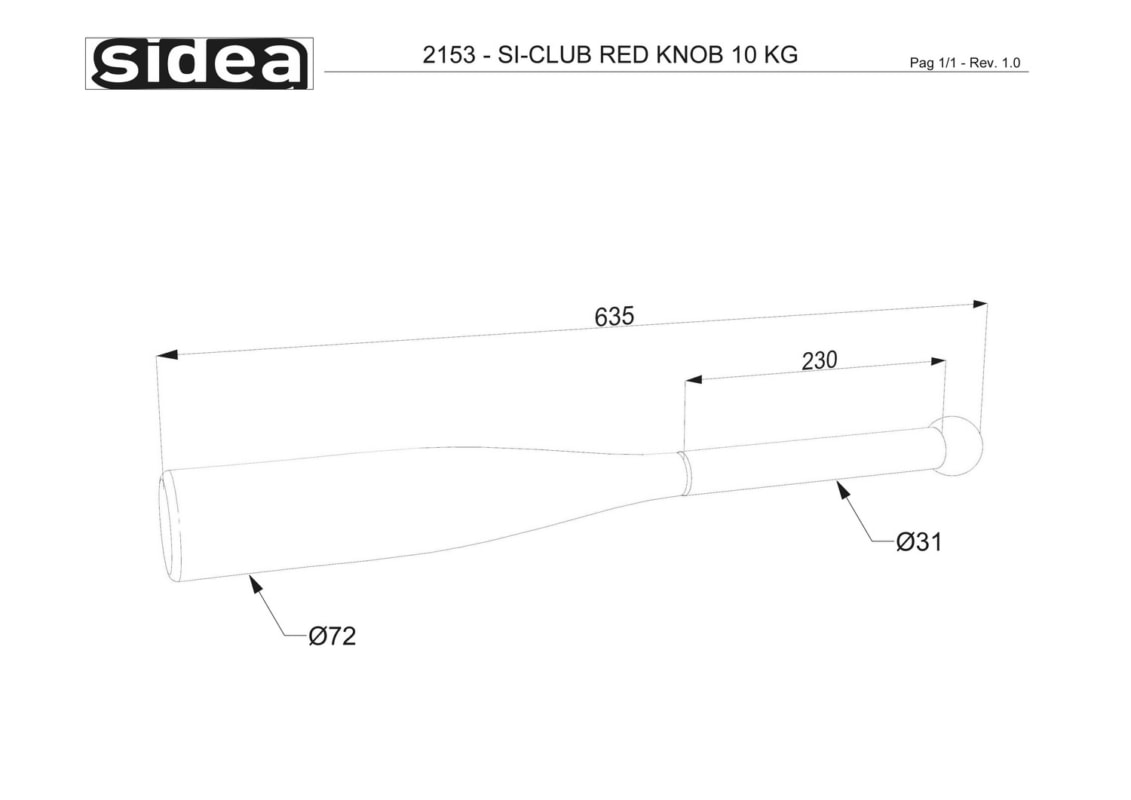

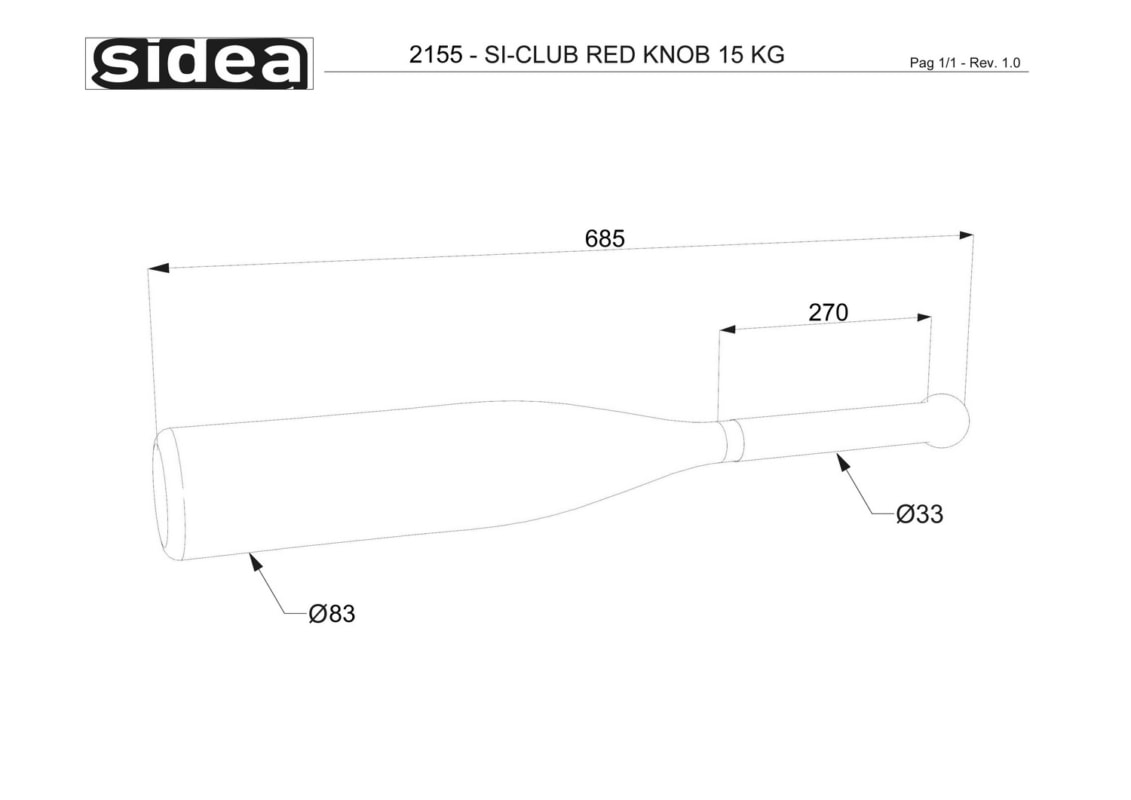
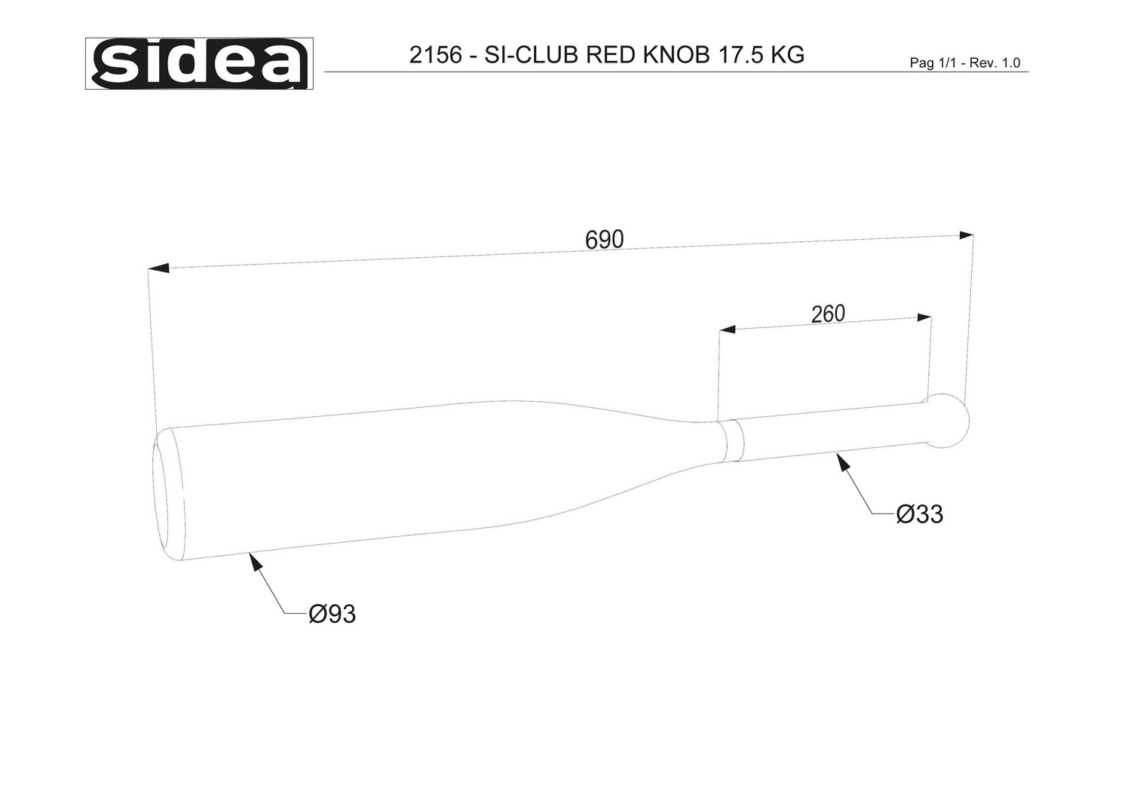
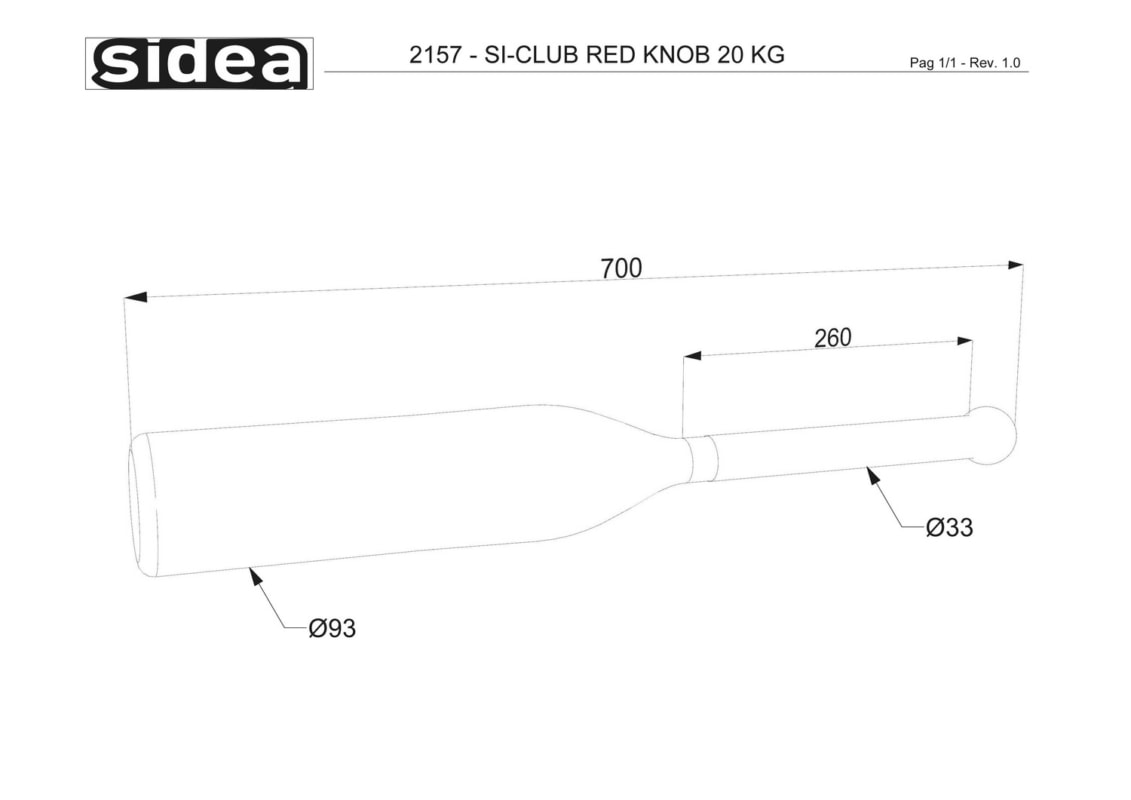

The Gamma Cast, the main exercise of Clubs Training
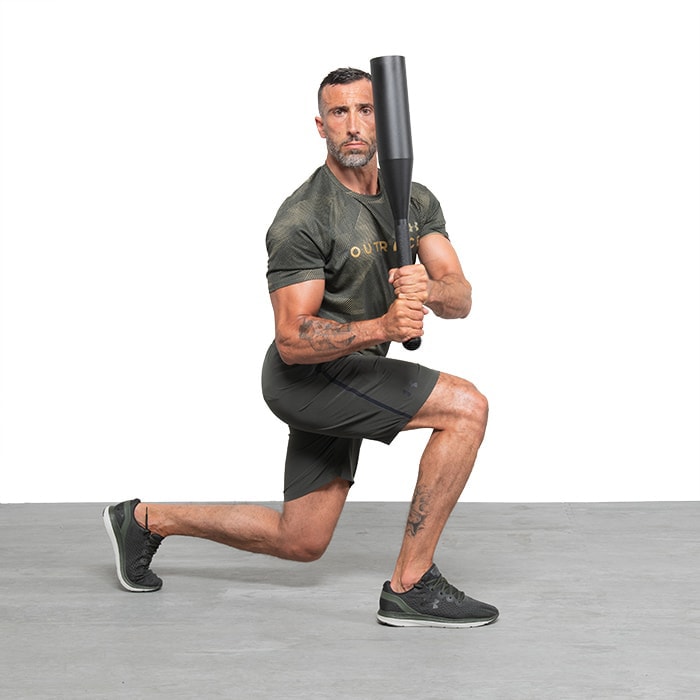
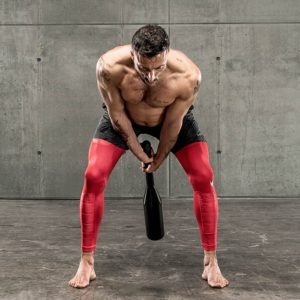
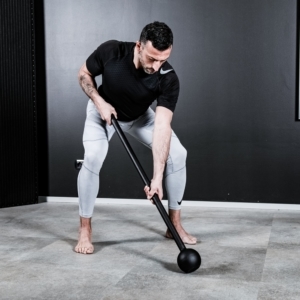
Each piece of equipment for Functional Training has certain specific technical characteristics, which must be known in order to optimise its application according to the level and objectives of the person training. There are therefore exercises or, more generally, movements that can maximise the capabilities of a piece of equipment. Kettlebell Training, in training with the Clave the most representative exercise can only be the Cast Range. Le Si-Clubs in fact, they can be used with a single grip, with a double grip and with two clubs at the same time. Due to their characteristic difficulty in exerting grip force, the simplest version is undoubtedly the one with double socketThis in fact allows one to begin to make up for the lack of strength in the grip through the use of both hands and, at the same time, to be able to begin to condition it gradually, and then be able to move on to the more complex single-grip and two-clave exercises. Consequently, as a pivotal exercise of the Clubs TrainingWe cannot choose a single grip or a double grip, but rather an exercise that everyone can start with thanks to the easy grip, the double grip. Although there are in fact more complete exercises than the Gamma Cast, such as the Mill (performed in single grip) and the Double Swipe (performed with two clubs), before being able to deal with them in an informed manner one must consolidate confidence with the tool through a simpler exercise, such as the Gamma Cast. The same can be said of the Kettlebell Training: although the Snatch is the most complete ballistic exercise, in order to be able to perform it safely and effectively one must first consolidate the Swing technique.
The Cast Range is therefore a pivotal exercise in the Clubs Traininga "obligatory passage" for all those who want to integrate the clubs into their training and want to do so by creating the appropriate technical basis to then be able to move on to more complex and articulated exercises. In spite of this, it is still fundamental to understand that if you do not first ensure the basic postural and biomechanical-motor parametersyou risk performing the exercise in an approximate and dangerous manner.
What are the basic aspects to pay attention to before performing this exercise?
- First of all, one must have an optimal Articular Mobility of the entire scapulohumeral-thoracic girdle, which is the biomechanical fulcrum called into play when performing the exercise. For people with stiffness in this area, it is mandatory to first work with free-body exercises to re-establish correct alignment and movement. Only in this way can irregular overloads in the shoulder region, cervical spine and elbows (joints that take over as compensation fulcrums in the event that the scapular girdle is not free to function correctly) be avoided.
- Another fundamental characteristic to be taken into account before tackling Gamma Cast is the Stability of both the scapular girdle, the trunk and the entire lower body base. One of the fundamental characteristics of club training is the strong decentralisation of the grip in relation to the mass. While this allows the execution of ballistic movements in wide trajectories, it also makes the entire body highly unstable, both because of the off-centre of the mass and the speed that the implement takes during ballistic trajectories. It is therefore essential to ensure optimal stability of both the fulcrum of movement of the exercise (the scapular girdle), and of the load-bearing axis of the body (the spinal column), right down to the pelvis and lower limbs, which carry us from the centre of the body towards the ground. Stability of the scapulae, spine, pelvis and legs must be ensured before performing not only the Gamma Cast at speed and safely, but also all exercises that use unstable equipment in very wide trajectories.
- Learning to grip management of the club through two exercises simpler than Gamma Cast, namely the Swing and the Clean
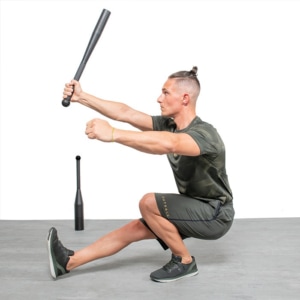
- Learning to Managing Scapular Girdle Mobility and Stability through two simpler exercises than Gamma Cast, namely the Barbarian Squat and the Pendolum.
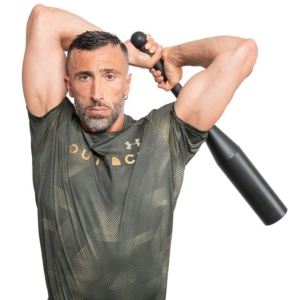
Whether it is a athlete in a specific sport or a simple training enthusiastit will become evident that Gamma Cast, and in general all training with the Clavewill significantly increase the levels of strength, power e muscle qualityand will do so while improving the functionality of the entire scapular girdle.
On the other hand, however, only with optimal knowledge of exercise technique in full respect of the body's biomechanics, and functional training programming, one can optimise the extraordinary characteristics of club training.
by Emilio Troiano
Master Trainer of the WTA International Functional Training Academy
Related products
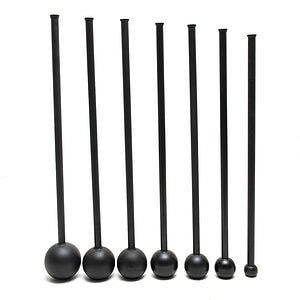
Functional Training
24,40€ 157,08€Fascia di prezzo: da 24,40€ a 157,08€ FEES and TAXES NOT INCLUDED
Questo prodotto ha più varianti. Le opzioni possono essere scelte nella pagina del prodotto


 Defibrillator AED
 Gift CardSidea
 Spare parts