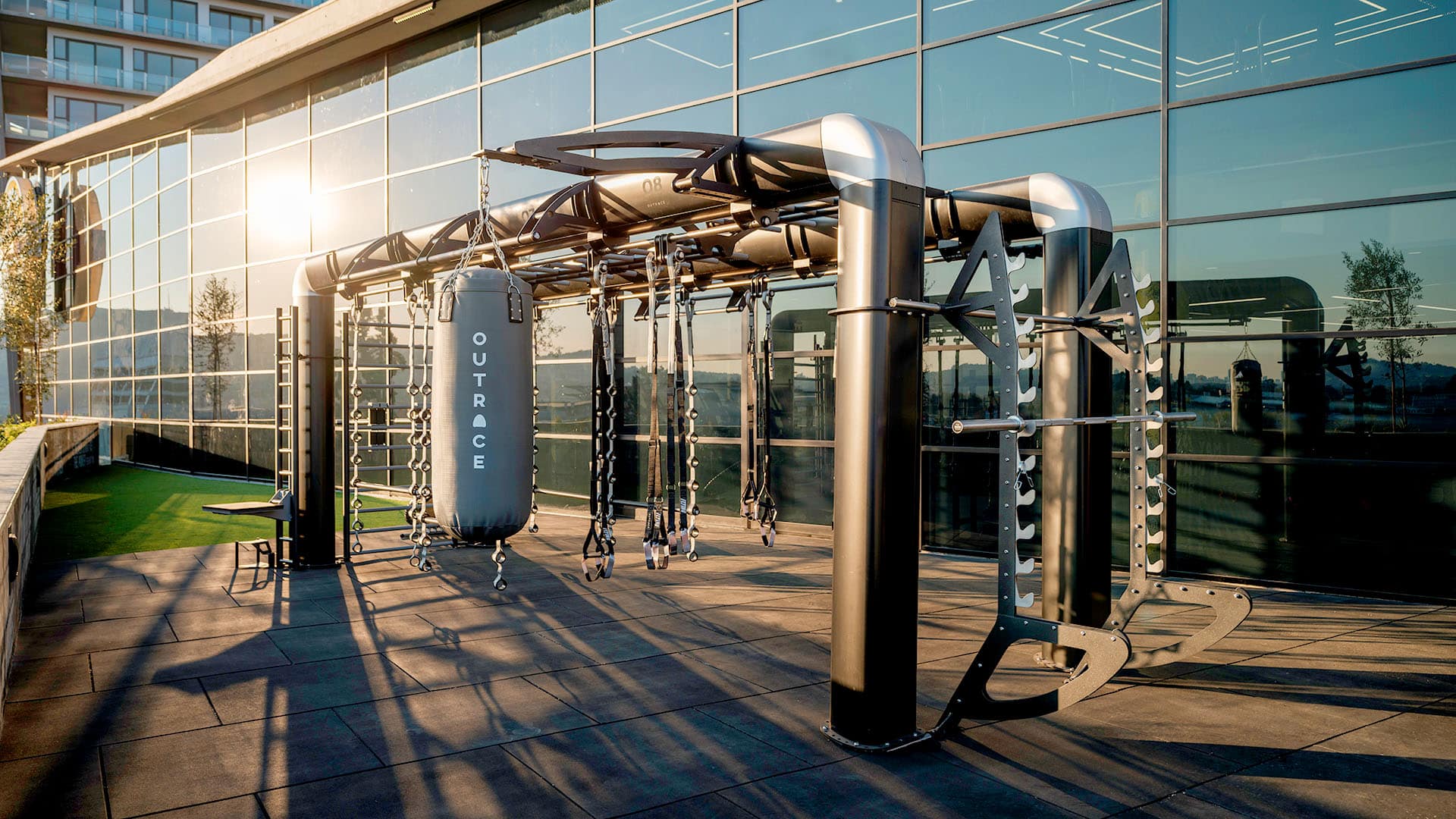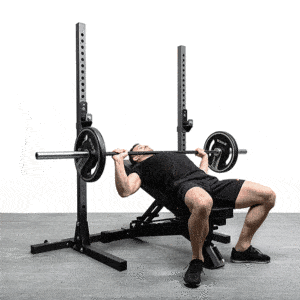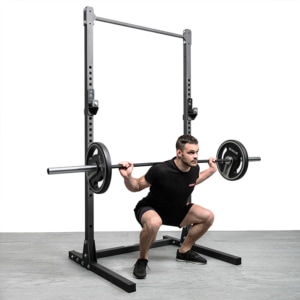




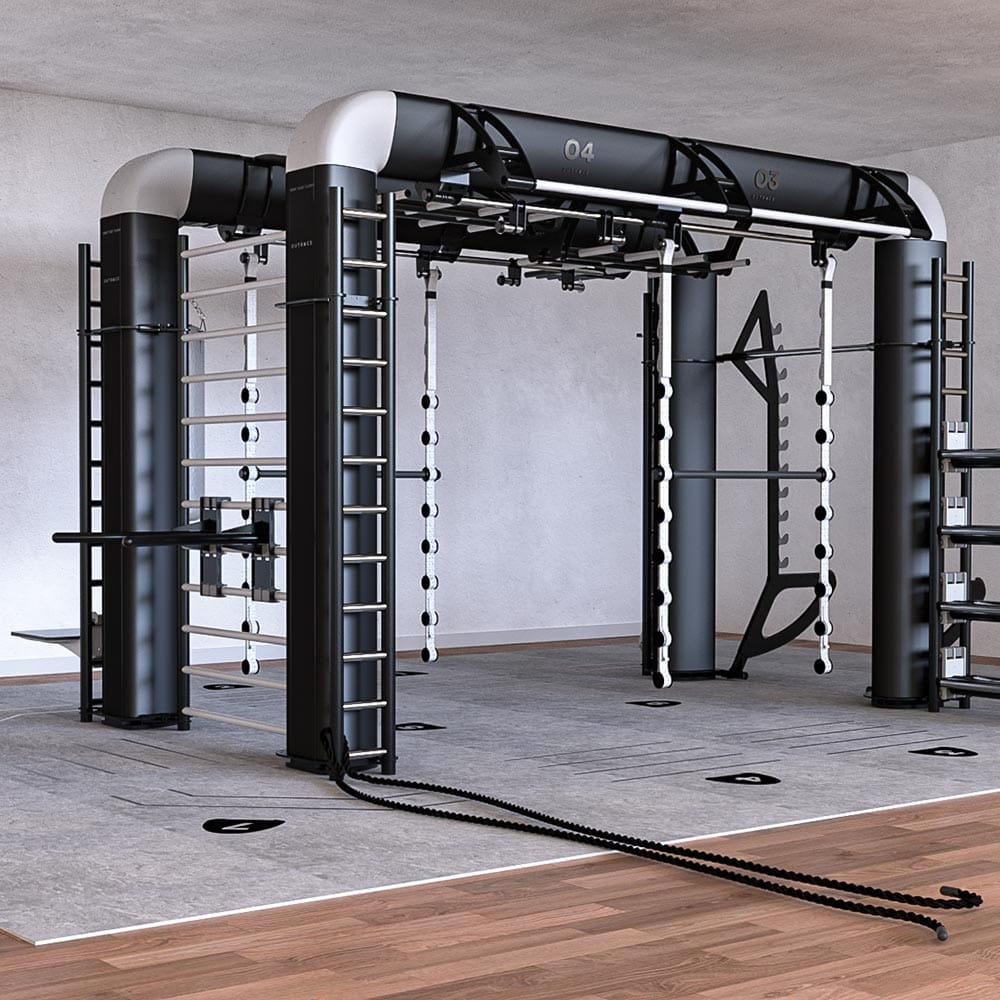
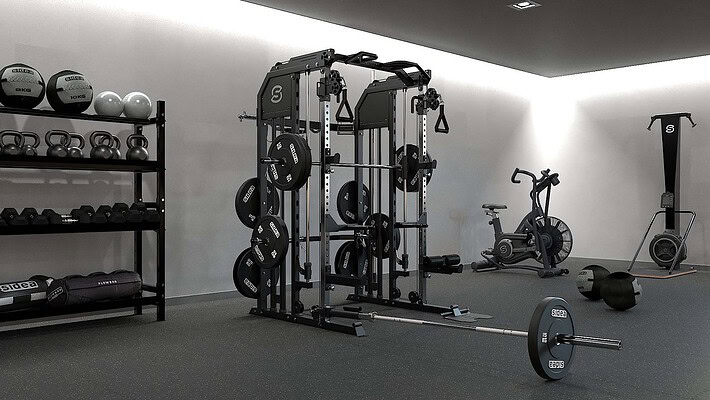

The rack is the central piece of equipment in any strength training area: it allows you to perform squats, presses, Olympic lifts, pull-ups and barbell exercises safely, whether in a professional gym or an advanced home gym.
Compact solutions (Smart Rack, Bar Support) right through to complete Power Cage systems
Compatible with Olympic barbells, adjustable benches and weight accessories
Suitable for professional settings, CrossFit boxes, personal training studios and garage gyms

Strong fitness training

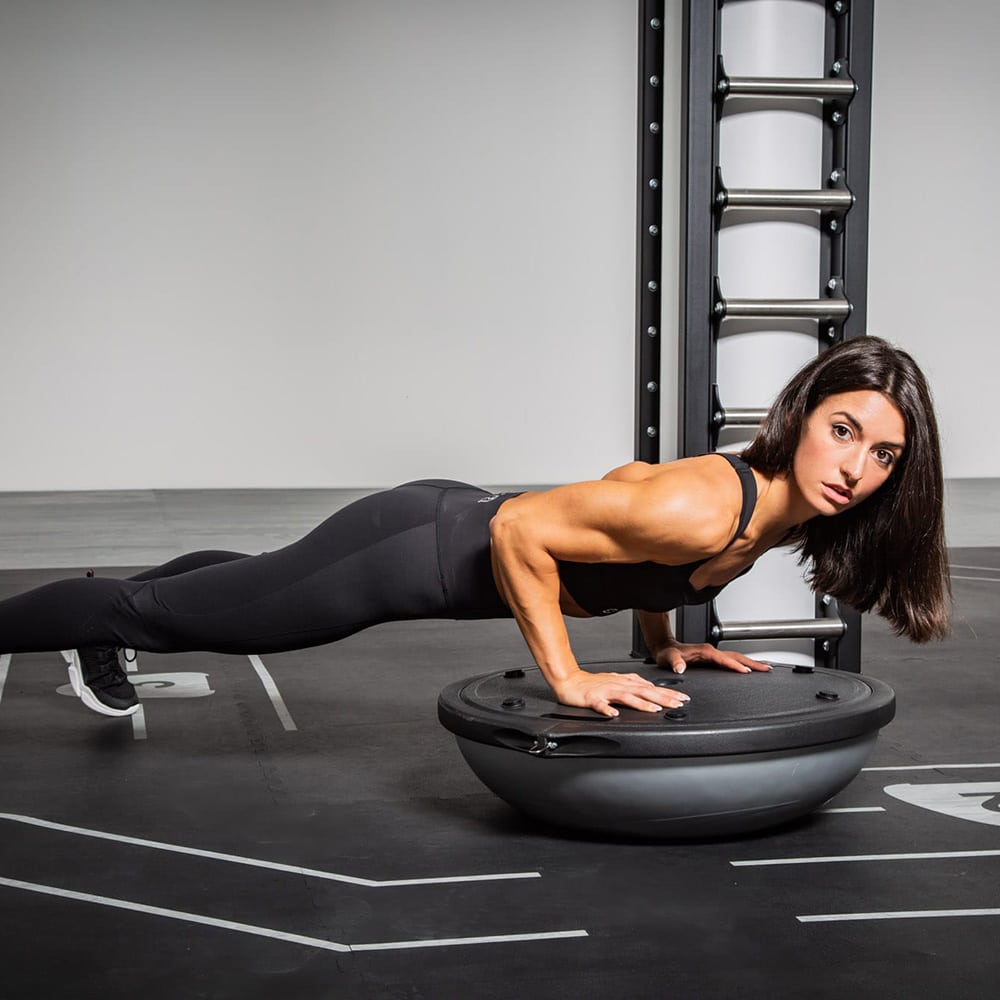
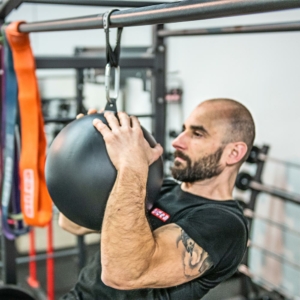
9017/1 Pull Up Giant Ball

99,13 FEES and TAXES NOT INCLUDED
-20%
PROMOTION
428,53 808,25Fascia di prezzo: da 428,53€ a 808,25€ 342,82 646,60Fascia di prezzo: da 342,82€ a 646,60€ FEES and TAXES NOT INCLUDED
Questo prodotto ha più varianti. Le opzioni possono essere scelte nella pagina del prodotto

Rack Station

9095 Power Cage Rack

582,55 1.471,63Fascia di prezzo: da 582,55€ a 1.471,63€ FEES and TAXES NOT INCLUDED
Questo prodotto ha più varianti. Le opzioni possono essere scelte nella pagina del prodotto
-20%
PROMOTION
497,15 976,00Fascia di prezzo: da 497,15€ a 976,00€ 397,22 780,80Fascia di prezzo: da 397,22€ a 780,80€ FEES and TAXES NOT INCLUDED
Questo prodotto ha più varianti. Le opzioni possono essere scelte nella pagina del prodotto

Rack: the Sidea selection

The ‘Rack’ category encompasses a wide variety of structures that differ greatly in terms of size, function and context of use, but which all share a fundamental principle: to provide a stable and secure base for training with barbells and free weights. These range from a simple Olympic barbell rack — designed for those training in confined spaces or on the move — right through to the Rack Station A complete cage, capable of accommodating heavy squats, bench presses and suspension training within the same floor space. Six models, across various categories, all united by a single common thread: structure, sturdiness and versatility.

Who is the Rack for?

There is no single answer. A fitness coach working on the field or in temporarily equipped gyms has different needs from someone running a 200 m² CrossFit box or someone who has set up a semi-professional garage gym.

  • Professional gyms and CrossFit boxes: they require equipment that can withstand intense training sessions, heavy loads and continuous use by multiple athletes. The Power Cage Rack and the Functional Rack Model 2 meet this need with a sturdy frame and multiple anchor points.
  • Personal trainers and fitness coaches: they often work in spaces not specifically designed for this purpose. The CrossX Rack and the Olympic Bar Support Pro allow you to set up a fully-equipped training station without the need for permanent installations.
  • Home gyms and garage gyms: anyone who trains at an advanced level at home — weighted squats, overhead presses, pull-ups — needs a rack that doesn’t compromise safety and doesn’t take up more space than necessary. The Smart Rack and the Standing Rack Pro was designed precisely for this purpose.
  • Strength athletes and weightlifters: the rack is an integral part of the training programme — back squats, front squats, rack jerks, isometric exercises — and must have J-cup heights that are adjustable in small increments (typically every 5 cm) and reliable safety bars.

How to choose

The choice always depends on the space available and the maximum expected load. A rack that can hold 200 kg is of no use to someone who squats 140 kg, but an undersized rack in a busy gym poses a real risk. Here are the criteria that really matter.

Floor space and headroom. A Power Cage typically occupies a floor area of 1.2–1.5 m², but requires at least 240 cm of headroom for pull-ups and overhead exercises. A Smart Rack or Bar Support can also be positioned under mezzanines or in rooms with ceilings 220 cm high.

Load-bearing capacity and frame quality. Square steel sections measuring 50×50 mm or 70×70 mm, with wall thicknesses of 2 to 3 mm, make the real difference between a home-use rack and a professional-use rack. Always check the static load rating specified by the manufacturer.

Modularity and compatible accessories. Some racks are compatible with dip handles, landmines, alternative J-cups and resistance bands. This compatibility transforms a simple piece of equipment into a multi-functional station, which is particularly useful for personal trainers and fitness coaches who wish to maximise the number of exercises that can be performed on a single piece of equipment.

Compatibility with a bench. A rack without a built-in bench must have sufficient space between the uprights to accommodate a standard adjustable bench (seat width ~30 cm). Check the dimensions before purchasing.

Installation and anchoring. Power cage racks are always best anchored to the floor, particularly when used with loads exceeding 100 kg. Compact models and bar supports can also be used as free-standing units, but only on non-slip surfaces.

Sidea Products for Racks

The range covers three distinct areas of use.

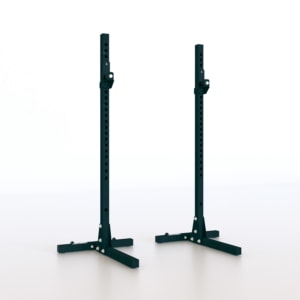
Compact structures and beam supports — The'Olympic Bar Support Pro It is the most basic solution: a horizontal Olympic barbell support, designed for those who want a squat or press station without the full structure of a rack. It works well when paired with a adjustable bench and takes up very little space. It Standing Rack Pro It adds height and adjustability, making it suitable for overhead presses and rack pulls as well.

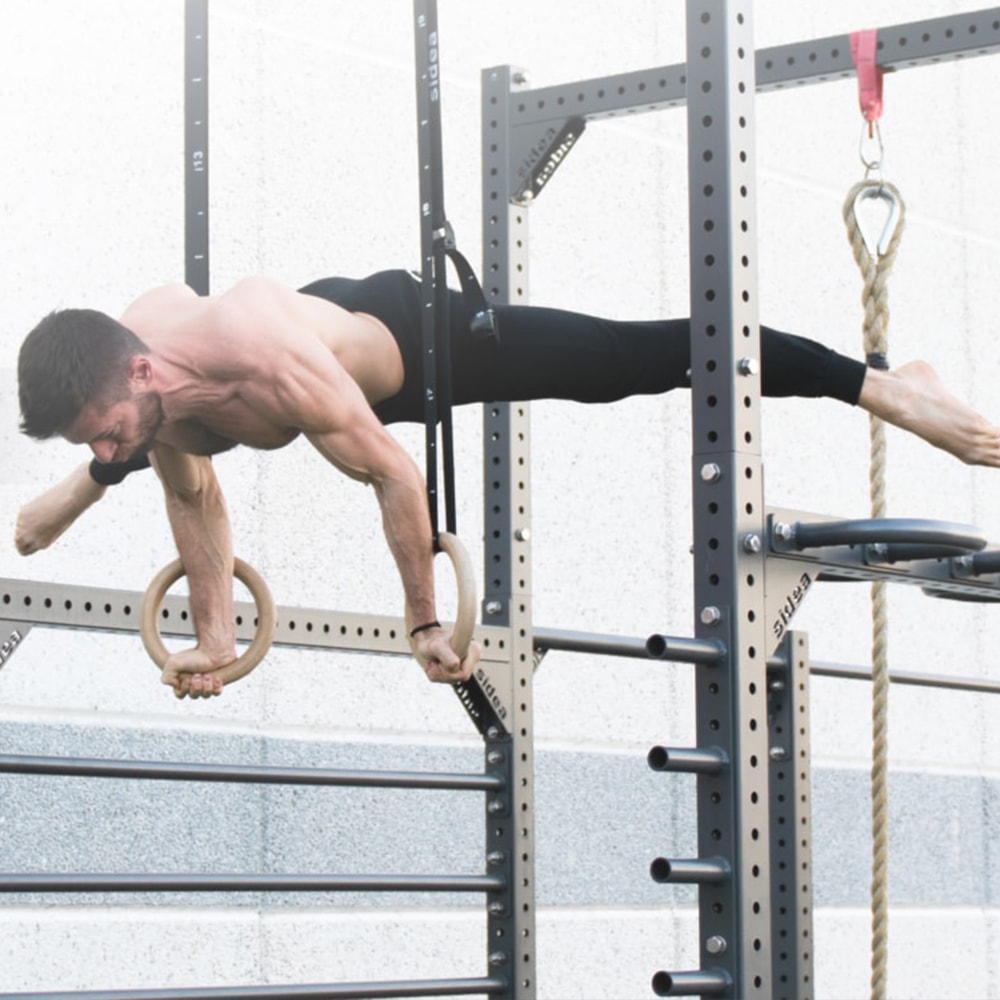
Functional and CrossFit racks — The CrossX Rack and the Functional Rack Model 2 They are designed for environments that incorporate barbell training into a broader functional training programme. They allow for pull-ups, resistance band attachments, TRX training and multi-exercise set-ups. They form part of the Functional Training in the most practical sense of the term.

Power Cage and complete set-ups — The Power Cage Rack It’s the solution for those who won’t settle for anything less: adjustable safety bars, multi-position J-cups, and a closed-cage design for independent training, even with maximum loads. Part of the packages Rackstation Packs, it forms part of comprehensive strength training programmes.

Complementary accessories — The Pull Up Giant Ball Complete the station with a pull-up bar for hanging grips, which is useful for proprioceptive training and advanced grip training, and is commonly used in StrongFirst protocols and relative strength programmes.

Why choose Sidea

Sidea has been designing and distributing professional fitness equipment since 1999, with an operational warehouse covering over 4,000 m² in Gambettola. The range of racks meets precise technical criteria, selected and tested over time in real-world settings — from professional gyms to CrossFit boxes, from public sports centres to advanced home gyms. As an official StrongFirst distributor, Sidea works closely with certified trainers and instructors, which is directly reflected in its product choices: nothing superfluous, just everything you need to train effectively and safely.
Domande frequenti - Rack

  • An open rack (half rack or squat stand) has two front uprights and allows the barbell to be loaded and unloaded from the side. A power cage is a structure with four uprights, enclosed on all four sides, with safety bars that protect the athlete in the event of a failed lift. A power cage is preferable for those who train independently with heavy weights.
  • It depends on the model and the weights used. Support bars and compact smart racks often operate as free-standing units on non-slip surfaces, particularly with moderate weights. Power cages and functional racks used with heavy barbells (over 80–100 kg) always benefit from being anchored to the floor, which reduces the risk of swaying and increases structural stability.
  • A properly configured rack allows for squats (back, front and box squats), barbell bench presses, overhead presses, rack pulls, isometric exercises, barbell hip thrusts, pull-ups and chin-ups, dips and — with the appropriate accessories — exercises using resistance bands and landmines. Its versatility depends on the presence of adjustable J-cups, safety bars and side anchor points.
  • The rule of thumb is: the athlete’s height plus 40–50 cm of clearance above the bar. For an athlete who is 185 cm tall and performs bent-knee pull-ups, a minimum headroom of 230–240 cm is required. In gyms with ceilings 220 cm high, it is often preferable to opt for racks without an integrated pull-up bar or with a low-mounted side bar.
  • Yes, provided that the stated static load capacity is compatible with the anticipated loads and that the rack is positioned on a stable raised floor. Bar supports and standing racks fitted with suitable safety bars allow for squat sessions with significant loads. The difference compared to a power cage is the lack of full side protection, which requires greater care when managing failure.
  • Some models in the Sidea range, particularly those included in the Rackstation packages, are designed to accommodate additional components — dip handles, band holders and landmine attachments. Compatibility must be checked on a model-by-model basis. It is advisable to plan which accessories you intend to add at the time of purchase, so that you can choose the most suitable base unit.
  • Sidea offers a range of instalment payment options to make it easier to purchase professional equipment. Please see the dedicated page: Payment options Sidea.
  • If you work in the fitness or sports sector, register on the website as a Professional or as an ASD to gain access to the price list reserved for industry professionals. Pro registration allows you to view exclusive discounts and special terms across the entire Sidea catalogue.
  • Yes, Sidea is an authorised supplier on the MEPA (Public Administration Electronic Marketplace). Public bodies, schools, universities, local authorities and public sports facilities can purchase Sidea equipment via the platform Public Sector Online Procurement. For information on product codes and direct MEPA orders, please contact Sidea customer service.
  • Sidea guarantees the right to cancel within 14 days of delivery for all online purchases, in accordance with current legislation. Products must be returned undamaged and in their original packaging. For full details on returns, refunds and the warranty, please see the page Terms and Conditions of Sale.
  • Sidea has been designing and distributing professional fitness equipment since 1999: over 25 years’ experience serving gyms, sports coaches, CrossFit boxes, personal training studios and enthusiasts of advanced home fitness. Official distributor StrongFirst e Luxiaojun, which is exhibiting at the FIBO international trade fair and is the technical sponsor of the Summit of Strength. Every product is designed with durability, functionality and suitability for real-world operational contexts in mind. The service Gym Design Offers bespoke design services with 3D renderings. A warehouse covering over 4,000 m² in Gambettola (FC) to ensure rapid order fulfilment, direct technical advice and a special price list for professionals and amateur sports clubs.