Agility: A Complete Guide
The Agility Sidea category includes equipment for neuromuscular and sensory-perceptual conditioning: rubber or adjustable agility ladders, low hurdles ranging from 15 to 50 cm, course markers, support rings, reaction balls and plyobox for plyometric training. These are tools designed to develop foot speed, responsiveness, changes of direction and fine motor coordination, even before pure strength. They are used by strength and conditioning specialists, coaches of position-specific and team sports, CrossFit coaches and enthusiasts who incorporate them into their functional training with low-impedance, high-frequency exercises. The programme covers indoor training on specialist flooring and outdoor training on grass or a sports pitch.
What is agility equipment: definition and function
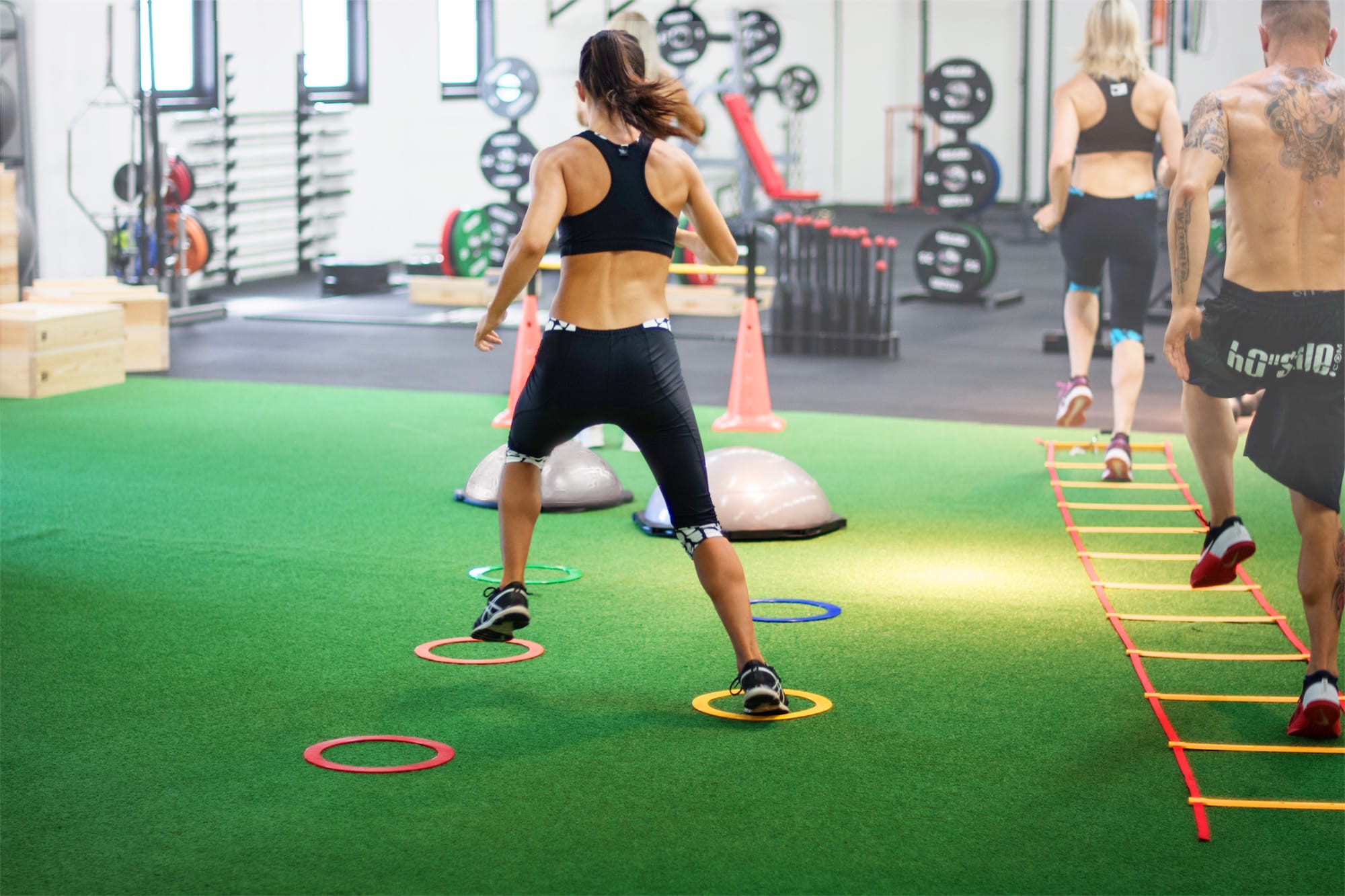
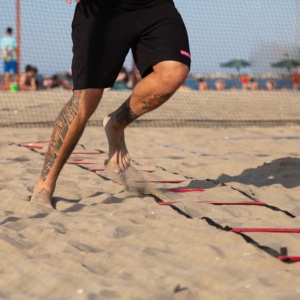
Agility equipment refers to a set of low-impact tools that stimulate the neuromuscular system to respond rapidly to spatial and temporal stimuli. The focus is not on training peak strength, but on the ability to activate correct motor patterns in the shortest possible time. The ladder drill works on foot cadence and foot placement. Low obstacles require a controlled hip lift, which is useful in the pre-sprint phase and during a return to action following an injury. Cones and rings serve as spatial markers for change-of-direction drills, shuttle runs and T-drills. The reaction ball introduces a componentand stochastic: the unpredictable rebound forces the athlete to react, rather than simply follow a learnt pattern. In a training programme, these exercises typically feature in the warm-up phase or the middle section of the session, before strength work.
Types of agility equipment
Agility ladders
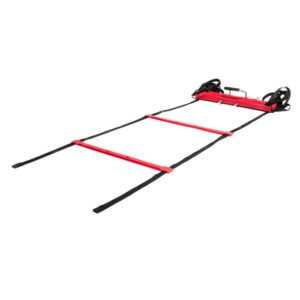
Sidea offers two versions: the 4111 Rubber Agility Ladder with fixed rubber slats, designed for heavy-duty outdoor use and abrasion resistance on tarmac or artificial grass, and the 4112 Adjustable Agility Ladder with adjustable rungs, which is better suited to a functional training room where different training programmes are used in rotation.
Low hurdles and speed hurdles
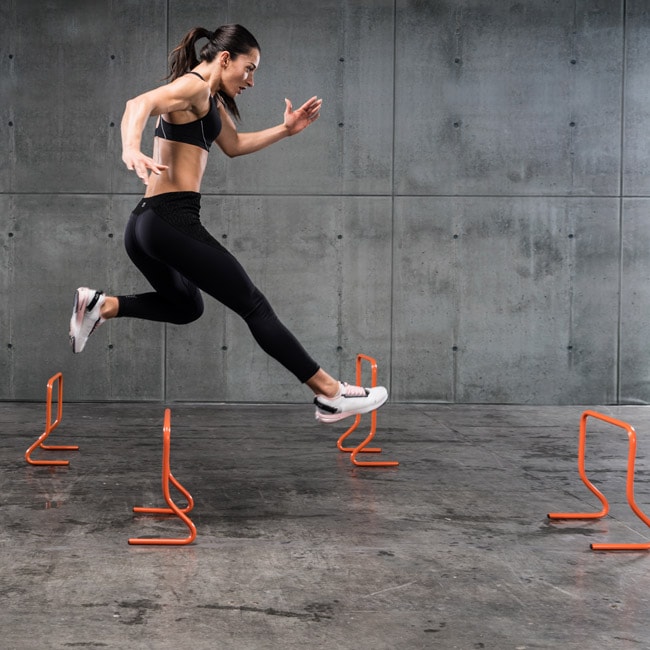
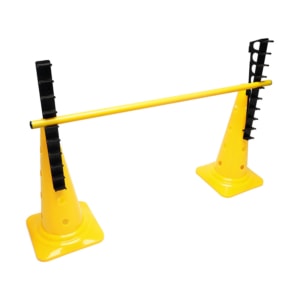
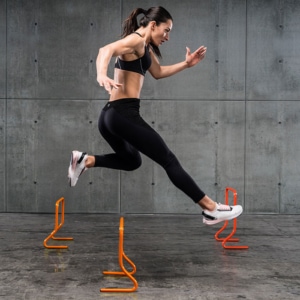
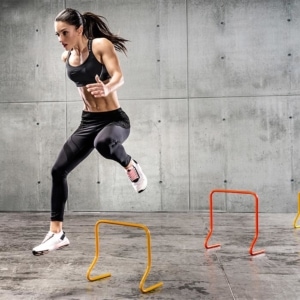
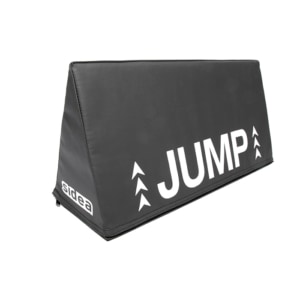
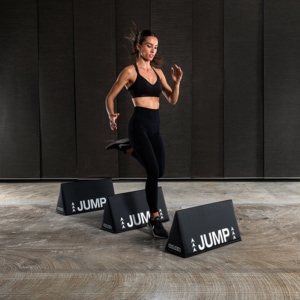
The 30 cm 0255 Speed Hurdle and the 50 cm 0257 cover the two standard heights for skipping, sprint drills and frequency training. The 1005 Soft Hurdle, made from foam, is the ideal choice for young athletes or for those learning the technique without the risk of tripping. The 0253 Multi Hurdle set offers adjustable heights in a single kit.
Cones, hoops and reaction balls
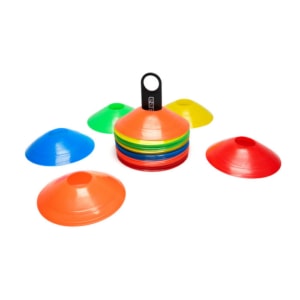
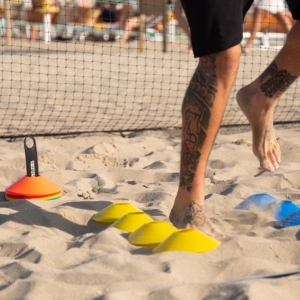
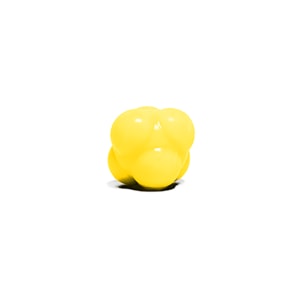
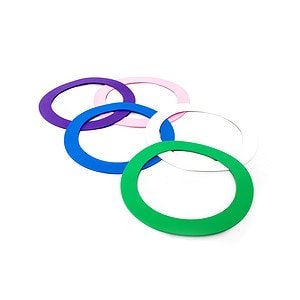
Cone 0250 and the 50-piece set 0251 serve as spatial reference points. The Agility Ring 2035 and the soft version 2035/1 mark the landing points. The 0465 Reaction Ball introduces the reactive element thanks to its random bounce.
Plyobox for explosive power
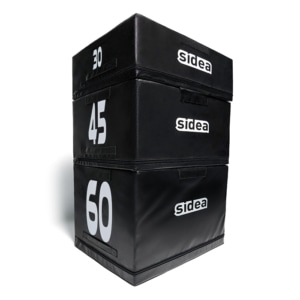
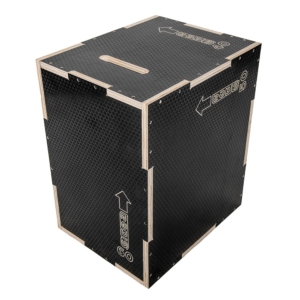
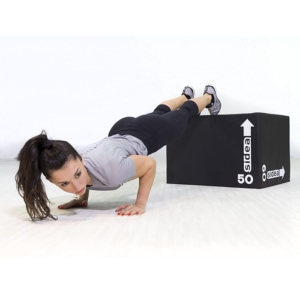
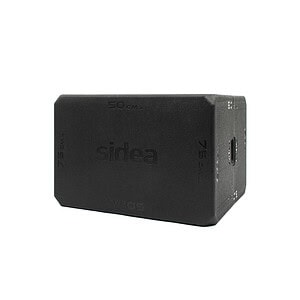
The 3-in-1 plyoboxes – available in wooden (9111, 9111V), soft (9112, 9112V) and foam (9116) versions – allow for plyometric training at three different heights using a single box. The 9105–9107 Plyobox Soft Impact series is designed for safe, repeated box jumps.
How to choose: a guide to use cases
Commercial gyms and fitness studios
You need equipment that can withstand continuous use by participants. The 4112 adjustable step and the 9112/9116 soft plyoboxes are the most commonly used combination: low maintenance, no risk of scraped shins, and quick to set up at the start of the class.
Personal training studies
Those who work one-to-one favour variety in a small space. A set of 0253 Multi Hurdles, plus a 0465 reaction ball and 0251 cones, cover most functional rehabilitation and return-to-sport programmes.
CrossFit boxes and team sports
Here, agility training complements metabolic training. Rubber step boxes 4111 (suitable for outdoor use), speed hurdles 0257 and wooden plyoboxes 9111 are the standard equipment for structured warm-ups and conditioning circuits.
Home gyms and garage gyms
Anyone who trains at home wants to take up as little space as possible. A 4112 step, ten 0251 cones and a 0465 reaction ball all fit into one bag and cover skipping, changes of direction and reaction time. If headroom allows, a 9116 plyobox adds plyometric training.
Technical glossary
- Agility
- The ability to change direction, speed and pace in response to a stimulus, whilst maintaining postural control. It is the result of the interaction between strength, coordination and the nervous system.
- Speed ladder
- An agility ladder laid out on the ground, used for cadence and footwork drills. It helps develop stride frequency and foot proprioception.
- Plyometrics
- A training method based on the muscle’s stretch-shortening cycle. It includes box jumps, drop jumps and obstacle courses, and develops explosive power.
- Responsiveness
- The time between an external stimulus and the athlete’s motor response. Training involves the use of reaction balls, strobe lights and drills triggered by visual or auditory cues.
- T-drill
- T-shaped change-of-direction tests and drills involving forward sprints, lateral movement and running backwards. Use cones as markers.
- Shuttle run
- Running back and forth between two points marked by cones or lines. This exercise trains deceleration and re-acceleration.
- Skip
- An exaggerated running exercise focusing on lifting the knee (skip A) or kicking the heel towards the buttock (skip B). Commonly performed over steps and low hurdles.
- Contact time
- The time the foot is in contact with the ground during a sprint or a jump. A short contact time is an indicator of elasticsmuscle-tendon unit.
Agility Sidea model comparison
| Model | Type | Recommended use |
|---|
| 4111 Rubber Agility Ladder | Fixed rubber ladder | Outdoors, on the pitch, heavy-duty use |
| 4112 Adjustable Agility Ladder | Adjustable ladder | Multipurpose hall, flexible layouts |
| 0255 Speed Hurdles 30 cm | Low hurdle | Skip, frequency, young athletes |
| 0257 Speed Hurdles 50 cm | Medium obstacle | Jumps, power, pre-sprint |
| 1005 Soft Hurdle | Foam obstacle | Rehabilitation, teaching resources |
| 0253 Multi Hurdle Set | Adjustable obstacle set | PT Studios: versatility in a small space |
| 0250 Cone | Single cone | Spatial marker |
| 0251 Set of 50 cones | Small cones | Group drills, T-drills, shuttle runs |
| 2035 Agility Ring | Fixed ring | Footrests, coordination hoops |
| 2035/1 Soft Agility Ring | Soft ring | Children, extra safety |
| 0465 Reaction Ball | Ball bouncing randomly | Responsiveness, reaction time |
| 9111 / 9111V Wooden Plyobox | 3-in-1 wooden Plyobox | CrossFit box, weight room |
| 9112 / 9112V Soft Plyobox | Plyobox Soft 3-in-1 | Commercial gyms, classes |
| 9116 Foam Plyobox | Foam Plyobox | Home gyms, athletes returning from injury |
| 9105-9107 Plyobox Soft Impact | Soft Plyobox Series | Repetitive plyometric training |
Frequently Asked Questions about Agility
In the FAQ section, you’ll find answers to the most common questions about using the step ladder, the difference between wooden and soft plyoboxes, the height of the obstacles, and choosing between reaction balls and classic change-of-direction drills.
Why choose Sidea
Sidea has been manufacturing and distributing professional fitness equipment since 1999. Its headquarters in Gambettola (FC) houses over 4,000 m² of warehouse space and a technical showroom. In the Agility category, we offer products designed for both athletic trainers working in the field and for CrossFit boxes and personal training studios. The Gym Design service provides 3D renderings for the layout of agility areas integrated with technical flooring and racks. Sidea is an official StrongFirst distributor and Luxiaojun, exhibiting at FIBO and a sponsor of the Summit of Strength.














 1200 Basic Kit with Wheels for Mirror
1 × 38,00€
1200 Basic Kit with Wheels for Mirror
1 × 38,00€ 9063 Stainless Steel Wall Anchor
2 × 45,75€
9063 Stainless Steel Wall Anchor
2 × 45,75€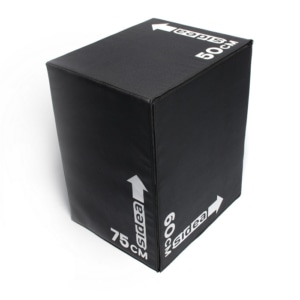 9112V Soft Plyobox 3-in-1
1 × 250,10€
9112V Soft Plyobox 3-in-1
1 × 250,10€











 Defibrillator AED
 Gift CardSidea
 Spare parts