















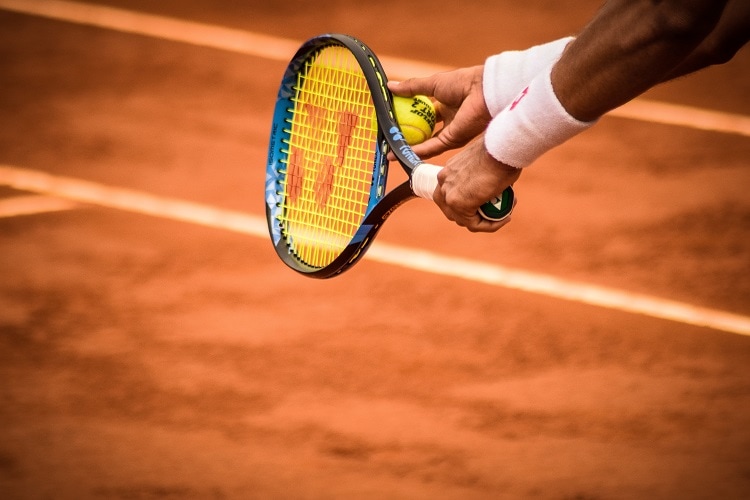
One of the sports disciplines in which it is easiest to understand how thefunctional training in athletic preparation can be the key to the success of the athlete/practitioner, is without doubt the tennis.
The tennis player, from the simple enthusiast to the professional athlete, normally dedicates most of his or her training to the specific practice of tennis. Power and precision of shot, rapid changes of direction, stabilisation and deceleration are among the fundamental characteristics of this sport, and it is absolutely correct to devote specific technical sessions to it in order to improve performance mastery.
Like any sports discipline, however, tennis must constantly come to terms with three fundamental aspects:
- Ability to perform technical gestures in stress conditions and fatigue caused by the match, especially if it is an individual sport, where the slightest distraction can cost dearly
- Execution of movements at high speeds which at the same time require maximum precision
- Accident prevention joints and muscles
We are talking about characteristics that, although they directly affect the execution of specific gestures on the field, must be built up during physical preparation, with general and gradually more specific work, through the three pillars of athletic preparation:
- Joint mobility (particularly of the hips and scapular girdle)
- Coordination skills (general, specific and special)
- Conditional skills (strength, speed, power, endurance)
But let's see how these characteristics correlate with thefunctional training and so that, when trained in accordance with its principles and practical applications, they are a real "manna from heaven' for tennis players of all levels and backgrounds.
Why Functional Training is Perfect for Tennis Preparation
L'functional training differs from any other training system in one fundamental characteristic: it aims to train the movements of the human body and everything related to it in terms of health, prevention and efficiency.
Training movement means training the wholeness and the multi-directionality so that the entire body participates in each individual motor pattern being performed. From simple standing upright to running, from a change of direction to a racket stroke. Every single gesture calls upon the entire body and does so under the constant control of the Central Nervous System which, through the Neuro-muscular System (part of the peripheral nervous system), directs and controls its operations in order to ensure its full and safe success.
This necessarily passes through the construction of the basic conditions for expressing the movement of the body in space:
- Freeing the joint fulcrums along which movements will pass (joint mobility)
- Stabilising joints involved (proprioception, joint and core stabilisation)
- Laying the foundations of coordination e totality of movements (control of kinetic chains and development of inter-muscle coordination)
- Increased levels of neuro-muscular strength of the person, so as to reflexively obtain greater 'lucidity' in the execution of gestures in reactivity, speed, power e resistance
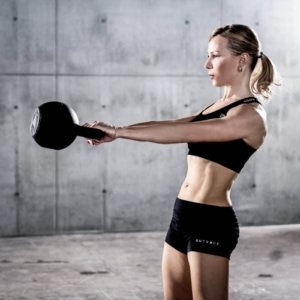
Kettlebell Strong Competition & vinyl
30,50€ 358,38€Fascia di prezzo: da 30,50€ a 358,38€ FEES and TAXES NOT INCLUDED
Questo prodotto ha più varianti. Le opzioni possono essere scelte nella pagina del prodotto
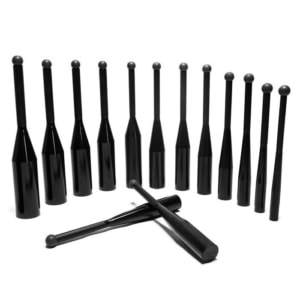
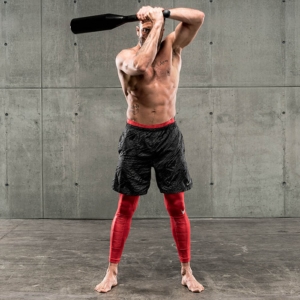
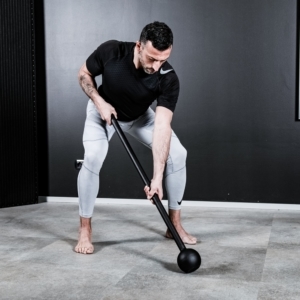
Clave & Macebell
14,49€ 298,90€Fascia di prezzo: da 14,49€ a 298,90€ FEES and TAXES NOT INCLUDED
Questo prodotto ha più varianti. Le opzioni possono essere scelte nella pagina del prodotto
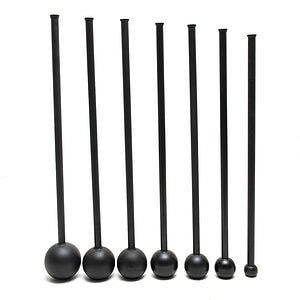
Functional Training
24,40€ 157,08€Fascia di prezzo: da 24,40€ a 157,08€ FEES and TAXES NOT INCLUDED
Questo prodotto ha più varianti. Le opzioni possono essere scelte nella pagina del prodotto
How to train to prevent injuries and improve performance?
If one considers that specific technical tennis sessions are usually three to five per week, it follows that those devoted instead to athletic preparation and physical conditioning cannot be more than twoso as to avoid a overtraining condition (to be avoided by every sportsman and athlete). Hence the need to find a system to constantly train all these aspects at the same time in every single exercise.
In this sense, if executed in accordance with the scientific principles of global multi-planar movement (physiology, biomechanics, movement planes, activation and control of functional groups and kinetic chains, management of the body's centre of gravity, the core), functional training is the perfect solution.
VIDEO: Preparing for tennis with Kettlebell and Si-Clubs
In the following video we see an example of combination of functional exercises suitable for tennis preparationto be performed in the central part of a workout (i.e. after a warm-up with joint mobility exercises), in order to condition all the required capacities at the same time.
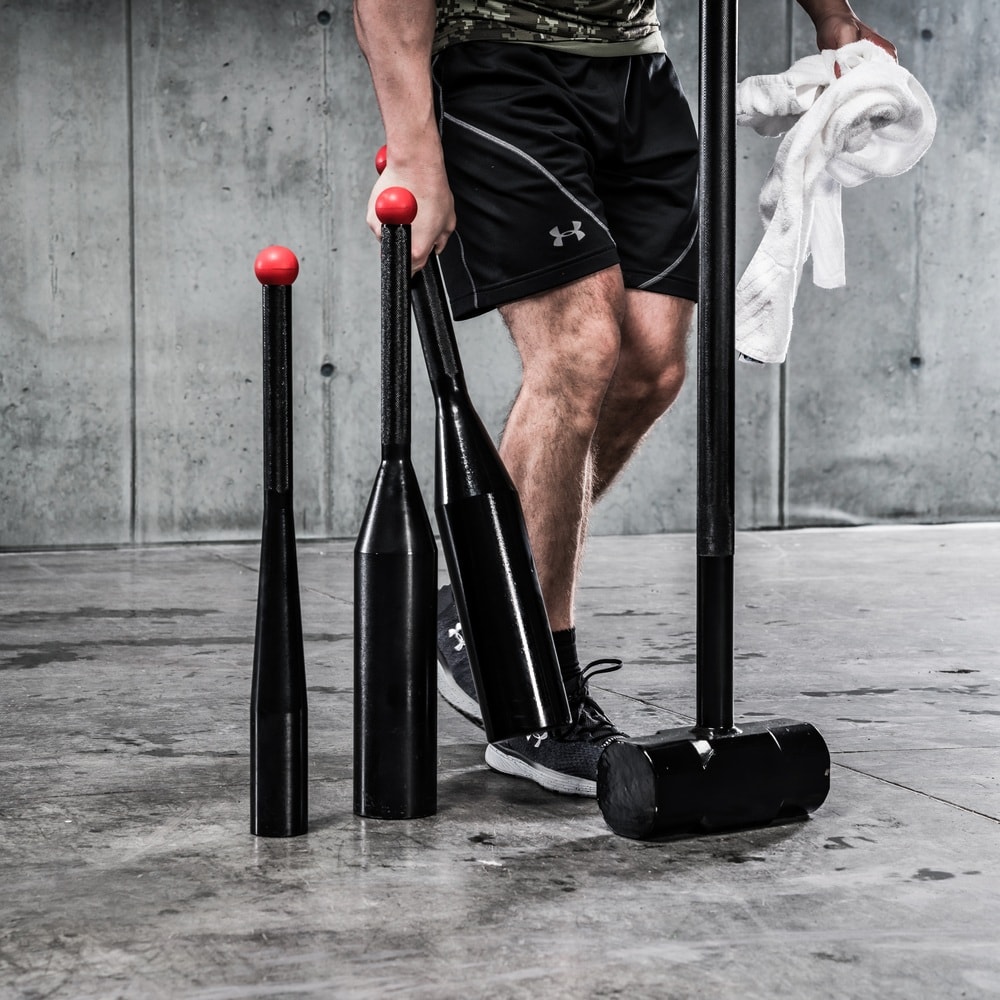
The tools used are Kettlebell e Si-Clubs, two of the functional training tools that are best suited to the needs described above. This is because always allow the two primary driving forces to be actively involved of the person's movement, the also and the scapular girdle, in the three planes of movement in spacesagittal, frontal and especially transverse, which for an athlete in any sport discipline, including tennis, is the one most concerned with specific technical motor patterns.
In the video we have seen complex exercises at an advanced level, but one of the characteristics of these work tools, along with all others in functional training (such as Flying, Flow Bag, Total-Core Pin, elastics, ropes etc.), is the extraordinary ability to versatility and adaptability at every level and specific request.
The advice is always to rely on a certified trainer in this field who, through an initial assessment of the person, will select the exercises and the training programmes best for each individual, so that they can gradually increase their technical skills in performing the exercises and gradually increase their physical capabilities, without incurring unnecessary injuries and overtraining.
by Emilio Troiano
Master Trainer of the WTA International Functional Training Academy
La WTA Functional Training Academy trainers in Functional Training since 2009. As of April 2019, alongside the historical in-house training courses, it offers the brand new Online training courses rich in practical technical content (more than 180 video lessons, ebooks and training sheets), to specialise in theFunctional Training for Athletic Preparation aimed at increasing performance and the prevention of injuries from indirect trauma and stress/overloading.
To find out how to specialise in the Athletic Functional Training® training system click on the banner below and go to the info page of the Athletic Functional Training® Instructor Training Course.

You can also download the brand new Functional Training Application which allows you to create training programmes for both physical preparation for various sports, post-traumatic recovery and general physical goals.
Click on the banner and discover all the features of this extraordinary App that you can download free of charge to your smartphone and tablet.


 Defibrillator AED
 Gift CardSidea
 Spare parts